Foresight News takes you to a quick overview of this week's hot topics and recommended content:
01 2026 Hong Kong Web3 Event
"40 Remarkable Quotes from Industry Leaders to Understand the 2026 Hong Kong Web3 Carnival"
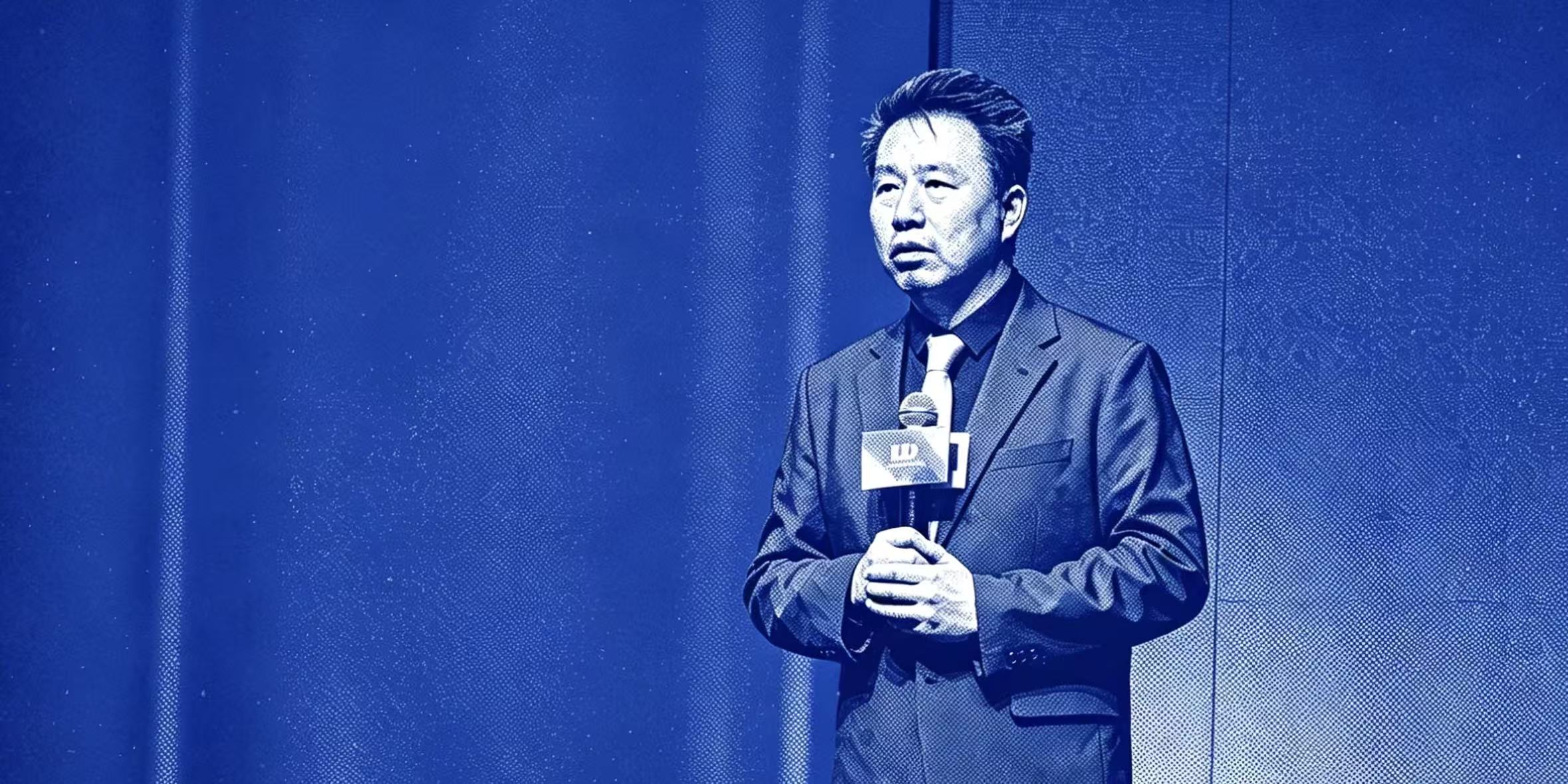
"Fu Peng's First Public Speech in 2026: Why I Joined the Cryptocurrency Asset Industry?"
"Vitalik × Qiu Dageng's Conversation in Hong Kong | ETH HK Hub Opening Day Message to the Chinese Community: The Future's Answers Go Beyond Ethereum"
02 KelpDAO Theft Incident
"Kelp Theft Losses of Nearly 300 Million Dollars, Aave Takes on 200 Million Dollars of Bad Debt"
"200 Million of Bad Debt, 8.3 Billion Dollars of Capital Flight: Aave is Experiencing its Darkest Hour"
"On the Sixth Day of the rsETH Incident, DeFi United's Rescue Plan Receives Approximately 100 Million Dollar Commitment"
03 Cryptocurrency News
"Controversy Entangled, Polymarket Loses to a Hair Dryer This Time"
"19-Year-Old Dropout Starts a Business, Creates a Unicorn Slash"
"A Law Firm Advocating for the Cryptocurrency Community Has Made ElizaOS Its New Target"
"Apple Changes CEO, Let's Not Expect Web3 Too Soon"
"Is Aztec Cashing Out Public ETH? Where Does the Privacy King Stand Now?"
01 2026 Hong Kong Web3 Event
The 2026 Hong Kong Web3 Carnival gathers global industry elites, focusing on core topics such as regulatory compliance, RWA tokenization, and the integration of AI and blockchain. Traditional finance and cryptocurrency tracks are accelerating integration, as the industry bids farewell to speculative chaos and moves towards practical implementation. A host of industry leaders, with insightful observations, outline a new development pattern centered on Web3 compliance, physical empowerment, and technological symbiosis. Recommended Article:
"40 Remarkable Quotes from Industry Leaders to Understand the 2026 Hong Kong Web3 Carnival"
Hong Kong Legislative Council Member (Technology and Innovation Sector) Qiu Dageng: Since the publication of the "Policy Declaration on the Development of Virtual Assets in Hong Kong" in 2022, the Hong Kong SAR government has been committed to establishing a comprehensive regulatory framework to clarify compliance requirements, promote product innovation, and facilitate the orderly development of the market, coordinating the work of various regulatory agencies. These are the key elements the industry has always pursued. To consolidate existing achievements, Hong Kong should continuously optimize the Web3 ecosystem and update relevant laws and regulatory systems. These efforts will create a virtuous cycle of application and development reinforcing each other, thereby creating new demand and liquidity.
HashKey Founder Xiao Feng: Integration, application, and security are my summary of the perspectives shared by guests at the four-day "WEB3 Carnival" in Hong Kong. The integration of AI, blockchain, and cryptographic algorithms (including quantum computing and privacy computing) will be a major trend in the future, and new ideas and opportunities will emerge at the intersection of these three innovations; tokenization (RWA) will be the catalyst for WEB3 native applications, with blockchain serving as a new generation of financial infrastructure, giving rise to on-chain finance and financial on-chain; DeFi security (protocol bugs), blockchain security (quantum resistance), and computational security (data exposure) will be the "ceiling" of future WEB3 innovation and entrepreneurship.
Binance Co-Founder He Yi: Binance’s pursuit goes beyond innovation in the cryptocurrency sector; it seeks to convey deeper values to the entire financial system: what are our contributions to "financial freedom" and "financial equity" for the world? Have we truly made the lives of more ordinary people better? For friends just entering the field, when lacking knowledge about the industry, I recommend allocating top assets but do not suggest making risky bets like CZ who sold his house for a gamble.
At the 2026 Hong Kong Web3 Carnival, macro scholar Fu Peng delivered his first public speech. Grounded in decades of traditional financial perspective, he reviewed the iterative rules of finance, pointing out that technological innovations are reshaping the financial landscape. With compliance coming into effect and cryptocurrency assets gradually maturing, they will blend into broad asset allocation, entering a new stage of institutionalization and standardization. Recommended Article:
"Fu Peng's First Public Speech in 2026: Why I Joined the Cryptocurrency Asset Industry?"
In the future, it will definitely be "FICC+C," and there won't be too much of a division between us. Of course, for us, the most important thing is compliance, so 2025 is actually an important foundational year. Whether it’s the stablecoin legislation or the clarity we see around digital or cryptocurrency assets, two significant pieces of legislation have already told us the market's answers. At this time, it's straightforward; in the future, you will see Wall Street financial institutions, former traditional financial institutions, quickly entering this market. Just like diversifying foreign reserves, it will be included as a diversified asset reserve.
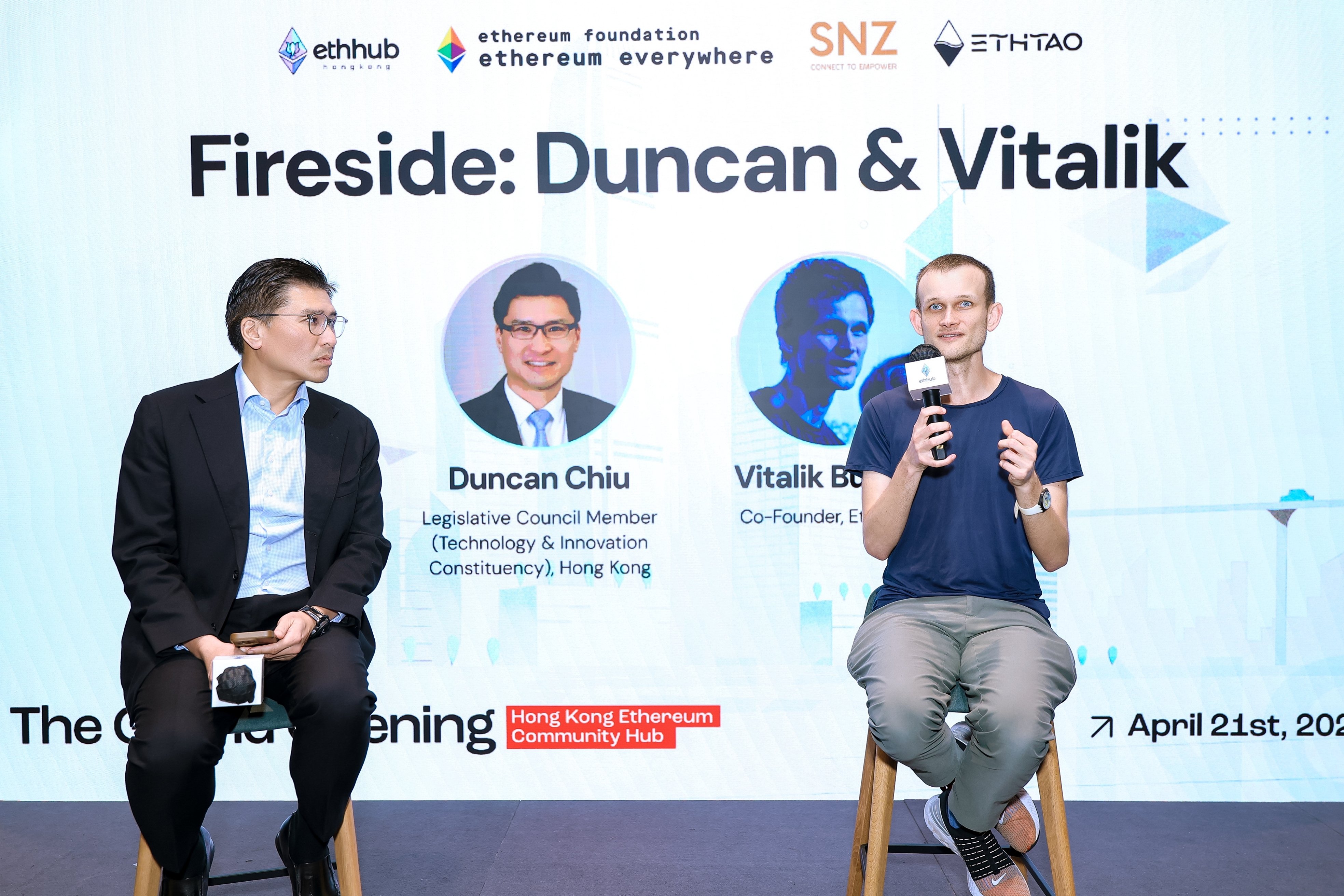
On April 21, the ETH HK Hub officially opened in Hong Kong, where Ethereum founder Vitalik had an in-depth conversation with Qiu Dageng. The two reflected on Vitalik's twelve-year ties with the Chinese community, discussing core topics around Ethereum's L2 development, scaling routes, quantum resistance, AI integration, and more, while encouraging Chinese builders to break through the limitations of singular ecosystems and explore a diverse future for blockchain. Recommended Article:
Qiu Dageng: Over the past decade, there have been many versions of upgrades, and the "Shanghai" upgrade can be considered a kind of nostalgia for China. You have recently emphasized that L2 cannot just focus on scaling; how do you view this?
Vitalik: L2 is still very important right now. However, I believe a good L2 cannot be just a replica of L1. L2 should be complementary to L1, rather than overlapping.
If you look at many applications now, they need blockchain, but they also need various other aspects—such as very high throughput, certain privacy capabilities, etc. Pure EVM forms of L1 are not the ideal direction. Therefore, you will see that many L2 ecosystems are beginning to include parts that do not require EVM.
In other words: the purpose of doing L2 should not be to do L2 just for the sake of doing it; it should meet those needs that L1 cannot fulfill but are crucial for certain applications.
02 KelpDAO Theft Incident
On the morning of April 19, Kelp DAO, relying on LayerZero's cross-chain bridge, was hacked, resulting in the theft of approximately 292 million dollars worth of rsETH by fabricating cross-chain messages. This significant theft caused by a lapse in cross-chain verification configuration not only severely impacted the project itself but also led to Aave accruing over 200 million dollars in bad debt, with risks rapidly spreading to multiple DeFi protocols, exposing deep security vulnerabilities in the excessive layering of LRT assets. Recommended Article:
"Kelp Theft Losses Nearing 300 Million Dollars, Aave Takes on 200 Million Dollars of Bad Debt"
On the morning of April 19, Kernel DAO's product Kelp DAO based on LayerZero's rsETH cross-chain bridge was breached. The attackers invoked the lzReceive method of the LayerZero EndpointV2 contract, fabricated cross-chain messages, causing the mainnet OFTAdapter to release 116,500 rsETH to the attacker's address, which was worth approximately 292 million dollars at the time, accounting for roughly 18% of the 630,000 circulation of rsETH. The attacker's wallet was funded with 1 ETH from the Tornado Cash 1 ETH pool 10 hours prior to the incident.
Within an hour, Kelp urgently executed a multi-signature pauseAll, freezing the LRT Deposit Pool, Withdrawal contract, LRT Oracle, and the rsETH token itself. The attacker made two additional attempts to further steal 40,000 rsETH each time but was rolled back due to the contract being paused; otherwise, the total loss would have approached 391 million dollars.
This has become the largest single loss in DeFi in 2026, surpassing the 285 million dollar hacker incident of Drift Protocol on April 1. According to Bitget market data, after the incident, AAVE, ZRO, and KERNEL dropped approximately 16%, 20%, and 11% respectively in the past 24 hours.
This crisis, prompted by a cross-chain vulnerability, did not stop at KelpDAO itself. A large quantity of false rsETH flooded into the Aave lending market, leveraging the composability of DeFi to pull down platform liquidity, triggering a flight of whales, a drastic drop in currency prices, and a significant shrinkage of TVL. This article will delve into the entire event's details, analyzing the impact and reflections of this crisis on Aave and the entire DeFi industry. Recommended Article:
"200 Million in Bad Debt, 8.3 Billion in Capital Flight: Aave is Experiencing its Darkest Hour"
As of approximately 3 PM on April 19, the amount of funds withdrawn from Aave had reached 6.6 billion dollars, half of which (3.3 billion dollars) was in stablecoins.
Lookonchain monitoring indicated that Abraxas Capital withdrew 392 million dollars, MEXC withdrew 431 million dollars; whale 0x7CD0 (possibly associated with Nonco) withdrew 405.7 million dollars.
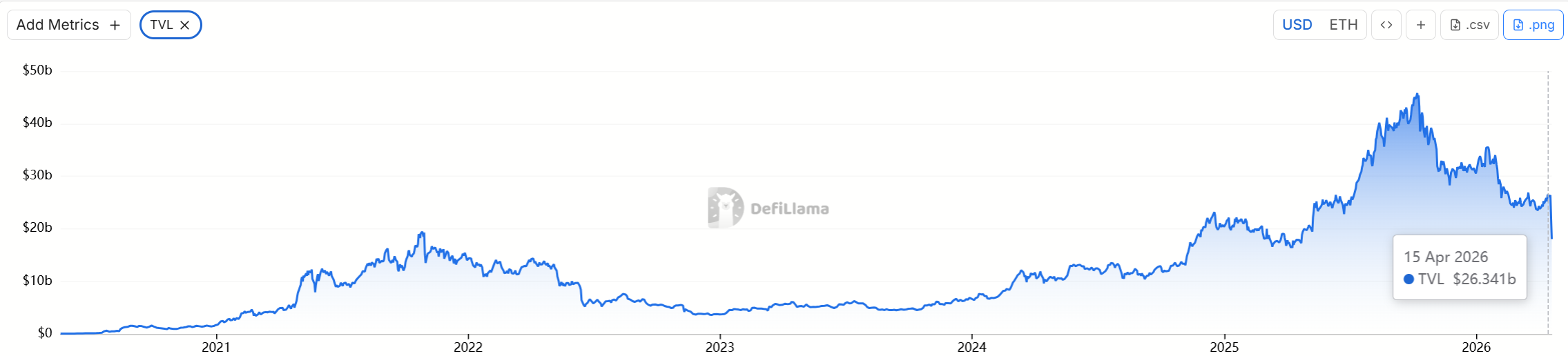
On April 20, according to the latest data from DefiLlama, Aave's TVL plummeted from 26.3 billion dollars to 18 billion dollars, evaporating 8.3 billion dollars in two days, a drop of over 31%.
In response to this risk, Aave took the lead in establishing the DeFi United cross-protocol rescue alliance, with multiple institutions contributing support, and the current rescue intention funding has reached 100 million dollars. The incident has led to multiple paths of loss resolution, with significant disparities in the scale of bad debt, and the subsequent direction still depends on KelpDAO's final plan. Recommended Article:
The rescue fund has gathered around Aave, but the key switch to whether the plan can be executed lies in KelpDAO’s hands. On the afternoon of April 23, KelpDAO issued a statement reiterating the core principle of prioritizing users, stating that the team and partners have made substantial progress on multiple paths over the past four days, and publicly thanked the Arbitrum Security Council for its on-chain freezing and SEAL 911's early intervention investigation. KelpDAO did not disclose specific plans, timelines, or loss-sharing details, only promising to continue sharing specific updates through official channels.
The current DeFi United rescue plan revolves around Aave, with each protocol's intended commitment structure implying a baseline scenario is Path One. Once KelpDAO moves towards other paths, the narrative of Mantle's 30,000 ETH loan, the sharing ratio of EtherFi and Lido, and even the entire rescue framework will need to be recalculated.
03 Cryptocurrency News
The cryptocurrency prediction market Polymarket was exposed for absurd manipulation. Criminals used just a hairdryer to artificially heat a weather sensor in Paris's outdoor airport, altering temperature data, and profiting 34,000 dollars from two precise bets. Smart contracts had multiple audits but overlooked vulnerabilities in physical data sources, exposing lethal shortcomings in off-chain reality data verification, and reflecting deep security risks in decentralized prediction markets. Recommended Article:
"Controversy Entangled, Polymarket Loses to a Hair Dryer This Time"
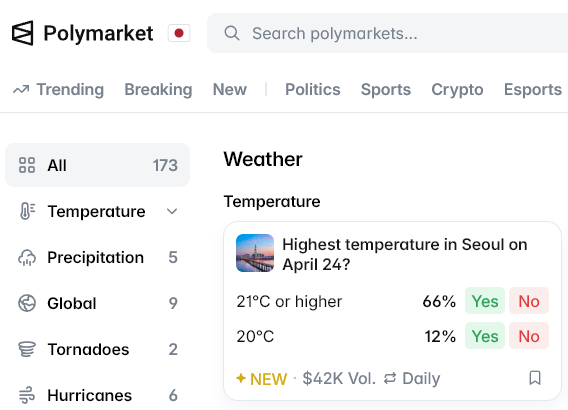
Polymarket currently has 173 active weather markets, and the settlement of these markets is based mostly on a physical sensor from a particular location.
A sensor, when used as a weather tool, derives its credibility from no one having the motive to tamper with it. Polymarket provided it with a new motivation structure but did not offer any new physical protections.
Météo-France's thermometer diligently records the temperature it senses. It just does not know it has become a financial settlement terminal.
Two 19-year-old dropouts started from scratch, entering the sneaker trading sector, and underwent a transformation during the industry crisis. Their fintech company Slash completed funding of 100 million dollars, achieving a valuation of 1.4 billion dollars and entering the ranks of unicorns. It integrates traditional corporate finance with stablecoin settlement, hiding the technical barriers to blockchain, and creating an integrated enterprise financial operating system, opening up a new track in fintech. Recommended Article:
"19-Year-Old Dropout Starts a Business, Creates a Unicorn Slash"
According to Slash's official announcement on April 16, 2026, the amount of this round of financing is 100 million dollars, with a valuation of 1.4 billion dollars, co-led by Ribbit Capital, Khosla Ventures, and Goodwater Capital, with veteran venture capital institutions NEA (New Enterprise Associates) and Y Combinator continuing to invest, bringing the total financing amount to over 160 million dollars.
It is worth noting that NEA and Y Combinator are investing in Slash for the fourth time. In May 2025, Slash completed a round B financing of 41 million dollars with a valuation of 370 million dollars, led by Goodwater Capital, NEA, and Menlo Ventures.
Two years prior, in 2023, Slash raised 19 million dollars in seed and round A financing, both led by NEA partner Rick Yang, with Y Combinator, Menlo Ventures, and Connect Ventures participating.
TechCrunch cited Slash's statement that the current annualized revenue has reached 300 million dollars and is profitable, with over 5,000 customers. 300 million dollars, this number certainly carries the narrative of "annualized metrics" growth, but it at least indicates one thing: Slash is no longer a single-function product but is vying to be the main entry point for corporate cash flow.
From a storytelling perspective, the young founders, rapid growth, and unicorn valuation are all attention-grabbing elements. But what investors are truly betting on is Slash's ability to transform corporate finance into an "integrated platform."
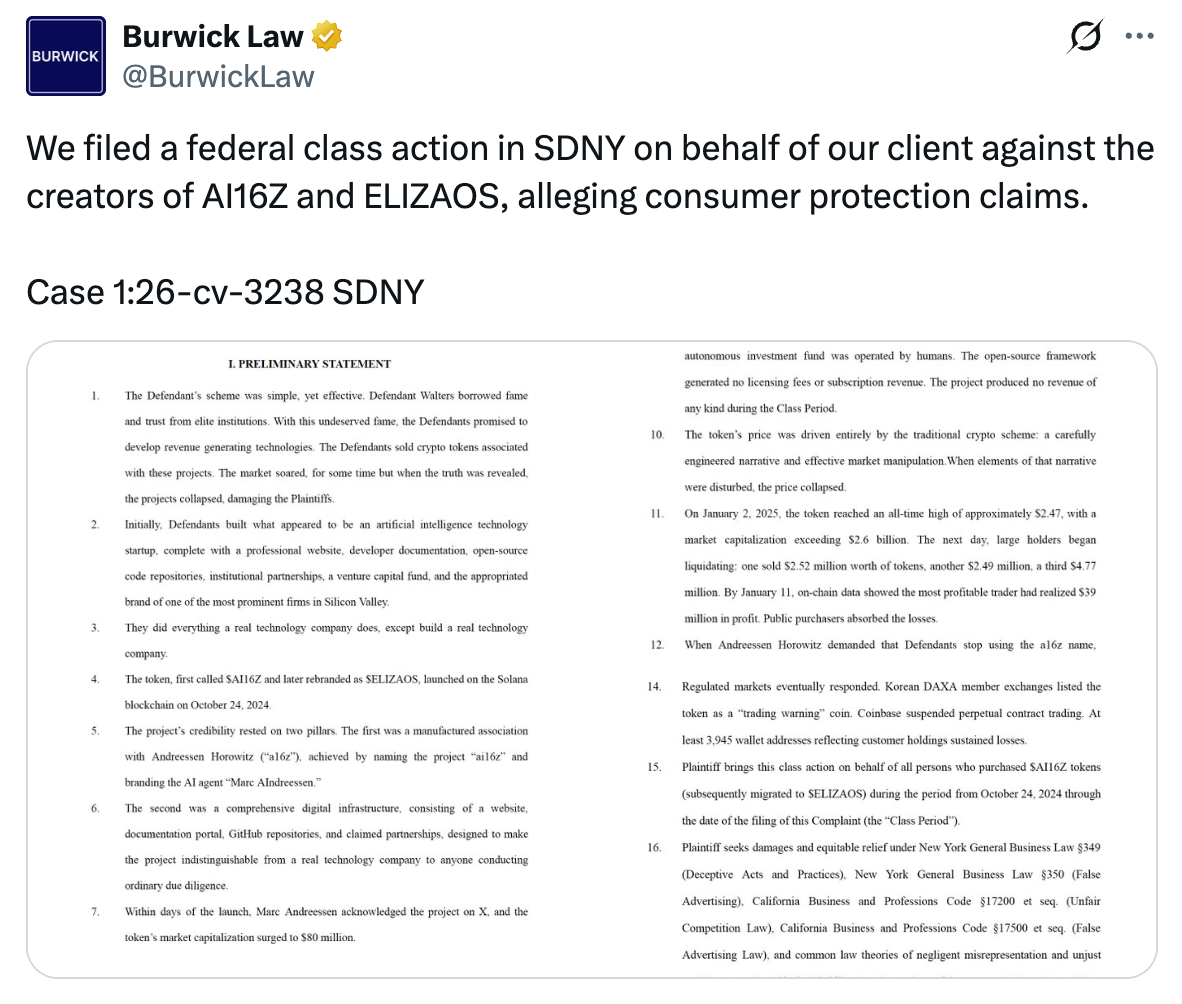
Recently, the Web3 law firm Burwick Law initiated a class-action lawsuit against ElizaOS (formerly ai16z). The project used the hype of a well-known institution to package itself as a tech AI project, heavily promoting to inflate token market value, yet it suffers from false advertising, technical flaws, and chaotic token issuance issues. Major players liquidated their positions, and ordinary investors suffered heavy losses, with a former 10 billion dollar valuation collapsing, reflecting the chaos and risks in the Web3+AI track. Recommended Article:
"A Law Firm Advocating for the Cryptocurrency Community Has Made ElizaOS Its New Target"
The class-action lawsuit details five major charges against ElizaOS: fraud, false advertising, unfair competition, false statements, and unjust enrichment.
Transforming from a meme to a decentralized AI project is not impossible. Despite controversies, Web3+AI projects, including Virtuals and Bittensor, have indeed made some achievements. ElizaOS's issue seems to stem from their inability to reach that threshold.
When changing the name from ai16z to ElizaOS, the total token supply increased from approximately 6.6 billion to about 11 billion. This increase, which had already dissatisfied early investors, even led to strange "unauthorized transactions" during the token migration process. Many users reported that after transferring the AI16Z token to the new wallet, unauthorized outgoing transactions occurred, and it was notably consistent that only half of the tokens were transferred out.
The team blamed this on hacker behavior, and they responded to users’ pleas for help with indifference or even blocking, leading to discontent from many users.
If this is still somewhat ambiguous, then the vulnerabilities in the AI framework directly led to a "death sentence."
Apple officially announced that Cook will step down as CEO, with hardware executive Ternus set to take over. The cryptocurrency community immediately discussed whether he would loosen Web3 and cryptocurrency policies. Rumors about the new CEO being a Bitcoin supporter are false; Apple has long been indifferent towards Web3, rooted in business model and ecological interest constraints. Personnel changes are unlikely to alter the underlying strategy of the company, and Apple will not embrace the cryptocurrency track in the short term. Recommended Article:
"Apple Changes CEO, Let's Not Expect Web3 Too Soon"
Three types of narratives about "Apple opening up to Web3" will likely emerge in the market, and it's worth pouring cold water on them in advance.
The first type, "Ternus led Vision Pro, so he will support the metaverse/NFTs." This is the most common associative fallacy. Vision Pro's positioning within Apple is "spatial computing"—Apple deliberately avoids the term "metaverse" because it doesn't want to be tied to the narratives of Meta and Decentraland. Ternus promoting Vision Pro hardware does not mean he will greenlight crypto applications on visionOS.
The second type, "The EU DMA legislation has pressured Apple to open the iPhone ecosystem, allowing Web3 applications to bypass the App Store for direct listing." Apple's real response strategy is "surface compliance, charge fees in another way"; in 2024, it launched a new rule called "Core Technology Fee" (Core Technology Fee): as long as your app doesn't distribute through the App Store, it has to pay Apple 0.5 euros for each download by a new EU user. Web3 applications hoping to avoid the 30% cut through this route will end up with a new fee bill that might not be cheaper.
The third type, "Apple Pay may integrate stablecoins like USDC/PYUSD to support on-chain settlement." This narrative circulated in 2025 but led to no progress. The reason is that Apple Pay processes over 15 trillion dollars in transactions per year, and its binding with Visa and Mastercard allows Apple Services to take a 0.15% cut of each revenue. Allowing stablecoins to bypass this settlement network would cut off a cash flow for Apple, and there is no business motivation for Apple to do this.
With top-notch zero-knowledge proof technology and backing from leading capital, Aztec was once hailed as a king-level project in the cryptocurrency privacy space. Now, the project is gradually cashing out public ETH; although it has launched the Alpha network and implemented privacy contract capabilities, its ecosystem is small, compounded by security loopholes, performance shortcomings, and doubts about genuine demand. As the halo fades, the developmental predicament and future direction of privacy benchmark Aztec warrant in-depth examination. Recommended Article:
"Is Aztec Cashing Out Public ETH? Where Does the Privacy King Stand Now?"
Aztec has defined its current phase quite conservatively: it is more suitable for early ecological testing and small-value transactions rather than being seen as a stable production network. The goals set by the official include about 1 TPS, about 6 seconds per block, and it clearly states that there is no default state migration between different Alpha versions, indicating that the network is still in a rapid iteration phase, constantly fixing and reconstructing.
According to the official settings, only when it reaches the Beta phase will the network raise its targets further to over 10 TPS and shorter block times. In other words, Aztec has indeed crossed a hurdle from a research project to an operational network, but it still has a considerable distance to go to establish a sufficiently stable, safe, and continuous privacy infrastructure.
免责声明:本文章仅代表作者个人观点,不代表本平台的立场和观点。本文章仅供信息分享,不构成对任何人的任何投资建议。用户与作者之间的任何争议,与本平台无关。如网页中刊载的文章或图片涉及侵权,请提供相关的权利证明和身份证明发送邮件到support@aicoin.com,本平台相关工作人员将会进行核查。


