Author: vangoya, NFT Analyst
Translated by: Felix, PANews
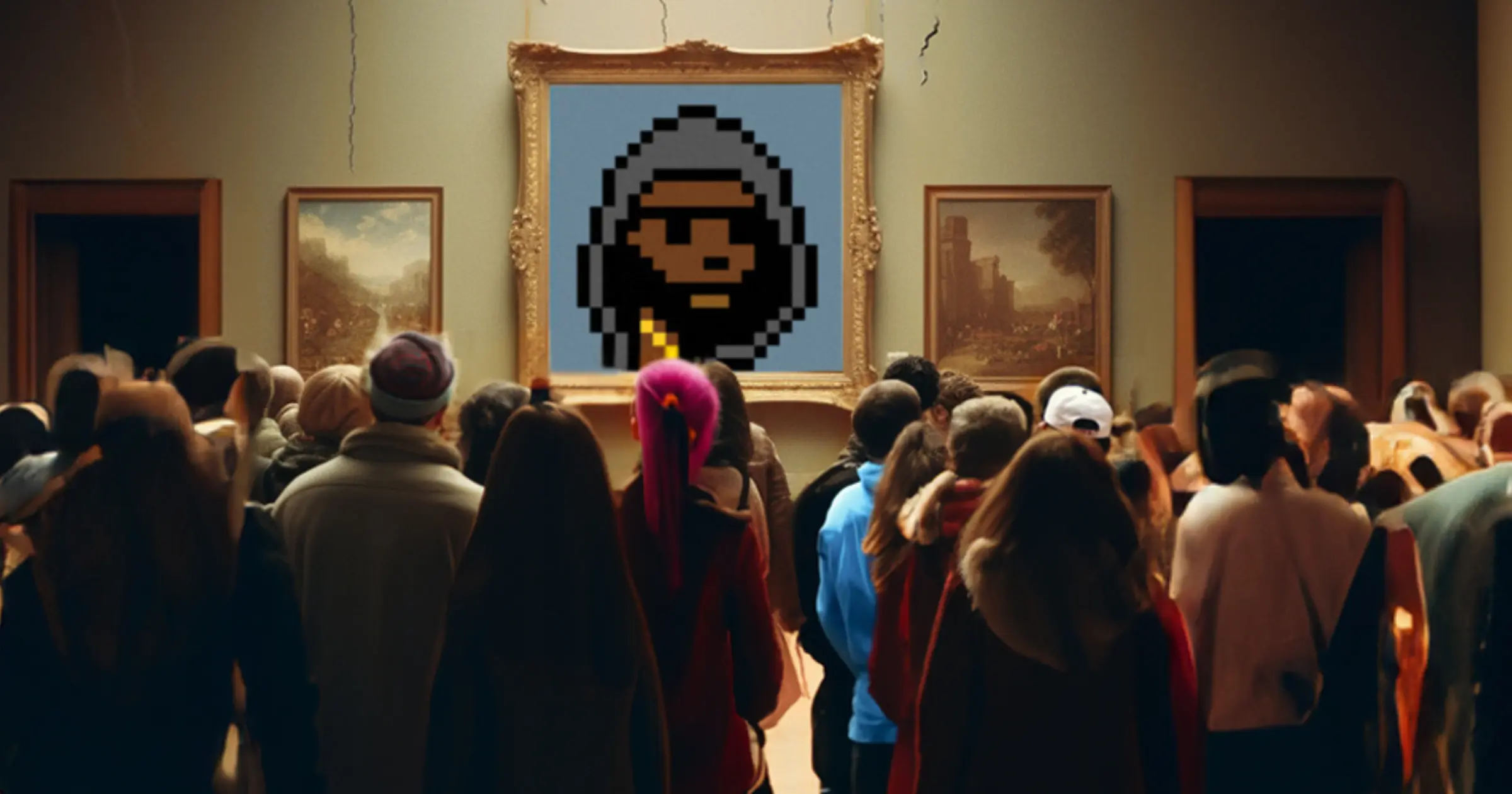
Most people in the crypto space believe that NFTs are outdated.
In the art world, most people see NFTs as a scam that briefly fooled some Hollywood celebrities and crypto founders in Singapore before fading away.
There is also a third group, which has been the loudest for the past four years, repeating the same three statements:
- “It’s just a JPEG image.”
- “I can right-click and save your million-dollar monkey.”
- “NFTs are a scam, just random animal pictures being marked up.”
If you have been online since 2021, you have definitely heard these three statements, and you may have even said them yourself.
But all these claims are wrong, and the data clearly shows this; I really don’t understand why no one is openly pointing this out.
In 2025, the traditional art market had a transaction volume of $59.6 billion, up 4% from the previous year, but still below the 2022 peak of $67.8 billion.
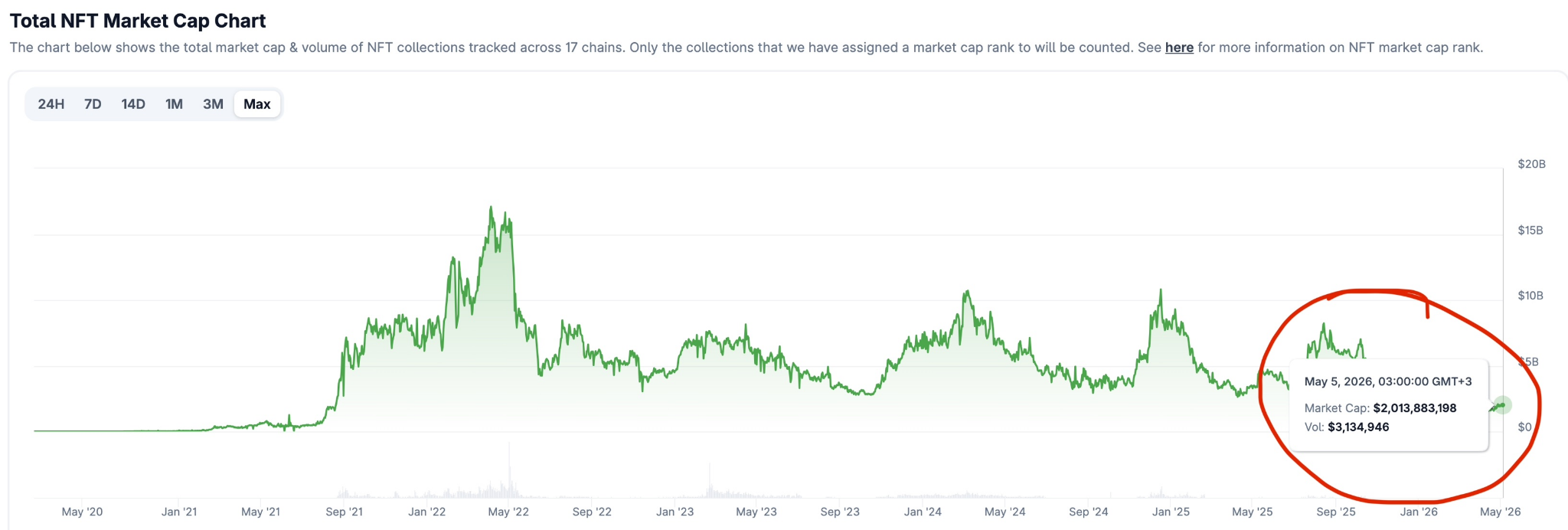
Currently, the NFT market is about $2 billion, having dropped approximately 90% from its peak. On the surface, you would say: “Right, NFTs lost.”
But you can't just look at the surface. Because the entire art world, including museums, top galleries, auction houses, and the most established collectors, has quietly built an infrastructure for what they call “dead” over the past four years.
This isn’t a short essay telling you that your favorite PFP (profile picture NFTs) floor price is about to rise 50 times. This article will delve into:
- What the gatekeepers of the art world have done while everyone else was focused on price trends.
- Why every major art movement in the past has been mocked for decades before being recognized.
- Why the bearish view on NFTs is fundamentally flawed.
1. What you consider an indestructible market is actually shrinking
The traditional art market's size is $59.6 billion. This number was published in a 2026 report by Art Basel and UBS. The report was written by Dr. Clare McAndrew, one of the most respected analysts in the field over the past decade.
By NFT standards, this number is enormous. But there are some truths about this number that no one tells you:
- Stagnant growth: It has declined from the $67.8 billion peak in 2022, after two consecutive years of decline before experiencing a slight rebound.
- Middle market contraction: The market for works under $50,000 has been contracting for over a decade.
- Value highly concentrated: Works priced over $1 million account for less than 1% of total auction lots but represent 54% of total value.
- Wealth transfer: The report also points to an impending significant turning point: “massive wealth transfer.” Over the next 20 years, more than $80 trillion in assets will be passed from the Baby Boomer generation to their descendants.
Read that again: “1% of auction lots contribute 54% of value.” The traditional art market is not a true $60 billion big market. It is a $30 billion market aimed at the mass, plus an additional $30 billion “super casino” at the top where billionaires trade Basquiat and Picasso works as efficient tax evasion methods.
And this top market faces a problem: buyers are aging, dealers are aging, and the infrastructure is aging too. The youth who are about to inherit $80 trillion did not grow up looking at Sotheby’s auction catalogs.
They grew up in the internet era.
So, before discussing NFTs, let’s clarify one point: the so-called competitors to NFTs are not a thriving, expanding market. It is an aging market with severe centralization issues facing an intergenerational transfer, and the inheritors do not want those old things. And this is what people refer to as “safe assets.”
In the high-end market, seasoned collectors are increasingly focused on estate planning, liquidity, and inheritance rather than discovering new art mediums.
Now let’s look at how those who govern art are actually using their money.
2. While you weren’t paying attention, the gatekeepers have acted
The art world has a very special mechanism for legitimizing a new art medium. The process is as follows:
- A few artists create a new form of work.
- Critics ridicule, and collectors ignore.
- A few brave curators include these works in institutional collections.
- Other museums see the acquisition actions and follow suit.
- Auction houses notice the institutional shift and begin to auction such works.
- Top galleries sign these artists.
- Prices continue to rise over the following generations.
This is a common trick used for photography, video art, installation art. It has been effective for every medium that the art world initially deemed “not real art.”
And this trick is also currently playing out in the fields of digital art and on-chain art. Most people don’t realize that the early stage has quietly been completed.
Here are some pieces that have been permanently collected by major museums:
- The Museum of Modern Art (MoMA) in New York: In 2023, it acquired Refik Anadol’s “Unsupervised.” This piece hung in the museum lobby for nearly a year, attracting 3 million viewers. The collection also includes a corresponding NFT and a blockchain souvenir that visitors can mint. That same year, MoMA also collected Ian Cheng's “3FACE.” This is a generative NFT that can read the contents of the owner’s wallet and change as the wallet’s contents change. This conceptual artwork could not exist without the blockchain.
- Centre Pompidou (Paris): In 2023, it collected 18 NFT works from 13 artists. The collection includes works from CryptoPunk, Autoglyph, and Sarah Meyohas. Curator Marcella Lista described it as a natural continuation of works by collection masters like Bruce Nauman.
- Los Angeles County Museum of Art (LACMA): It possesses one of the world's most authoritative collections of on-chain art. In February 2023, collector Cozomo de’ Medici donated 22 pieces of generative art and blockchain works, including CryptoPunk, Dmitri Cherniak’s Ringer, and Tyler Hobbs’ works. This is the largest blockchain art donation ever received by an American museum. Additionally, the founder of Art Blocks and Erick Calderon directly donated the final version of Chromie Squiggle to the museum, a piece that is considered a cornerstone of the entire on-chain generative art movement. LACMA also established the first fund in an American museum dedicated to the digital art collection of women artists.
- Institute of Contemporary Art (ICA Miami): It was one of the earliest institutions to accept a donation of CryptoPunk #5293. In 2022, Yuga Labs donated a second Punk and launched the “Punks Legacy Project,” aimed at pushing CryptoPunks into major museums around the world.
- The Whitney Museum: For years, it has been quietly collecting digital and internet art, with two works by Rafaël Rozendaal in its permanent collection. Since 2001, they have been operating a digital exhibition platform called Artport.
- Buffalo AKG Art Museum: It held the “Peer to Peer” exhibition at the end of 2022, the first blockchain art exhibition at an American museum. A historical point raised by the curator is noteworthy: in 1910, the same museum hosted the first photography exhibition in an American museum. In 1910, people still did not consider photography to be art, even though it had been a quarter of a century since its invention.
- The Guggenheim Museum: In 2024, it will feature Jenny Holzer’s “Light Line,” a 900-foot-long rolling LED installation that combines AI-generated text.
The Centre Pompidou, The Museum of Modern Art (MoMA), Los Angeles County Museum of Art (LACMA), Institute of Contemporary Art (ICA Miami), The Whitney Museum, Buffalo AKG Art Museum, and The Guggenheim Museum collectively form the institutional backbone of contemporary art in the U.S. and Europe, all of which have formally committed to support digital art and blockchain art over the past four years.
Those who are not paying attention will tell you that institutions do not care. But in fact, these institutions have already publicly entered the space. The market ignores it only because the floor prices have dropped.
3. Every art movement you are now taking seriously was initially a joke
This is a part that crypto enthusiasts often overlook, but it is generally understood in the art world.
In 1863, the French official exhibition “Paris Salon” rejected more than 2,000 paintings. Due to the excessive rejections and widespread complaints, Napoleon III ordered the establishment of the “Salon des Refusés.” People flocked to see it, but to laugh. Manet’s “Luncheon on the Grass” was the focus, criticized by critics as vulgar.
Today, this painting is considered one of the foundational works of modern art and is housed in the Orsay Museum. If this painting were to be sold today, it would be valued at an immeasurable number.
In 1874, a group of artists rejected by the official salon held their own exhibition. A critic derisively referred to Monet’s painting “Impression, Sunrise” and used the term “Impressionist” as an insult.
This name caught on. Later, it became one of the most important movements in history.
It wasn't until 1987, more than a century after the Salon des Refusés was held, that a painting by Van Gogh broke the auction record for modern art pieces, surpassing prices that had long been dominated by classical masters. “Sunflowers” was sold at Christie’s for nearly $40 million.
Van Gogh sold only one painting during his lifetime. Today, his works can fetch over $100 million at auction.
This kind of delay is a necessary path for every art revolution, without exception.
This does not mean that recognition of art always takes a century. It means that ridicule often precedes recognition, acceptance from institutions follows, and market repricing comes last.
Take pop art as an example. In July 1962, Andy Warhol’s “Campbell's Soup Cans” had its exhibition premiere at the Ferus Gallery in Los Angeles. A neighboring gallery put real cans of Campbell’s soup in its window to publicly ridicule, posting a sign saying “Genuine, 29 cents.” Of the 32 paintings, only 5 sold. Gallery owner Irving Blum ended up buying the whole set back for $1,000.
Today, those 32 soup can paintings have become one of the most treasured collections of The Museum of Modern Art (MoMA) in New York. One of the paintings from this series was privately sold for over $9 million.
That grocery store has long been forgotten.
Take conceptual art as an example. In 1967, Sol LeWitt published “Paragraphs on Conceptual Art” in the magazine “Artforum.” The opening sentence states, “Ideas become a machine that makes art.” At that time, the art world largely viewed this as marginal philosophy. Early conceptual artists deliberately created contracts, instructions, and certificates for works that could not be collected, partly to critique the gallery system. They tried to escape the market.
Sol LeWitt’s auction record now exceeds $1.6 million. His wall drawings have been collected by major museums around the world.
Conceptually, a wall drawing is like a smart contract. Someone writes the rules, and someone executes them. “Art” exists within the contract.
He invented the framework for how on-chain generative art operates, fifty years before there was a blockchain to run this framework.
Now let’s look at how long it takes for these artworks to emerge. This part should be quite enlightening:
- Impressionism: From 1863 when it was ridiculed to 1987 when it first broke the modern auction record, lasting 124 years.
- Pop Art: From 1962 when it was mocked in the grocery store to being permanently collected by the Museum of Modern Art (MoMA) in the late 1960s, lasting about fifty years, eventually selling for millions of dollars.
- Conceptual Art: From the declaration in 1967 to auction prices breaking the million-dollar mark, lasting about 35 years.
- NFT Art: Quantum, which most people consider the first NFT, was minted in 2014. CryptoPunks launched in 2017. Christie’s held its first major NFT art auction in 2021. Lasting seven years.
Seven years.
Impressionist painters had already held eight exhibitions before the public even knew how to call them. The first generation of NFT artists is still creating. Most of them are still alive. Most of them are still in the middle of their careers. The strategies used to price Manet, Van Gogh, Warhol, and LeWitt are now quietly being enacted on them.
Impressionism took decades to go from ridicule to a multi-billion-dollar valuation. Conceptual art faced similar resistance.
Its pattern is: A new medium appears, mainstream society dismisses it, then many creators and collectors begin to accept it, followed by institutions, and eventually, the money flows in.
The pace of NFT development has been faster than any art movement in history.
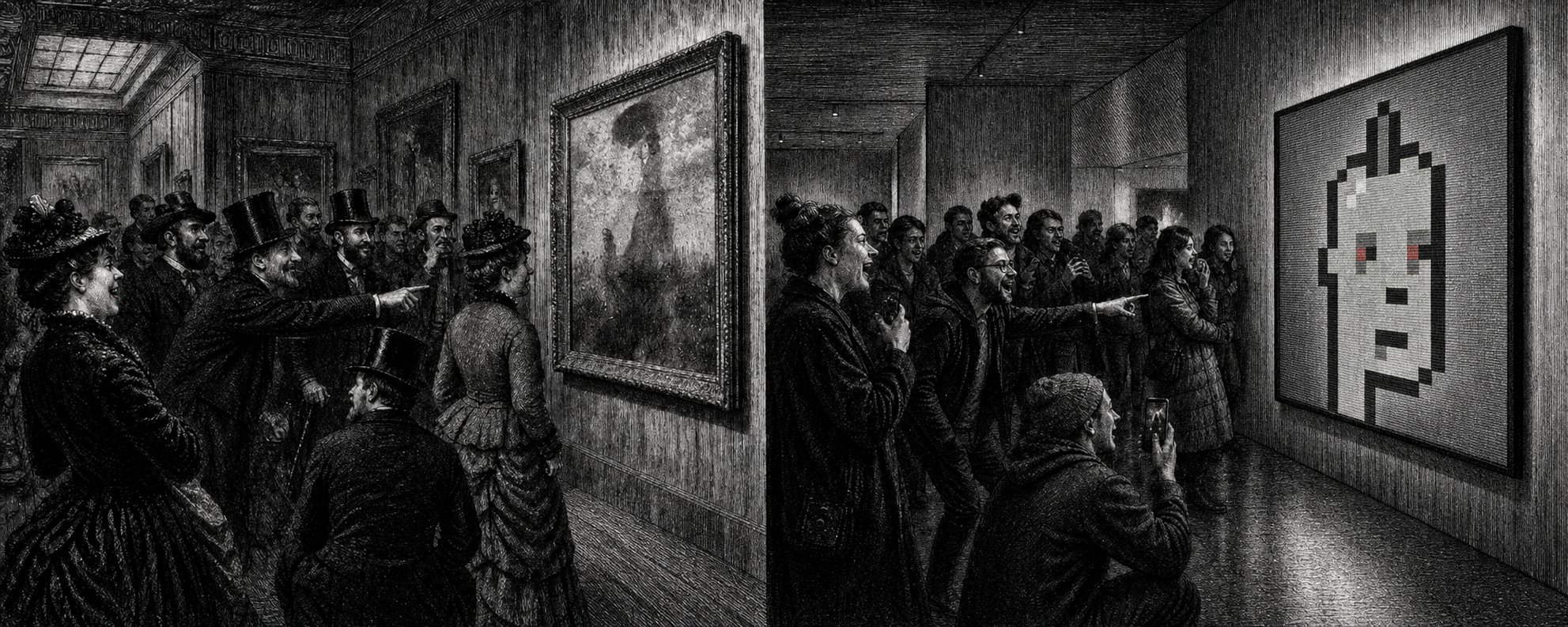
“Ideas become a machine that makes art.” — Sol LeWitt, 1967
He was talking about wall drawings at the time. But his description can also be fully applied to smart contracts.
4. Top galleries have already voted with their feet
If you want to know which artists will be recorded in history 20 years from now, don’t look at auction prices; look at which galleries have signed them. Pace, Gagosian, Hauser & Wirth control who gets into museums and who gets into textbooks. They are the most conservative participants in the art world, only signing an artist if they believe that artist will still be important in 50 years.
Pace Gallery: Founded in 1960, it represents the legacies of artists like Rothko and Sol LeWitt. Sol LeWitt is the artist most closely associated with the concept of NFT art. In November 2021, Pace launched an exclusive NFT and Web3 platform called Pace Verso. Since then, they have partnered with numerous well-known artists to launch a series of NFT projects:
- Jeff Koons (whose sculptures were sent to the moon)
- Maya Lin
- Trevor Paglen
- teamLab
- DRIFT
- Tara Donovan
- Lucas Samaras
- John Gerrard
- Loie Hollowell
- Leo Villareal
- Random International
Take a close look at this list. These artists are not fresh faces in cryptocurrency. They are established figures in contemporary art who have debuted NFTs through one of the top three galleries.
Then, in March 2023, Pace did something even more significant. They held a solo exhibition for Tyler Hobbs (a generative artist who has grown up in the on-chain art space) at their flagship gallery in New York. Twelve large-scale works derived from his QQL algorithm were exhibited alongside works by Rothko and Calder in the same gallery.
The QQL Mint Pass was sold for $17 million the previous September. A month later, its secondary market price surged to $28 million during the crypto winter.
Pace Gallery holding a solo exhibition for a generative NFT artist is not a publicity stunt; it’s a vote.
This is not an isolated case:
- Lehmann Maupin Gallery became the first commercial gallery to accept cryptocurrency payments.
- Hauser & Wirth Gallery exhibited works related to NFTs by Jenny Holzer.
- Gagosian Gallery accepts cryptocurrency payments.
- Sotheby’s launched an exclusive metaverse marketplace in 2021, and since its launch, NFT sales have surpassed $100 million, continuing to pay royalties to artists while most markets abandon on-chain royalty payments.
- Christie's launched Christie's 3.0 in October 2022, the first fully blockchain-based auction platform launched by a traditional auction house.
Auction houses and top galleries don’t have to do this. Even without cryptocurrency, their business is quite substantial. They do this because wise people in the most conservative corners of the art world have analyzed the data and concluded: the collection trend for the next 25 years will occur here.
5. Solid data
Mike Winkelmann created a digital painting every day for thirteen years and published them online, but hardly anyone noticed. He had a small fanbase, no gallery representation, no museum attention, and held no ground in the traditional art world.
However, in March 2021, Christie’s auctioned off a file composed of all 5,000 of his works, which ultimately sold for $69.3 million. His online identity is Beeple.
Now, let’s compile all the data.
- Beeple, “Everydays: The First 5000 Days”: Sold for $69.3 million at Christie’s in March 2021. This was the first purely digital NFT artwork launched by a major auction house. Beeple thereby became the third highest-selling living artist in global auction history.
- Pak, “The Merge”: Sold for $91.8 million in 2021, arguably the highest price for a living artist at public auction, although this is disputed since the work was sold in multiple units.
- Beeple, “HUMAN ONE”: Sold for $29 million at Christie’s in November 2021. This is a hybrid sculpture incorporating both physical and digital elements, and includes a dynamic NFT component.
- Dmitri Cherniak, “Ringers #879”: Sold for $6.2 million at Sotheby’s in June 2023 during the bear market. This is the second-highest price achieved in generative art auction history. The total sales from that day’s Sotheby’s GRAILS auction were about $11 million, setting eight new records for artists. This was not a hype from 2021, but a testament to people’s steadfast belief during the crypto winter of 2023.
- Tyler Hobbs, “Fidenza #725”: Sold for over $1 million at Sotheby's Contemporary Art Evening Auction in May 2023, five times its highest estimate.
- XCOPY, “Right-click and Save As Guy”: Sold for about $7 million at a SuperRare auction at the end of 2021. Several of his works have fetched millions of dollars.
- Refik Anadol, besides being collected by the Museum of Modern Art in New York, he also became the first artist to project on the exterior of the Sphere in Las Vegas in September 2023, residing there for four months. Prior to this, his works were shown in venues like Walt Disney Concert Hall, the Bartolomeo house, and the Venice Architecture Biennale. He became Google’s first resident artist in 2016.
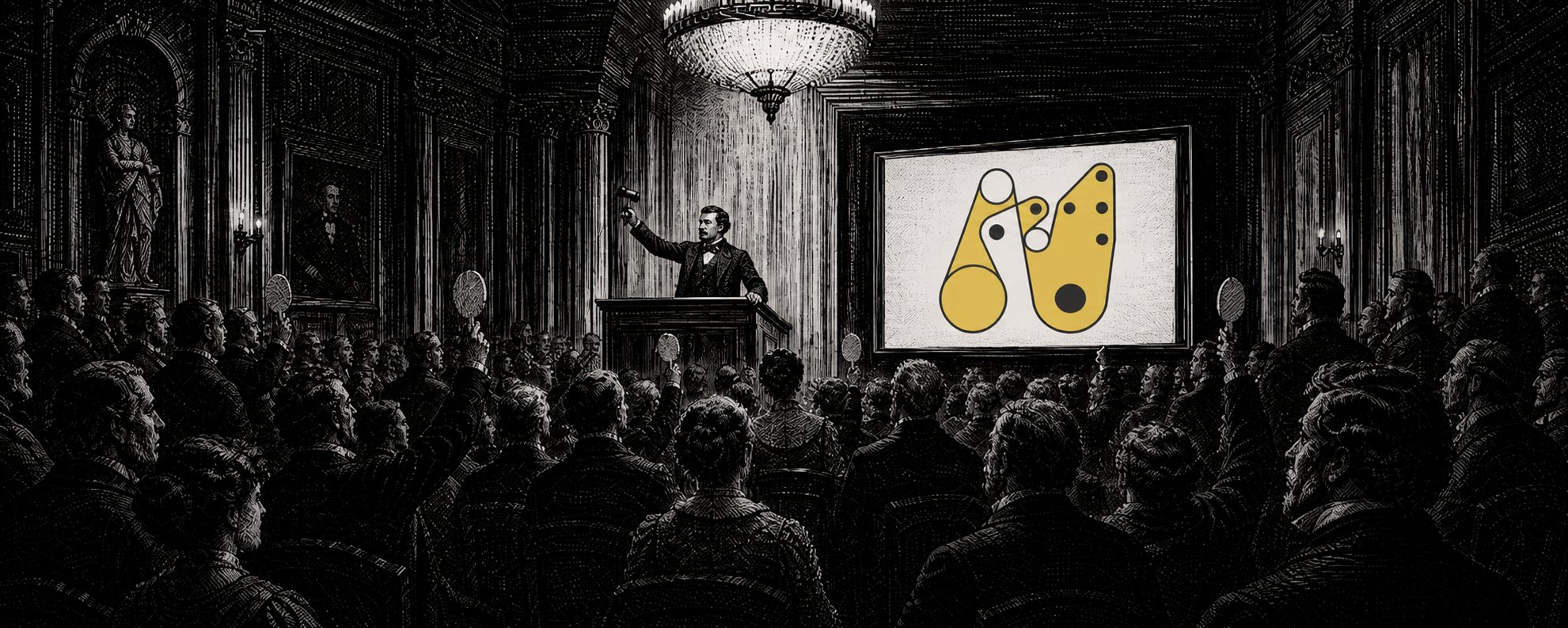
These are not isolated cases; they are part of a whole.
Currently, there are a significant number of digital artists active in the art world whose auction prices reach seven or even eight figures, whose works are collected by museums across three continents, and who hold a seat in the top galleries of contemporary art.
Five years ago, such a group did not exist.
The hype has passed, but the infrastructure remains solid. And those who built the infrastructure won't wait for you to realize this.
6. The new generation of “Medici” has begun to collect
If you want to understand the future market direction of a certain asset class, look for those who are continuously accumulating assets during bear markets.
There is a collector who calls himself “Cozomo de' Medici.” The widespread use of this name is not accidental.
The original Medici family funded Botticelli, Michelangelo, and Donatello when these artists were still unknown, and painting as an art form was just emerging. If calculated chronologically, the returns on these investments are almost limitless.
When others did not understand, the Medici family realized that the medium was changing, and those who recognized this first would shape the classics.
In February 2023, Cozomo de' Medici donated 22 generative art pieces to the Los Angeles County Museum of Art (LACMA). The name “Medici” represents everything. They bet that internet art will be remembered by future generations like the Florence Renaissance.
They are not fighting alone:
- Punk6529: This anonymous collector purchased “The Goose” for $6.2 million. He operates a museum district in the metaverse, showcasing over two thousand pieces. At its peak, the value of his personal collection exceeded $20 million. For years, he has openly pointed out that NFTs are not trading; they are a new system of owning digital culture.
- Flamingo DAO: A group of about one hundred members that started fundraising in October 2020. They own the only complete CryptoPunks attribute set in existence, as well as a complete set of Autoglyphs. They own an Alien Punk, which was purchased for about $750,000 in 2021 and is now valued at about $13 million. Their portfolio has seen a peak valuation of $1 billion.
- PleasrDAO: They acquired the only existing Wu-Tang Clan album from the U.S. federal government, having previously been seized from Martin Shkreli. They also purchased Edward Snowden's Stay Free NFT for over $5 million. Additionally, they acquired the original Doge meme NFT and sold it in portions. PleasrDAO is backed by a16z.
These people are not retail speculators, nor are they ordinary buyers. They are collectors and groups with sufficient capital, conviction, and cultural literacy to continue investing after the NFT craze fades, viewing NFT collections as a viable investment project.
Coupled with those anonymous institutional collectors, family offices quietly buying up, and the fact that Christie’s on-chain bidding is now enough to support its exclusive platform, you will find that the reality does not align with the public assertions that “NFTs are dead.”
NFTs are being accumulated. It’s just that their holders are not posting their portfolios on X every day.
The Medici example embodies the essence of the entire transaction:
Before future institutions realize they need to collect a certain medium, they find the medium they want to collect and buy foundational works at relatively low prices when their value is far below what it will be in the future.
This is exactly what the original Medici family did.
7. Redefining
If you have read this far, you should understand what I am about to say.
The traditional art market is shrinking, centralizing, and aging. Its main buyers are elderly. Its infrastructure was built for a generation that did not grow up in the internet era. The next generation, those who did grow up in the internet era, are about to inherit $80 trillion in wealth.
Some of the most important contemporary art institutions in the U.S. and Europe have officially committed to investing in digital art and on-chain art.
For the past 150 years, every significant art movement has been ridiculed for decades before being taken seriously. But NFTs have only 7 to 12 years of history.
Top galleries have made choices. Pace Gallery held a solo exhibition for Tyler Hobbs. Sotheby’s operates a dedicated digital art platform. Christie’s runs a fully web-based auction platform.
Auction prices are already set. Beeple's achieved a price of $69 million. Pak is valued at $91.8 million. Cherniak is valued at $6.2 million in a bear market. Anadol’s presence appears on the sphere in Las Vegas.
Collectors are amassing in large numbers, including Flamingo, PleasrDAO, 6529, Cozomo, and those lesser-known family offices.
Here lies the misconception most people hold about NFTs.
They believe NFTs are a trading category. Not at all. It is a system of ownership. Before NFTs emerged, digital culture had limitless channels for dissemination, but ownership was zero. Everything was in circulation, and nothing could be truly owned. All value flowed to the platforms, not to the creators or collectors of the works.
NFTs revolutionized this. Culture can now spread endlessly while also being owned in limited quantities.
That is the crux. The price of art has always depended on three factors: provenance, story, and cultural relevance, and on-chain ownership does not replace any of these factors. It enhances all three.
On-chain scarce artworks with social consensus are new scarce resources, and those who are collecting these artworks are doing what every authoritative collector in every significant art medium did at the inception of that medium.
And the real reason why the entire argument stands firm is this:
On-chain artworks are the first major category of art whose ownership history can be programmed, publicly recorded, and timestamped from the beginning.
It does not solve all problems: copyright, storage, authorship, and cultural value remain crucial. But it addresses the provenance issue more effectively than the traditional art market.
The traditional art market loses billions of dollars annually due to fakes, lost provenance, and ownership disputes. America’s oldest gallery, Knoedler Gallery (which has been around for 165 years) sold fakes worth $80 million, including supposed works by Rothko and Pollock, before it closed in 2011. Even Christie’s sold “Salvator Mundi” for $450 million, but it was officially designated as a “Da Vinci work,” although this is still disputed.
On-chain art does not have this issue. The provenance of the work itself is the medium. Each preceding owner can be verified. Each transaction is time-stamped. Each smart contract is auditable.
For the first time in history, a piece of art and its complete ownership history are immutable mathematical objects.
You can right-click to save a JPEG image, but you cannot right-click to save the provenance information of the work. That is the key.
This is the ultimate realization of Sol LeWitt's 1967 notion of “dematerialization.”
Ideas become a machine. The machine creates art. The blockchain records everything.
If you truly analyze museum collections, auction records, gallery representations, collector demographics, historical timelines, legacy inheritance situations, structural issues in the traditional market, and the advantages of the on-chain provenance system, you will find that the market value of NFT artworks cannot remain at $2 billion forever.
$2 billion is the current market value of an asset class:
- The world’s most prestigious museums are collecting its foundational works;
- The world’s most conservative galleries are signing its artists;
- The world’s most professional collectors are quietly accumulating;
- The clearest provenance system in history;
- Trillions of dollars in inheritance are about to land in the hands of buyers who grew up alongside screens, and this intergenerational transfer will bring huge returns.
The stakes are not about price, but about the medium itself.
And this medium has won the only critical debate: the institutions that decide what counts as “art” have made their decisions.
The truly valuable parts of NFT art have survived the speculative crash, and its institutionalization is progressing faster than most controversial art movements in history.
Pessimists argue that the demise of NFTs is due to the collapse of the speculative market. But institutional records show: speculation has died, but the medium itself has survived.
This does not mean that all PFPs will return; most will not; nor does it mean that all collections from 2021 are vital. It means that the foundational works of on-chain art are being organized, collected, interpreted, and established as classics in real-time.
The key is not that “NFTs are back.”
The key is that digital art is entering art history, while most people continue to treat it as a relic of a past craze.
In 1965, you could buy a Warhol piece for the price of a used car. Now, that same piece sells for nine figures. The prices of foundational digital art today are consistent with the prices of Warhol's works in 1965. This is not an unfounded claim; it is data you can verify.
The salons mocked Manet. The grocery store mocked Warhol. Now those mocking Beeple, Anadol, Hobbs, and Cherniak sound very similar to those who mocked every new medium before it became art.
History will always prove who will look foolish in this game. The only question now is whether you will act before those who have not read this article.
Further reading: It’s 2026, who is still playing with NFTs in the “opening red” market?
免责声明:本文章仅代表作者个人观点,不代表本平台的立场和观点。本文章仅供信息分享,不构成对任何人的任何投资建议。用户与作者之间的任何争议,与本平台无关。如网页中刊载的文章或图片涉及侵权,请提供相关的权利证明和身份证明发送邮件到support@aicoin.com,本平台相关工作人员将会进行核查。


