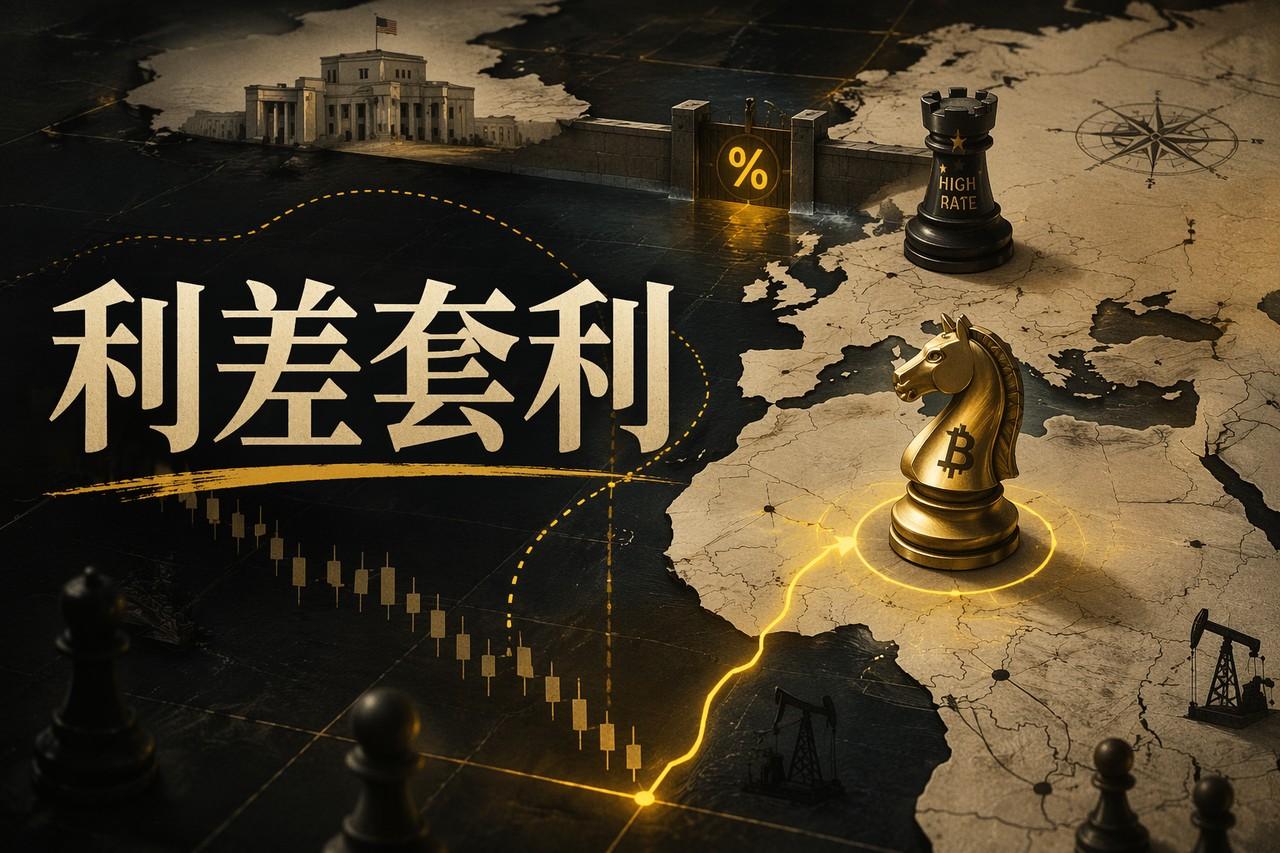
In the same trading week, two seemingly unrelated clues began to intertwine: on one side was the “principled consistency” mentioned by anonymous U.S. officials — the U.S. and Iran reached consensus on a framework for a memorandum of understanding, and if formally signed, it would fully restore passage through the Strait of Hormuz within 30 days. This waterway, which carries about one-third of global oil trade, means that the geopolitical risk premium for energy and shipping is expected to be pressed down; however, this document has not yet been officially signed, and Iran has not provided a public and detailed response, leaving the market to price its probabilities using futures curves and exchange rate fluctuations within the spectrum of “the end of war” and “negotiation repetitions.” On the other side, Morgan Stanley highlighted another kind of “premium” in its research report: the global semiconductor market could reach $1.5 trillion by 2030, with AI-related chips contributing nearly half, and global cloud capital expenditure reaching nearly $811 billion by 2026. Japan's Sakura Internet is considering increasing its capital expenditure for this fiscal year to nearly seven times its original plan, while Citigroup calls the current AI infrastructure and scarce reasoning capabilities an “absolute seller's market,” backing this up with the expectation of approximately 130% quarter-over-quarter growth in Anthropic's revenue in the second quarter of 2026. As the risk premium for tankers is expected to decline, and capital expenditure for computing power and cloud enters a super cycle, crypto assets are forced to shift from the narrative of “inflation and war hedges” to the new coordinate system of “technology growth beta,” redefining the weights of risk preferences and capital flows between Bitcoin, Ethereum, and even cash anchored in USD on-chain.
Expectations for Hormuz Opening and Energy Premium
At the moment the U.S. and Iran reached a principled agreement on the framework of a memorandum of understanding, including the clause to “restore passage through the Strait of Hormuz within 30 days after signing,” the market essentially began to reprice the energy front. The Strait of Hormuz is responsible for approximately one-third of global oil trade; once blocked, a significant geopolitical premium would quickly accumulate in international crude oil quotations and shipping insurance; and now, even though the framework has not been formally signed or come into effect, and Iran has not provided an official and detailed response, the mere expectation of “expected opening within 30 days” is sufficient for traders to exclude a large portion of the “supply disruption probability” from the baseline scenario. The risk premium layers on oil and shipping insurance have thinned, meaning that the wartime component in energy prices has been removed, thus reducing the tail risk of “energy spikes” in the global inflation path.
As both energy and inflation risk premiums retreat, the “war inflation hedge” role earned by crypto assets, represented by Bitcoin, will naturally draw scrutiny during this round of Middle Eastern crises. Bitcoin has been packaged by some institutions as “digital gold,” gaining additional buying power in narratives of geopolitical conflict and rising prices, but its pricing also highly depends on the global liquidity and real interest rate environment: if Middle Eastern risks cool down, oil price pathways become moderate, and real USD interest rates remain high or even rise further, then the opportunity costs of holding high-volatility assets with no cash flow increase, making it difficult for the “inflation hedge” label to support a high premium independently. The market will be forced to re-select between two extremes — either continue viewing Bitcoin and Ethereum as insurance against geopolitics and inflation, or more straightforwardly classify them into the high beta risk asset basket similar to tech stocks, where the extent to which crypto assets’ premiums come from “hedging” or “growth” will become the core variable in the new round of pricing games under an environment of retreating energy premiums and rising real yields.
Rotation of Risk Assets and Crypto Pricing
Once the market begins to believe that Hormuz will restore passage within 30 days after signing the memorandum of understanding, the narrative of oil and gas “war premium” will loosen, and the easing of U.S.-Iran conflict will be naturally interpreted as a signal unfavorable to oil and gas and defense sectors, yet relatively favorable to growth assets. In traditional asset allocation, this usually means a reduction in long positions in commodities and energy, with capital rotating towards tech growth stocks and AI concept stocks. Coinciding with this window of time, Morgan Stanley raised its forward expectations for tech prosperity: the global semiconductor market is expected to reach $1.5 trillion by 2030, with AI-related semiconductors contributing nearly half; global cloud capital expenditure could reach nearly $811 billion by 2026. In a rising interest rate cycle, the valuations of risk assets are highly driven by real interest rates and long-term growth expectations, as “war premiums” decline and “AI premiums” are collectively adjusted upwards, capital's tolerance for oil and gas naturally decreases, while willingness to allocate towards high growth, high beta assets is reignited.
This rotation chain easily extends to Bitcoin and Ethereum: historically, they have shown high positive correlation with tech stock indices such as NASDAQ during several phases, and the market has become accustomed to viewing them as amplifiers of tech and growth risks. In an “absolute seller's market,” as described by Citi, the AI infrastructure and scarce computing power are characterized as a “vertical wall of demand,” with Anthropic cited as a typical case—projected second quarter 2026 revenue of approximately $10.9 billion, a quarter-over-quarter increase of about 130%, while Japan's Sakura Internet is considering increasing this fiscal year's capital expenditure to nearly seven times its original plan to catch up with this AI capital expenditure curve. As capital withdraws from commodity hedging trades and seeks high elasticity targets along the main line of AI and cloud infrastructure, the role of crypto assets will quietly change: from being speculative hedges under geopolitical uncertainty to being high beta bets on the tech and AI growth story; their pricing will increasingly follow expectations of growth and fluctuations in tech stock risk preferences rather than merely inflation or war narratives.
AI Semiconductor Trillion-Dollar Blueprint and Crypto
When Morgan Stanley threw out predictions of a “$1.5 trillion semiconductor market by 2030, with AI-related chips contributing nearly half,” and “global cloud capital expenditure nearing $811 billion by 2026” during the same timeframe, the global growth anchor for capital was redefined: the main theme for the next decade is no longer simply about the commodity cycle but about the super cycle of AI infrastructure. Citi's descriptions of “vertical wall of demand” and “absolute seller's market” indicate that computing power itself is becoming a scarce asset, capable of sustained price increases and premium valuations in capital markets; the cited anticipated revenue of approximately $10.9 billion for Anthropic in second quarter 2026 with about 130% growth converts this blueprint from a story back to cash flow. This entire expectation provides a new coordinate system at the asset allocation level: whoever can resonate with AI infrastructure will gain higher tolerance and longer holding duration in the portfolio.
In this new coordinate system, crypto assets begin to slide from the “inflation/geopolitical hedge” quadrant to the “tech infrastructure beta” quadrant. Investors will be more willing to view BTC, ETH, and some L1/L2 as high elasticity factors along the same risk curve as GPU and cloud capital expenditure: when AI chips and cloud spending are expected to be long-term rising structural variables, the overall risk preference will rise, prompting the market to actively seek on-chain assets that can support this narrative—whether packaging public chains into a “decentralized computing network” pseudo-theme or viewing certain tokens closely related to AI service interfaces as “AI revenue options.” The result is that the weights of growth expectations and tech stock sentiments in crypto market pricing will rise, whereas sensitivity to oil prices and war premiums will relatively decrease, with the linkage of BTC/ETH and AI infrastructure assets slowly being written into the new macro trading framework.
Japan's Sakura Boosting CapEx Betting on Computing Power
While the market is still digesting the “AI premium” narrative, Japan delivered an extremely intuitive signal: Sakura Internet is considering boosting its capital expenditure for this fiscal year to about 20 to 30 billion yen, almost seven times its original plan. For a company centered on cloud and computing power, this amounts to revaluing the entire balance sheet under the “AI era” framework, reflecting the overall acceleration efforts in the AI sector by the Japanese government and businesses, aligning with the rising trend in CapEx of global cloud giants. For crypto traders, this is not an isolated corporate announcement but a tangible example of the “super cycle of AI infrastructure” landing in the Asian time zone, meaning an increasing amount of regional capital is to be locked into data centers, electricity, and GPUs rather than traditional defensive assets.
This kind of aggressive CapEx has two conduits for pricing on-chain assets that are more sensitive. Firstly, the increase in Asian AI computing power investment boosts the local stock market along with cloud infrastructure and semiconductor weights, while regional tech stocks and crypto assets have shown strong linkage across multiple cycles—when tech sentiment is good, BTC and ETH trading volume and volatility during Asian trading hours are often amplified. While funds buy computing power concept stocks, they allocate a portion of their risk budget to “purer tech beta” crypto assets, reinforcing the resonance between tech and crypto within the region. Secondly, such a multiplier level CapEx as Sakura’s indicates an elevation in financing demand and leverage levels, meaning fluctuations in the funding costs and yields of yen assets will more frequently be tugged by corporate refinancing and interest rate expectations. When local investors sense changes in the return/risk composition of yen assets, some funds may look to BTC/ETH as tools to hedge against yen depreciation and local asset fluctuations, even incorporating them into the same basket of “high beta growth positions” as domestic tech stocks. The result is that the more aggressively AI capital expenditure lands in Japan, the higher the sensitivity of the crypto market in the Asian time zone to fluctuations in tech stock performance and yen interest rate expectations.
From War Premium to AI Premium in Crypto Markets
The expectation of a possible opening of Hormuz essentially compresses the “war premium” in oil prices and inflation, while Morgan Stanley and Citi's provided strong pathways for AI infrastructure and semiconductors raise a new “AI premium curve”; crypto assets are rewriting their pricing logic between these two opposing forces. As long as the U.S.-Iran memorandum of understanding remains at the framework level and has not yet been officially signed, the uncertainty regarding passage through Hormuz, energy prices, and inflation expectations still prevails; thus, the “war and inflation hedge story” of BTC and ETH won’t disappear instantly, but marginally, they are more likely to be re-integrated into the global investment portfolio as “tech growth beta”—viewed as shadow assets of the super cycle of AI infrastructure and cloud capital expenditure. Morgan Stanley expects the global semiconductor market to reach $1.5 trillion by 2030, with AI-related contributions nearing half, while anticipating global cloud capital expenditure approaching $811 billion by 2026, combined with Citi's notion of an “absolute seller's market,” providing macro support for this tech beta narrative. For on-chain capital, the originally risk-averse “on-chain cash in USD” and aggressive high beta positions will reallocate between different assets as geopolitical risks cool and AI trades heat up; the outcome will be reflected in adjustments to DeFi currency market interest rates, term structures, and derivatives leverage preferences. The launch of the EDGE token page by the decentralized derivatives exchange edgeX during this window is itself a microcosm of the structural trading interest rebound in platform tokens and derivatives in times of improved risk preference; the next steps will be to continuously track whether the U.S.-Iran negotiations can genuinely materialize, the energy price paths related to Hormuz, and how the performance of AI-related indices and cloud/semiconductor sectors evolves alongside BTC, ETH, and on-chain USD interest rates.
Join our community, let's discuss and become stronger together!
On-chain Telegram community: https://t.me/AiCoinWhaleData
On-chain community: https://www.aicoin.com/link/chat?cid=N6OVMor5g
AiCoin on-chain Twitter: https://x.com/aicoinwhaledata
AiCoin exclusive Hyperliquid benefits: https://app.hyperliquid.xyz/join/AICOIN88
AiCoin exclusive Aster benefits: https://www.asterdex.com/zh-CN/referral/9C50e2
免责声明:本文章仅代表作者个人观点,不代表本平台的立场和观点。本文章仅供信息分享,不构成对任何人的任何投资建议。用户与作者之间的任何争议,与本平台无关。如网页中刊载的文章或图片涉及侵权,请提供相关的权利证明和身份证明发送邮件到support@aicoin.com,本平台相关工作人员将会进行核查。