Organized & Compiled by: Deep Tide TechFlow
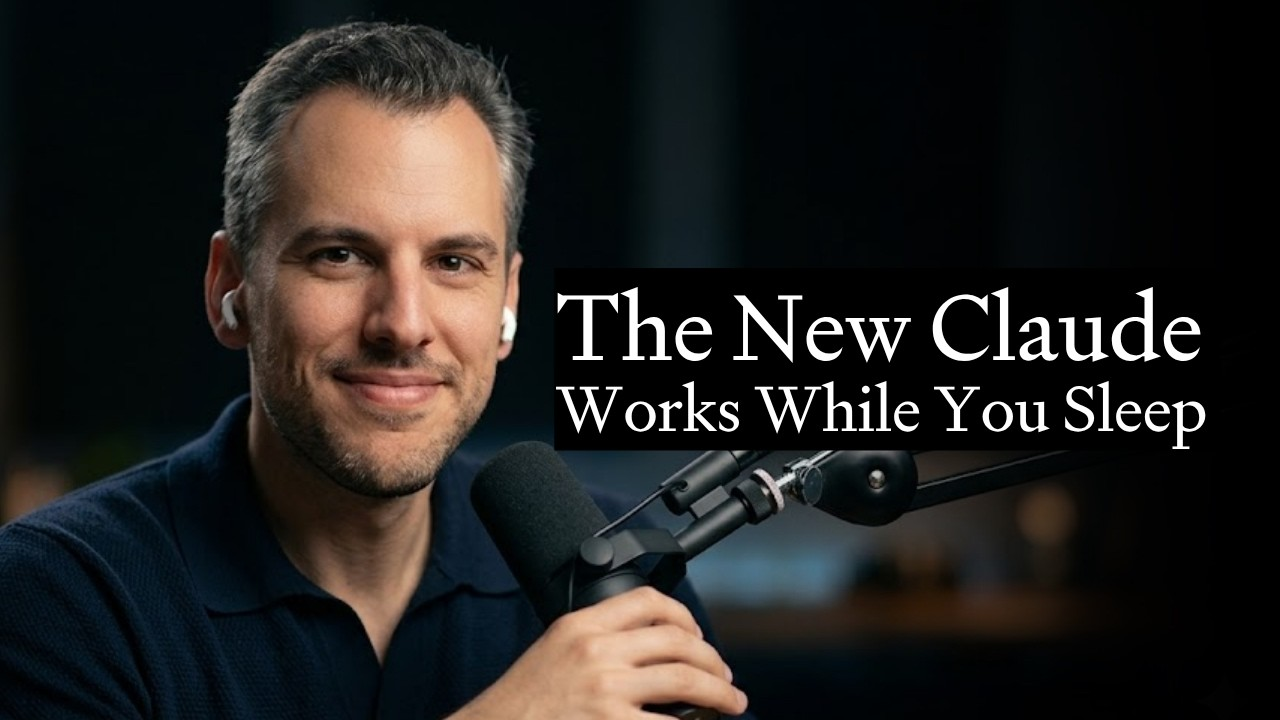
Guest: Mike Krieger, Co-founder of Instagram
Host: Dan Shipper
Podcast Source: Every
Original Title: Mike Krieger Lets Fable 5 Code While He Sleeps
Broadcast Date: June 11, 2026
Key Points Summary
Mike Krieger, as a co-founder of Instagram, has crafted one of the most influential consumer applications in the human world over the past two decades. Today, he is at the forefront of "AI-native" product development, leading his team at Anthropic Labs to tackle the ultimate question: when the world's leading AI models are handed over to true developers, how far can the capabilities of technology be pushed?
Five months before the official launch of Fable, when he first gained access to this model internally, the shock and sense of acceleration left a strong impression on him. "I felt like a complete novice again," he joked to his team at that time. He suddenly realized that the principles he had accumulated over decades regarding efficiency improvement, development strategies, and even time management were instantly outdated. The evolution speed of the model had completely outpaced his existing workflow.
In this episode, the host engages in an in-depth conversation with Mike Krieger, revealing what it's like to work alongside a groundbreaking model like Fable to build software. What new rhythms of development, serious challenges, and imaginative possibilities emerge in this new normal of human-machine symbiosis?
Highlights of Key Insights
How Fable Completely Reshaped Mike's Workflow
- "The real cognitive upgrade comes from several weeks of intensive, continuous use, rather than the first day's trial experience. … As the interaction time lengthens, people suddenly realize: 'I wasn’t demanding enough from it before. I need to push further and rethink where the boundaries of this generation of models lie.'"
- "The correct stance now is: convey more macro and complete intentions to it, and then fully let it run. Not only can it produce astonishing results all at once, but more frighteningly, it can understand the subsequent evolution direction of this function and the overall context of the entire project."
- "What impresses me the most is its ability to auto-close the loop. For example, it thinks: 'Mike asked me to run a complex task tonight. But I'm stuck because a remote server is down. Okay, I’ll write a mock backend to fill in...'" For me, being able to delegate tasks at this level and fully trust its final output is an incredibly shocking experience.
- "In the past, we often compared this kind of model to an 'assistant' or 'partner', but now it feels more like a true hardcore teammate who can take the fall and deliver substantial core work."
When to Use Sonnet and When to Use Fable
- "It’s not even the same level of sensation. It’s not even about how many tokens are produced per second, but rather about the question of how much brain capacity is needed to think through the issue. Sometimes, a simple answer doesn’t require that much depth of thought."
- "Most of the time, when I open the iOS app, it’s probably not for those heavy tasks that Fable would disrupt. … I have recently deeply experienced the subtle mindset of 'this problem doesn’t deserve Fable; I should call Sonnet to answer it'."
- "Fable is also the first model I’ve encountered that actively makes me adjust the 'reasoning effort'. … Previously, I didn’t bother adjusting this when using Opus, because at that time the model didn’t have such a wide elastic range, but Fable really does."
The Agent-native Structure Enabled by Fable 5
- "The so-called agent-native architecture starts with making every core component and data within the product fully open to the agent, with corresponding tool calling interfaces. This is quickly becoming the minimum requirement in the software industry—though sadly, most software on the market today is still not achieving this."
- "In the app, long-pressing the chat button will awaken our hosted agent to receive 'code modification instructions'... When I am outside playing with my child and realize 'the position of this floating button on iOS is too low', I can simply tell it in the app, and it will run back to the backend to fix the code."
- "How exactly should Claude be embedded in software? It shouldn’t just stop at the 'usage' level, it should be deeply embedded in the 'building' marrow of the software."
The Cost of Building Has Collapsed
- "Looking back at the V1 version of Instagram—its features were indeed more than what I did this weekend with my media tracker, but there was no essential difference in scale. Back then, Kevin and I probably spent five consecutive all-nighters to make that V1... but what about now? The construction time has indeed been shortened to an outrageous degree."
- "The gap between 'intention' and 'execution' for the average person who doesn't understand coding has been leveled. … This is the first time in my life that I feel that the things I think in my head and the things that exist in the real world can be done without any distance. I can directly make it happen."
- "Human creativity is limitless, and one of the most remarkable things we are doing today is to expand the boundaries of 'having the ability to turn what one imagines into reality' endlessly."
Is Software Engineering Dead?
- "The connotation of software engineering has completely changed. It is undergoing a seismic transformation. ... The era of pure coding craftsmen is probably truly over."
- "The role of senior engineers is still irreplaceable: you need to maintain absolute calm, comprehensively collect log data, implement urgent hem-stitching due to years of accident response experience, and then deduce fundamental long-term repair plans."
- "There used to be a saying popular in Silicon Valley: 'Code wins arguments'. I personally never liked it because its subtext is that whoever can code holds the power of discourse. But now, it’s interesting how things have evolved: sometimes we stubbornly disagree on a product's direction, but often, a non-coding PM comes over and says, 'I just made a demo myself…' which instantly opens a completely different high-dimensional conversation."
- "The most obvious feature is the terrifying level of development parallelism, and the absolute need for teams to conduct high-level abstractions of workflows. But one thing that has never changed is humans’ 'ownership and sense of responsibility' for products."
Mechanisms of Verification and Pricing
- "Now 'cost' has evolved into a multidimensional concept—you need to calculate not only the 'cost of a single inquiry' but also the 'comprehensive cost of getting something completely done'. What impresses me about Fable is precisely the latter: it always tends to get things right on the first attempt, without me having to sit in front of the computer battling it through eight or nine rounds."
- "Adapting to this new normal and figuring out how to work with it is something all of us need to learn. … Every time I build something, I need to ensure that every PR from Claude comes with photos or videos—whether it's an iOS PR or changes at the UI level. This gives you a lot of confidence."
- "Video is an extremely underutilized tool for Claude. Recently, I’ve been prototyping: making a video recording of what Claude has built, using FFmpeg, watching it analyze each frame, and then saying 'this animation has stutter, I’ll fix it'. Screenshots will never catch this because they miss that moment."
Dynamic Workflows
- "In the previous generations of models, projects often had a 'complexity ceiling'. Once your business code or logic stacks up to a certain volume, large models begin to 'pay attention to the head but ignore the tail'... But now, this female colleague who doesn’t understand coding has been able to maintain her system in the background for several months with the help of a model at the level of Fable. You can clearly see that the software is growing, evolving, and evolving wildly under the irrigation of AI like a living organism."
- "Workflow is a good middle ground; you use chat to orchestrate it but it’s expressed in code and executed in a clean UI, each step shows what’s happening. I think in the future, we will use a similar way to connect long-term vision work with chat."
How Fable Completely Reshaped Mike's Workflow
Host Dan Shipper: This episode's guest is Mike Krieger, who is both the head of Anthropic Labs and a co-founder of Instagram. Mike, I really want to hear you talk about the real sensations after deeply using this model. When such a powerful model is released, if someone who uses it heavily every day says: 'It's ridiculously strong in these areas, it has really changed workflows, and in some areas, it’s just so-so'—this can really help everyone understand how technology should integrate into their daily lives.
Mike Krieger:
Absolutely. This experience itself is interesting. In the months leading up to Fable's official release, we already used several models at the Mythos level internally. I was really looking forward to seeing what external developers would create with them, but as you said, the real cognitive upgrade comes from several weeks of intensive, continuous use, not the first day's tasting experience.
We had also experienced this cognitive reshaping with previous models. From late December last year to early January this year, when everyone was focusing on using Opus 4.5 and 4.6, as the interaction time lengthened, people suddenly realized, "I wasn’t demanding enough from it before. I have to push further and rethink where the boundaries of this generation of models lie."
Host Dan Shipper: Some of our colleagues at Every have actually started using it. Some feedback was: "I feel like I need an entirely new skill tree to master this model," especially from those without a technical background who found it a bit hard to start; while those working on agent orchestration complained, "There’s just too much new stuff to learn."
Mike Krieger: You hit the nail on the head with "transforming workflows"—it refers not only to specific operational steps but also to a shift in mindset. Coincidentally, the emergence of this model coincided with a change in my work: I had just transitioned from CPO (Chief Product Officer) back to Labs, switching back to developer mode. About a month and a half to two months after that, the first time we successfully had this type of model up and running, I sat in front of my computer and thought, "Damn, I feel like a newbie again." Because I realized that my previous habits of writing prompts and even my thought processes for breaking down tasks had become completely outdated in front of this model.
Your sense of time and interaction pattern has to evolve. In the past, I might say, "I have a feature idea, let’s start with the first step—" that’s absolutely not how it should go anymore. The correct stance now is: convey more macro and complete intentions to it and then fully let it run. I remember around March and April, the capabilities it showed were already impressive—it not only could produce astonishing results at once but more frighteningly, it could grasp the subsequent evolution direction of the function and the overall context of the whole project.
And this evolution hasn’t stopped at all. Just this morning, I was chatting about work—while on the plane, I realized "I can actually handle most of the work remotely." I don’t even worry anymore about the Wi-Fi dropping because as long as I set the correct context and instructions before going offline (like an ongoing command), it can keep track of everything itself.
In the past couple of months, I’ve often had those highlight moments: saying goodnight to Claude before bed, throwing it a complex task, and waking up the next day to find it had sorted everything out—usually completing the main part by two in the morning, with the last four hours spent perfecting the details.
What impresses me most is its ability to auto-close the loop. For example, it thinks: "Mike asked me to run a complex task tonight. But I'm stuck because the remote server is down. Okay, I’ll first write a mock backend to fill in, record this problem in the documentation, and get the whole process running and saved—I'll fix it once the service is restored tomorrow." For me, being able to delegate this level of task and fully trust its final output is an incredibly shocking experience.
Of course, you still need to review the results afterward—this involves a complete verification mechanism, which we can discuss more as it is a crucial part of the closing loop. But it really forces me to rethink: when facing such models, what does "efficient" even mean? In the past, we often compared this type of model to "assistants" or "partners," but now, it feels more like a true hardcore teammate who can take responsibility and handle a lot of core work.
Host Dan Shipper: What does your daily workflow look like now? I've noticed a phenomenon: if you throw a grand task at it and let it run for hours or overnight, its performance is strongest then. But in the everyday mundane tasks, it seems too slow and too costly, making it less appealing to use. How do you weigh that in actual work? Where does it sit in your tech stack?
Mike Krieger:
I now use it more in the early stages of architectural planning and scheme alignment. This is an interesting shift and currently a hard nut for all models to continue chewing on.
In this aspect, I am very grateful for my experience of creating Instagram—starting from hastily setting up the simplest version on a server in Los Angeles, to later scaling for massive concurrency, and finally merging it into Facebook’s infrastructure. This process cultivates an intuition of "at what stage of a project, what level of architectural abstraction and complexity should be used".
So, I still have frequent back-and-forth discussions with Fable. Sometimes it presents a seemingly perfect implementation plan, and I’ll poke it a bit: "I do plan to push this online soon—we need to consider the carrying capacity beyond just a single machine." This kind of mutual feedback is very important. But when doing architectural planning, I usually let it generate an HTML page to visualize what we are discussing, so I can share it with the team. Even a Markdown file is fine, but I prefer a format with charts.
This creates a very interesting paradigm: thinking things through and planning with it, then producing a document to align the team. Since the speed of constructing prototypes has greatly compressed, you need upfront consensus and alignment—even if you plan to first "start small and fast" to create a demo, and then derive a more rigorous system architecture, the initial communication is crucial. And this is precisely where human thought and collaboration are still deeply embedded in the entire process.
At the execution stage, whether using nighttime or large blocks of daytime to let it tackle various task modules, it means that I maintain much more concurrent sessions than before. I sometimes like to keep a long-running Claude Code session open, letting it fork all the tasks to backend sub-agents so that the main thread can respond to my new commands at any time; sometimes, I simply open five or six tabs in the browser, letting each handle long-term complex tasks.
This operational mode with long-term vision, having the sense of "don’t worry, leave it to me, it will take some time", really has a lot of potential. We are currently thinking about how to better support this experience at the product level—you certainly want to balance both "immediate response" and "long-term operation", and the interaction between them is very interesting. My personal preference is to keep at least one high-context and incredibly quick-response Claude window handy, having a sense of "I’m on standby, just say the word, and I can kickstart or derive sub-tasks right away."
免责声明:本文章仅代表作者个人观点,不代表本平台的立场和观点。本文章仅供信息分享,不构成对任何人的任何投资建议。用户与作者之间的任何争议,与本平台无关。如网页中刊载的文章或图片涉及侵权,请提供相关的权利证明和身份证明发送邮件到support@aicoin.com,本平台相关工作人员将会进行核查。


