Original text丨Boyang, Tencent Technology
On June 16 local time in the United States, just four days after SpaceX completed the largest IPO in history, it announced its first major acquisition post-listing.
According to documents submitted to the U.S. Securities and Exchange Commission (SEC), SpaceX will acquire AI programming startupCursor’s parent company Anysphere in an all-stock deal valued at $60 billion. The transaction is expected to be completed in the third quarter of 2026, pending regulatory approval.
After the announcement, SpaceX’s stock price soared by over 16% during intraday trading, briefly pushing its market value above $2.94 trillion, surpassing Microsoft. By the end of the trading day, SpaceX surpassed Amazon to become the fourth largest company by market value in the United States. Based on the IPO price of $135 per share, SpaceX’s stock price has increased by nearly 50%.
CNBC host Jim Cramer commented, "Buying SpaceX means buying Musk’s brain." He believes that traditional valuation models are inadequate to measure Musk's ability to turn grand visions into commercial realities.
01 What is Cursor and why is it worth $60 billion?
Cursor is one of the most popular AI programming tools in the world today, co-founded in 2022 by Michael Truell, his MIT classmates Sualeh Asif, Arvid Lunnemark, and Aman Sanger. The company is headquartered in San Francisco, has about 700 employees, and serves 60% of the Fortune 500 companies.
Cursor’s core product is an AI programming assistant that allows developers to seamlessly switch between mainstream AI models from OpenAI, Anthropic, xAI, Google, and others. It can automatically generate, edit, and review code, directly competing with Anthropic’s Claude Code and OpenAI’s Codex.
In terms of revenue, Cursor has shown remarkable growth. By November 2025, its annualized revenue surpassed $1 billion, increasing about tenfold from a year prior. Reports indicate that in the subsequent three months, Cursor's annualized revenue doubled again to reach $4 billion. Currently, Cursor ranks 37th on CNBC’s annual disruptors list for 2026.
However, according to consumer data from Ramp, Cursor’s market share has decreased from 41% in June 2025 to approximately 26% in May 2026, while Claude Code from Anthropic currently holds about half of that market segment.
02 The entrepreneurial journey of a genius young man
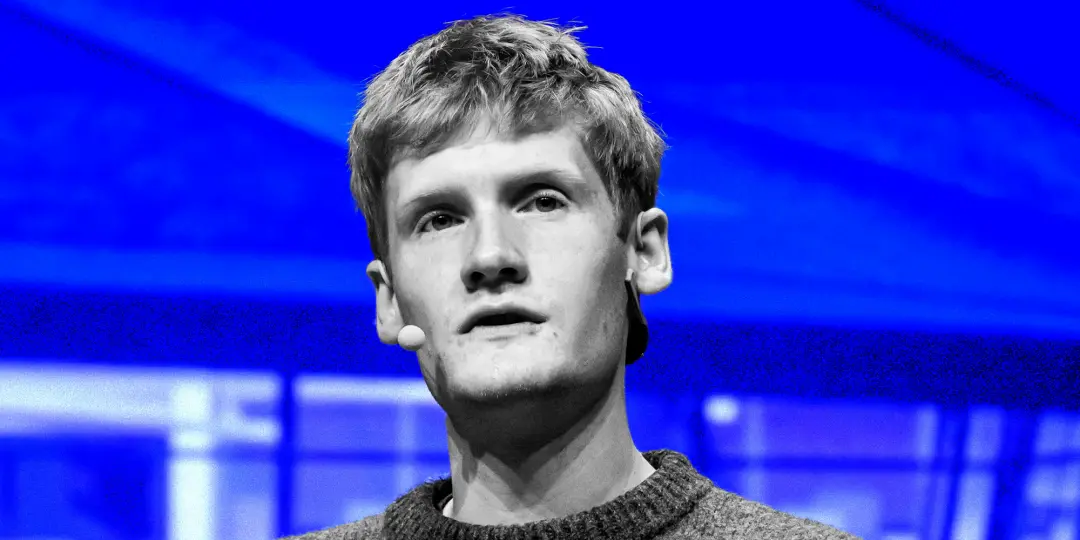
Cursor CEO Michael Truell
The story of Cursor begins with a quiet red-haired boy.
In 2019, 18-year-old MIT freshman Truell completed a programming test expected to take an hour in less than ten minutes. Technology investor Ali Partovi was the examiner that day, leading a project dedicated to scouting top programming talents. Afterward, Partovi asked Truell to create a test for him and discovered that the boy's code was neatly organized, while his own answer sheet was a mess.
Truell grew up in New York with journalist parents, showing extraordinary programming talent from a young age. At 15, while attending the prestigious Horace Mann School, he co-developed a programming game called Halite that guided players to learn programming fundamentals by conquering grid territories. This attracted thousands of middle and high school students who had never encountered programming before and earned him a $10,000 award from a top mathematics association.
At MIT, Truell majored in Computer Science and Mathematics while beginning to formulate entrepreneurial ideas. Claire Shorall, who guided him in an entrepreneurship boot camp, recalled that Truell's curiosity and humility impressed her. "I gave him some advice, but he clearly had a good understanding of things already."
After graduating in 2022, Truell co-founded Anysphere with three MIT classmates, initially positioned as a code editing platform. By building an improved version of Microsoft’s open-source editor VS Code, they achieved $1 million in monthly recurring revenue within a year. In March 2023, Cursor officially launched and immediately gained popularity among developers and enterprise users.
03 The "strange" relationship with Anthropic
Cursor's path to success has not been smooth, with the greatest variable coming from its core AI supplier—Anthropic.
The two companies are highly interdependent: Cursor's products heavily rely on Anthropic's AI models, while Cursor's explosive growth has contributed about 40% to 50% of Anthropic's revenue; both parties are keenly aware of each other's importance.
However, before launching its code editor Claude Code, Anthropic privately expressed to Cursor management that the product was more research-oriented and not a major business deployment, yet Claude Code quickly swept through the developer community.
By February 2026, the annualized revenue of Claude Code had risen to $2.5 billion, about $500 million higher than Cursor's revenue at that time, and a large number of developers began posting on social media announcing their switch from Cursor to Claude Code. Meanwhile, earlier, Anthropic had cut off model access to Windsurf during its acquisition negotiations with OpenAI, further intensifying Cursor management's concern over excessive reliance on a single supplier.
On January 5, 2026, Truell convened an internal meeting described by employees as "urgent" and announced that Cursor must develop its own AI model. His message was clear and strong: we cannot fall behind, cancel everything unnecessary, prepare for cross-team collaborations, and we must remain flexible and quick to respond.
Subsequently, Cursor launched its self-developed programming model suite Composer, based on an open-source model from the Chinese AI lab Moonshot; however, according to Cursor, in the May release of Composer 2.5, over 85% of the work was performed independently by Cursor (based on the Kimi K2.5 model). Cursor engineer Lucas Garza stated that Composer received "extremely enthusiastic" feedback from developers due to its low price and extremely fast response time.
04 Aligning with Musk: A win-win gamble
The development of self-research models requires massive computing power, which is precisely Cursor's shortcoming. This spring, Truell found another ambitious founder to fill this gap.
On April 21, Truell posted on X platform in his usual concise style: "Excited to collaborate with the SpaceX team to expand the scale of Composer. This is an important step on our journey to build the best AI programming platform."
On the same day, SpaceX publicly announced on X that it had obtained an acquisition option granted by Cursor. SpaceX could choose to acquire Cursor in an all-stock transaction valued at $60 billion after completing the IPO; if it opted out, it would have to pay a $1 billion breakup fee and $8.5 billion in free computing resources.
A few days after SpaceX successfully completed the largest IPO in history, it formally exercised the acquisition option and announced the acquisition of Cursor for $60 billion, fulfilling the "foreshadowing" laid in April.
This transaction serves specific goals for both parties. Cursor gains access to SpaceX's Colossus supercomputer, composed of hundreds of thousands of top-tier NVIDIA AI chips, while SpaceX hopes to leverage Cursor's deep penetration into the elite software engineer community to achieve a leapfrog advantage in the AI programming competition. Musk's AI chatbot Grok still lags behind mainstream models in programming; an xAI contractor admitted that Grok "is not good at programming."
After the announcement, many Cursor employees felt caught off guard. After all, Truell had repeatedly stated his intention to build the company into a "long-lived enterprise," viewing a sale as "a significant risk and a major gamble." Investor Partovi, who had previously written the first check to Cursor, said he believes Truell is the kind of founder inclined to maintain independence, "He has the ambition, confidence, and drive to sustain him further."
SpaceX stated that the Colossus supercomputer is the core bargaining chip in attracting Cursor. "Cursor’s leading products and distribution capabilities among top software engineers, combined with SpaceX’s Colossus supercomputer equivalent to millions of H100s, will allow us to create the most practical AI model in the world."
05 Greater ambitions: Satellite data centers and trillion-dollar revenue
This acquisition also serves SpaceX's broader AI strategy. The company is seeking regulatory approval to deploy up to 1 million AI satellites, exploring the potential of solar-powered orbital data centers to take on ground-based computing tasks. Meanwhile, SpaceX has announced multi-billion dollar cloud computing agreements with Anthropic and Google, significantly bolstering its revenue foundation before the IPO.
However, Musk also indicated on X that if Colossus computing power becomes strained, SpaceX reserves the right to cancel those agreements.
On June 14, Musk stated that SpaceX "might achieve about $1 trillion in revenue by 2030." Compared to the company’s projected revenue of $18.7 billion in 2025, it would represent a dramatic leap. In 2025, SpaceX recorded a net loss of $4.9 billion, with a further loss of $4.28 billion reported in the first quarter of this year.
For Musk, the objective remains clear. He wrote on X, "Whether it can become the best remains to be seen, but I will never give up. Never."
For Truell, this may be the biggest test of his life: Will the bet with Musk pay off? "It truly seems a bit crazy," he said, "But we know how special this is—how unprecedented it is in history."
免责声明:本文章仅代表作者个人观点,不代表本平台的立场和观点。本文章仅供信息分享,不构成对任何人的任何投资建议。用户与作者之间的任何争议,与本平台无关。如网页中刊载的文章或图片涉及侵权,请提供相关的权利证明和身份证明发送邮件到support@aicoin.com,本平台相关工作人员将会进行核查。


