Author: Zen, PANews
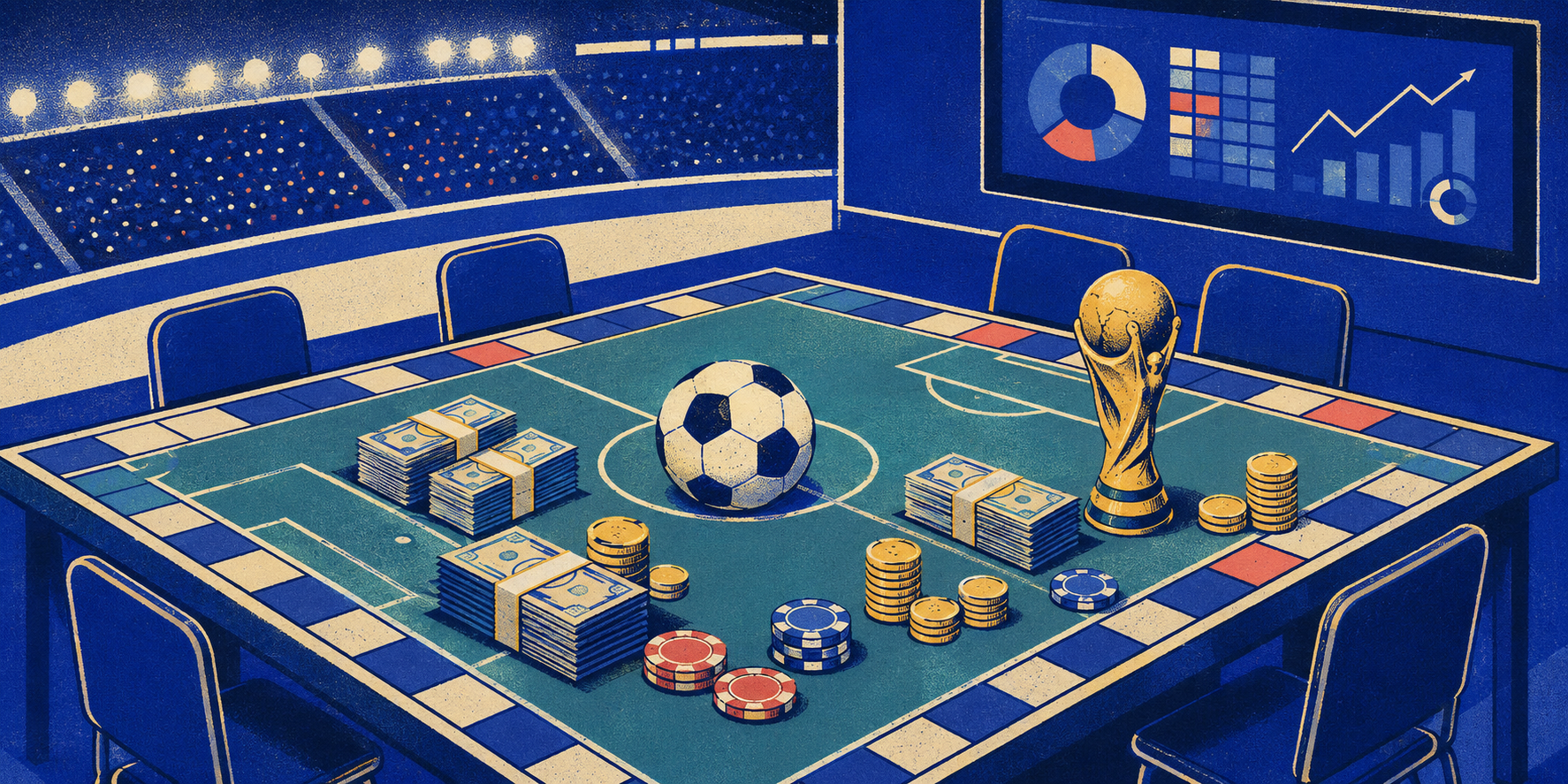
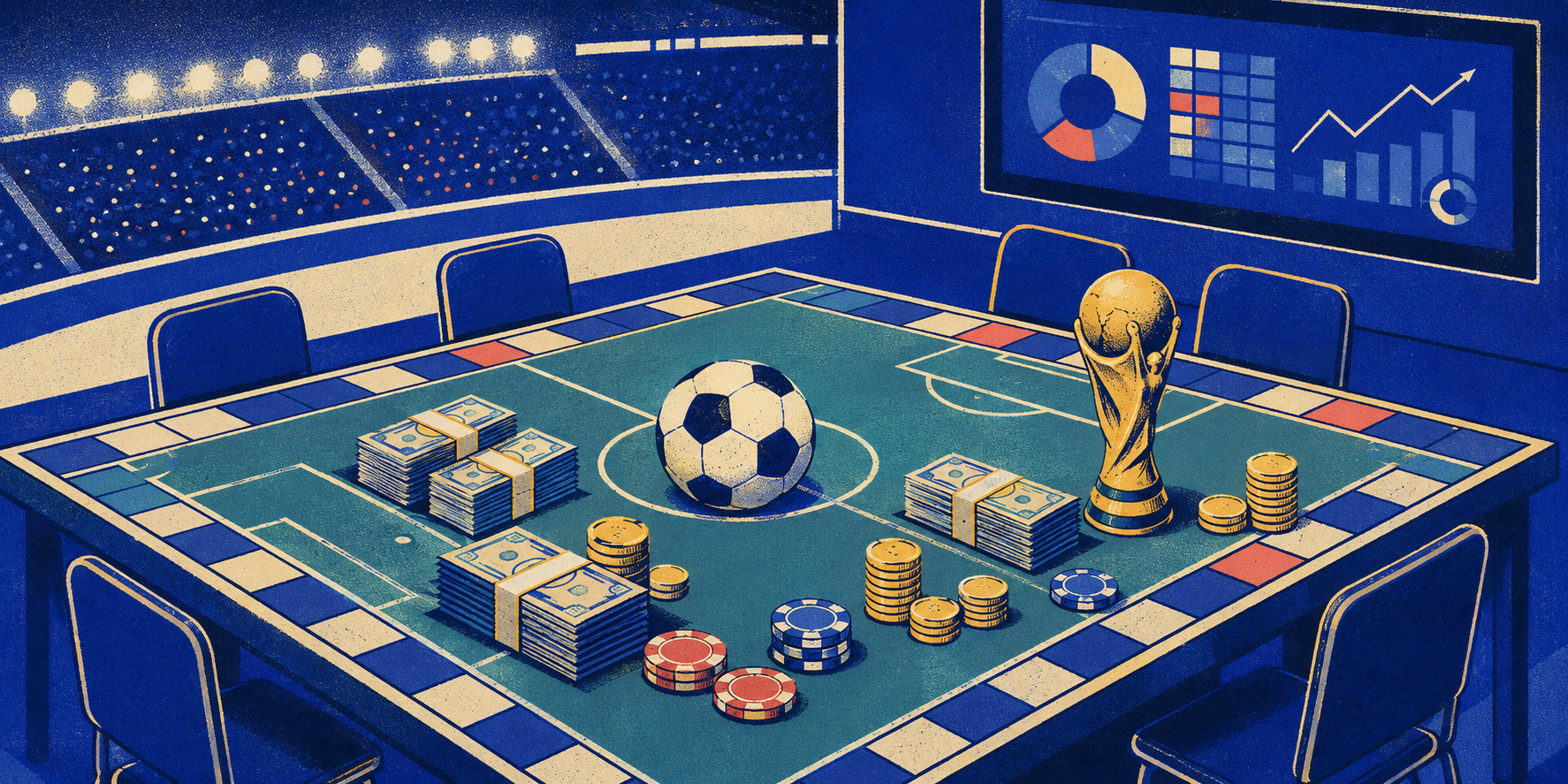
The World Cup is not just a fan festival, it is also a rare global speculative window.
With 48 teams, 104 matches, and a schedule spanning the US, Canada, and Mexico, attention, emotions, identity, information asymmetry, and scarce resources are concentrated and compressed into just over a month. Therefore, what forms around the World Cup is not only football consumption but also an entire set of speculative ecology. Some bet on scores, some speculate on probabilities, some buy concept stocks, some hoard jerseys and tickets, and others offer information and tools.
This year's World Cup happens to occur in an era where prediction markets, sports betting, social media, and digital assets are highly integrated. As more and more capital seeks opportunities from the World Cup, this largest global football event has also turned into a weeks-long speculative experiment.
1. The Rise of Prediction Markets
During the 2022 Qatar World Cup, prediction markets were still just a marginal play for the crypto circle and niche traders. Now, it has truly entered the mainstream narrative of sports events and has become the most noteworthy new prediction market scenario in this World Cup.
After the World Cup kicked off, the trading volume of event contracts predicting the "World Cup Champion" on the Polymarket platform quickly surpassed 2 billion dollars. As of June 18, the transaction volume of champion contracts on the platform had reached 2.6 billion dollars, with liquidity of about 436 million dollars. Another prediction market giant, Kalshi, also benefited significantly from the influx of traffic, recording 5.1 billion dollars in trading volume in the opening week of the 2026 FIFA World Cup, setting a historical high for the platform.
In terms of user growth, prediction markets are outpacing the traditional sports betting scene. US media citing Apptopia data stated that from June 1 to 15, Kalshi and Polymarket collectively accounted for nearly 75% of new activity in betting apps. During the intersection of the World Cup, NBA Finals, and NHL Finals sports cycles, the growth rate of the prediction market significantly surpassed traditional platforms like DraftKings, FanDuel, and BetMGM.
Compared to traditional sports betting, the on-chain wealth story of prediction markets is also more compelling. After Spain drew 0-0 with Cape Verde, the relevant match market on Polymarket saw about 64 million dollars traded. One new wallet trader bet on Spain not winning and Cape Verde successfully getting a handicap, earning about 9 million dollars in profit; while another cautiously styled trader bet Spain would win, ultimately losing all of a 1 million dollar stake.
2. Traditional Sports Betting
Before this World Cup, the betting industry already regarded it as a historically significant window. According to the FT, the betting amounts related to the 2026 World Cup are expected to exceed 50 billion dollars, a 43% increase compared to the 2022 Qatar World Cup.
Now, the legal sports betting market in the US has also far surpassed that of the 2022 World Cup. Platforms like DraftKings, FanDuel, and BetMGM have already swapped their homepage to feature World Cup content in full swing to welcome this carnival of sports and gambling.
Although prediction markets have stolen a lot of the spotlight, traditional sports betting remains the largest base for World Cup speculation. Compared to the new narratives and new trading methods of prediction markets, traditional sports betting contains more mature user habits, a larger legal market, and a more complete product system. For most ordinary fans, betting on the outcome of a match, point spreads, totals, and scores remains the preferred choice.
Eilers & Krejcik Gaming expects that the legal sports betting platforms in the US will have a betting volume of about 2.8 billion dollars during this World Cup. If the US team advances further, this number could rise to 4.3 to 4.4 billion dollars. According to Sports Business Journal's predictions, this would elevate football's share from around 5%, a niche category, in US sports betting from June to July, to over 25%, a core category.
Therefore, in the story of “old king versus new noble,” the prediction market focusing on financial trading offers more freshness and social communicability, while traditional bookmakers still command the most mature, stable, and scalable speculative business.
3. Stock Market
The World Cup also creates "concept stocks" in the capital markets. Often a schedule, a victory, or even just the expectation of increased fan consumption is enough to drive stock prices up.
The Korean market is the most typical example. One day before the North American World Cup opens, the Korean team is about to face the Czech team in the group stage. As the Korean team's first match approaches, investors bet that consumption of fried chicken, instant foods, and home viewing will increase during the match. Subsequently, on June 11, poultry processing company Maniker closed up 29.97%, Maniker F&G up 29.83%, and Foodnamu up 18.85%.
This type of trading did not just appear in 2026. Before the 2022 Qatar World Cup, Korean "fried chicken + beer" concept stocks were already hyped in advance. Korean media reported that one month before the 2022 World Cup kicked off, Kyochon F&B's stock price increased by 46%, Maniker by 49%, and Jeju Beer skyrocketed by 64%.
During the Qatar World Cup, Japanese football concept stocks also fluctuated violently with the performance of their teams. After Japan lost 0-1 to Costa Rica, market sentiments about the chances of advancing cooled rapidly. Consequently, parent companies of the livestreaming platform Abema, sports brand Mizuno, and English pub chain Hub all saw varying degrees of decline. However, when Japan beat Spain 2-1 and advanced to the knockout stages as group leaders, market sentiments reversed again, causing these companies' stock prices to rise sharply.
The corresponding logic for these companies is different; CyberAgent's rise is linked to the massive traffic brought by free World Cup livestreaming, Hub corresponds to offline pub viewing consumption, and Mizuno is related to national team gear and football shoe sales.
Clearly, with every victory or defeat, traders will repricing the enthusiasm of fans. This also makes World Cup concept stocks look more like an emotional betting market that is constantly fluctuating around match results, consumption scenarios, and fan psychology.
4. Ticket Resale Arbitrage
World Cup tickets are originally proof for fans to enter the stadium, but in the 2026 World Cup, they are also being played as speculative items. Some grab official tickets for resale, some purchase "ticket rights" from FIFA Collect, and some haven't even received tickets but list them on third-party platforms for sale. This turns the World Cup ticket market from a consumption market into an arbitrage market surrounding scarce seats.
World Cup tickets heavily depend on teams, stars, geographic locations, and fans' willingness to travel; their arbitrage, likewise, involves both profit and risk. After the World Cup schedule was announced, Houston confirmed it would host the match for the Portuguese team, and the expectation of Cristiano Ronaldo's participation immediately ignited the resale market. Before the schedule was announced, secondary market ticket prices for Houston World Cup matches ranged from around 390 dollars to 2497 dollars; within just four hours of the schedule announcement, some ticket prices were pushed up to 487 dollars to 11150 dollars.
Before the World Cup began, according to the FT, about 180,000 tickets were still for sale on FIFA's official resale platform, about 176,000 of which were concentrated in the group stage. The median ticket price on the official resale platform dropped about 20% within a month, and after deducting FIFA resale platform fees, many scalpers actually incurred losses. On the other hand, teams with a large fan base like Mexico and Colombia still have strong demand, with some resale prices reaching four to six times the original value; the Scotland team, returning to the World Cup after many years, also saw tickets for related matches with high premiums.
On third-party platforms, the buying and selling of tickets is more complicated. On secondary markets like StubHub, SeatGeek, and Vivid Seats, some sellers list tickets for sale before actually receiving them. These speculative sellers bet that ticket prices will drop as the match approaches, allowing them to purchase at a lower price later. If ticket prices soar, these sellers are either forced to buy tickets at high prices to fulfill orders or cancel orders and accept fines from the resale platform. To some extent, this operation is somewhat similar to short selling in financial markets.
It is worth mentioning that this year's World Cup has further amplified the speculative properties of "entry qualifications." FIFA's Right to Buy (RTB) is a right to purchase tickets for specific matches in the future, not including tickets themselves, and can be resold on the official FIFA Collect market. This also led to the emergence of a "two-tier speculation" in the World Cup ticket market: the first layer is the resale of ticket rights, and the second layer is the resale of the tickets themselves.
5. Collectibles and Merchandise
World Cup merchandise has always been an important area for fan consumption, and there have long been phenomena of collecting, reselling, and speculation. Those items that are prone to market speculation usually possess scarcity, emotional value, and liquidity.
The classic example remains Panini stickers. After the 2026 World Cup expanded to 48 teams, the official Panini sticker album also expanded. This World Cup's Panini sticker album contains a total of 112 pages, requiring the collection of 980 different stickers to fill, including 68 special stickers. In the UK, a pack containing 7 stickers is priced at 1.25 pounds, but due to the reality of repeatedly drawing the same stickers, it may require purchasing over 1000 packs to complete the album, ultimately costing close to 1000 pounds.
Panini's speculative properties have been proven in the old sticker market, where these World Cup stickers can transform from low-priced consumables to high-priced collectibles. In 2021, a Panini sticker of Maradona from 1979 sold for 470,000 pounds at auction. Although the vast majority of stickers cannot replicate this price, it illustrates that the value of World Cup stickers comes not just from the paper itself, but from the narrative of collecting created by players, eras, scarcity, and collective memory.
Jerseys with symbolic identification or scarcity are also popular items in the secondary market. During the 2026 World Cup, New York City launched a locally themed World Cup jersey, originally priced at only 50 dollars, limited to 1500 pieces. Due to its price being significantly lower than official World Cup jerseys, along with local symbolic significance, these jerseys sold out quickly. Subsequently, on platforms like eBay, the prices of these jerseys soared to 400 dollars, with some listed for as high as 999 dollars.
Before the match between Portugal and the Democratic Republic of the Congo in Houston, many vendors outside the stadium sold Cristiano Ronaldo's number 7 Portugal jersey for about 60 dollars, while similar jerseys retailed for about 130 dollars through official channels. Many fans knowingly purchased these jerseys of dubious origin; under high ticket prices, high travel costs, and high consumption pressure, a "looks real" jersey for 60 dollars was enough to satisfy their identity needs for watching the game in person.
After all, for fans, as long as the jersey can express itself outside the stadium, in the stands, and in social media photos, it already holds consumption value. For vendors and counterfeit supply chains, this represents a demand that can be harvested.
6. Cryptocurrency
The World Cup has also spawned an even more marginal and volatile cryptocurrency speculative market. The craziest part comes from unofficial World Cup meme coins.
Two months before the 2026 World Cup opens, over 16,000 World Cup-themed tokens appeared on Solana, including 11,184 newly issued in May alone, a 531% increase over April. Relevant statistics also show that the trading volume of Solana football meme coins in May was about 650 times that of similar tokens on Ethereum. The vast majority of these tokens lack team authorization, actual use, or stable liquidity, merely attracting short-term traders through the World Cup name, national team logos, and star images.
A typical example is the WORLDCUP token issued on Pump.fun. This token launched on May 11, with an early market value of under 40,000 dollars, but within two days it rose to about 6 million dollars, peaking at 12.2 million dollars on May 21. A trader invested 341 dollars through five transactions in the early stages of the project and sold in batches during three price surges, ultimately achieving about 48,000 dollars in profit, a return of over 140 times.
However, these wealth stories often only showcase a few addresses that entered early and successfully exited, while many other investors suffer heavy losses during a massive drop. After the World Cup began, an unofficial Solana token JUDE, named after England star Bellingham, plummeted 98%. This token had no participation from Bellingham or authorization from the FA, simply leveraging the star's name and the World Cup hype to attract buying.
Blockchain analytics company TRM Labs also specifically warned before the World Cup that so-called "World Cup commemorative coins" had already become a potential channel for pump-and-dump schemes.
7. Content and Information Services
The final layer of the World Cup speculative ecology centers around providing information and tools to speculators. Facing the massive number of fans interested in the World Cup, those selling shovels also make money.
A Chicago fan named Luke discovered that the official FIFA platform struggled to simultaneously compare ticket availability and prices for 104 matches, so he leveraged Claude Code and developed a ticket tracking website called SeatSidekick in just five days. This site aggregates inventory, minimum prices, and price trends from FIFA's ticketing backend for different matches. The platform launched on April 18 and gained 178,000 unique users and over 1 million views within a month.
SeatSidekick initially was a free tool but later introduced price alert services. Users can set target matches and prices, receiving notifications once tickets that meet their conditions appear on the FIFA platform. One Reddit user claimed they purchased tickets beyond their budget during the drawing phase and later used SeatSidekick to observe inventory and competitive prices for the same matches, adjusting their listings to the platform's "best deal" page, ultimately selling tickets for three matches within days.
Another, more direct information business is selling World Cup betting advice. Many individuals and teams have launched paid Telegram groups and membership subscriptions for the 2026 World Cup, offering a one-time price for betting recommendations throughout the event, including daily match selections and immediate betting opportunities.
What makes the recommendation business special is that income does not directly depend on the accuracy of recommendations. As long as enough users believe that the recommender has a data advantage, the operator can collect membership fees in advance. If the recommendation is successful, the operator can also create promotional materials based on the match results to continue attracting new members.
Some speculate on ticket prices, some on match results, while this group of "shovel sellers" speculates on the information demand itself. They don't need to know who will win the championship; they only need to understand that the more people attempt to make money from the World Cup, the more willing people are to pay for a sense of a faster, earlier, and closer answer.
The real winners may not be those who guess the champion, but rather those who first understood how attention flows. After the World Cup ends, the scores will be written into history, but beyond the stadium, another vast trading network has already quietly settled in the global market.
免责声明:本文章仅代表作者个人观点,不代表本平台的立场和观点。本文章仅供信息分享,不构成对任何人的任何投资建议。用户与作者之间的任何争议,与本平台无关。如网页中刊载的文章或图片涉及侵权,请提供相关的权利证明和身份证明发送邮件到support@aicoin.com,本平台相关工作人员将会进行核查。


