Author: Martin Talk
"Copy trading" is a controversial topic. For beginners, it is a shortcut to bypass technical barriers; for experienced traders, it often means the risk of relinquishing decision-making power.
For a long time, the biggest criticisms of copy trading in the market have been twofold: first, the "black box" of position control — you do not know how many lots a trade made by the trader corresponds to your account, leading to uncontrolled capital management; second, the passiveness of risk control — once the leading trader exhibits emotional responses to trades, followers often can only accompany until liquidation.
As an observer who has long focused on the evolution of derivative tools, I have thoroughly tested the new copy trading function of Bitget CFD, particularly the three core modules: "fixed lots," "proportional copy trading," and "take profit and stop loss." From a product manager's perspective, this is undoubtedly a massive leap in risk control capabilities; however, from a trading philosophy perspective, these features raise a deeper question: When we start to carry out refined "micro-operations" in copy trading, are we really still "copy trading"?
Here is my in-depth experience report.
1. Position Transparency: From "Guessing Game" to "Precise Control"
In the logic of copy trading, what troubles professional traders the most is "asymmetrical positions."
In a traditional proportional copy trading model, suppose trader A opens 1 lot of gold with 10,000 USDT, while you only have 1,000 USDT for copy trading. The system will calculate your position proportionally. But in practical execution, due to minimum trading unit restrictions, margin fluctuations, or slippage, the position that finally arrives in your account is often an "approximation." This leads to confusion for beginners: "Why did the teacher earn 5% while I only earned 3%?" or worse: "Why did the teacher trade lightly, but for me, it became a heavy position?"
The newly introduced "fixed lots copy trading" model by Bitget addresses this problem. When setting up copy trading, users can now directly specify: "No matter how many lots the trader opens, I will always follow with X lots."
- Scenario Simulation: You are optimistic about a trader skilled in short-term gold trading, but your risk appetite is extremely low. You can set each copy trade to be fixed at 0.01 lots.
- Result: Regardless of whether the trader opens 10 lots aggressively or 0.1 lots conservatively, your account will only increase exposure by 0.01 lots.
This means the control of the position returns to the follower’s hands. You are no longer passively accepting the trader's position size but viewing the trader as a "signal source," with you deciding what risk exposure corresponds to that signal. For users with small capital or those who are extremely risk-averse, this is a true "airbag."
Of course, the core value of copy trading was originally to escape the human weaknesses of traders (fear, greed, hesitation), fully transferring decision-making to professional systems or individuals. However, the introduction of new features actually encourages users to re-engage in the decision-making process.
The new system provides users with too many parameters to set (leverage multiples, lots, take profit and stop loss, maximum copy trading amounts, etc.). This can easily create a "sense of control illusion" for beginners. Newcomers often overestimate their risk control capabilities and underestimate market randomness. They might feel proud after a successful "independent stop loss," believing they are smarter than the trader, thus frequently adjusting parameters. Ultimately, this frequency of fine-tuning often leads to being "hit from both sides" — neither benefiting from the copy trading profits nor escaping manual decision-making errors.
2. Strategy Flexibility: Evolution of Proportional Copy Trading
Fixed lots may not be suitable for everyone. For users who want to fully replicate the trader’s capital curve and pursue the same return multiple, "proportional copy trading" remains the first choice. However, the new version's proportional algorithm has significantly improved stability in handling extreme market conditions.
- Past Problems: In the traditional model, the number of lots is determined by the net worth ratio of both parties, where the system rounds down to the minimum lot size of the product. If your capital is far greater than or less than that of the trader, the proportionally calculated lots may deviate, or the hedging structure may be disrupted due to rounding (especially when following EA strategies).
- Current Optimizations:
- Customizable Multiples: You can set a fixed multiple (such as 1x, 2x), and the system will strictly execute "trader lots × multiple," no longer affected by minor proportional changes caused by net worth fluctuations, ensuring precise symmetry in long and short lots.
- Maximum Lot Limit: If your capital is far greater than the trader, proportional calculations may lead to excessively heavy positions. By setting a "maximum single copy trading lots," the system will automatically cap, preventing excessive risk exposure from capital volume differences.
Proportional copy trading is suitable for users who recognize the overall capital management ability of the trader. It retains the "compounding effect" — when the trader profits and increases the principal, your copy trading position will also automatically expand, achieving growth in returns.
3. Independence in Risk Control: Putting the "Brake" Under Your Control
In the traditional understanding of copy trading, there is a fatal misconception: "If the teacher does not close the position, I will not close my position either." This has led to countless tragedies—traders with large capital can withstand a 20% drawdown and wait for a reversal; however, followers with small capital may face liquidation from the same drawdown.
The new version of Bitget allows followers to set independent take profit and stop loss levels right at the beginning of the copy trading relationship.
After selecting a trader, a key module has been added to the setup page:
Stop Loss/Take Profit Protection: You can set a "maximum loss amount per order (e.g., 50 USDT)."
- Test Mechanism: I set up a copy trade with a stop loss amount of 50 USDT. At the moment the trader opened the position, the system automatically calculated the corresponding stop loss price based on my opening price and lots, and directly placed an independent stop loss order in my account.
- Result Comparison: When the market reverses, although the trader chose to "hold the position" and wait for a rebound, since my stop loss order was already placed in the market, when the price reached that level, the system automatically matched the order and closed the position. Ultimately, the trader accumulated losses of 15% due to the continued decline in the market, while I successfully locked in a maximum risk of only 50 USDT due to the preset hard stop loss, avoiding being passively stuck.
This breaks the "joint liability system" of copy trading. You are following the trader's "entry logic," but retaining your "exit rights." This model of "synchronized entry, independent exit" perfectly meets the needs of users with different risk appetites. It transforms copy trading from a form of "faith investment" into a "quantifiable risk control strategy portfolio."
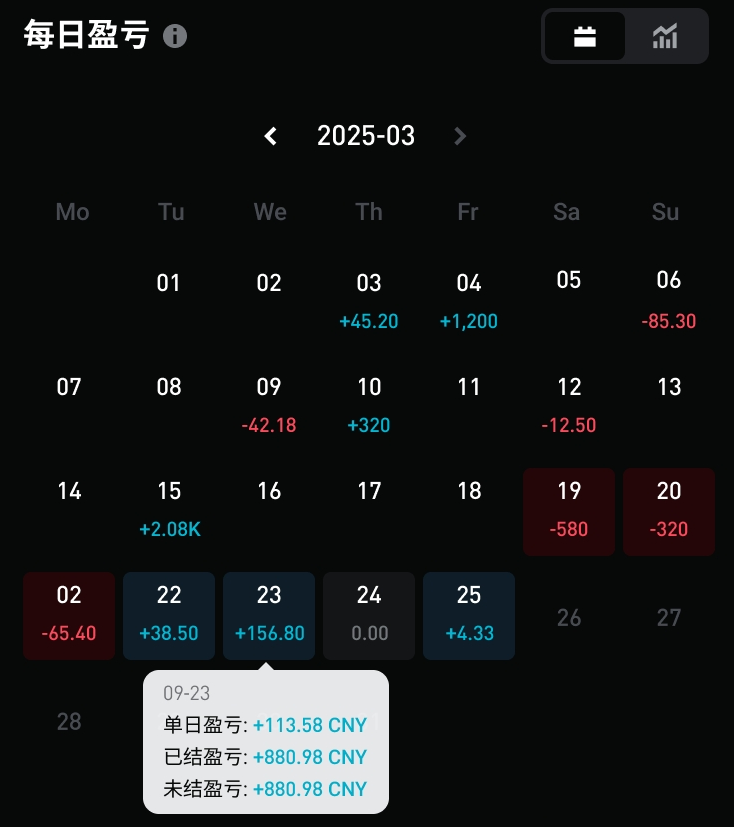
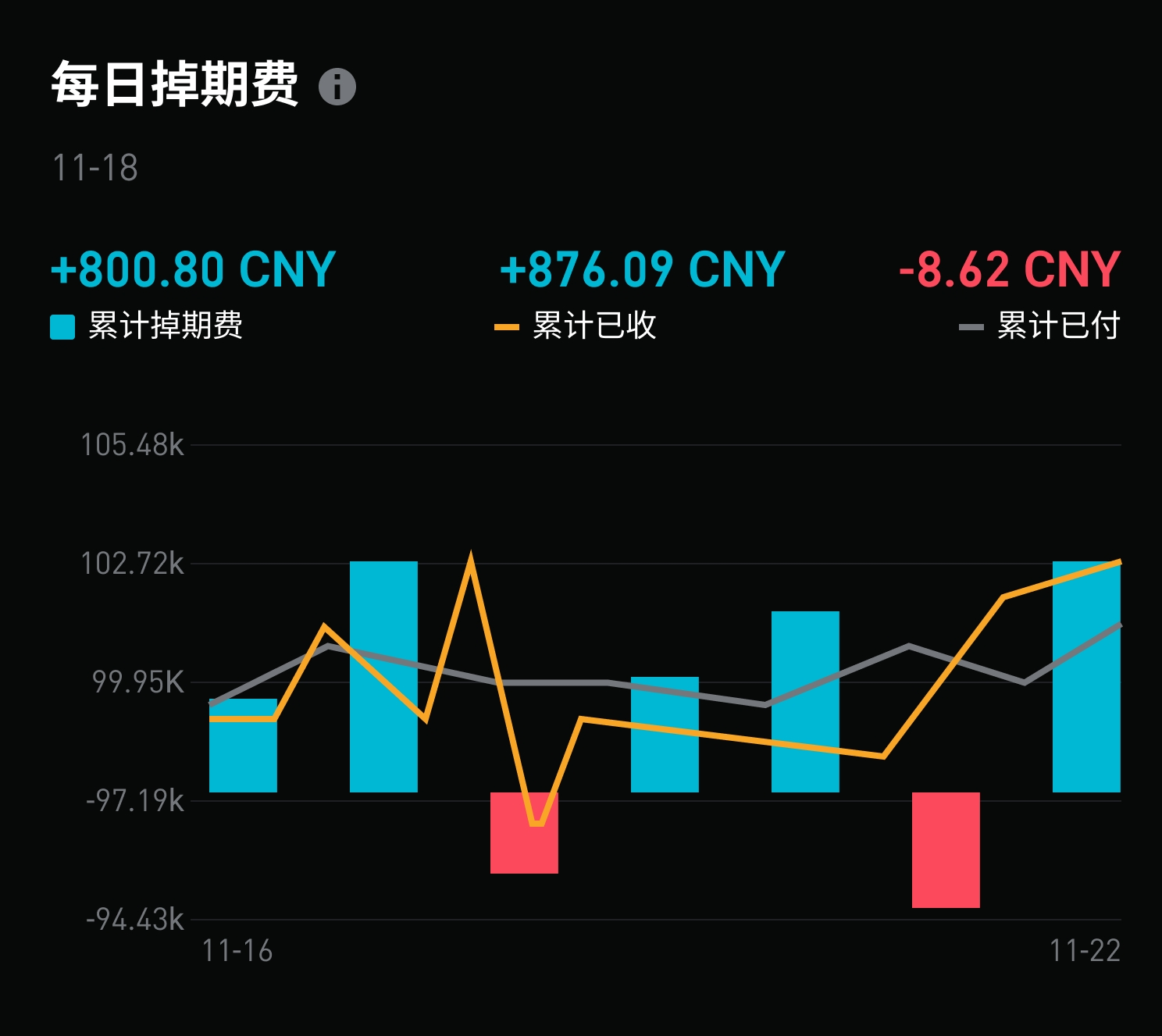
At the same time, it offers rich profit and loss analysis features (win rates, returns, drawdowns, etc.), but these are all retrospective data. The reality check is that a trader with a 500% return over the past six months may have just been lucky to hit a directional market, and their style might be extremely aggressive. When you start copy trading, the market style may have switched to a range-bound market, and their strategy might suddenly become ineffective. The new features help you control positions but cannot assist in identifying "luck" versus "skill."
4. Simulation Experience: When the Black Swan Strikes
To verify the robustness of the new system, I reviewed the recent sharp fluctuations in gold (XAU/USD).
On the eve of the non-farm payroll data release, market volatility was extremely high. An aggressive trader I follow went heavily long on gold just before the data was released.
- Old Version Experience: Followers would copy their high-leverage long position with their entire capital. After the data release, the price plummeted by 20 dollars instantly, and many followers were directly force-liquidated due to insufficient margin, even though the price rebounded afterward, they were already out.
- New Version Experience (Fixed Lots + Independent Stop Loss):
- User A (Conservative): Set fixed lots as 0.01 lots, and a stop loss of 100 USDT. The price drop triggered the stop loss, leading to a small loss exit, protecting most of the principal.
- User B (Balanced): Set proportional copy trading with a wider stop loss amount. Although they experienced floating losses, due to reduced leverage, they were not force-liquidated and ultimately profited in the rebound.
This case clearly indicates that tools themselves do not generate Alpha (excess returns), but excellent tools can help users filter out the fatal parts of Beta (market risk).
It is worth noting that during extreme black swan events (such as the Swiss franc black swan or negative oil prices), the market may experience a brief liquidity drought. At this time, even if you set "independent stop losses," the system may not be able to execute due to lack of counterparties, causing stop losses to fail, ultimately leading to a bust. This is a systemic risk present in all CFD platforms and does not vanish with functional upgrades.
5. Advice for Beginners and Experienced Traders
After in-depth experience, I believe that Bitget's recent CFD copy trading upgrade fundamentally decouples and reorganizes "the strategies of professional traders" from "the risk control of individual investors."
For Beginners:
- Make Good Use of "Fixed Lots": Do not pursue high returns right from the start. First, use the minimum lots (e.g., 0.01 lots) to verify the trader's win rate and style.
- Set Stop Loss Amount: Never believe that "experts don’t lose money." According to the documentation, take profit and stop loss are set in fixed amounts (USD). Please calculate the maximum single loss amount you can bear (e.g., 50 USDT), letting the system execute discipline for you instead of relying on vague ratios.
For Experienced Traders:
- Use Copy Trading as a Signal Filter: You can use the copy trading system to monitor the movements of multiple top traders. When multiple traders agree in direction, you can choose to intervene manually or increase the copy trading ratio.
- Utilize Independent Take Profit to Optimize Curves: If you find a trader with a high win rate but a mediocre risk-to-reward ratio (likes to take profits early or late), you can correct their strategic flaws by setting your own take profit and stop loss amounts, thus achieving a smoother return curve than the trader themselves.
Conclusion
The financial market has no holy grail, and copy trading is not a magic way to "earn without effort." However, the new copy trading system from Bitget, through the transparency of fixed lots and the autonomy in risk control provided by independent take profit and stop loss, indeed upgrades copy trading from a "game of luck" to a "manageable" investment infrastructure.
In this uncertain market, those who can control risks are the ones who will survive longer. This upgrade undoubtedly gives followers more power to control.
免责声明:本文章仅代表作者个人观点,不代表本平台的立场和观点。本文章仅供信息分享,不构成对任何人的任何投资建议。用户与作者之间的任何争议,与本平台无关。如网页中刊载的文章或图片涉及侵权,请提供相关的权利证明和身份证明发送邮件到support@aicoin.com,本平台相关工作人员将会进行核查。


