Author: The discoverer of tomorrow's products, APPSO ,
Chinese air conditioning is being crazily snatched up in Europe.
The most outrageous part is that an air conditioner was literally snatched like concert tickets and limited sneakers: overseas netizens waiting for restocking, cross-border sourcing, and some even dispatched AI agents to assist.
It is not an exaggeration to say this is the most powerful episode of AI.
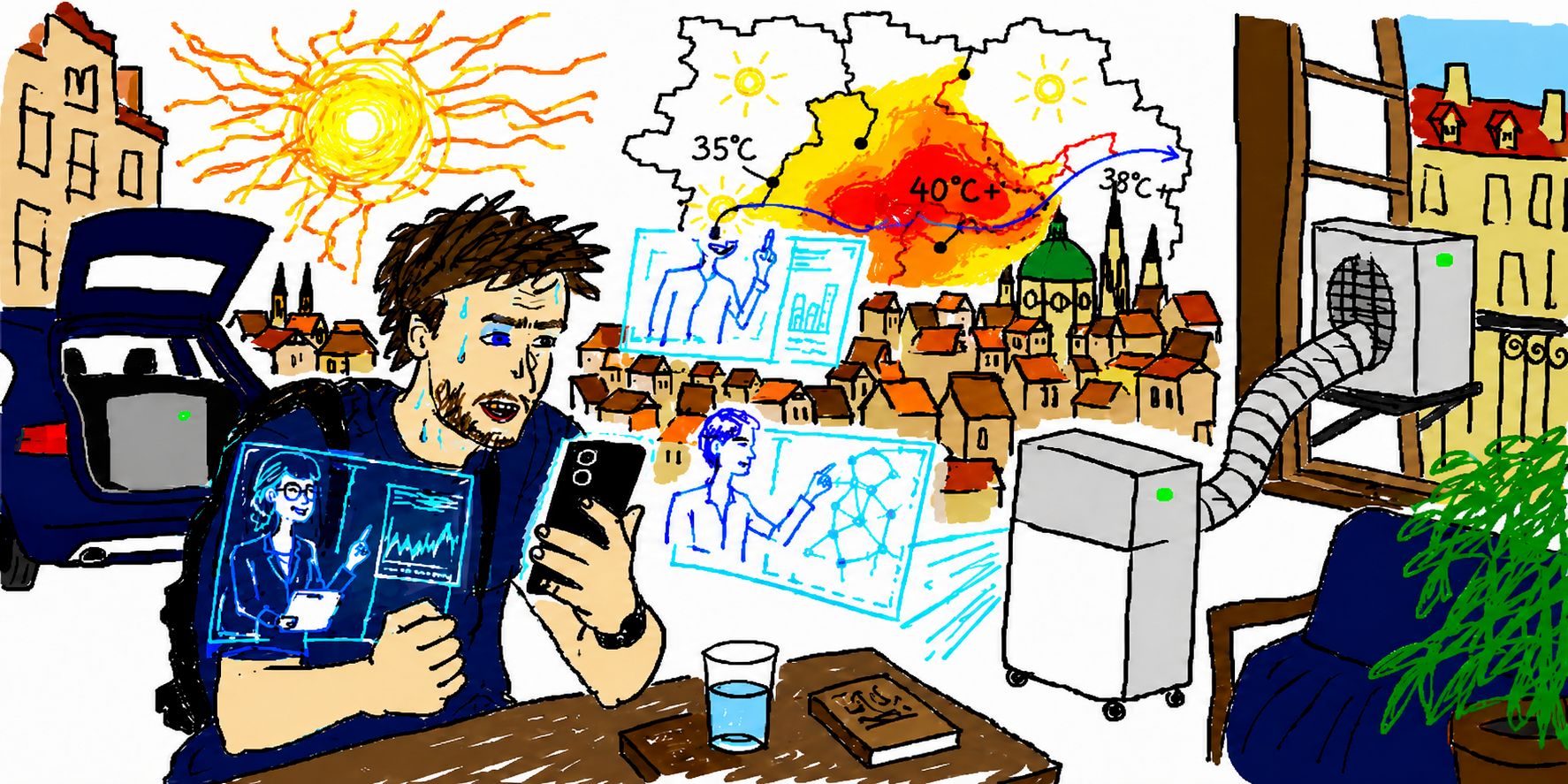
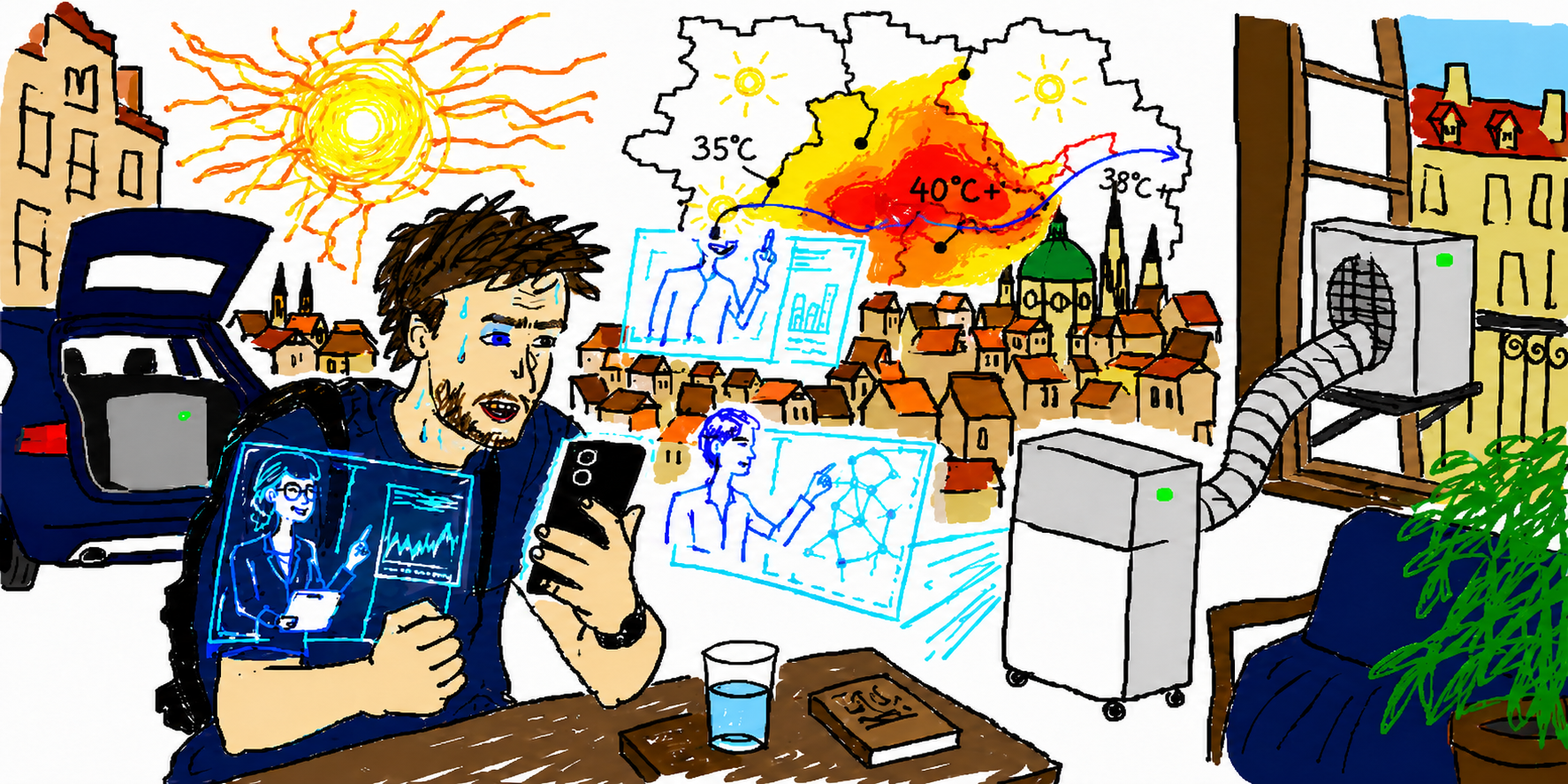
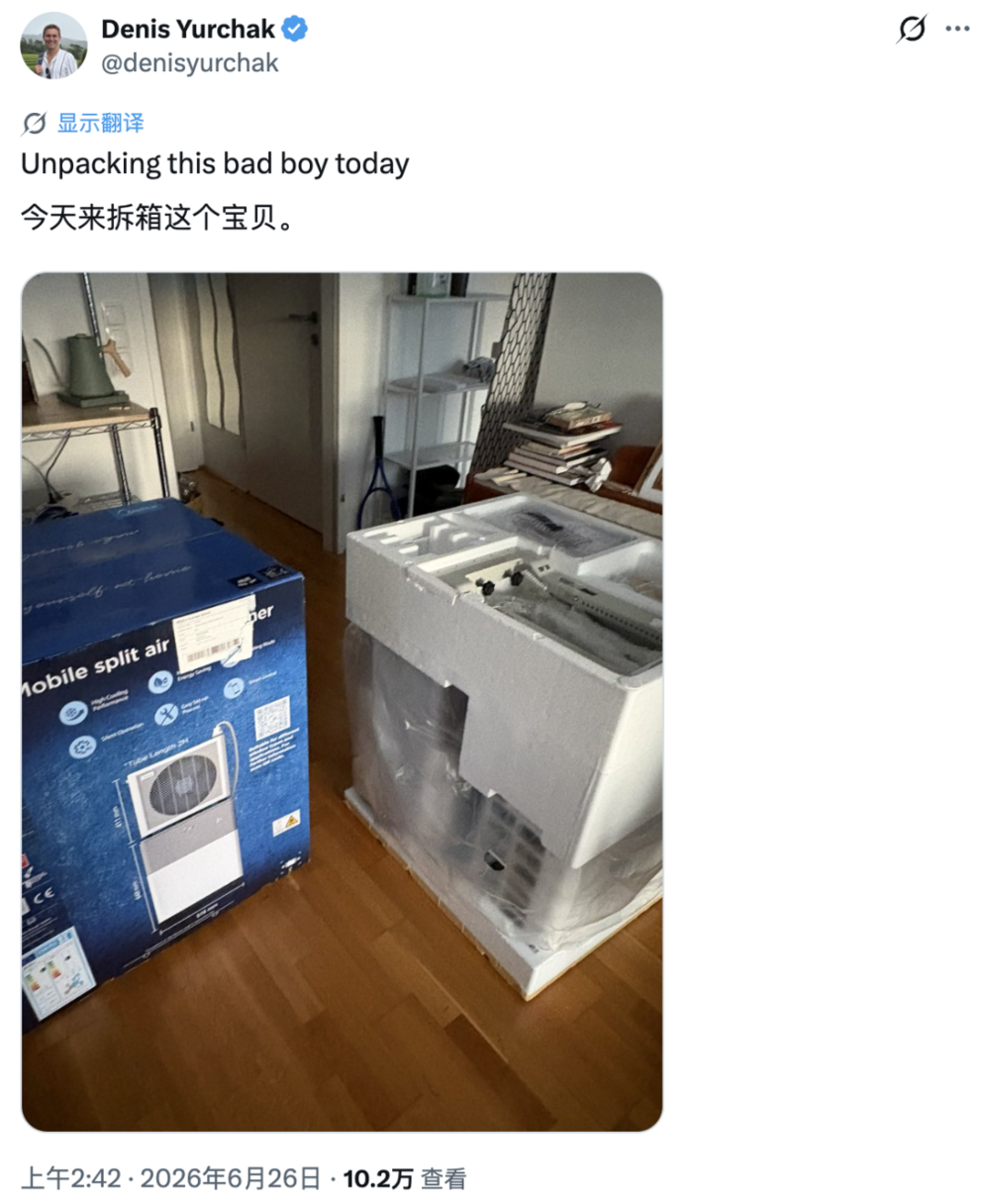
To buy a Midea PortaSplit portable air conditioner, Austrian Denis Yurchak toiled for two whole days: driving 200 kilometers, going through various channels, and even having three AI agents monitor inventory round the clock.
In the end, he managed to grab the last remaining unit of that model in Austria.
After reading the follow-up tweet he posted, it is hard to tell whether it is a diary about buying an air conditioner or a practical lesson on AI agents. And this story begins with the heat wave in Europe.
One air conditioner, half an adventure story
Since the end of May, Europe has been repeatedly baked by record-breaking heat waves, with Germany, Spain, France, and the UK breaking records one after another.
However, air conditioning, which is relatively common in China, has a penetration rate of just over 20% in Europe.
On the one hand, in order to maintain the appearance of historic buildings, local governments impose extremely cumbersome restrictions on the installation of air conditioning. Based on environmental values, local governments even urge residents not to use air conditioning, claiming that "the best air conditioner is a tree."
On the other hand, apart from the difficulties in approval, the cost of professional installation is also exceedingly high. In Europe, construction and drilling installation usually require professional workers, with installation costs often exceeding 1,000 euros, even surpassing the price of the air conditioning unit itself.
But as mentioned above, this year, Europe is indeed very hot, resulting in a collective rush to buy air conditioners, with sales of Samsung, Midea, and Mitsubishi Electric skyrocketing.
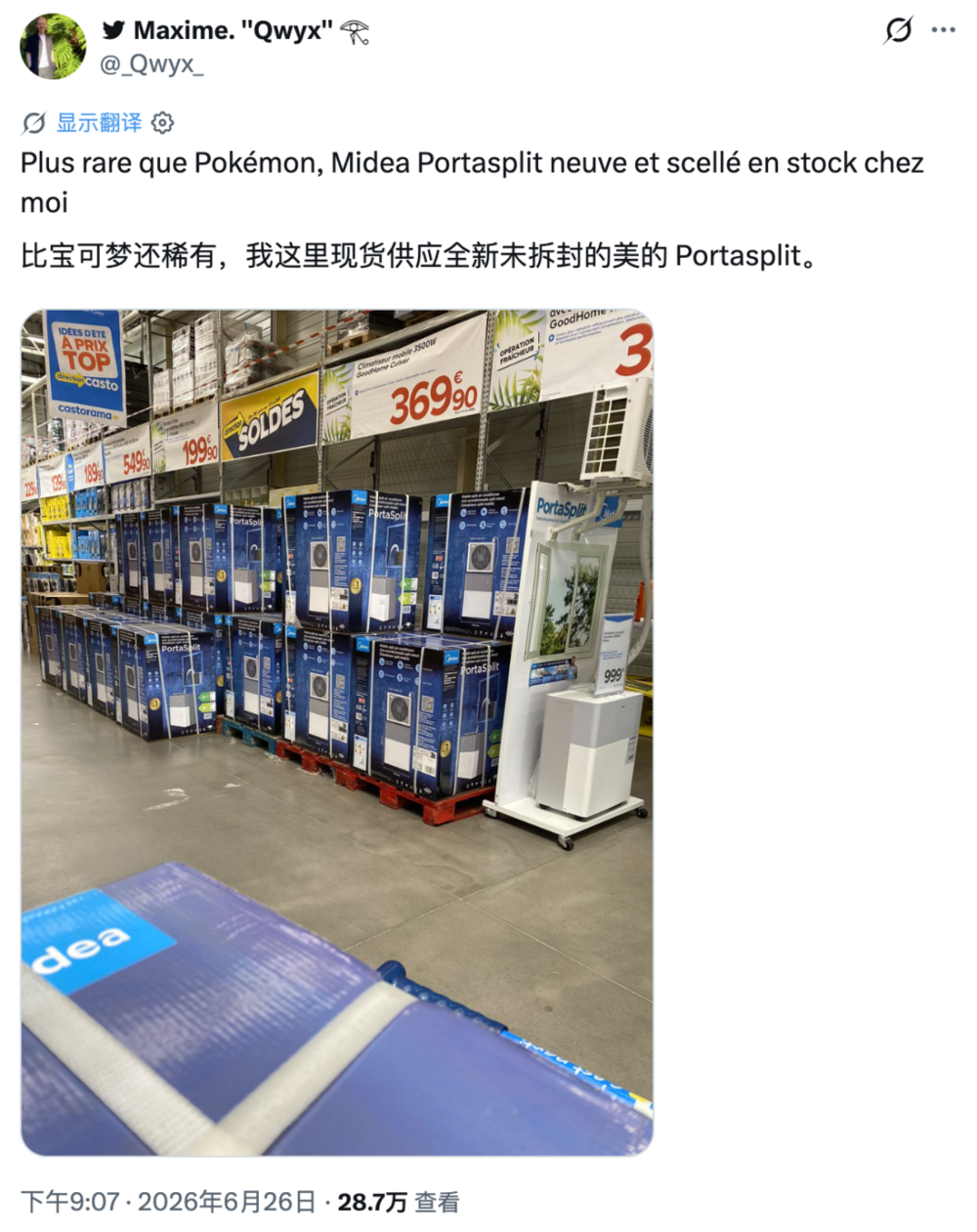
The most sought-after model is Midea's portable air conditioner called PortaSplit. How popular is it? Some channels have run out of stock entirely, on certain second-hand platforms, PortaSplit has been marked up two to three times, with some outrageous listings reaching several thousand euros.
An ordinary portable air conditioner has been traded like a financial product.
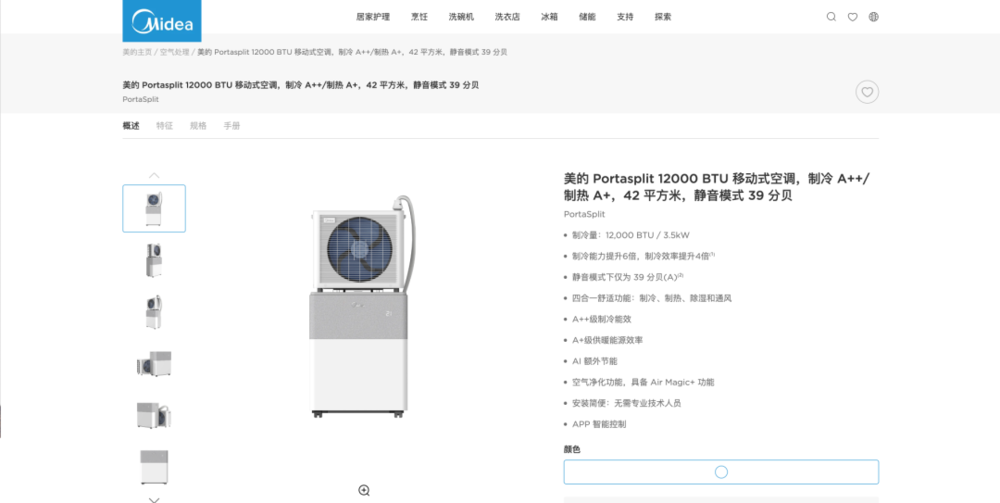
But what Denis is looking for is exactly this model.
He himself said that after two days of searching, the only one he found appealing was this one, but it was nearly impossible to find anywhere in the EU. And just two days later, temperatures in Vienna were set to soar to 38 degrees; in his words, that would turn into "hell on earth."
At this point, the average person might resign to opening windows, buying ice, and just enduring.
Denis's choice was: to operate three AI agents to help him shop around the clock. Meanwhile, he kept monitoring the available air conditioners in the market.
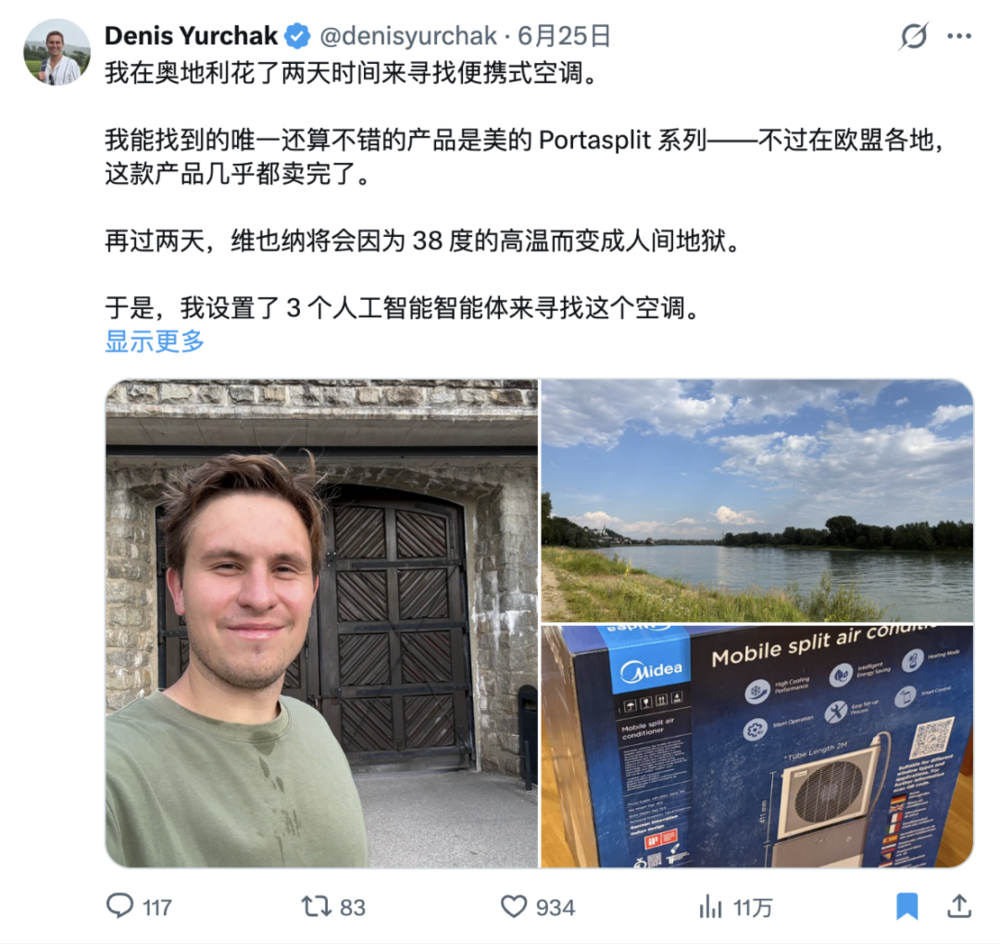
Tweet 🔗https://x.com/denisyurchak/status/2069866683586445766
The next part of the plot can basically be seen as a feel-good story. The agent quickly located Hungary as the only country in the EU with remaining stock. Denis contacted a local distributor, who said they could only ship within Hungary.
He didn't have any Hungarian acquaintances, so he began calling local courier companies one by one.
But then came the problem: the people on the other end didn't speak English.
Faced with the language barrier, Denis quickly thought of a clever solution: he recorded what the GLS logistics company's dispatch manager said in Hungarian, input it into AI, and figured out how to communicate with them.
Even more remarkable was the call itself. Calling across EU countries incurs high fees, so he simply pulled out his own VoIP app, managing to endure a 30-minute hold queue.
But wait, there's another hurdle.
Due to the lack of sender's instructions, the courier company refused to accept his package. Denis changed strategies again, calling 10 hotels near the border to ask if they could help him transit a 50-kilo box. After about 20 calls, finally one agreed.
At this point, did you think it was almost done? Not at all.
That day at 2 a.m., he couldn't sleep and was aimlessly scrolling online, contemplating whether to just spend a few hundred euros to run to Hungary himself.
Just then, his phone pinged with a notification. It was his AI agent, which found a unit locally in Austria.
In Linz (an Austrian city), the last remaining unit of that model in the country, located 200 kilometers from where he lived.
Denis quickly grabbed his phone, filled out the booking form, and contentedly went to sleep.
The next morning, he bought a cup of coffee, drove 200 kilometers to pick up the air conditioner. Upon arriving, he found the price had increased by 100 euros, from 749 euros to 849 euros. Denis decided to stand firm and asked to see the manager; in the end, the store agreed to sell it at the reservation price.
He described himself as being as happy as a child at that moment, the last one in the country was now his. Denis finally said he was grateful for this shortage and heat wave, as searching for an air conditioner amidst a panic of heat turned into a real adventure.
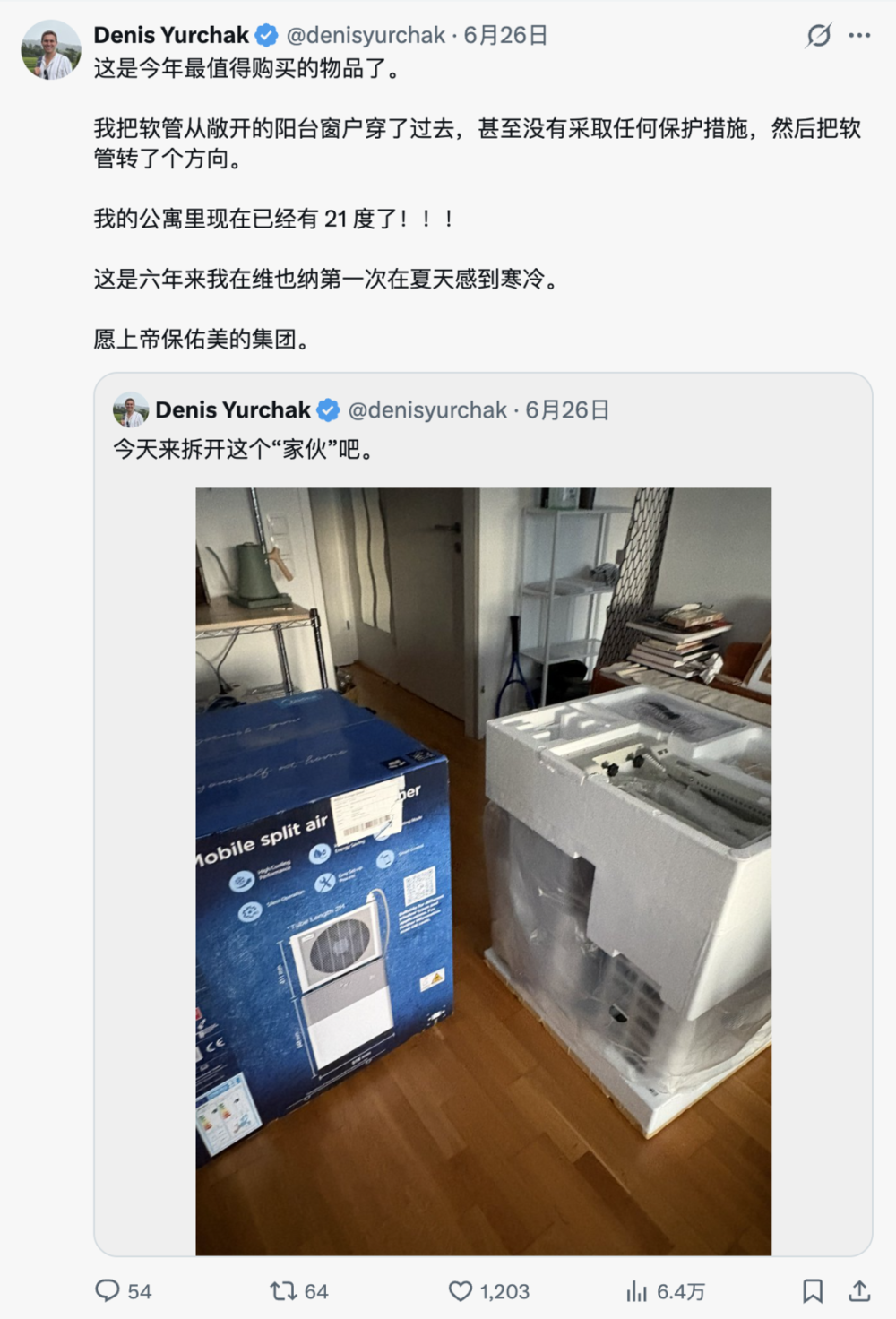
And now his apartment is finally cool.
It's a bug-carding device, but actually, it's not that mysterious
So why is this air conditioner sold out?
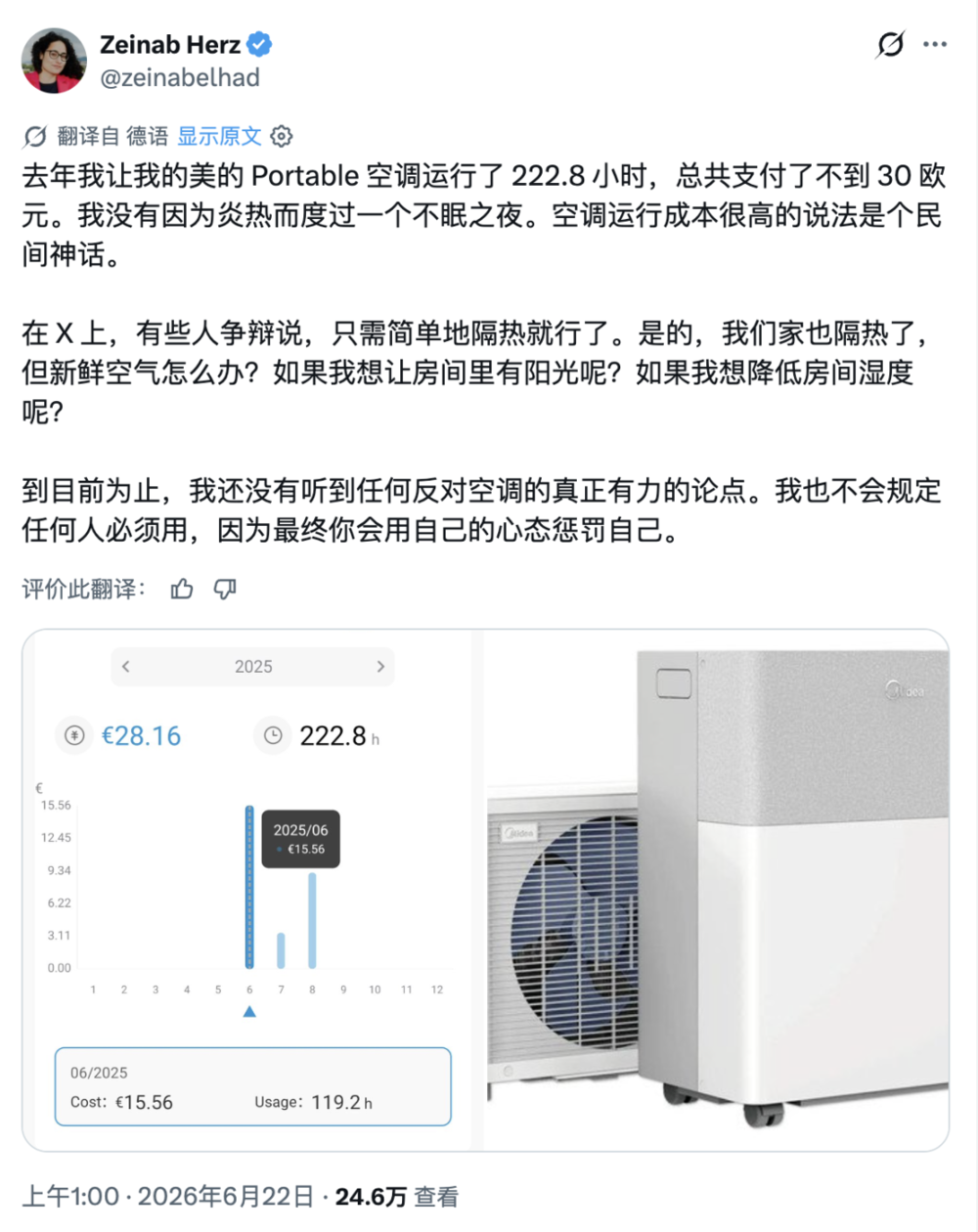
To understand the reasons, although the PortaSplit is Midea's portable split air conditioner, its specifications are indeed impressive: 12000 BTU, 3.5kW cooling capacity, suitable for rooms up to 42 square meters; energy efficiency A++, SEER 6.1; equipped with a heat pump that provides heating in winter; silent mode at 39 decibels.
It has won the iF Design Award, the German Innovation Award, and was selected by Time as one of the best inventions of 2025.
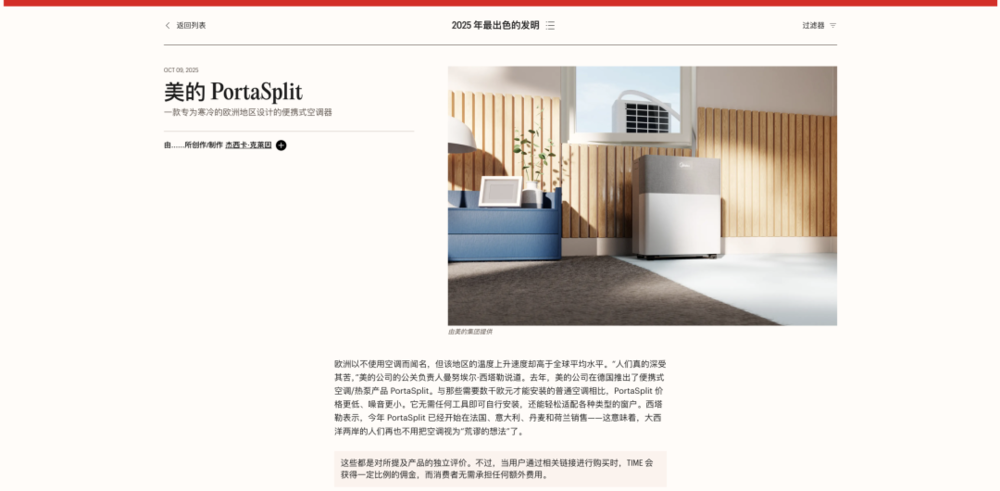
🔗https://time.com/collections/best-inventions-2025/7318415/midea-portasplit/
Its real breakout in the domestic market is thanks to an online saying:
Midea managed to exploit a loophole in European regulations.
The rumor had a well-structured narrative, complete with a string of precise decimal numbers: refrigerant capped at 1.99 kilograms, just dodging France's 2-kilogram strict inspection red line; noise capped at 35 decibels, right along the boundary of Germany's nighttime disturbance law; SEER capped at 6.1, meeting the minimum threshold for Switzerland's A++ energy efficiency.
It sounds like Midea's legal team tailored it to local regulations.
Unfortunately, I checked the official and European dealer data and found that while it was hectic, some of the figures did not match: for instance, the 12000 BTU version uses R32 refrigerant with a charge amount of 0.62 kilograms, not the rumored 1.99; silent mode claims 39 dB(A), not 35 dB(A).
Moreover, the nighttime 35 dB(A) in Germany usually refers to the noise evaluation of residential zones affected, and is not the same as the manufacturer-stated noise level for the indoor unit in silent mode, so it cannot be compared directly.
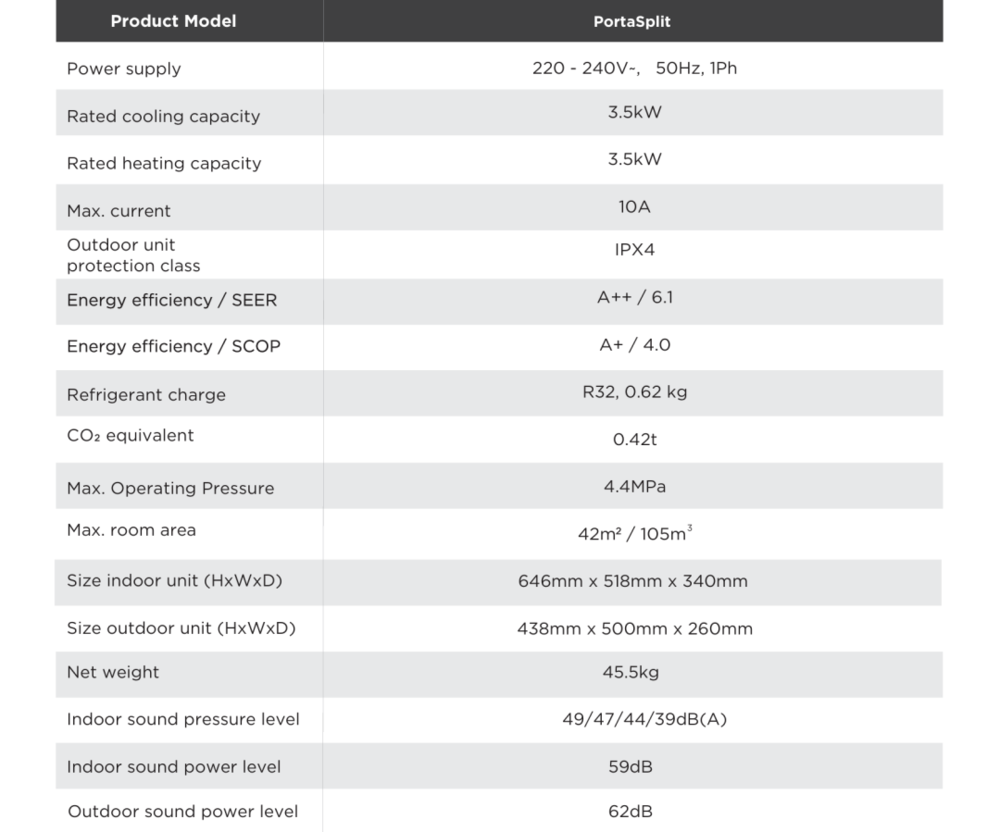
Midea PortaSplit user manual parameter screenshot 🔗https://www.midea.com/content/dam/midea-aem/uk/air-treatment/porta-split-air-conditioner/Portasplit-User-Manual-ENG.pdf
The so-called magic of exploiting loopholes is partly a dramatization created by netizens; it's entertaining as a joke but not worth taking seriously. However, the notion of "exploiting a bug" does have some truth.
It indeed sidestepped the two toughest hurdles for installing air conditioning in Europe, but the methods are much simpler.
The first hurdle is the F-Gas installation qualification.
European traditional split air conditioners require on-site connection of indoor and outdoor units, vacuuming, and refrigerant charging, and it is legally mandated that this must be done by an engineer holding an F-Gas certificate; in Italy, the penalty for failing to use qualified personnel for fixed air conditioning installations is up to 100,000 euros.
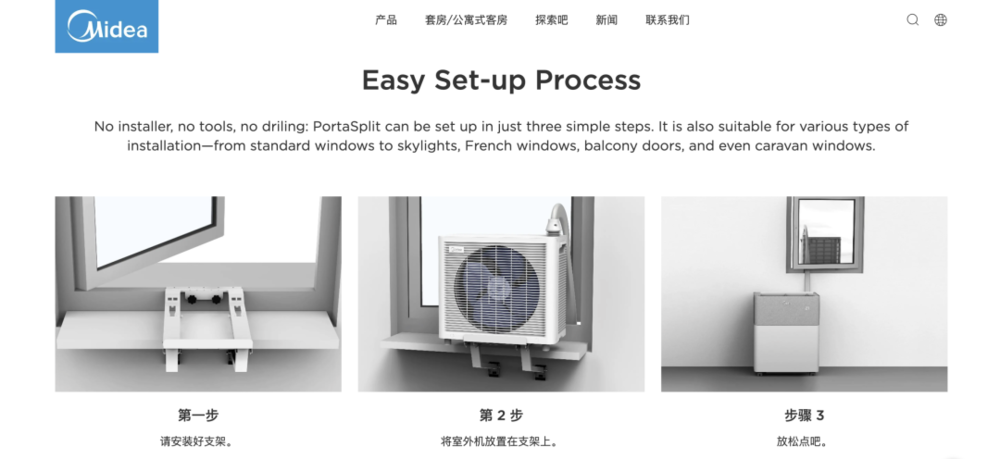
To address this, PortaSplit's solution is that the entire refrigeration circuit is sealed and welded in the factory, with the indoor and outdoor units connected by a permanent 2.7 cm thick flat pipe, and users do not come into contact with the refrigerant. British dealer pages even confidently state that an F-Gas engineer is not required.
By not having this installation action, the qualification threshold naturally does not exist.
The second hurdle is that you cannot alter walls.
Old European houses are either protected historic buildings that prohibit drilling, or renters generally lack renovation rights, and in Spain, hanging an outdoor unit requires a vote from the homeowners' committee. The 9.9-kilogram outdoor unit of PortaSplit does not go on walls or require drilling, it hangs on the windowsill with a metal bracket and uses a sealing kit to block the window gaps.
To move, just lift the outdoor unit from the bracket back inside, and any so-called "illegal construction" can disappear in ten seconds.
Thus, Midea has indeed carved out a blue ocean in the rental and old house market, areas traditionally abandoned by conventional air conditioning, relying on this "factory-sealed + no-drilling" product design to successfully exploit a bug.
This is what Vibe Coding should look like
If it were just a quirky encounter of an Austrian guy using high technology to snag an air conditioner, it would just be a fun story. The problem is, Denis is far from an exception.
Zooming in on Germany, you'll see a whole set of grassroots technical mobilization triggered by the heat wave.
The most typical example is a website called brauchklima.de, which translates to "I need air conditioning." The developer, Adrian Kübel, did something both straightforward and geeky:
He wrote a script to scrape real-time inventory data from major home improvement chains in Germany such as Bauhaus, OBI, Hornbach, and Toom, creating a map showing which of the over 1100 stores still had PortaSplit in stock.
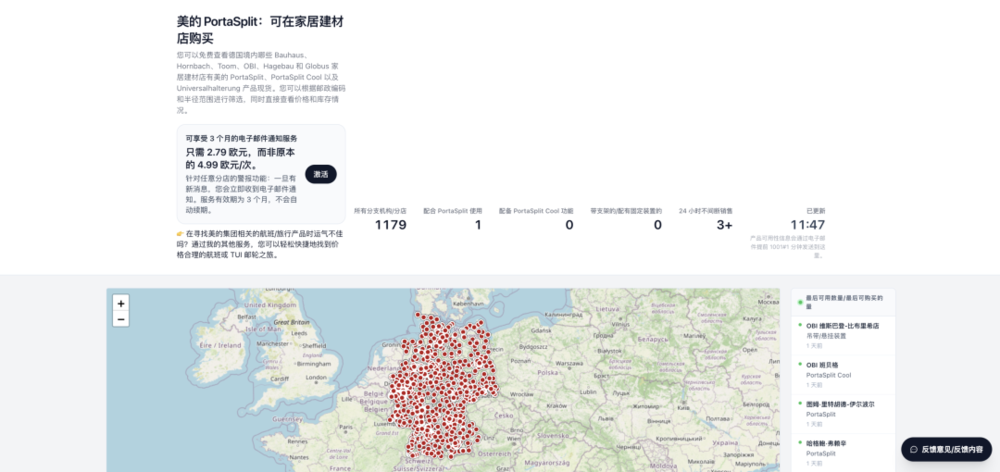
Green dots represent available stock, and red dots indicate sold-out status. The whole map is blood red. Of over 1100 stores, only 3 still had stock. Amazon, eBay? Sold out. Even on AliExpress, which sells everything, searching for PortaSplit only yielded replacement filters.
This website also offers email alerts, notifying you immediately when a store gets restocked. To be frank, if the same system could be applied to snag concert tickets or limited-edition sneakers, that would be fantastic (doge).
Inventory visualization is just the beginning; the developer's approach goes far beyond simply refreshing the map.
German tech media Heise reported that many buyers suspect that available stock is being wiped out in bulk by automated scripts (bots). The logic is easy to understand. Manual page refreshing will never beat machines.
So, tech-savvy netizens started writing Python scripts, running a headless browser to monitor inventory statuses in e-commerce APIs. Once the JSON field changes from "sold out" to "available," the script automatically adds to the cart, fills in details, and places the order, all in milliseconds.
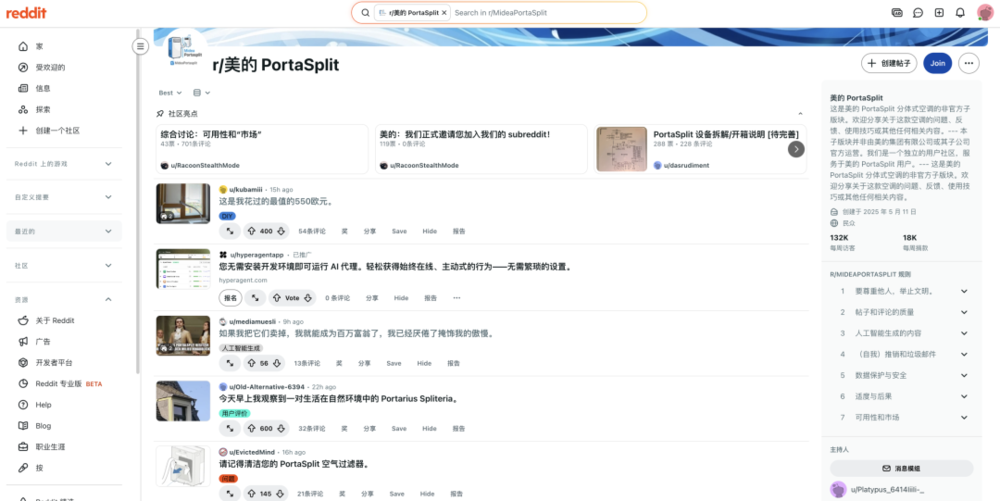
It's worth noting that just two years ago, writing such a bot required some programming background.
But now, the barrier has been smoothed out by AI. Just throw your needs at Codex, let it generate a purchasing script, fine-tune a bit, and you can have it running in a few minutes.
The more advanced approach is integrating the scraping script with the Telegram and Discord APIs. You create a channel, and when the backend script detects inventory changes, it instantly pushes notifications with direct links to hundreds or thousands of subscribers. Once a message is sent out, online buyers rush in.
Getting your hands on it is just the beginning for some hardcore developers.
For instance, someone posted a specially designed pipeline adapter for PortaSplit on the 3D printing model site Thingiverse, optimizing window gap seals. Others contemplated connecting the air conditioner to balcony solar panels, creating an ultimate off-grid solution that uses "as long as there's sunlight, the air conditioning blows for free."
By the way, in January this year, Midea released a firmware update for PortaSplit, adding an outdoor silent mode, claiming it can further reduce noise by 6 decibels. As soon as this new feature was released, someone in the HA community immediately opened an issue on GitHub to explore how to integrate it into local control.
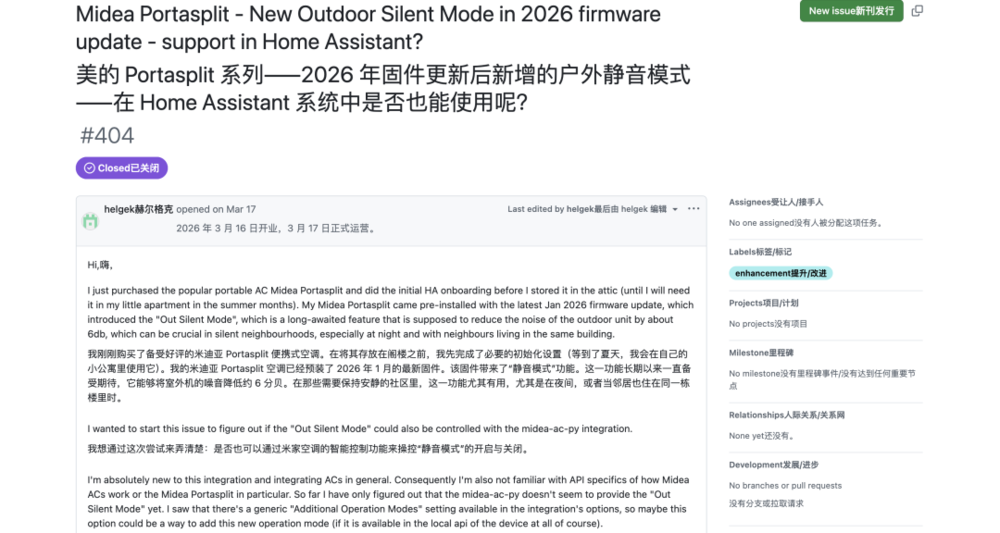
Indeed, manufacturers update on one end, and communities catch up on the other. This momentum indeed can only be forced out by necessity.
Having gone around in circles, let's return to Denis. The reason this tweet has circulated so widely both domestically and internationally is not just because of the air conditioner but because it employed AI agents in ways that most people hadn't thought of.
In the past conversations about Vibe Coding, there was often a hint of programmer self-entertainment, and discussions typically revolved around writing code: letting Claude or Cursor help you generate functions, fix bugs, or build projects.
When Karpathy introduced this term, it was merely positioned as "suitable for weekend toy projects."

But Denis's methods, along with brauchklima.de and the developers of those purchasing bots, in these scenarios, AI is not used for serious coding business but for scanning inventory across the EU, converting Hungarian voice recordings into communication plans, generating purchasing scripts, writing YAML configurations, and silently sending that key notification at 2 a.m.
Code is merely a means; the goal is to live better in the physical world. Of course, to be precise, it's to live cooler (manual dog head).
The most intriguing aspect is the twist in Denis's story.
He made a flurry of phone calls, contacted hotels, and planned a trip to Hungary, thoroughly busy, but in the end, the agent's local sourcing at 2 a.m. truly solved the problem. The human was bustling at the front, while AI quietly supported in the background.
To this day, we still see the argument that AI is useless flourishing across many social platforms.
But the heat wave does not discriminate, and it can provide more people with the first opportunity to seriously ponder what AI can actually help me accomplish. And the entry of AI agents into the real world may not necessarily start with grand narratives; it could begin with an air conditioner that's hard to obtain.
免责声明:本文章仅代表作者个人观点,不代表本平台的立场和观点。本文章仅供信息分享,不构成对任何人的任何投资建议。用户与作者之间的任何争议,与本平台无关。如网页中刊载的文章或图片涉及侵权,请提供相关的权利证明和身份证明发送邮件到support@aicoin.com,本平台相关工作人员将会进行核查。


