Author: 137Labs
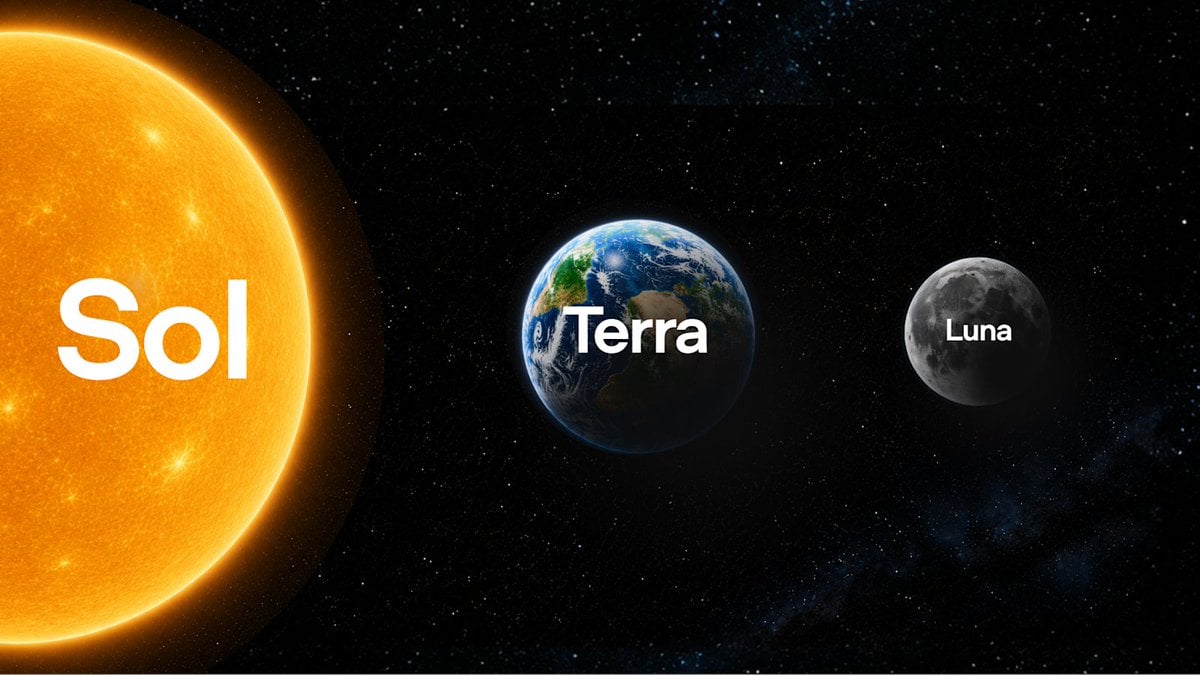
On June 26, 2026, OpenAI released the GPT-5.6 series models, introducing the flagship model Sol, the balanced model Terra, and the high-speed low-cost model Luna. Unlike previous launches that focused on a single flagship model, this time OpenAI clearly adopted a more mature product matrix approach: instead of just releasing the “strongest model,” it covered three types of needs: high performance, balanced cost, and high throughput all at once.
According to official OpenAI statements, the GPT-5.6 series significantly enhances capabilities in software engineering, computer operations, professional knowledge work, scientific research, and cybersecurity, among others. Currently, the series is in a limited preview phase, accessible through API and Codex to a small number of trusted partners, and is not yet fully available in ChatGPT.
From a single model to a family
Over the past few years, OpenAI’s model iterations have mostly revolved around a single core model. Even with mini, turbo, or different inference versions, they essentially extend around one flagship capability.
The difference with GPT-5.6 is that it has been designed from the outset as a three-tier model family.
Sol is the flagship model, aimed at high-difficulty reasoning, complex coding, scientific analysis, cybersecurity, and long-cycle agent tasks. It serves as the “strongest brain,” suitable for scenarios where the cost of error is high, the task chain is long, and deep judgment is required.
Terra is the mid-range balanced model, positioned similarly to the mainstay model for enterprises. It does not necessarily pursue maximum capability but achieves a balance among performance, stability, and cost, making it more suitable for high-frequency tasks such as knowledge base Q&A, office automation, internal enterprise assistance, code assistance, and document processing.
Luna emphasizes speed and cost efficiency, suitable for high concurrency, large-scale, low-latency application scenarios, such as customer service robots, content classification, batch summarization, real-time interaction, and lightweight automation processes.
This design suggests that OpenAI is further shifting from being a "model company" to an "AI infrastructure company." It is no longer simply telling the market “I have the strongest model,” but is beginning to answer the real questions enterprises care about: Which model should be used under different business needs, different budgets, and different response speed requirements.
Why Sol, Terra, Luna?
This naming is also worth noting.
Sol, Terra, and Luna correspond to the sun, earth, and moon, respectively. Compared to technical numbers like GPT-4o, o3, o4-mini, this naming carries a more product-oriented feel and is easier for non-technical users to understand.
Sol symbolizes the highest capability and core engine; Terra represents a stable, broad, and reliable middle layer; Luna suggests lightweight, fast, and low-cost.
Behind this is actually an important change: large models are transitioning from engineer-led technical products to a product system that can be understood by corporate procurement, developer deployment, and general users.
In the past, users would ask: “Which model is the strongest?”
In the future, users might ask: “Should this task use Sol, Terra, or Luna?”
This is similar to the cloud computing era, where users do not always choose the most expensive server, but select GPU instances, CPU instances, storage-optimized instances, or edge nodes based on tasks. AI models are also entering a similar era of resource scheduling.
AI products are entering the "layered era"
OpenAI's three-model strategy is not an isolated event but a common trend across the industry.
Anthropic's Claude series adopts layers like Opus, Sonnet, and Haiku; Google Gemini also has different positioning with Ultra, Pro, Flash, etc. The introduction of Sol, Terra, and Luna by OpenAI signifies that leading large model companies have essentially completed the transition from single flagship competition to model matrix competition.
This indicates that the large model industry has moved beyond the “one-point flashy” stage and entered the “engineering landing” stage.
In the early days, the competition among large models was primarily based on leaderboards, context length, inference ability, coding capability, and multimodal performance. However, when enterprises deploy in reality, they will consider more practical issues: invocation costs, latency, stability, throughput, permission management, security auditing, caching mechanisms, tool invocation capabilities, and deployment compliance.
Therefore, the most competitive vendors in the future will not necessarily be the ones with the strongest individual capabilities but rather the platform companies that can provide “flagship capability + cost efficiency + engineering reliability” at the same time.
The three-model structure of GPT-5.6 reflects this trend.
Agent becomes the core direction of GPT-5.6
One of the most noteworthy directions of GPT-5.6 is the continued enhancement of Agent capabilities.
In the past, large models mainly served as "Q&A tools": users posed questions, and models generated answers. However, the goal of an Agent is different; it not only needs to answer questions but also to plan tasks, invoke tools, operate software, check results, correct errors, and continuously advance goals across multiple steps.
OpenAI has officially mentioned that the GPT-5.6 series has made progress in software engineering, computer usage, and professional knowledge work, and these capabilities form the foundation of Agent deployment.
This means that the core value of AI in the future is not just “writing a paragraph” or “generating a piece of code,” but completing a complete workflow.
For example:
Users no longer just ask AI to write emails; instead, they expect AI to read context, organize materials, draft plans, generate emails, check wording, and send once confirmed by the user.
Developers no longer simply instruct AI to write functions; they expect AI to understand the codebase, locate bugs, write patches, run tests, explain changes, and submit merge requests.
Security teams no longer just direct AI to analyze vulnerabilities; they expect AI to assist in auditing code, generating repair suggestions, validating the impact of patches, and producing risk reports.
These types of tasks demand much more from models than ordinary chat. They require stronger long-term planning capabilities, more stable tool invocation abilities, better context management, and lower error accumulation rates.
Thus, the true significance of GPT-5.6 is not only being “smarter in answering” but being closer to “capable of continuous work.”
Reasoning ability continues to enhance
In recent years, the main line of improvement for large models has shifted from simple language generation to complex reasoning.
GPT-5.6 is positioned as a series of models aimed at software engineering, scientific research, professional knowledge work, and cybersecurity. These scenarios share a common characteristic: the questions are not simple Q&A but require multi-step judgment.
For instance, software engineering tasks often require the model to understand the structure of the codebase, identify dependencies, infer the source of errors, generate modification plans, and avoid introducing new bugs.
Scientific research tasks require the model to read complex materials, handle hypotheses, compare evidence, design experimental ideas, and even assist in data analysis.
Cybersecurity tasks are even more complex, as the model must help defenders enhance their capabilities while also avoiding misuse in attacks. OpenAI’s internal security assessment shows that the GPT-5.6 series performed strongly in internal network security evaluations, hence security controls and access restrictions became important contexts for this release.
This also highlights a real problem: the stronger the model, the more complex the method of openness.
In the past, the limitations on model capabilities mostly focused on misinformation, bias, hallucination, and content safety. However, as models begin to acquire stronger capabilities in coding, cybersecurity, automation, and tool invocation, they may affect real systems. Therefore, the release of cutting-edge models is no longer just a product issue; it has become a matter of security governance.
Cost becomes a new focal point for enterprise competition
Another focus of GPT-5.6 is its cost structure.
According to OpenAI's official pricing information, GPT-5.6 is billed per million tokens: Sol costs $5 for input / $30 for output, Terra costs $2.5 for input / $15 for output, Luna costs $1 for input / $6 for output. The official documentation also mentions a more predictable prompt caching mechanism, including explicit caching breakpoints and a minimum caching lifecycle of 30 minutes.
This shows that OpenAI is well aware of the pain points of enterprise customers: when truly scaling AI usage, cost is not a minor issue but the core factor determining whether the product can be commercialized.
An AI application might only require a few hundred model invocations during the demo phase, but once entering real business, the invocation volume could be in the tens of thousands, millions, or even more per day. At that point, if all tasks call the flagship model, costs can spiral out of control.
Thus, the value of the three-model structure lies in task diversion.
High-value, complex, low-frequency tasks are assigned to Sol.
Daily office tasks, knowledge Q&A, and code assistance go to Terra.
High-frequency, simple, real-time tasks are handled by Luna.
Combined with prompt caching, enterprises can cache fixed system prompts, long document contexts, common rules, and knowledge base content, reducing the cost of repeated input. This is particularly crucial for Agents, enterprise knowledge bases, and long context applications.
In other words, GPT-5.6 is not just a model upgrade; it is driving AI applications from “usable” towards “scalable business.”
Why is it temporarily unavailable for experience?
This time, GPT-5.6 has not been immediately opened to all users but is taking a limited preview approach. The OpenAI Help Center clearly states that during the preview, GPT-5.6 can be provided to a limited number of trusted partners through API and Codex, but it is temporarily not available in ChatGPT, with plans to gradually expand in the coming weeks.
This restriction is related to U.S. government security reviews of cutting-edge AI models. Reports from Axios, Financial Times, The Guardian, etc., have mentioned that access to GPT-5.6 is currently affected by government-related requirements, with a narrow scope of openness, especially focusing on cybersecurity and potential abuse risks.
This reflects that the AI industry is entering a new phase: the release of top models is no longer solely a voluntary decision of companies but may be influenced by national security, cybersecurity, and industrial policy.
OpenAI's stance is also somewhat nuanced. On the one hand, the limited release indicates that the company recognizes that cutting-edge models indeed require a more cautious deployment approach. On the other hand, OpenAI does not want this government approval mechanism to become the long-term default model because excessive restrictions could affect developers, enterprises, and defensive security teams' access to advanced tools.
This essentially highlights the core contradiction in future AI governance:
If openness is too rapid, it may pose a security risk.
If restrictions are too strict, it might weaken innovation and defense capabilities.
The release method of GPT-5.6 is likely to become an important case for future mechanisms of releasing cutting-edge models.
The future competition of large models will shift from models to platforms
The significance of GPT-5.6 lies not only in the enhancement of model capabilities but more importantly, in reflecting that OpenAI's development direction has changed.
The focus of future competition will no longer just be on model parameters, scores, or leaderboards, but:
· Whether there is a complete model product matrix;
· Whether there are mature Agent capabilities;
· Whether stable, secure, and cost-controllable enterprise solutions can be provided;
· Whether a complete ecosystem covering developers, enterprises, and general users is formed.
With the launch of Sol, Terra, and Luna, OpenAI has transitioned from "releasing a stronger model" to "building a complete intelligent platform."
For the entire AI industry, this also signifies that the development of large models is entering a new stage—models are no longer just technical achievements but become important components that support future digital infrastructure.
免责声明:本文章仅代表作者个人观点,不代表本平台的立场和观点。本文章仅供信息分享,不构成对任何人的任何投资建议。用户与作者之间的任何争议,与本平台无关。如网页中刊载的文章或图片涉及侵权,请提供相关的权利证明和身份证明发送邮件到support@aicoin.com,本平台相关工作人员将会进行核查。


