The information flow is too fast, and in-depth analysis articles are easily drowned out by hot topics. The "Weekly Editor's Picks" column extracts these valuable contents from the vast sea of information to help you filter out the noise, leaving insights that inspire.
Macroeconomic Situation
Goldman Sachs recommends buying a basket of the Chinese AI value chain, covering power, semiconductors, AI infrastructure, models, and applications.
Goldman Sachs estimates that the market value related to Chinese AI is about $4 trillion, with revenue accounting for about 16% of global AI-related revenue, but global mutual funds have only allocated about 1.2% to China.
The core of this transaction is not a single AI application explosion, but rather a revaluation opportunity brought about by underallocated funds, policy investments, and hardware demand. The risk lies in the need for continued realization in data center investments, storage expansion, IPO financing, and AI hardware exports.
India, the first country shorted by AI
If we want to find a trading target in the global market that can purely express the narrative of "AI replacing white-collar workers," the answer lies both on the bull list of Nasdaq and on the bear list of the Bombay Stock Exchange. The former is Nvidia, and the latter is the Indian Nifty IT index.
The essence of the Indian model is to wholesale primary engineers to the world, with the commodity being the repetitive labor of primary and intermediate engineers. Higher visa thresholds and AI replacing jobs are making it impossible for Indians to go to the United States.
Investment and Entrepreneurship
When big companies donate stocks to "Trump Accounts," which targets will benefit?
On July 4, the U.S. Treasury officially announced that the long-awaited "Trump Accounts" have officially launched, and American parents and children can now download the app and access their accounts to check their funds or make donations in real time.
The initial funding of the "Trump Accounts" mainly comes from government grants, private donations, and family savings. The Treasury allows stock donations, and SpaceX has followed up. In projects highly focused and personally promoted by Trump, companies that participate earlier are more likely to receive the president's public endorsement.
The potential benefiting targets mainly include three levels: the direct funding flow of the "Trump Accounts" – the S&P 500 index, the access path of the "Trump Accounts" – Bank of New York Mellon, Robinhood, early donation entities.
For investors, what is truly worth paying attention to may not be the next company named by Trump, but who can occupy the most core position in this decades-long funding pool.
Seven times oversubscribed, can SK Hynix save the semiconductor industry this time?
SK Hynix, the South Korean semiconductor giant, has exceeded a sevenfold subscription for the American Depository Receipts (ADR) issued in the U.S., poised to become the largest foreign listing project in U.S. history. Meanwhile, the entire semiconductor sector is experiencing a severe pullback.
In the context of ongoing adjustments in the secondary market, SK Hynix's U.S. stock listing has garnered much more funding support than expected. There is speculation about the listing pace of SK Hynix: before landing on Nasdaq, the stock price may undergo a significant adjustment, perhaps to create a more favorable outlook after listing, benefiting the company, underwriters, institutions, and retail investors alike...
The next few quarters of tech giant earnings reports (on explicit capital expenditures for AI's future) will be key to judging the direction of the semiconductor market.
Securitize lost 40% in the week after listing, the tokenization industry faces a patent war
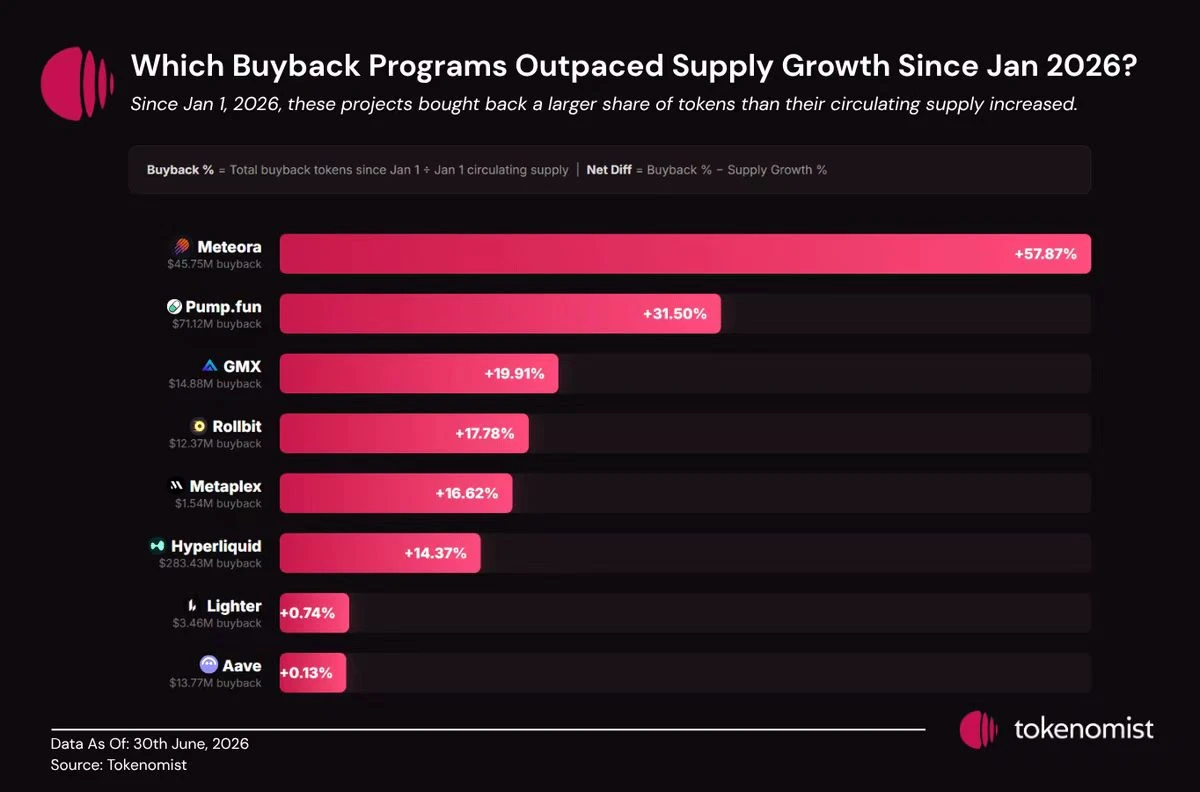
The SPAC mechanism has exposed issues ahead of fundamentals: after a SPAC goes public, the investor structure undergoes an overall switch, from SPAC subscribers who initially prefer fixed income to true long-term fundamental stock holders, and this turnover process itself creates violent fluctuations.
The tokenization infrastructure company tZERO has sent a letter to Securitize, demanding "cease and desist from infringement and reserve rights," accusing its DS Protocol and Vault Registrar core products of infringing on patents held by tZERO.
This drop in stock price reflects that the secondary market does not acknowledge endorsement, only liquidity.
Also recommended: 《Trump's "paycheck" revealed: cryptocurrency revenue of $1.4 billion, over 22,000 stock trades》《SpaceX's first-day drop below 150, did Wall Street collectively shout the highest price of 800 dollars?》.
Web3 & AI
The "China Hynix" earning 400 million a day, even Apple is seeking to buy
In the global storage industry ranking, after Samsung, SK Hynix, and Micron, there is the yet-to-be-listed Chinese company Changxin Storage (CXMT).
This domestic chip company, which has been losing money for nearly a decade, suddenly became one of the most profitable hard tech companies in A-shares. In the past week, the name Changxin Storage has appeared frequently in global tech media. Apple is lobbying the U.S. government for a special permit and plans to include Changxin Storage in its Mac and iPad memory supply chain. Google has also started evaluating Changxin DRAM for procurement, and there are reports that HP and Dell are validating Changxin Storage DRAM, while Acer and Asus are requesting more use of domestic storage chips from Chinese partners.
In the same week, Reuters reported that Tencent signed a long-term supply agreement for server DRAM with Changxin Storage worth over 20 billion yuan, valid for three to five years. The client list disclosed in Changxin's prospectus includes Alibaba Cloud, ByteDance, Lenovo, Xiaomi, OPPO, vivo, and Honor.
One thing that all investors must consider calmly when looking at Changxin’s valuation: today's excessive profits are due more to cyclical contributions than structural progress. Pricing Changxin as a "stable growth stock" may easily overestimate profit sustainability. Understanding it as "a new variable rising in the cycle" is closer to the real situation.
Prediction Markets
The World Cup quarter-finals are about to kick off, which teams do AI favor for advancement?
Different models predict the final four with high consistency: France, Spain, England, and Argentina.
Also recommended: 《After Ronaldo's tearful farewell, Polymarket stages a "tear verification" drama》.
Policy and Stablecoins
MiCA implemented, Tether exits Europe, Circle capitalizes on compliance benefits
Tether did not apply for a MiCA license, stating that the regulation is "very dangerous for stablecoins." Before the MiCA transition period ended, Circle had already secured an EMI license in France and integrated USDC and EURC into the MiCA framework.
Stablecoins that can remain in mainstream trading and institutional scenarios in the long term cannot rely solely on liquidity and user habits; they must also have a sufficiently clear compliance identity. This is Circle's opportunity.
CeFi & DeFi
Strategy's accounting trick: the cap on selling coins is far more than $1.25 billion
"Replenishing reserves" and "building reserves," the two types of sales will ultimately flow into the same reserve pool for the same purpose, just classified as different usages.
The previously disclosed "Monetization Plan" (BTC Monetization Program, which is selling coins) has never limited Strategy to only selling $1.25 billion worth of Bitcoin; it only restricts one funding pool—that is, establishing dollar reserves by selling BTC.
The market needs to start understanding Strategy's "special language": "building" and "replenishing" are essentially just accounting classifications, but they determine whether Strategy's BTC sales will occupy the "open quota" that the market sees.
The past Strategy narrative was very simple: selling MSTR stock → buying Bitcoin → providing investors with leveraged BTC exposure, but now the logic has changed. Today, Strategy is buying and selling different components of its own capital structure to manage the strain relations between common stock (MSTR), preferred shares, dollar reserves, and Bitcoin assets (BTC). This dynamic also introduces new conflicts of interest.
Bitcoin is no longer just an asset for Strategy to continue accumulating; it is becoming a balance-sheet lever to maintain the operation of the preferred share system. The market must also break down every term used by Strategy to judge what it means for future BTC sales.
Further reading: 《When the biggest buyer of BTC becomes a seller, who is picking up the pieces after Strategy sells 3,588 Bitcoins?》.
Crypto options landscape is a set of adjacent markets with different settlement and yield types.
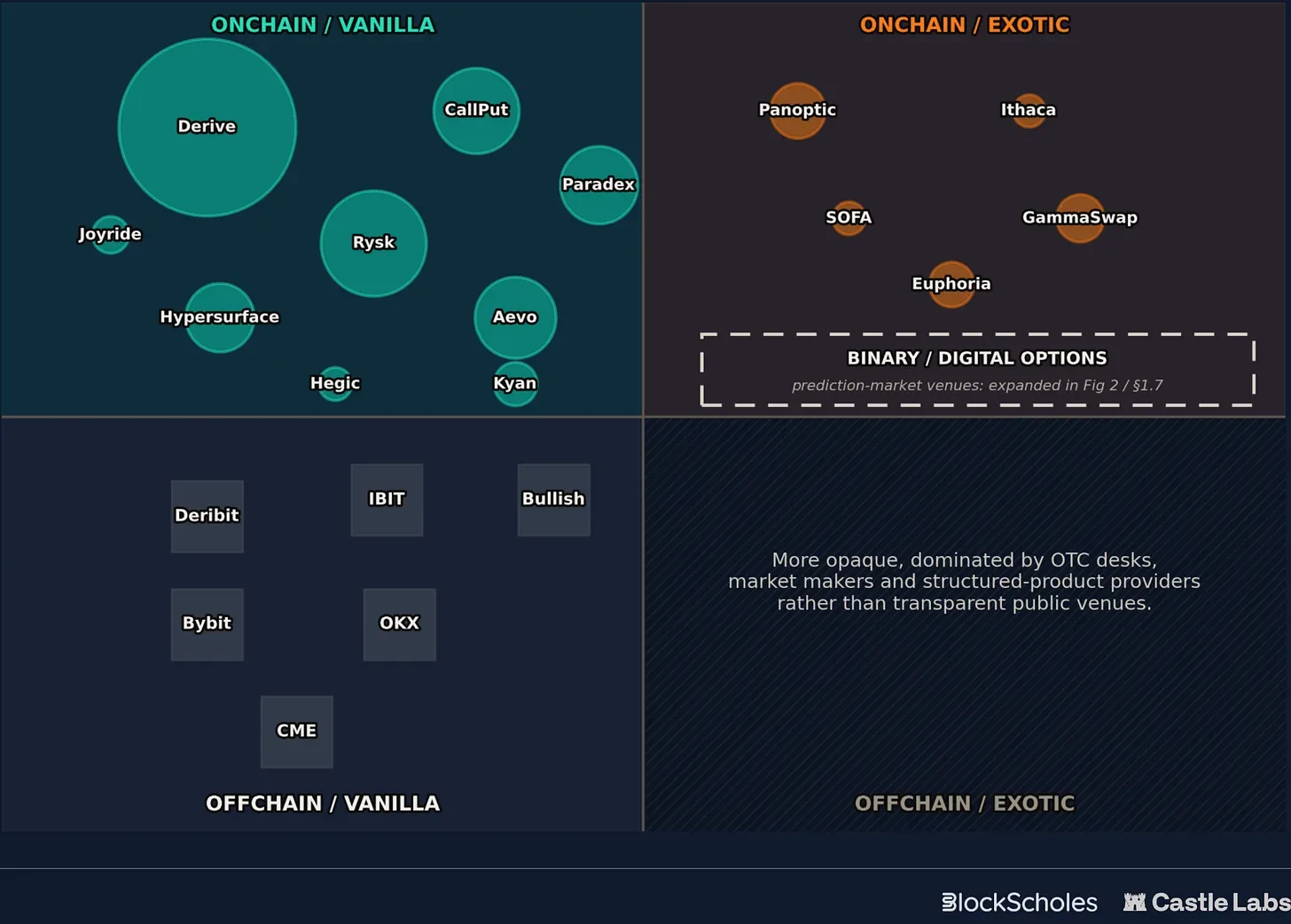
Vertical axis settlement: on-chain to off-chain; horizontal axis yield: vanilla to exotic
Meme
ANSEM reaches a new high, CZ enters the fray, Meme Summer is back
Ethereum and Scaling
Ethereum Foundation is dead, Ethereum diversification organizations should rise
Weekly Hotspot Review
Policy and Macroeconomic Market
Trump on Iran: We have won, especially in the military field;
The U.S. MCSA no longer opposes the CLARITY Act, changing its stance to neutral;
The Clarity Act was not signed into law on July 4; August 7 is a key time node ( analysis );
The U.S. SEC released its regulatory agenda statement for 2026: to promote tokenized security trading and advance crypto regulations;
North Carolina will impose a 6% tax on prediction markets, acknowledging the CFTC's federal regulatory authority;
South Korean stock investors bet on Chinese AI, with a "shopping spree" of $2.8 billion in half a year: A-shares Northern Huachuang and Cambrian have been purchased frantically;
Is the AI carnival continuing? U.S. tech companies' data center rental commitments hit a high, reaching $850 billion;
Zhiyou plans to self-develop AI chips, having contacted chip companies to accelerate filling the computing power gap;
In just one year, earning more than in the past 40 years, Samsung's estimated operating profit this year is about $200 billion;
Changxin Technology launches IPO on the Sci-Tech Innovation Board, with an estimated market value of nearly 295 billion yuan and a first-day locked-up ratio of 78%;
Google updates its Chrome Web Store policy: banning extensions related to prediction markets;
Opinions and Voices
The three AI giants impact the capital market: SpaceX, OpenAI, and Anthropic may create the largest exit wave in U.S. VC history;
Serenity: Humanoid robots may reach a labor replacement inflection point; VCs and tech giants have begun to adjust their strategies;
Cantor Fitzgerald: optimistic about MSTR's link with BTC recovery; STRC is key to restarting the capital engine;
Vitalik: In the next five years, Ethereum will enter a streamlined era, with anti-quantum and privacy as primary goals;
Institutions, Big Companies, and Leading Projects
Strategy plans to support a $1 billion preferred share buyback through a $1.25 billion Bitcoin monetization plan;
Polymarket launches Perp trading feature, supporting various crypto and stock assets, with up to 20x leverage;
Open USD Consortium was accused of listing stablecoin partners like Samsung without consent;
Leading blockchain games YGG "cut off an arm to survive": shutting down the issuance platform, going all-in on AI data economy;
Data
USDC leads in stablecoin trading volume competition against USDT, with monthly trading volume hitting a new high;
Robinhood Chain surpasses Hyperliquid in 24-hour DEX trading volume, reaching $433 million;
Meme coin CASHCAT becomes the first blockbuster on Robinhood Chain;
Nearly a million investors have incurred cumulative losses of over $3.8 billion in Trump-themed tokens;
Memecoin market cap ratio among altcoins drops to 3.7%, hitting a new low in nearly three years;
Bloomberg: SK Hynix ADR expected opening price to reach $175, 17% increase from the issuance price...
Attached is the link to the "Weekly Editor's Picks" series. See you next issue~
免责声明:本文章仅代表作者个人观点,不代表本平台的立场和观点。本文章仅供信息分享,不构成对任何人的任何投资建议。用户与作者之间的任何争议,与本平台无关。如网页中刊载的文章或图片涉及侵权,请提供相关的权利证明和身份证明发送邮件到support@aicoin.com,本平台相关工作人员将会进行核查。