Author: Zhang Yaqi, Wall Street Journal
The volatility of U.S. stock indices appears calm on the surface, but internal pressures are building up. Under the triple pressures of geopolitical situations, expectations for monetary policy, and signals from the credit market, market vulnerability has risen to near historical highs—while a season of high expectations and high risks for earnings reports starts just at this moment.
The "Turbu-lens" market vulnerability indicator from UBS's derivatives strategy team currently reads 0.9 (on a scale from -1 to 1), the highest level since mid-September 2025, and historically such readings often indicate a phase of sharp increases in the VIX. The UBS derivatives strategist Maxwell Grinacoff's team warns that this indicator points to "extreme market vulnerability," coinciding with the start of the earnings season. Meanwhile, the team also noted that if systematic strategies leverage fully, the indicator reading "could truly reach +1."
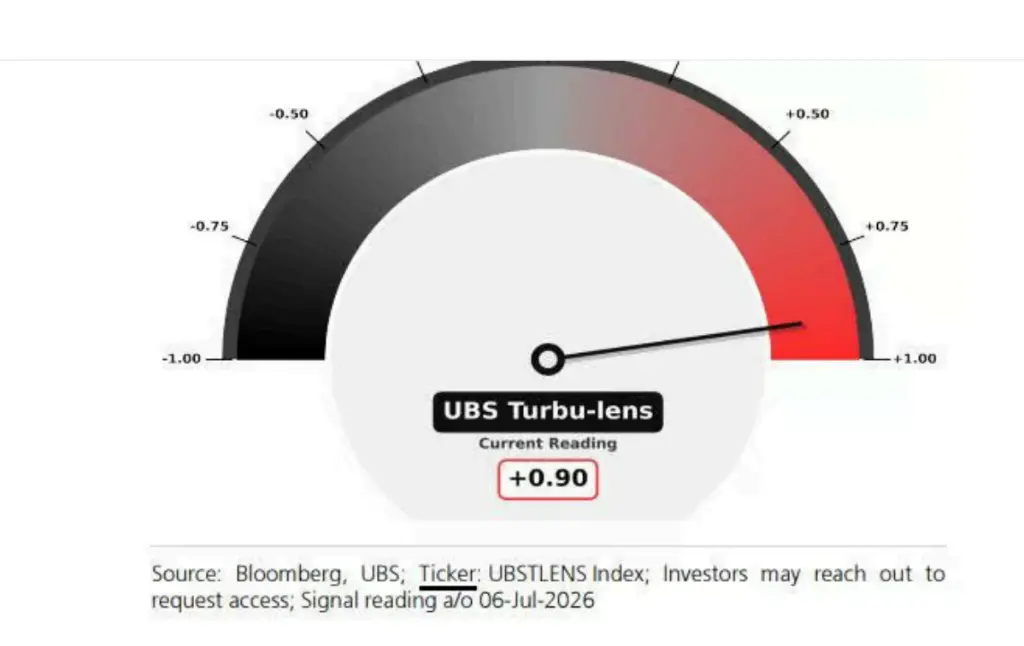
The current market's high expectations have further amplified risks. Analysts expect a 24% growth in earnings for the S&P 500 constituents in the second quarter and a 12% expectation for the Europe Stoxx 600 index. Unlike previous earnings seasons, analysts have consistently raised forecasts on the eve of the reporting period, and the strength of this confidence means that should the results disappoint the market, the adjustment room is greater.
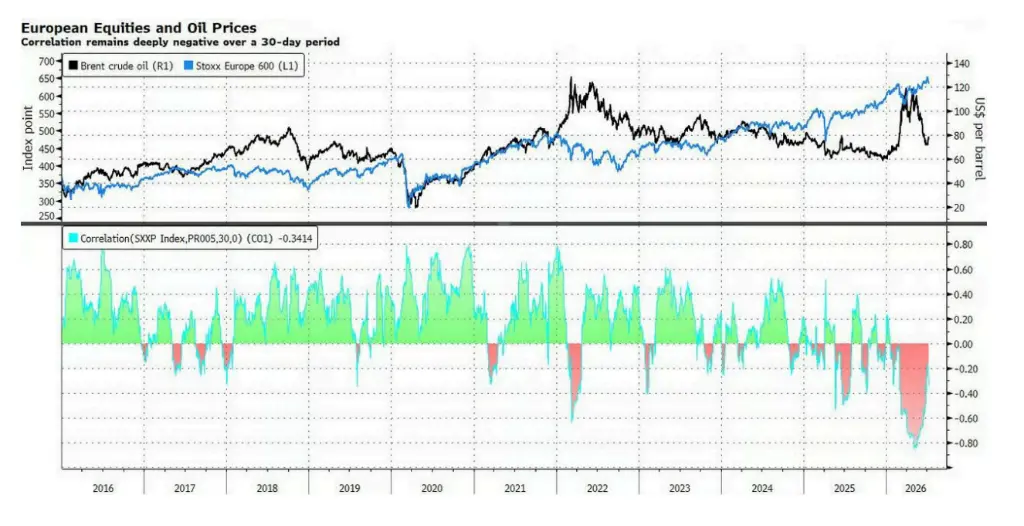
VIX Calmness, Individual Stock Volatility at Three Times Higher
The current VIX is at a low level, but this calmness is misleading. Barclays strategist Anshul Gupta's team points out that the recent decline in VIX coincides with the calendar window when seasonal price fluctuations usually narrow, characterizing it as a "temporary sweet period" with limited sustainability, and the start of the earnings season may re-elevate VIX.
More concerning is that the low volatility of indices masks extreme differentiation within the market—individual stock volatility has exceeded index volatility by more than three times. Grinacoff states that the probability of narrowing this gap is higher in the summer, when either a re-pricing of monetary policy or geopolitical disruptions could trigger a surge in index-level volatility.
In terms of hedging strategies, due to dispersion trading and sector rotation likely continuing during the upcoming earnings period, the hedging effect at the index level may be limited. Grinacoff suggests, "Individual stock options may provide better tactical opportunities."
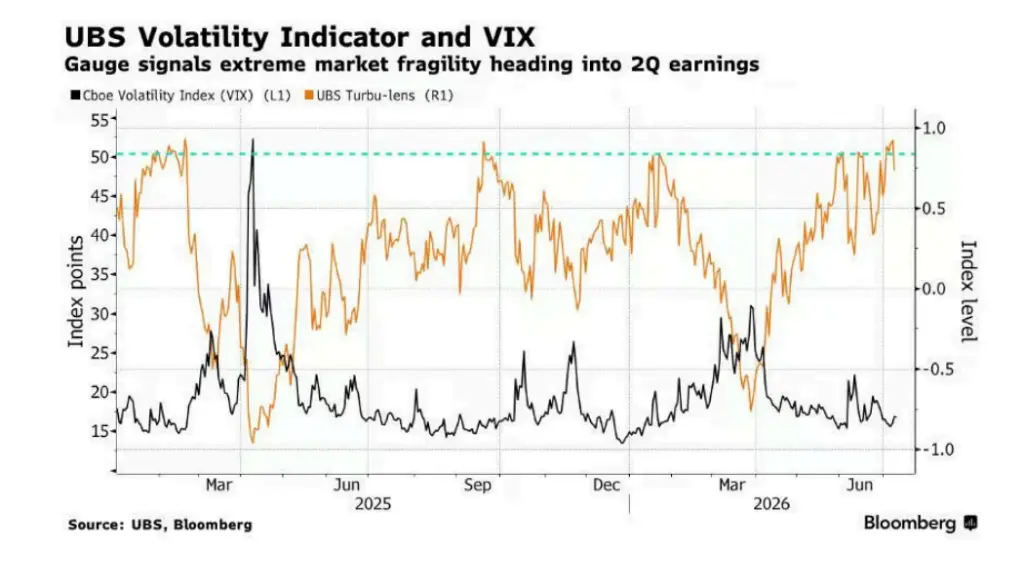
Oil Prices and Bond Market Send Dual Warnings
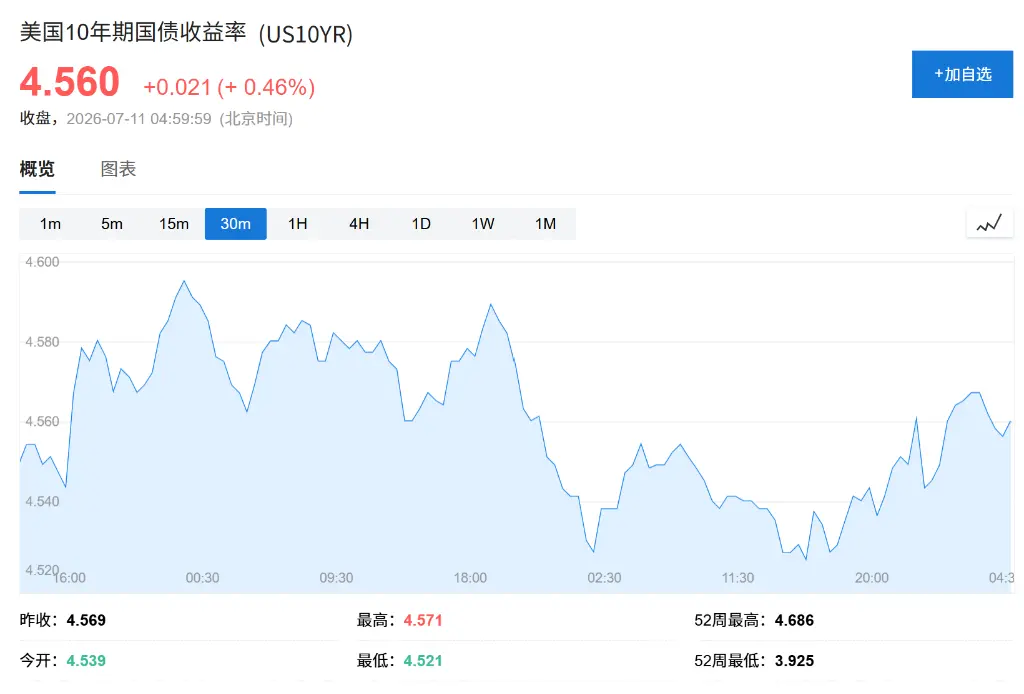
The fluctuations in oil prices driven by geopolitical situations are consistently putting pressure on global stock markets. Brent crude prices have risen to below $80 per barrel, a trend that may keep inflation expectations high and lead the Federal Reserve to maintain a wait-and-see stance. Although changes in interest rate expectations following the release of the Federal Reserve's minutes have been limited, the yield on 10-year U.S. Treasury bonds has quietly risen to nearly 4.6%, with rising bond market volatility sending negative signals to global stock markets, or at least suppressing further upside potential.
Citi's strategist team (including Alice Zheng) points out that the market currently has a biased positioning regarding rising oil prices, with Europe being particularly vulnerable—due to its high dependence on imported energy and low exposure to assets benefiting from AI. "If the rise in oil prices continues, the pullback in European stocks could be quite significant, as the market has already substantially priced in expectations for the end of the conflict," the strategists wrote.
Credit Market Does Not Endorse Stock Market Rising
The performance of the credit market has sounded alarm bells for the current upward momentum in the stock market. Compared to the previous record highs of the stock indices, the narrowing of credit default swap (CDS) spreads has been relatively limited, and the credit market has not fully endorsed the stock market's upward trend. As the stock market recently experienced a pullback, the two have realigned, but analysts believe that to support a stronger upward move in the stock market, clearer tightening signals from the credit market are needed.
In the face of these risks, UBS recommends that investors capture individual stock volatility opportunities through pair-wise correlations trades. In terms of sectors, UBS believes that technology, energy, and financial sectors in the U.S. market are best suited for paired volatility trading, while it recommends energy, technology, and consumer discretionary sectors in the European market.
免责声明:本文章仅代表作者个人观点,不代表本平台的立场和观点。本文章仅供信息分享,不构成对任何人的任何投资建议。用户与作者之间的任何争议,与本平台无关。如网页中刊载的文章或图片涉及侵权,请提供相关的权利证明和身份证明发送邮件到support@aicoin.com,本平台相关工作人员将会进行核查。


