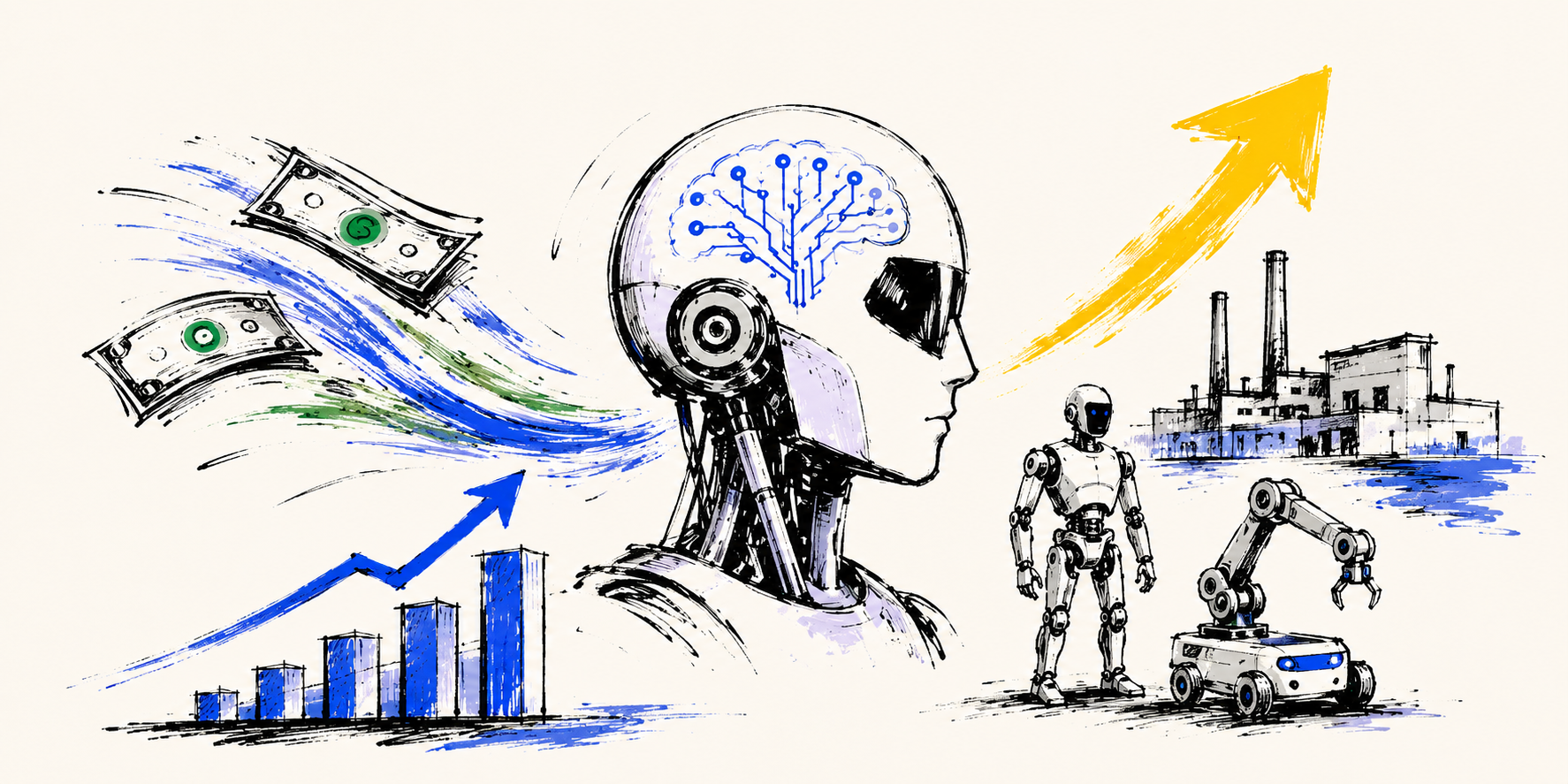
Some see it as the greatest platform opportunity after large models, while others denounce it as a capital bubble driven by overvaluation. But one undeniable fact is: embodied intelligence is succeeding large models and becoming a new frontier for AI talent influx.
Since 2026, the investment craze in embodied intelligence has continued to rise, with several leading companies completing financing rounds of hundreds of millions of dollars. Basic models for robotics, humanoid robots, world models, and simulation platforms have become some of the most watched directions in the primary market.
Beyond funding, talent and technology routes in the AI industry have also begun to extend towards robotics. Google DeepMind, NVIDIA, and Mistral have successively expanded their Physical AI layouts, and a batch of researchers from large models, world models, and spatial intelligence fields have started to enter the robotics entrepreneurial space. The technology and talent networks formed around language models are seeking new application outlets.
However, the increase in capital investment has not brought about a consensus expectation. Are humanoid robots suitable for most industrial scenarios? Can complex movements shown in videos be translated into long-term stable operations? Is the current valuation overleveraging commercialization prospects? These have become focal points for investors.
Continuous funding is flowing in, but the divergence in routes is becoming increasingly pronounced.
The Valuation Logic Behind Capital Betting on “Robot Platforms”
According to Crunchbase statistics, as of late June 2026, the global financing amount for robotics startups in the year has reached $18.8 billion, surpassing the $15 billion total for all of 2025 and the $14.1 billion peak set in 2021.
If we include certain autonomous systems and Physical AI companies in the robotics industry statistics according to PitchBook, in the first quarter of 2026 alone, the fields of robotics and Physical AI completed 492 financing rounds, with a transaction amount reaching $16.3 billion.
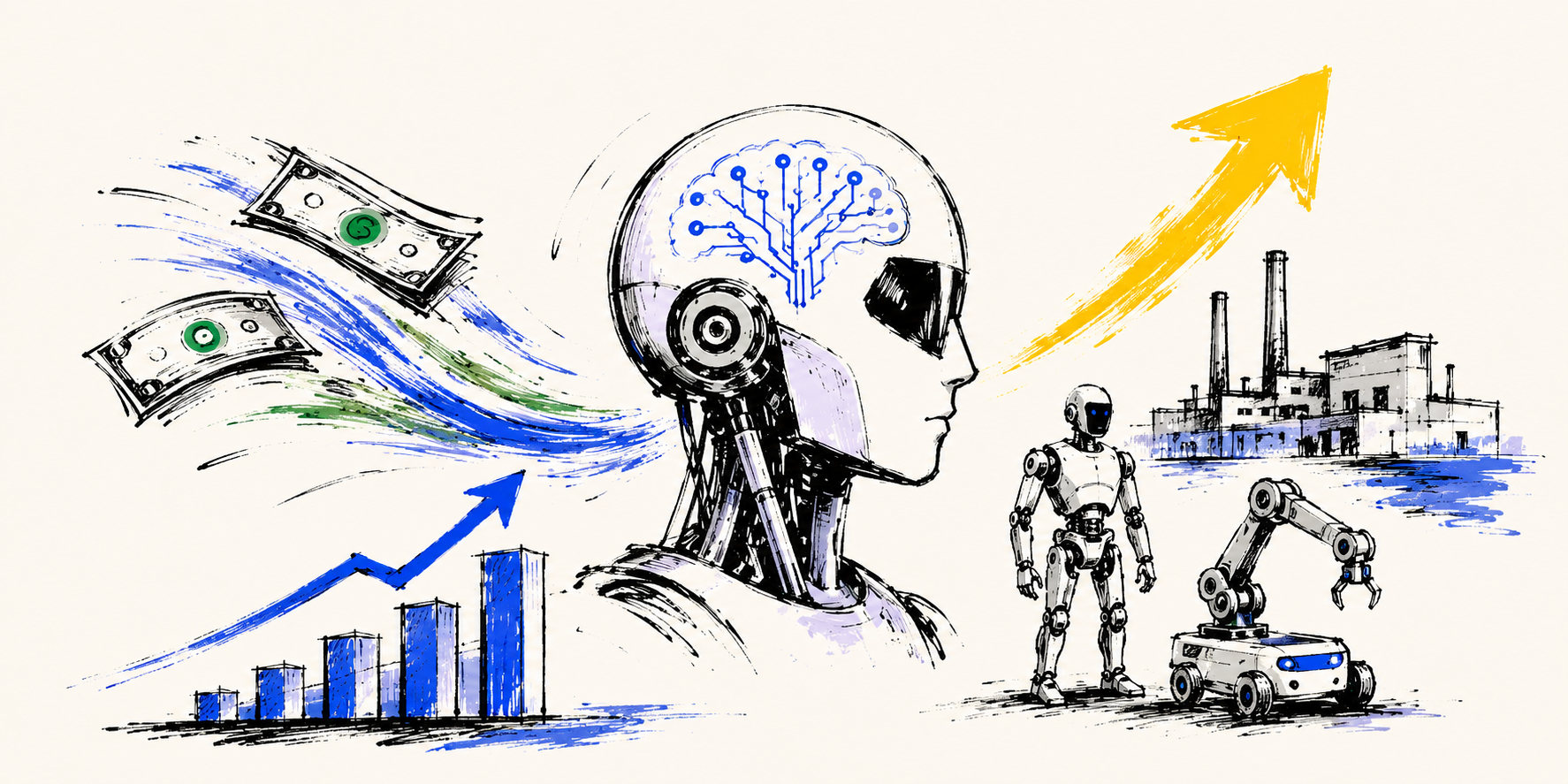
Massive funding has clearly flown to a few star companies. In January of this year, the robotics basic model company Skild AI completed a $1.4 billion Series C funding round, reaching a valuation of over $14 billion; in June, German robotics company NEURA Robotics announced it had secured up to $1.4 billion in Series C funding; humanoid robotics company Apptronik also received an additional $520 million in February, bringing its total Series A financing to over $935 million.
Notably, these investments are no longer a showcase dominated by traditional venture capital. Companies like Google, NVIDIA, Amazon, Mercedes-Benz, Bosch, and Schaeffler frequently appear on financing lists. They may provide models, chips, and manufacturing capabilities or potentially become clients and deployment channels for robotics in the future.
These transactions also reflect a shifting approach in capital valuation of robotics. Investment focus is no longer solely on mechanical structure and equipment sales; robotics models, data loops, simulation capabilities, and cross-ontology reuse have become new valuation bases. Many investors hope that basic models can lower the cost of adapting robots to new tasks, that the same software can progressively cover more tasks and robot forms, and that real-world deployments can lead to data accumulation.
This idea somewhat resembles the development path of large models. The more capable the model, the more applicable the scenarios; scaling up deployment can bring more data. However, the physical environment that robots face is far more complex than text, and whether model advancements can replicate the rapid expansion of large language models remains unanswered.
Bessemer Venture Partners refers to the current phase as the “GPT-2.5 moment” for robots. They contend that robotics basic models have begun to show real capabilities, and patterns between data scale and model performance are emerging, but there is still a considerable gap between laboratory demonstrations and large-scale deployments.
The Humanoid Route Debate: Are Legs the Answer or a Burden?
The market imagination space for humanoid robots is significant because many facilities in modern society are originally based on the scale of the human body and human operating habits. Door handles, stairs, workbenches, and common tools all assume the user has a height, arm span, and hand structure close to that of a person. Adopting a human-like form allows robots to use existing tools directly and may reduce renovation costs in factories, warehouses, and public spaces.
Compared to traditional industrial equipment that can only perform fixed tasks, general-purpose humanoid robots target a broader market. From manufacturing and logistics to retail, service, and household labor, nearly every scenario that relies on manual operations could fall within their long-term application scope.
However, humanoid designs also bring additional engineering burdens.
Several investors interviewed by Business Insider recently believe that some robotics companies prematurely set humanoid forms as the final answer. Legs must support the torso and battery, and during walking, maintaining balance continues to increase difficulty, energy consumption, and fall risk. In factories and warehouses with flat surfaces, wheeled chassis are often more stable; certain production processes do not require robotic movement, and fixed mechanical arms can accomplish tasks at a lower cost.
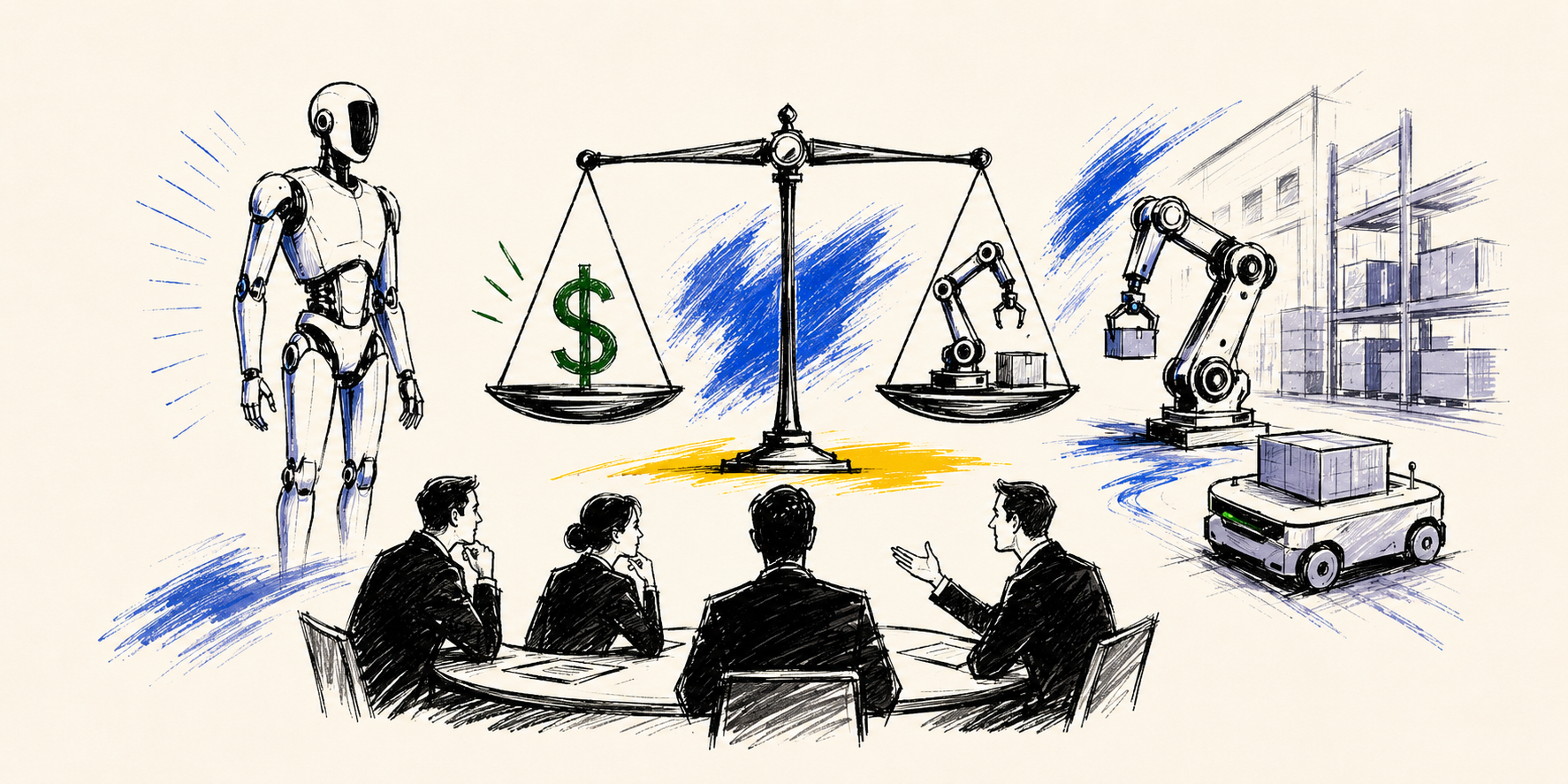
Bain Capital Ventures partner Ajay Agarwal is cautious about the practicality of humanoid robots. He believes that wheels and wings are widely used precisely because they are more efficient than human means of movement in specific scenarios.
Eclipse partner Jiten Behl places greater importance on the match between the tasks and the robot form. In many manufacturing processes, robots do not need to walk or maintain a standing position. Determining the work content first and then choosing wheeled chassis, fixed mechanical arms, quadrupeds, or humanoid designs may better meet the actual needs of industrial deployment.
The Eno released by Genesis AI is a product of this thinking. Eno retains manipulation capabilities similar to human hands but eliminates the head and legs, employing a wheeled chassis and a liftable structure, primarily targeting logistics and manufacturing in flat environments. Genesis was founded in 2025 and has secured $105 million in financing, planning to commence production and target customer deployments by the end of 2026.
In summary, humanoid robots are better suited for using existing tools, overcoming obstacles, or frequently switching tasks; wheeled robots and fixed mechanical arms can achieve higher stability and lower costs in clearly defined factory and warehouse processes. For enterprise clients, the specific form of robots is only part of the procurement evaluation. Factors like continuous operation, recovery time after failures, the need for long-term engineers on-site, and whether efficiency gains can cover procurement and maintenance costs all influence final decisions.
Currently, the publicly demonstrated videos released by robotics companies often showcase the upper limits of robotic capabilities, while what industrial clients, as buyers, care more about in actual production environments are daily performances. A robot's continuous operating time, long-term failure rates, maintenance costs, and return on investment periods are more precise concerns.
Industrial clients will calculate cycle times, uptime rates, intervals between failures, maintenance costs, and return on investment periods. Once robots enter open environments, they must also handle variations in light, object displacement, personnel movement, and situations that have not appeared in various training data. Unlike chatbots that can regenerate responses after errors, physical robots' mistakes can also have tangible consequences; a single misjudgment could damage items, equipment, or even threaten personnel safety.
Regarding the timeline for widespread application of robots, the deployment plans disclosed by large enterprises provide a reference for the pace of commercialization. Hyundai Motor Group plans to deploy Boston Dynamics’ Atlas humanoid robots at its factory in Georgia, USA, starting in 2028, initially for high-risk and repetitive tasks, then gradually expanding to more complex jobs like parts assembly.
This pace suggests that even for the most aggressive industry players, the scaling deployment of humanoid robots will still require years of refinement.
AI Talent “Down to Create,” Robotics Remains a Hard Engineering Task
As investment in robotics heats up, AI companies and researchers are also beginning to extend model capabilities into the physical world.
In July of this year, European large model company Mistral launched its first robotic model, Robostral Navigate. This model has 8 billion parameters and performs autonomous navigation using just one RGB camera, without relying on Lidar or complex multi-sensor systems. Before releasing the model, Mistral acquired the Austrian robotics AI company Emmi AI to supplement its technical team for entering the industrial and robotics sectors.
Genesis AI co-founder Théophile Gervet was previously a researcher at Mistral. This year, the company released the robotic model GENE-26.5, aiming to adapt the same model for robots from different manufacturers and of different forms while covering both navigation and operational tasks.
Google DeepMind has also been earlier in integrating the capabilities of Gemini into robotics. Gemini Robotics, released in 2025, combines visual and language understanding with action generation within the same model; the accompanying Gemini Robotics-ER focuses more on spatial reasoning, capable of identifying object locations, planning operational paths, and connecting with the existing underlying controllers of robots.
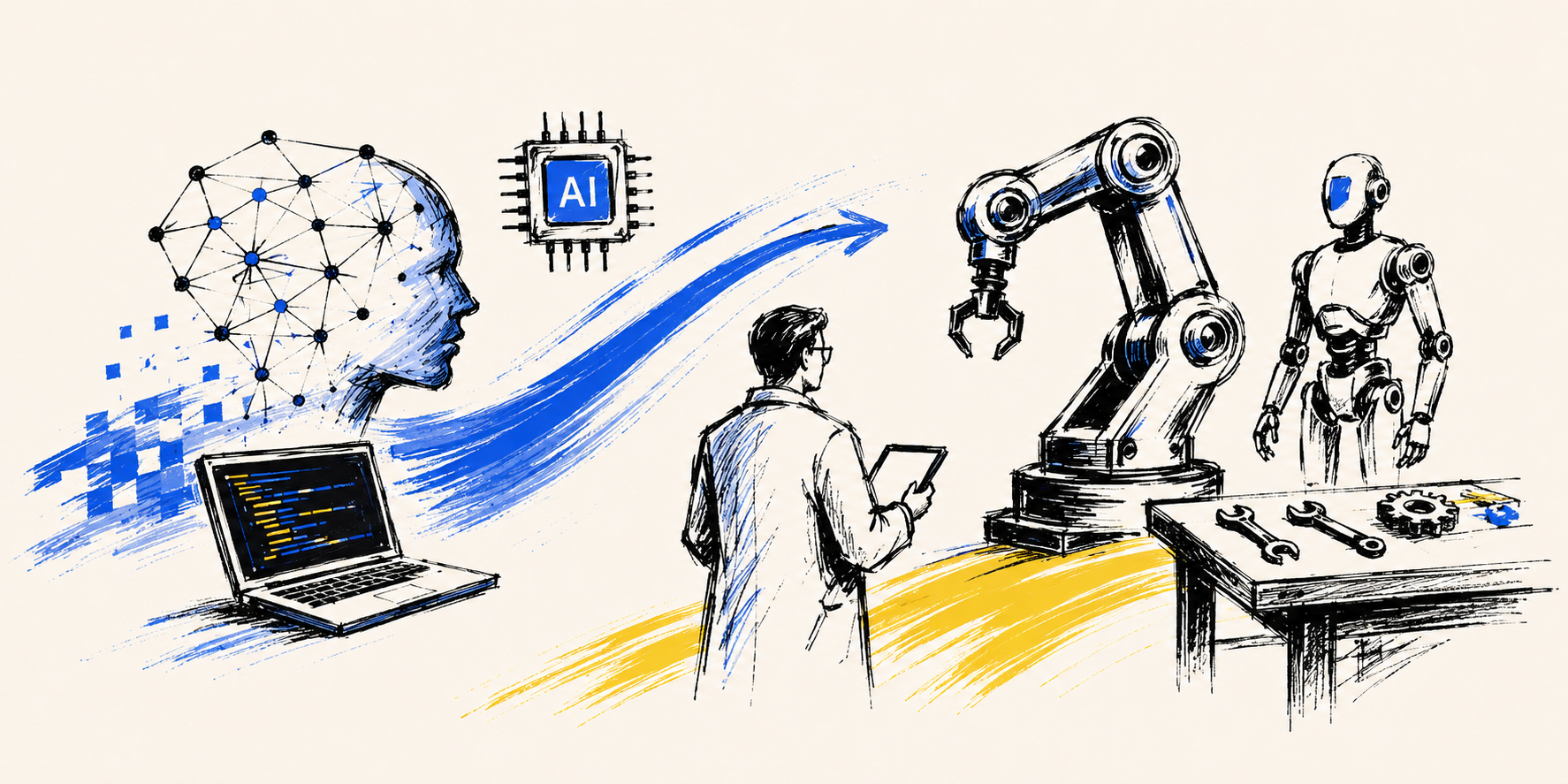
World models have also become a new hotspot in AI research.
While large language models can learn relationships between texts, they struggle to understand how objects move, collide, and deform based solely on language. Once robots enter real environments, they must also judge spatial distances, object states, action outcomes, and the continuous changes in external environments.
World models aim to enable AI to build internal representations of space, time, and physical laws, predicting the outcomes that a particular action may bring. The World Labs founded by Fei-Fei Li focuses on spatial intelligence; Yann LeCun has also long viewed world models as an important direction for breaking the limitations of language models.
Talent mobility has already shown more specific cases. AP recently reported that Louis Castricato, who had long researched large language models, shifted his focus to world models during his doctoral studies and founded Overworld, hoping to enable AI to learn spatial and physical environments, rather than just process text. An increasing number of researchers are beginning to view robotics, generative environments, and physical reasoning as new directions following chatbots.
However, robotics R&D also involves dynamics, motion planning, sensor fusion, embedded systems, mechanical design, materials, supply chains, and on-site maintenance. Actions learned on one type of robotic arm may require retraining and debugging when transferred to devices with varying joint structures and load capacities. Wear and tear of parts in production environments, network delays, safety certifications, and equipment maintenance cannot be solved solely by scaling up models.
Currently, the demand for versatile talent in embodied intelligence is higher than that for general software startups. After analyzing U.S. robotics companies that were founded in the last five years and have collectively raised over $30 million, Bessemer found that 43% of founders hold Ph.D. degrees, and 48% come from Stanford, MIT, Berkeley, and Carnegie Mellon. Talent in robotics basic models, control systems, and hardware engineering remains concentrated within a limited number of research institutions and industrial networks.
As capital surges in, talent migrates like migratory birds, embodied intelligence undoubtedly stands at the forefront of the AI industrialization wave. Yet beneath the surface, route divergences, engineering challenges, and commercialization delays continue to exist like hidden reefs. The forces of humanoid versus non-humanoid, general versus specialized, software flywheel versus hardware toil are still engaged in fierce competition.
免责声明:本文章仅代表作者个人观点,不代表本平台的立场和观点。本文章仅供信息分享,不构成对任何人的任何投资建议。用户与作者之间的任何争议,与本平台无关。如网页中刊载的文章或图片涉及侵权,请提供相关的权利证明和身份证明发送邮件到support@aicoin.com,本平台相关工作人员将会进行核查。


