
Author: Frank, PANews
On July 20, the FIFA World Cup in North America finally concluded. This event, which attracted billions of fans worldwide, not only garnered immense attention within the stadium but also influenced countless speculators' wallets outside of it. Previously, PA Beacon had compiled predictions for the group stages, noting that during the initial phase of the World Cup, the large capital in prediction markets did not show a clear advantage. On June 17, 2026, PA Beacon found that prior to the first 20 matches, the pre-match buy amount was $89.5457 million, with a prediction accuracy of only 48.5%. Based on holdings until settlement, the overall loss was estimated at $1.7594 million, with an ROI of -2.0%.
A month later, the results changed. After all 104 matches of the World Cup ended, PA Beacon reported a pre-match buy totaling $474.040 million, with $298.49 million betting on the right side, and the prediction accuracy increased to 62.97%. If these positions are calculated based on holding until settlement, the total return is approximately $502.93 million, estimating a net profit of $28.8858 million, with an ROI of 6.09%.
From loss to profit, it seems that large amounts of capital gradually regained their judgment as the schedule progressed. However, when broken down at the account level, the answer is not so simple: a few wallets withdrew most of the profit relying on just one or two heavily invested matches; while other accounts spread bets across the entire World Cup with higher hit rates, but their final profits were relatively limited. The profit rankings and skill rankings are not the same list.
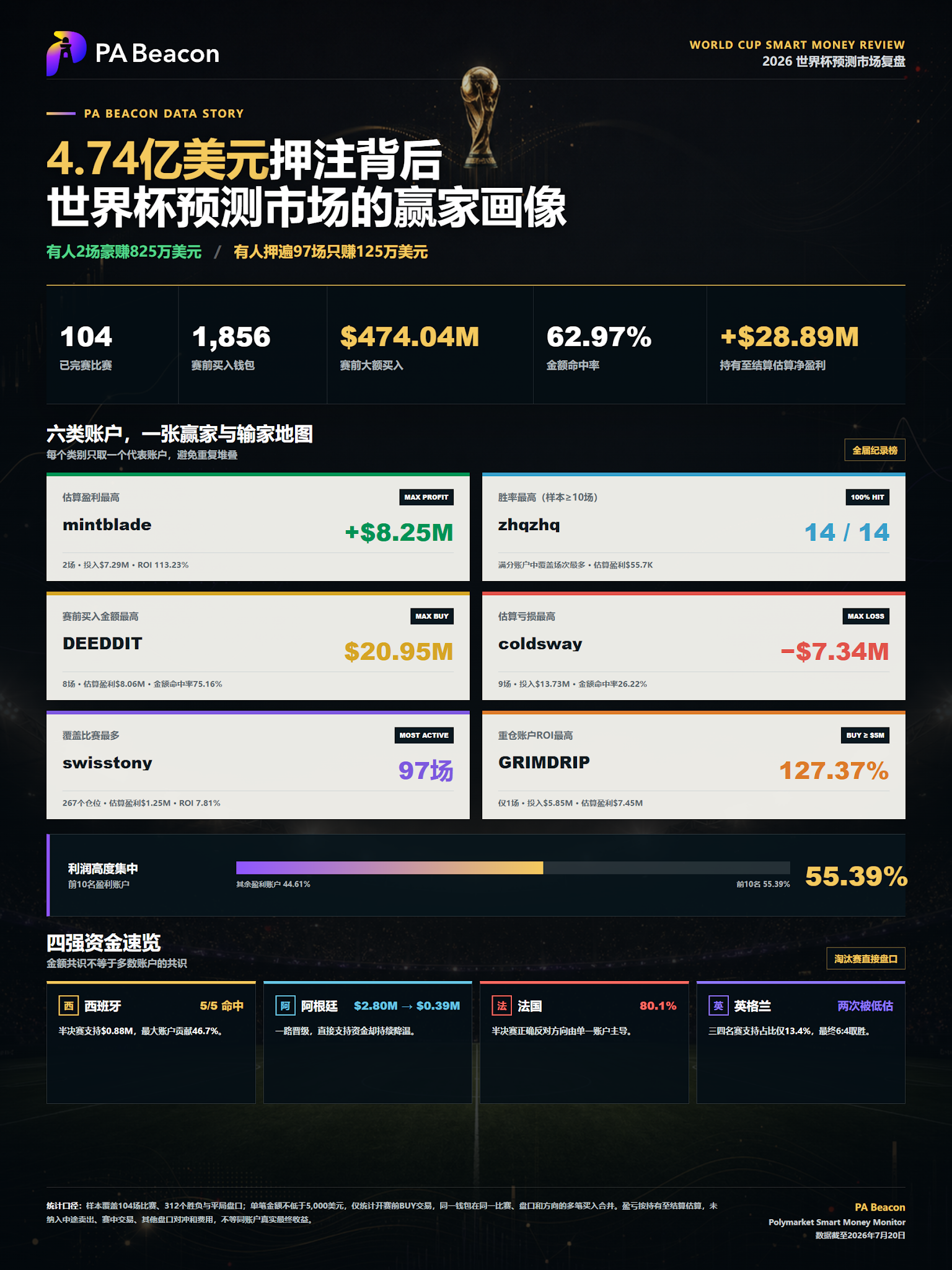
Article statistical criteria: the sample covers 104 matches and 312 win/loss and tie odds. Trading comes from Polymarket Data API, with pre-screening conditions for single amounts not lower than $5,000, only pre-match BUY trades are counted; multiple buys from the same wallet in the same match, same odds, and same direction are combined. Profit and loss are estimated based on holding until settlement and do not include mid-way selling, in-play trading, other odds hedging, and fees, thus not equating to the actual final profit and loss of the account.
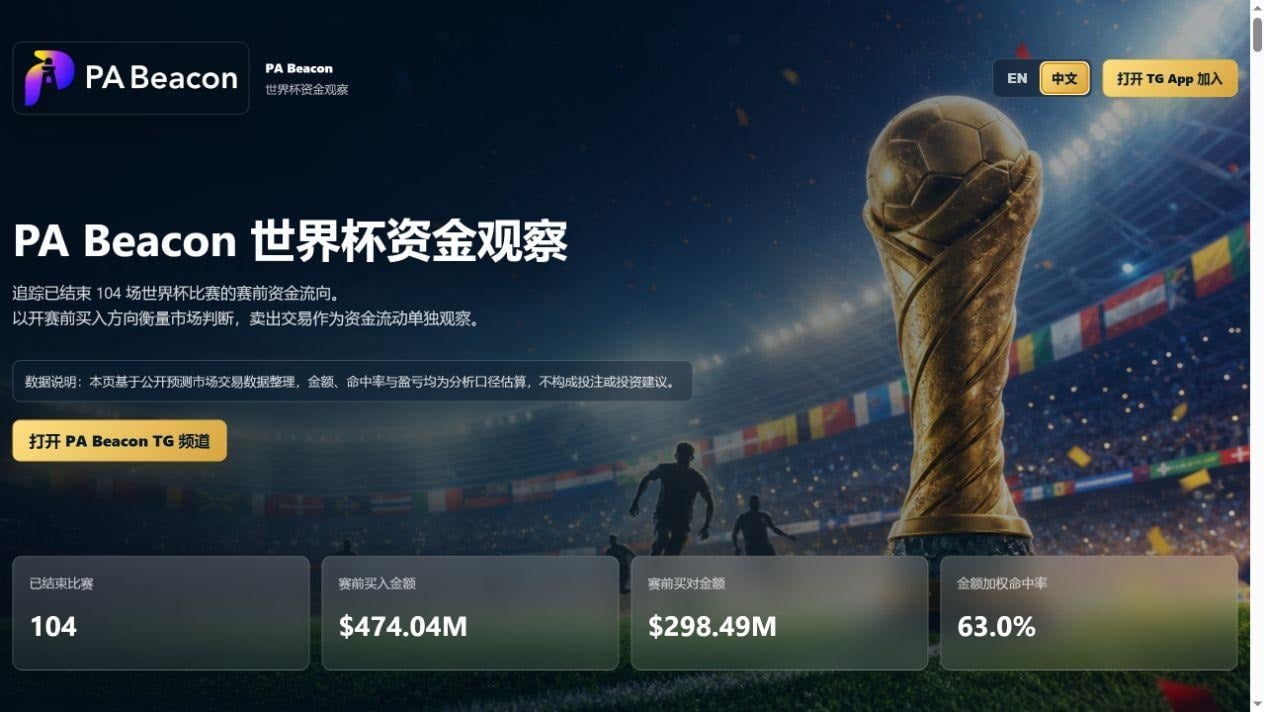
Figure 1: Overview of PA Beacon World Cup full funding observations. Data as of July 20, 2026.
Large amounts of capital completed a comeback, but profits concentrated in a few accounts
Among the 1,856 wallets participating in pre-match buys, 1,003 are estimated to have made profits according to the criteria mentioned, with 853 losing, and the profitable wallets accounting for 54.04%. Profitable accounts collectively earned $99.6338 million, while losing accounts collectively lost $70.7480 million, resulting in a total net profit of $28.8858 million after offsetting.
More importantly, is the concentration of profit. The top 5 profitable accounts collectively earned $37.7064 million, accounting for 37.85% of the total gross profit of all profitable wallets; the top 10 collectively earned $55.1869 million, reaching 55.39%. In other words, the 6.09% profit expectation for the entire market does not represent that the majority of large capital gained a stable advantage, but rather that a few heavy winners significantly lifted the average performance.
Moreover, the differences between matches were also substantial. The match between Belgium and Egypt attracted $12.3905 million in pre-match buys, but only $0.6670 million was bet on the right side, with a hit rate of only 5.4%; the pre-match buy amount for Belgium versus Senegal was $12.0438 million, with $10.5326 million betting on the right side, resulting in a hit rate of 87.5%. Despite similar funding scales, the results were completely different. Large amounts do not equal correctness; it is still the direction of the buy, odds, and positions that determine profits.
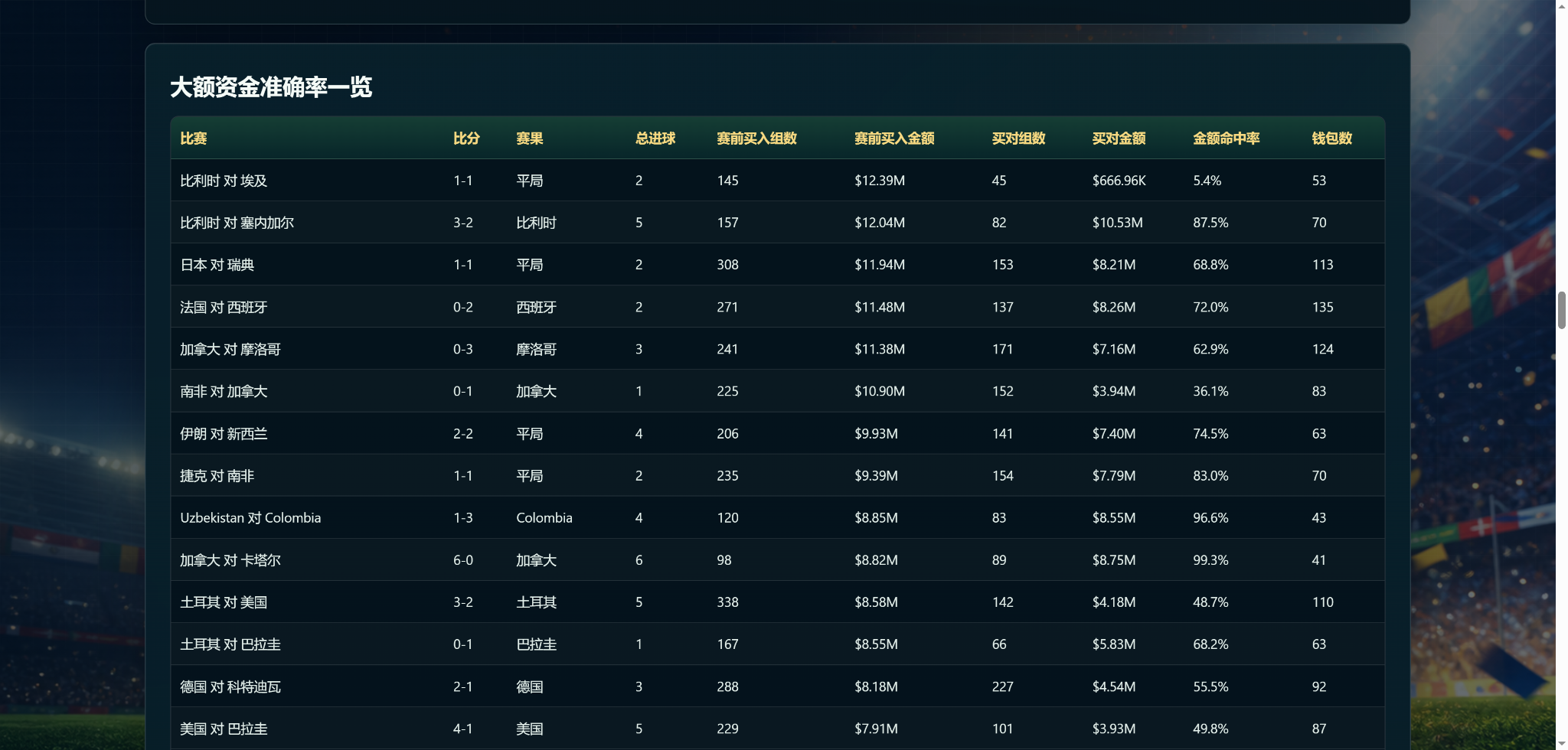
Figure 2: Pre-match large capital accuracy rates by match statistics.
One or two heavy bets created the most noticeable winners
The account "mintblade" is the most typical case. This account only participated in 2 matches, with 3 aggregated positions, investing $7.2889 million, estimating a profit of $8.2535 million, with an ROI of 113.23% and a prediction hit rate of 100%. Among them, the match between Iran and New Zealand contributed a profit of $6.7738 million, accounting for 82.1% of its estimated World Cup profit.
His trading logic is not complicated. "mintblade" used $6.4705 million to bet on "Iran not winning," with an average price of about $0.49. Ultimately, the match ended in a 2-2 draw, and the position settled at $1, estimating a return of $13.2443 million. Then, he placed a bet on "Uruguay not winning" along with a small share of the tie in the match against Saudi Arabia, earning about $1.4797 million from these two bets. Betting correctly on both matches placed him among the most profitable accounts of this World Cup. However, the reason he could make such bold bets on these two matches is intriguing.
In contrast, the account name "GRIMDRIP" is even more outrageous. He only participated in one match between the Czech Republic and South Africa, buying both "Czech Republic not winning" and "match draw" in related directions. The final score was 1-1, both positions were correct, with an investment of $5.8490 million bringing an estimated profit of $7.4497 million, resulting in an ROI of 127.37%.
Behind these large bets is a certainty about the match result, leading to speculation that the large profits of such addresses may contain unknown secrets.
The account "DEEDDIT" represents another way of large betting. He covered 8 matches and had 9 aggregated positions, investing $20.9493 million, estimating a profit of $8.0636 million. In the knockout stage, Belgium defeated Senegal 3-2, where he invested $7.1610 million on the Belgium win odds, estimating a profit of $7.7495 million from that single bet; in the semifinals, France lost 0-2 to Spain, and he bet on "France not winning," earning an additional $3.4259 million.
However, "DEEDDIT" was not correct all the way. He made wrong bets on ties in matches such as Mexico versus Ecuador and Switzerland versus Colombia, with several major losses exceeding $4.3 million. The largest profit corresponds to 96.1% of his net profit for the World Cup. He ultimately ranked high but heavily relied on the match between Belgium and Senegal.
The accounts "sparklingwater123" and "endlessFate" share similar characteristics. The former only covered 2 matches, investing $8.5005 million, estimating a profit of $7.7469 million; the latter covered 5 matches, investing $11.4454 million, estimating a profit of $6.1929 million. They often bought "not winning" or draw positions when the prices for popular teams to win were too high, but not mechanically opposing the favorites, rather expressing their judgment in a few select matches. Overall, the operations of these whales may involve multiple platforms for hedging or price arbitrage.
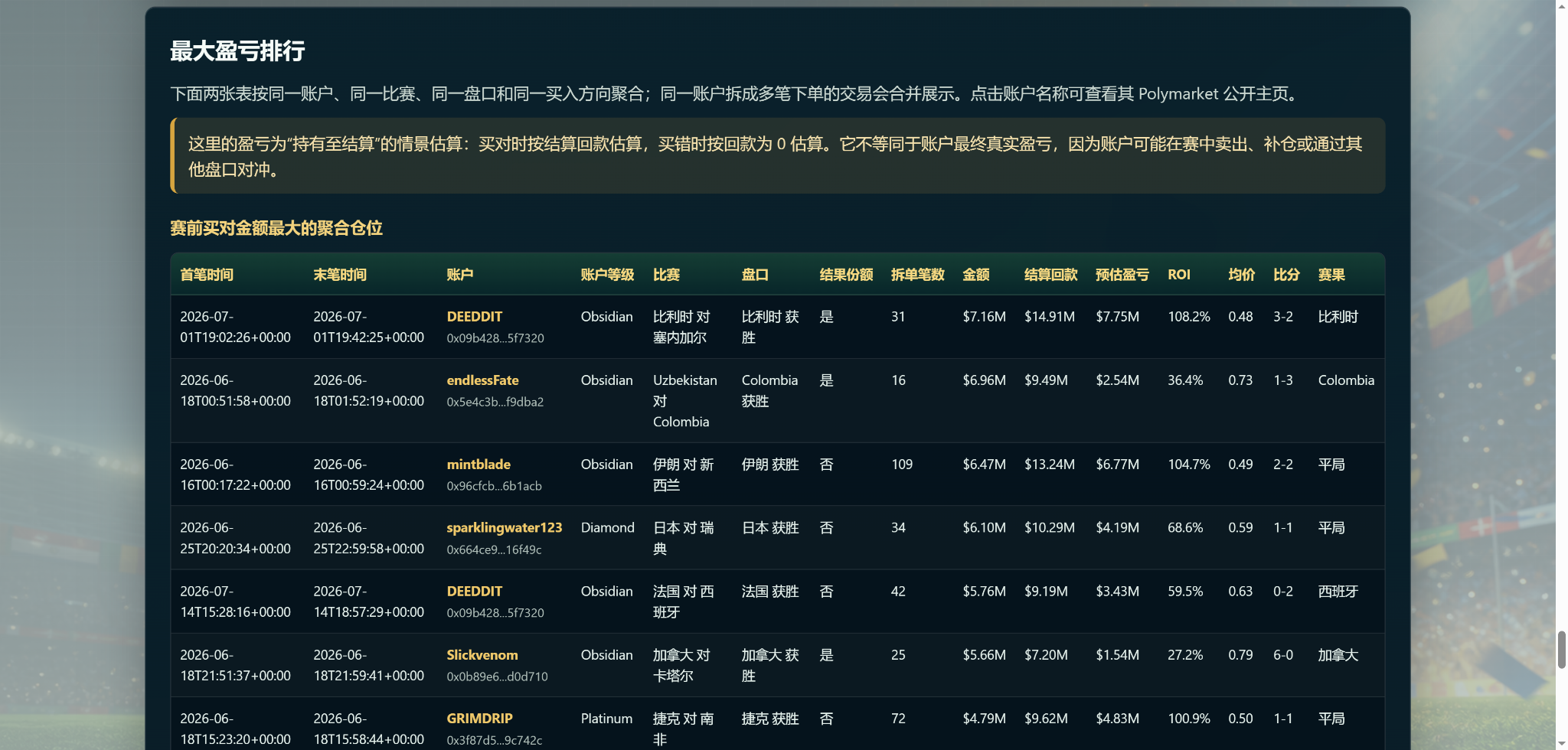
Figure 3: Aggregated positions in the ranking of maximum profit and loss.
The "gambler" invested 15.99 million participating in 97 forecasts, profits less than others' two matches
If we only look at the profit rankings, the account "swisstony" does not stand out, but in terms of frequency of participation, he is absolutely the king. His forecasts covered 97 matches and 267 aggregated positions, with a pre-match buy of $15.9912 million, achieving a hit rate of 79.29%, estimating a profit of $1.2482 million, with an ROI of 7.81%. However, the matches he got right were far more than those of "mintblade" and "GRIMDRIP," yet his profit was only about 15% of the former.
The difference mainly comes from the position structure. "swisstony" had a maximum estimated profit per single position of only $0.2227 million, and a maximum loss of $0.3058 million, with the largest winning position only accounting for 17.84% of his net profit for the World Cup. He did not rely on a single match to turn a profit, but instead accumulated returns using smaller positions over numerous matches. The results may not be as dramatic, but they better indicate whether an account has a sustainable advantage.
The accounts "AV23IUa" and "Latina" also belong to relatively broad-covering profitable accounts. "AV23IUa" participated in 46 matches with 46 positions, investing $2.1245 million, estimating a profit of $0.9060 million with an ROI of 42.65%; "Latina" covered 11 matches with an investment of $3.4293 million, estimating a profit of $1.2920 million, achieving a hit rate of 88.64%. Neither's profit concentrated on a single match.
Another noteworthy account is "zhqzhq." According to the standard of whether the fund for each correct direction exceeds half, he judged all 14 matches correctly, but an investment of $1.0182 million only brought an estimated profit of $0.0557 million, with an ROI of 5.47%. The hit rate is very high, but the earnings are low, likely because he often bought when the matches were already in a stage of high certainty.
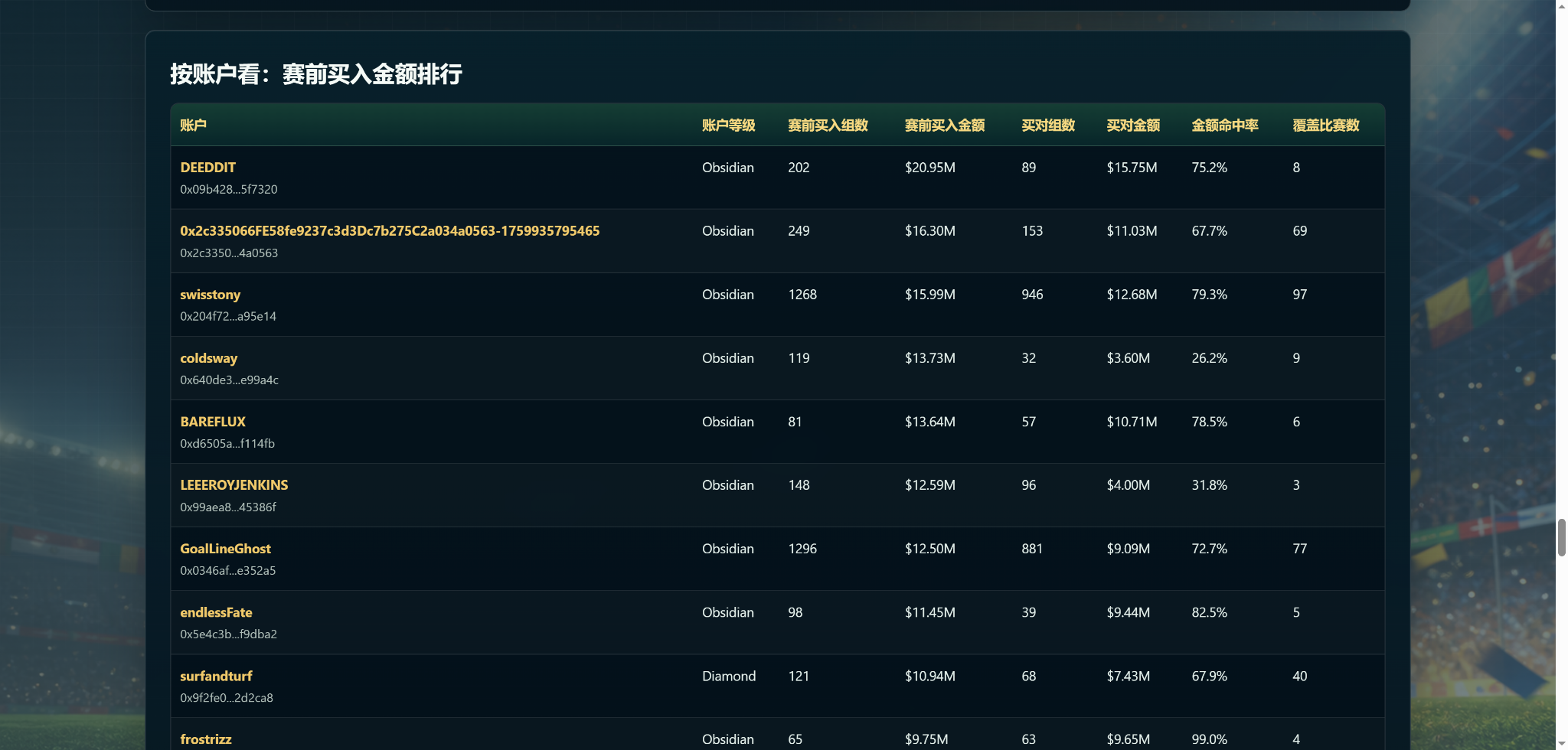
Figure 4: Ranking of pre-match buying amounts based on accounts.
Apart from the winners, losing accounts provide a more direct contrast. "LEEEROYJENKINS" estimated a profit of $4.7976 million from the match between Australia and Turkey, but subsequently made a heavy bet on Belgium beating Egypt, which ended up in a 1-1 draw, estimating a loss of $8.3943 million from that match. The previous large profit was offset by one mistake, leading to an overall estimated loss of $3.2464 million in the World Cup journey.
Moreover, many losing players primarily continued to bet incorrectly. The account "coldsway" invested $13.7255 million covering 9 matches, with a hit rate of only 26.22%, resulting in a final estimated loss of $7.3437 million, becoming the largest loser at the account level. The account "FlickRaw" only participated in 2 matches, both of which were judged incorrectly, with an investment of $4.7983 million lost completely.
These cases illustrate that the underlying characteristic of these whales remains that of high-stakes gamblers. A single oversized incorrect position can offset many prior correct ones.
View of championship favorites through the eyes of whales: France heavily overestimated, Spain most stable
As matches approached the end, the four teams of France, England, Argentina, and Spain were closely watched as the favorites to win the championship, and the predictions from substantial capital regarding them could better reflect the real strength of these whales.
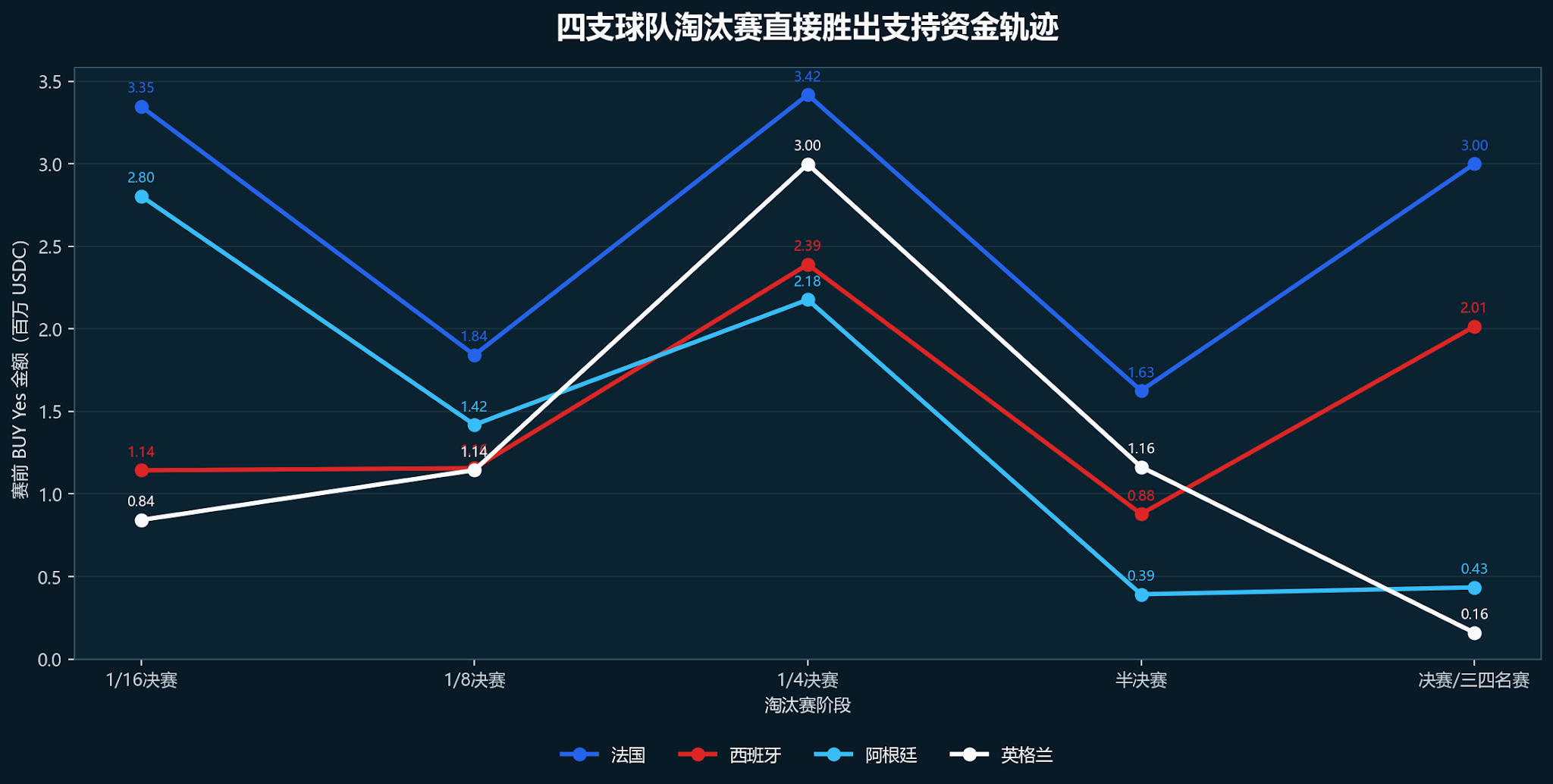
Figure 5: Direct winning support funds for France, Spain, Argentina, and England in five knockout rounds. Units: million USDC.
Spain: Spain is the most consistent sample among the four teams in terms of funding judgment. In five knockout matches, the larger side of funds all bet correctly. However, the support intensity did not rise steadily: from the group of 32 to the quarter-finals, the funds supporting Spain's victory increased from $1.143 million to $2.390 million; however, in the semi-finals against France, it dropped to $879,000, with the median purchase cost only $0.297. Ultimately, Spain won 2-0, which became the match with the largest odds space. However, this $879,000 was not a widespread consensus, as the largest account contributed 46.7%, and the top five accounts accounted for 73.5%. With a perfect record in five matches, it shows that a few heavy funds consistently stood on the correct side, but the overall market misjudged.
Argentina: Argentina's curve is the opposite. Although the team staged a comeback and reached the finals, the direct supporting funds gradually declined. In the round of 32, the supporting amount was $2.804 million with a median cost of $0.86; in the semi-finals, this decreased to $393,000 with $0.315. Before the finals, the funds supporting Argentina's victory were only $434,000, while opposing funds reached $1.518 million, with support accounting for 22.2%. This time, the funds had shifted early to "not winning" and judged correctly. However, the top five opposing accounts accounted for 92.5% of that side's funding, with the largest account alone occupying 44.4%, still a conclusion dominated by a few large holders.
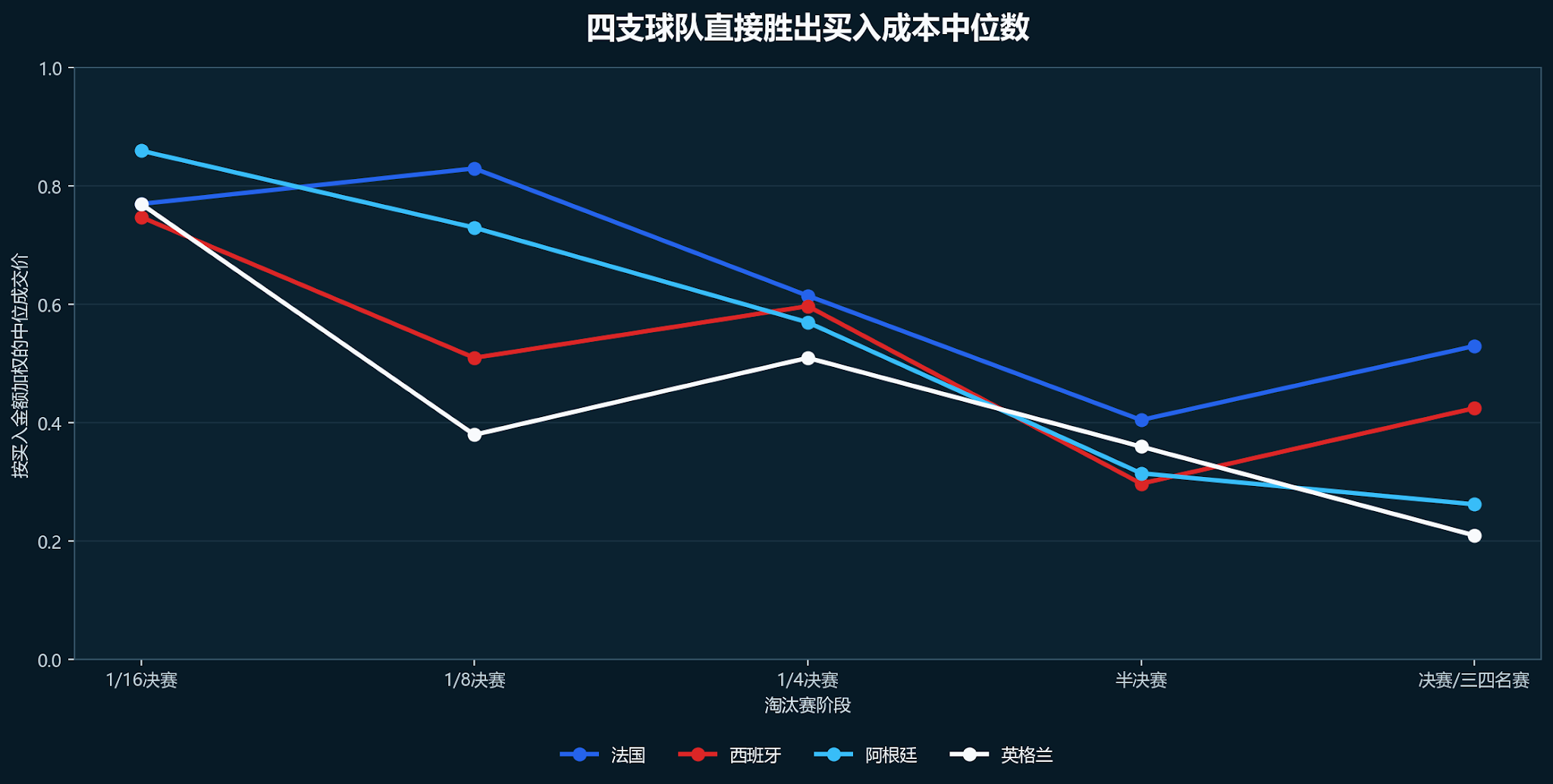
Figure 6: The median buying costs for direct winning odds among the four teams, weighted by transaction amounts.
France: France exhibited the most obvious "few correct, crowd incorrect" phenomenon. In the semi-finals against Spain, the funds supporting France's victory amounted to $1.626 million, while opposing funds reached $7.194 million. Ultimately, the large funds won, but most of the funding composition came from a single wallet contributing about $5.76 million, accounting for 80.1% of the opposing funds. In the third-place match, the funds significantly shifted back to France: $2.9997 million supported France's victory, while $179,300 opposed it, with support reaching 94.4%. The result saw France lose to England with a score of 4-6.
England: England was the most underrated team. In the round of 16 against Mexico, the funds supporting England amounted to $1.144 million, while opposing funds were $1.187 million, with the consensus on the money side standing on "not winning" while England progressed with a score of 3-2. In the third-place match against France, the funds supporting England were only $159,000, opposing funds reached $1.032 million, with support only 13.4%, and the median buying cost was just $0.210. Ultimately, England won 6-4. However, neither of these matches represented a "collective misjudgment of smart money": in the third-place match, the top five accounts opposing England accounted for 98.3% of that side's funds, with the largest account occupying 60.4%, indicating that a few heavily invested accounts had pulled the consensus in the wrong direction.
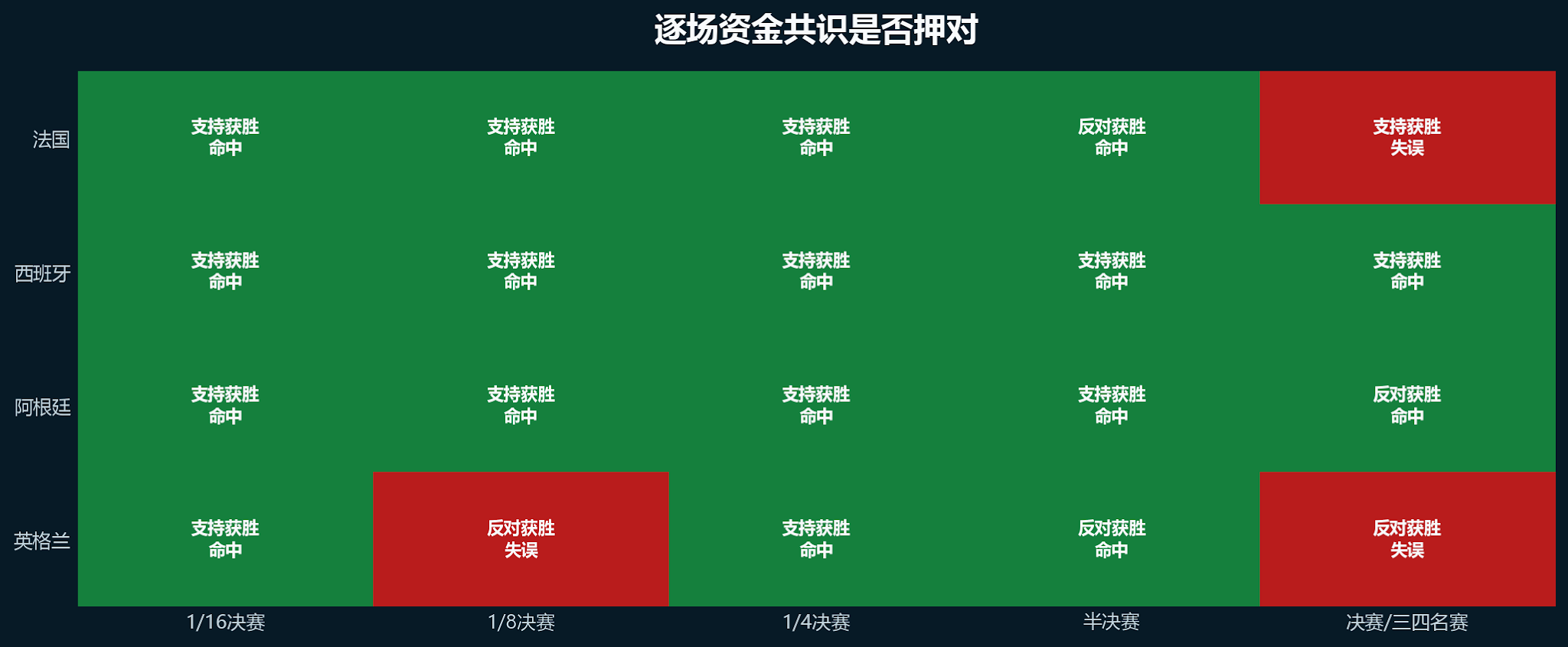
Figure 7: In the same match's direct odds, whether the side with a larger amount corresponds to the final match result.
As the buzz from the FIFA World Cup in North America fades, this 40-day "prediction carnival" has also drawn to a close. Reviewing these on-chain data, we see an incredibly real and harsh world of speculation: here, the scale of funds does not equate to foresight; "smart money" can also be counterattacked by collective bias; here, some get rich overnight from a few upsets, while others, despite careful calculations, cannot overcome a single major betting error.
Pushing aside the "survivor bias" fog, the most eye-catching profit myths still have at their core the thrill of high-stakes gambling. There are no eternal victors on the football field, nor in the speculative market.
免责声明:本文章仅代表作者个人观点,不代表本平台的立场和观点。本文章仅供信息分享,不构成对任何人的任何投资建议。用户与作者之间的任何争议,与本平台无关。如网页中刊载的文章或图片涉及侵权,请提供相关的权利证明和身份证明发送邮件到support@aicoin.com,本平台相关工作人员将会进行核查。


