Author: Jeff Dorman, Chief Investment Officer of Arca
Translated by: Jiahua, ChainCatcher
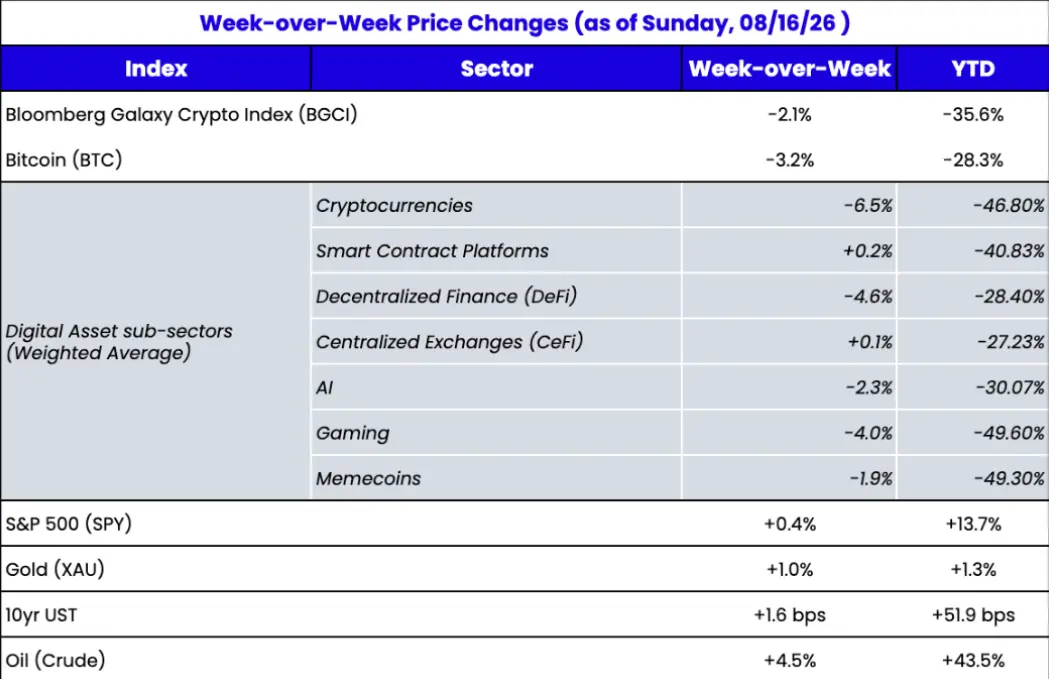
Chart Source: TradingView, CNBC, Bloomberg, Messari
Crypto protocols are finally generating real profits
Last week, Bitwise Chief Investment Officer Matt Hougan published an article suggesting that as more protocols connect income with token holders through value-capturing mechanisms like token buybacks, the valuation of crypto assets could double or even reach higher levels.
We agree with this view. In fact, we have been waiting for a long time for the market to start accepting this line of reasoning.
For nearly a decade, Arca has believed that digital assets should ultimately be analyzed like any other investable assets, based on fundamental value and expected future cash flows. Tokens are not stocks, and the way token holders capture value is different from shareholders. However, the fundamental investment principles do not suddenly become invalid just because the asset exists on a blockchain or the issuer changes from a Delaware corporation to a protocol.
However, this view has not been easy to communicate in the past.
In July 2019, when most people were still used to categorizing nearly all digital assets as "cryptocurrencies," we pointed out that this definition was unreasonable. Digital assets represent a range of different types of economic rights. Some are currencies, some are utility tokens, and some, as we stated at the time, “are essentially akin to assets tied to equity in companies that can generate cash flows.”
At that time, we specifically mentioned exchange tokens. These tokens have both product utility value and an economic connection to the underlying business, such as allowing holders to indirectly share in a proportion of the revenue or profit through token buybacks.
Six months later, in the annual review of December 2019, we divided digital assets into four categories, one of which was "businesses that use tokens and can generate real cash flows." At that time, some centralized crypto companies had already begun to generate substantial revenue, but decentralized protocols mostly remained in the experimental stage. We wrote that decentralized protocols might still need "5 to 10 years" to truly create economic value.
Now it appears that our guess was not far off.
Six and a half years later, protocols like Hyperliquid (HYPE), Aave (AAVE), Aerodrome (AERO), and Maple Finance (SYRUP) have begun to generate real fees and revenue from actual users. In many cases, their profit margins and capital efficiency are enough to make most public companies envious.
The question is no longer whether decentralized protocols can create economic value, but how they should utilize that value. This is where things start to get interesting.
Having income does not equal having valuable tokens
The generation of income by a protocol does not mean that its tokens necessarily have value. This point is very important and is one of the issues we have repeatedly emphasized since we began studying digital assets.
In August 2020, when analyzing the emerging DeFi protocol Aave, we distinguished between two things: one is the incentives generated through token issuance, and the other is the economic benefits created by real users and business activities in the ecosystem. We wrote, "In our view, exogenous cash flow from real businesses is key to the long-term value growth of token holders."
Six years later, Aave is still around, and this issue remains. If a protocol can generate $500 million in revenue annually, but those earnings never flow to token holders, then why should token holders care? This is precisely where digital assets differ significantly from stocks.
When you buy a company's stock, you own a portion of the company's residual claim. The company can reinvest profits back into the business, distribute them to shareholders via dividends, or repurchase stock. Even if the company never returns a dollar of capital directly to shareholders, shareholders still have another way to realize value: the entire company could be acquired.
A startup can reinvest every dollar earned back into the business for several years because investors believe these investments will generate more profit in the future. Once the company matures, it can start paying dividends or repurchasing stock.
Alternatively, another company or a private equity firm might acquire it at 20 times its profits, with shareholders receiving acquisition payments, often at a premium over the current stock price.
But crypto protocols typically do not have such exit strategies.
No one is going to acquire the Aave protocol at 20 times EBITDA and then send a check to all AAVE holders. Nor will anyone buy Hyperliquid and offer a 30% acquisition premium to allow all HYPE holders to exit. These protocols are decentralized networks, and at least in theory, they are designed to exist indefinitely, unlike companies, which can eventually realize value through acquisition.
Therefore, for tokens, the connection between protocol economics and token economics may even be more significant than the linkage between company profits and stock prices.
Because if a protocol generates billions in revenue over its lifetime but not a dollar of that goes to token holders, there may never be an exit event to bridge the gap between "protocol value" and "token value."
Protocol profits must ultimately flow to the tokens
Therefore, we are increasingly convinced that token buybacks are currently one of the simplest and most direct mechanisms to connect protocol success with token holder value. But this does not mean that every protocol should immediately use all its revenue to buy back its own tokens. In fact, this would often be a poor capital allocation.
Many leading protocols today are essentially still in the startup phase. They are growing rapidly and have ample opportunities for further capital investment. They can improve products, provide liquidity incentives, enter new markets, acquire teams or technologies, build insurance reserves, subsidize new products, or invest in the entire ecosystem.
If a protocol invests $1 today and that investment can generate $5 in the future, we would clearly prefer it to continue investing rather than use that $1 to buy back tokens.
This is not a problem unique to the crypto industry.
Amazon became one of the most successful investment vehicles in history not by frantically increasing dividends and stock buybacks during its early rapid growth phase. If reinvesting capital can yield higher returns, excellent companies will choose to retain profits within the business to continue investing, rather than distribute them to shareholders.
Protocols should do the same.
However, there is a significant difference between "we are not buying back tokens today because there are better uses for capital right now" and "there is no reason to believe that this income will flow to token holders in any form in the future."
The former could be a very sound capital allocation decision, while the latter would render valuation nearly impossible. In other words, buybacks do not necessarily have to happen today, but investors must believe that they will happen someday.
Morpho (MORPHO) founder Paul Frambot recently reignited this discussion. He opposes aggressive token buybacks, believing that young, rapidly growing protocols should reinvest profits back into the business rather than distribute them directly.
Last year, he also expressed similar views in a blog post. We largely agree: assessing a protocol should be done similarly to assessing a company; when the expected return on new capital is sufficiently high, continue investing; when that return diminishes, return capital.
However, there is a very significant difference between Morpho and the tech companies Frambot uses for comparison. Meta shareholders own Meta. Even before Meta began returning capital to shareholders, shareholders legally owned a residual claim on the company's constantly growing profits and assets.
Theoretically, they could eventually realize this value through dividends, stock buybacks, or acquisition of the company. MORPHO holders do not, however, have the same clear path to value realization.
Therefore, reinvesting protocol income back into the business may delay the time it takes for token holders to realize value, but it cannot indefinitely substitute for value capture itself. Ultimately, the economic value created by the protocol must somehow flow to the tokens.
And Crypto Twitter, as usual, has turned this issue into a black-and-white debate about whether "buybacks are good" or "buybacks are bad." In reality, the real issue is timing, as we discussed in March 2025. Buybacks do not necessarily have to happen today, but protocols must ultimately answer one question: what do token holders actually own?
After making money, how should protocols spend?
For most of the history of the crypto industry, "capital allocation" has hardly been an important topic, as projects have not had much capital to allocate. Projects financed themselves, burned cash, and then issued tokens to incentivize users. When the money ran out, they sought more funding.
Now, this situation is changing.
Once a protocol begins to generate substantial free cash flow, its founders and governance participants will suddenly face a problem that Jamie Dimon, Warren Buffett, and all public company CEOs have faced for decades: what should be done with this money?
Should it continue to be invested in the business?
Should it be used for acquisitions?
Should it subsidize growth?
How much reserve should be kept?
Should it enter adjacent businesses?
When expected returns on these investment opportunities begin to decline, should excess capital be returned to token holders?
These are the capital allocation decisions. Therefore, digital asset investors should not only look at how much income a protocol generates in the future, but also what it does with that income.
Assume there are two protocols right now, both generating $100 million in revenue annually, with a revenue growth rate of 30%, and their profit margins and competitive positions are roughly comparable.
Protocol A indefinitely reinvests all earnings back into the business, with no credible mechanism ensuring that those earnings will eventually flow to token holders.
Protocol B is similarly aggressive in reinvesting at this stage, but its governance mechanism and token economic model clearly stipulate that after satisfying reasonable reserve and growth investment needs, the remaining cash flow will be used to buy back its own tokens.
These two tokens should not have the same valuation multiples. Protocol B has established a credible mechanism for protocol revenue to flow to token value; Protocol A has not.
Buybacks do not equal value recapture
Even the term "buyback" itself needs careful analysis. Suppose a protocol generates $100 million in revenue, uses $50 million of that to buy back its own tokens, and then distributes $50 million worth of similar tokens as incentives. This does not necessarily mean it has truly returned $50 million in value to token holders. It could simply be a recycling of token issuance and does not equate to a real return of $50 million to holders.
Buyback and burn will permanently reduce the token supply; buying back tokens and distributing them to holders or stakers will more directly transfer economic value. If a protocol places purchased tokens in a treasury, it may also create value, but this must ultimately be managed with the interests of token holders as the target. Specific mechanisms are important.
But the underlying principle is quite simple. If a protocol creates economic value, then there must ultimately exist a mechanism that allows token holders to share in that value. Otherwise, the so-called "protocol income" is merely an interesting statistic.
From revenue to valuation
By 2021, we began to see this framework operating in reality.
In July of that year, we introduced a group of digital assets and described the projects behind them as: "real companies, real cash flows, tokens that can capture economic value, and a method for measuring their success." We believed that these projects were finally beginning to accomplish one thing we had long awaited from digital assets: allowing customers and users to share in the economic value created by projects.
But the problem at that time was that there were far too few such projects. Now, the situation is different. This is precisely why Hougan's perspective is so noteworthy.
The truly important aspect of his article is not the assertion that "income should flow to token holders." The real significance is that, just as these assets themselves have matured and this valuation framework begins to genuinely function, this framework has coincidentally started to become the market mainstream. This will have a very large impact on valuations.
Valuation discounts should begin to narrow
If a protocol's revenue grows by 50%, its tokens naturally might become more valuable because the ability of the protocol itself to generate profits is increasing. But at the same time, another thing may also happen: the valuation multiples that investors are willing to pay for these profits may also rise.
Suppose a protocol's profits increase by 50% annually, and as investors become more convinced that these profits will ultimately flow to token holders, its valuation rises from 8 times profits to 16 times profits.
In this case, the protocol's profits do not even need to double; the token price may still double. The reason is that the market is now willing to pay a higher price for every dollar of profit because investors believe the probability of these profits ultimately reaching token holders has increased.
This essentially captures the point raised by Hougan: as a clearer connection is established between protocol income and tokens, the valuation of crypto assets could double or even reach higher levels. We believe he is correct. For a long time, profitable crypto protocols have faced significant valuation discounts compared to similar publicly traded companies, some of which are evidently justified.
Stockholders possess legally protected ownership with a highly mature governance structure, audited financial statements, and securities laws that provide investor protection, while management has fiduciary responsibilities. Decades of practice have established a very clear institutional and legal basis for shareholders regarding what they actually own.
Token holders often do not possess these attributes. Therefore, a token in comparison to a stock with identical economic conditions is likely to have an inherent valuation discount.
But the question is, how large should that discount be?
If a protocol has hundreds of millions in sustainable income, extremely high profit margins, rapid growth, can reach global markets, has very limited capital needs, and has a transparent mechanism to continuously use residual cash flows to buy back its own tokens, should it really be trading at only a small fraction of the valuation multiples of a slower-growing public company?
Perhaps.
But we are increasingly doubtful that the answer is affirmative. This suggests that one of the biggest opportunities in the digital asset space today may not only be seeking protocols with ongoing revenue growth. A more significant opportunity might lie in identifying those protocols where the fundamentals have changed, yet market pricing continues to rely on an outdated valuation framework.
Crypto investment is moving towards fundamentals
For nearly a decade, Arca has maintained that digital assets will ultimately be valued like all other assets, using the same fundamental investment principles.
In 2019, we discussed businesses with cash flows that utilized token buyback mechanisms.
In 2020, we proposed that exogenous cash flow is key to the long-term value of token holders.
In 2021, we began focusing on digital assets that genuinely generate income and can allow tokens to capture economic value.
This does not mean that the market back then was suitable for fundamental investment. Frankly, most assets themselves were not ready at that time either. The issue wasn't that this framework was incorrect; it was simply that the entire industry was not mature enough to allow this framework to operate stably.
Now, it is different.
Protocols have customers, they generate revenues, they create profits, operators of protocols are beginning to make capital allocation decisions, and an increasing amount of residual cash flow is being used to buy tokens.
This means that the questions digital asset investors should be asking today have become strikingly familiar:
How fast is revenue growing?
What is the profit margin?
How long can competitive advantages be maintained?
How much capital needs to be reinvested to sustain growth?
What returns can be expected from these reinvestments?
How much residual capital will ultimately be returned to token holders once high-return reinvestment opportunities diminish?
In other words, crypto investment is finally starting to transform into fundamental investment. After spending over 15 years trying to invent various new methods for token valuation, the next significant "innovation" in the digital asset space may be the very logic that stock investors are already familiar with: making money, growing profits, allocating capital wisely, and ultimately allowing asset holders to share in those profits.
免责声明:本文章仅代表作者个人观点,不代表本平台的立场和观点。本文章仅供信息分享,不构成对任何人的任何投资建议。用户与作者之间的任何争议,与本平台无关。如网页中刊载的文章或图片涉及侵权,请提供相关的权利证明和身份证明发送邮件到support@aicoin.com,本平台相关工作人员将会进行核查。


