Compiled & Edited by: Deep Tide TechFlow
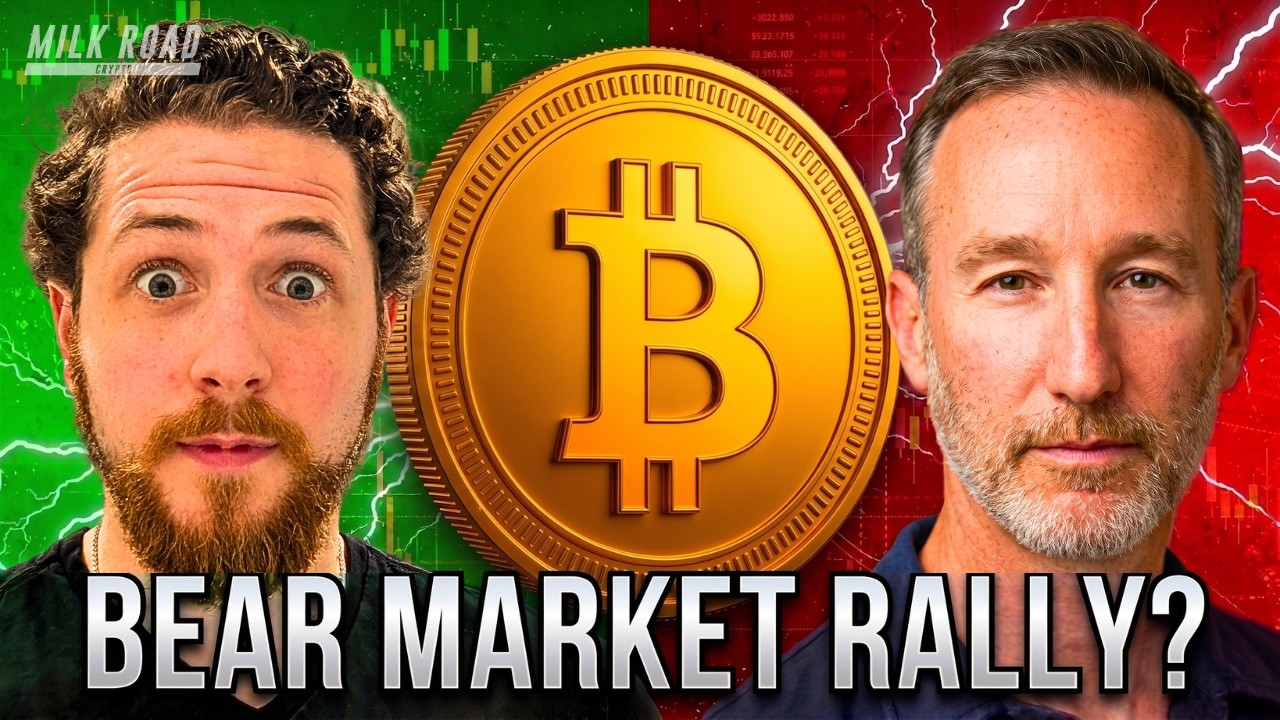
Guest: Rob, Founder and Host of Digital Asset News (X: @NewsAsset), entered the crypto market in 2017, openly shares his personal DCA practices
Host: John Gillen, The Milk Road Show
Podcast Source: Milk Road
Original Title: Bitcoin Just Pumped… But Is the Bear Market Really Over?
Release Date: August 19, 2026
Disclosure: Rob is an independent content creator, has disclosed his personal holdings of Bitcoin and a small number of altcoins, and shares his personal investment practices, with no external fundraising or associated product interests.
Key Takeaways
This episode was recorded on August 19, the day before Bitcoin's massive rise. Guest Rob is the host of the YouTube channel Digital Asset News, entered in 2017, has experienced a complete cycle, and his investment methods are all public: according to Ben Cowen's risk meter, buying more as prices fall. His core judgment is straightforward: historically, the area around the 200-week moving average has always been a good buying zone; in the short term, he maintains a "healthy pessimism" and believes that calculating based on a four-year cycle, the bottom will be around October, possibly falling to 55,000, 50,000, or even 45,000. The next day, on August 20, Bitcoin surged about 10% in a single day, briefly breaking through $70,000, reaching a new high since early June, and triggering the largest short-squeeze since 2021, with over $1 billion in short positions liquidated in just one hour.
Rob’s short-term point of view was quickly challenged by the market, but what he really wants to convey is not a prediction, but the real discipline of a long-term investor: buying more as prices drop, taking profits in batches, and considering missed sells as tuition fees. This episode also discusses the CLARITY Act, the White House meeting (his conclusion is "posturing"), the SEC's new framework and the return of ICOs, how to diversify self-custody after multiple cold wallet breaches, which altcoins to recognize, and the narrative of AI proxy payments for the next bull market.
Highlights of Opinions
On the Bottom
- “I hope it hasn't hit the bottom yet, so I can buy a bit more at a lower position.”
- “Buying Bitcoin at $3,000 in 2018 and $15,000 to $17,000 in 2022, looking back I did not lose.”
DCA Discipline
- “When the risk level hits 0.49, I double my purchase, at 0.39 I quadruple, and below 0.29 I octuple.”
- “Sometimes after buying, the bank would call to confirm it was really me making the transaction, but they don't call anymore.”
Regulation and the White House
- “In an election year, the Democrats won't let Trump win a single round, so the CLARITY Act probably won't pass.”
- “When Congress is unreliable, the SEC and CFTC will fill that gap.”
The Dilemma of Self-Custody
- “PlanB has transferred all his holdings to ETFs; he doesn't want to deal with these headaches anymore.”
- “Losing 25% is painful, but the worst is losing 100% and having no control.”
Altcoins
- “I only recognize four chains: BNB, Ethereum, Solana, and Tron; they have the largest stablecoin traffic.”
- “When traditional markets sneeze, Bitcoin catches a cold, and altcoins go straight to the ICU.”
Cycles and the Next Narrative
- “According to the four-year cycle, the bottom should appear around October. Is it 55,000, 50,000, or 45,000?”
- “AI proxies will need to pay; they won’t use fees like PayPal’s 2.9% plus $0.30, but will be cheaper, just a fraction of a cent.”
200-Week Moving Average: Is the Bottom Here, or Halfway Up the Mountain?
John: Bitcoin has once again crossed the 200-week moving average, which historically has often marked the bottom of bear markets. Sometimes prices tend to hover around this zone for a long time. Do you think we've hit the bottom, or is there more of a bear market ahead?
Rob: I hope it hasn't hit the bottom yet. Looking back at history, the area around the 200-week moving average has always been a good buying position. In 2015, we briefly dipped below it; after I entered in 2018, we dropped below it once after the high in 2017, and everyone said it was over and would never come back, but smart people quietly continued to DCA. Then there was the pandemic in 2020, we dropped below it again, another good buying point. By 2022, we even dropped below the 200-week, 250-week, and 300-week moving averages. Now the price is hovering around the 200-week moving average, currently possibly above it. For me, this is a pretty good buying time. I don’t want to repeat the mistake I made in 2022 when I did something foolish called "micro DCA," where I bought less as prices fell, thinking I’d wait until it dropped very low to buy more at once. If I had stuck to the original plan and bought more as prices fell, my position would be much better than it is now. Buying Bitcoin at $3,000 in 2018 and $15,000 to $17,000 in 2022, looking back I did not lose. So back to your question: I hope it hasn't hit the bottom yet, let's see if this four-year cycle follows the script again or if this is just a reasonable buying point.
DCA Every Monday: Buy More as Prices Fall
John: You are famous for DCAing Bitcoin every Monday. During bear markets, prices can stay flat for months. How did you design this strategy? Do you also use the same method to sell in batches during bull markets?
Rob: I look at the risk levels; I reference Ben Cowen's risk meter on the Into The Crypto Verse website. As prices go down, risk levels also drop. I start buying around 0.5 or 0.6; if it drops below 0.49, I double my purchases based on the last week's basis; once it hits 0.39, it's four times; below 0.29, it's eight times. These are all manually adjusted by me. My purchasing automatically uses Cash App for regular purchases, executed at 6:30 AM with almost negligible fees, and the spreads are decent. The current risk level is around 0.3, so I’m roughly at the four times buying stage. Whenever I buy a large amount, the bank used to call to confirm it was really me, but they don’t call anymore. As for selling, I did well in 2021 by setting price targets for selling in batches, cascading down; when it rose 2 times from the low points, I took some profit, and at 4 times, I took more. By 2025, I thought I should use indicators to appear smarter, looking at Pi Cycle Top, MVRV, and Puell Multiple, but they all disappointed me. The actual call for the top came from a Reddit post three years ago, stating October 6, 2025, would be the absolute top; I thought that was impossible, but it turned out to be true on that day. So, during the drops, I took some profits but didn’t sell at the peak; I also don’t think anyone can sell at the highest. I know many say to never sell Bitcoin, but everyone's goals are different. I sold some to pay off debts and move it into safer assets, like the S&P 500, bonds, and real estate, so I can sleep at night. Most of my positions are still in Bitcoin, not altcoins.
Volatility at Absurd Lows: What Can Break the Stalemate?
John: Bitcoin's volatility has hit historic lows in recent months, even lower than gold and the stock market. What events do you see on the horizon that could break this situation?
Rob: It’s hard to say. On the downside, there could be an AI bubble that bursts, or another significant hacking event with cold wallets. On the upside, it would be good if the CLARITY Act could pass, but I don’t believe it will; being an election year, the Democrats won’t let Trump win this round and give him a chance for a victory tour. There have been consistent messages from institutions; I just saw Citigroup, the world's third-largest bank, is starting to do Bitcoin custody. We also have a president who promised to support crypto during his campaign, but many of his promises have not been fulfilled, especially regarding the CLARITY Act. In the short term, I don’t see many positive catalysts; Congress has continually disappointed us, and while the SEC and CFTC will fill that gap, their help is limited. A major market shift will have to wait until this year is over because everyone's mindset is dominated by the four-year cycle. Only after this cycle ends will the market sentiment shift, and prices can truly begin to rise.
CLARITY Act and the White House Meeting: Don’t Have Too High Expectations
John: The CLARITY Act has been pushed to September. As we record this today, Trump is meeting with a bunch of crypto industry leaders at the White House; do you think there will be any substantial outcomes?
Rob: I hope so, but I just saw World Liberty Financial received a conditional banking license from the OCC; they want to use this to enter the stablecoin business, and their stablecoin is already the fifth largest. This helps reinforce the dollar's position globally, but there has to be reserves backing the stablecoin. The president wants to push this because it benefits his own company, and I don’t think that will go smoothly. The only thing I can control is my investment range; I cannot control a U.S. president running his own crypto company. If he can negotiate something with the industry and push Congress forward, that would be great, but in my view, it feels more like posturing. The bill might pass in September, but I don’t have high hopes.
SEC's New Framework and ICOs: Five to Six Years Late in Regulation
John: The SEC has approved a framework called "Regulation Crypto," covering ICOs, financing, and providing innovation exemptions for projects still under development. What do you think? The ICO boom of 2017 also brought a lot of rug pulls, aiming to protect investors while fostering industry vitality presents a contradiction; how do you resolve this?
Rob: The government is probably five to six years late this time. When I first entered in 2017, there were ICOs everywhere; if this framework had been introduced earlier, many good projects could have secured funding. I looked at the details, and there are basically no thresholds for amounts under $5 million; the next tier is $75 million within four years. If this really comes to pass, money will flow into the crypto industry. But I worry about one thing: do we really need more new projects and altcoins? There are already millions. I prefer to stick with proven projects and build on them. It's good that the SEC and CFTC can properly set up guardrails and prevent lawlessness like in the past, but I don’t think this is a decisive catalyst; of course, I could be wrong. Furthermore, how do outsiders perceive us? They just say, "Isn't that the one with meme coins and where hackers stole money?" Watching Coinbase's Super Bowl ad this year, it started with a chorus, but when it cut to Coinbase, there were boos all around because that was where they lost money. Trump coin, Melania coin led to a big hit on many people as well. Guardrails are good, but what we need are truly transformative projects, not just more filler.
After Multiple Cold Wallet Breaches: Self-Custody Must Be Diversified
John: Last week Coldcard, Trezor, and SafePal all had issues, causing people to start feeling uneasy about self-custody. What’s your take?
Rob: Some will say this is coincidental because custodial services like Citigroup are about to launch. But remember, Coldcard has been around for many years. Conspiracy theories aren’t important; what matters is that many people indeed lost money. Two years ago, PlanB said he moved everything to ETFs; he knows more about cold storage than anyone but said he didn't want to deal with these headaches anymore. On the other hand, Simon Dixon says this is pushing people away from self-custody toward custodial solutions. In my case, I receive an email every couple of weeks from someone saying they lost their entire savings. It’s not just about being hacked due to mistakes; companies like Ledger and SafePal themselves got hacked, with addresses, emails, and phone numbers all leaked. The scariest part is "I don’t know what I don’t know." What if a mainstream cold wallet suddenly says, 'We discovered a vulnerability we’ve been overlooking, and hundreds of thousands of people's Bitcoin are gone'? What then? So I am currently diversifying my security: part is with Ledger, part with Tangem, part with iTrust custody, and there's also Coinbase Prime, which is used by Strategy and BlackRock, plus another part is moved into ETFs. I refuse to be the person who goes back to tell my wife, “The Lazarus group stole all our savings.” Steve Wozniak invested $3.2 million in Bitcoin and still got scammed. Losing 25% is painful, but the worst is losing 100% and having no control. I would rather protect more people than let them bear the brunt alone.
Altcoins: I Only Recognize These Four Chains
John: Besides Bitcoin, are there any altcoins on your DCA list?
Rob: Stablecoins are going to develop well, especially reinforcing the dollar. Looking at Visa's on-chain data, the chains with the largest stablecoin traffic are always those four: Binance, Ethereum, Solana, and Tron; I call it BEST. Polygon can be discussed, and XRP advocates will talk to you about cross-border payments; I understand all of that, but my money is limited. Payments are just one piece; the biggest factor is still speculation. Beyond that, tokenization of real-world assets like bonds, stocks, and real estate can go on-chain. Ethereum seems to be the choice of institutions and Wall Street, although DeFi hacking events have dinged its perception; Tron is the giant behind Tether, with over 60% of Tether's volume on Tron. Canton has a significant share in tokenization, Hyperliquid is very active in perpetual contracts, they're all good, but not enough to make me adjust my positions right now. When the traditional market sneezes, Bitcoin catches a cold, and altcoins go straight to the ICU. This is the transmission path of digital assets.
The Next Narrative and "October Bottom": AI Paying, Who Will Underwrite?
John: Tokenization, stablecoins, AI proxy finance, which narrative do you see the most potential in? In November, you will attend Ben Cowen’s Investing Through the Cycles conference in Miami; do you think we’ll emerge from the bear market by then?
Rob: I like AI proxy payments because there’s one thing that can never be bought: time. If I have a robot that won’t turn around and ruin me, that helps me arrange my trip to Puerto Rico and pays with very low fees, plus gets me cash back, then that would be great. Just last week, Cloudflare announced they will enable AI proxies to pay with cryptocurrency, with fees not like PayPal’s 2.9% plus $0.30, but just a tiny fraction of a cent. But what if the AI proxy goes crazy? There’s a story about a developer who let AI clean his email inbox, and it ended up deleting all files on his computer. The age of robots will bring more "we didn’t think of that" situations. John is right; smart contracts and decentralized identities could be the solutions, but all of this is still a blue ocean; no one knows what it will look like. Returning to Ben's conference, he said if he could hold a conference at the worst time of the bear market, next year would be better, the year after would have cuts, and the year after that would be a grand bull market. This conference is a litmus test. Based on the four-year cycle, we should see the bottom around October. What's the bottom? 55,000? 50,000? Or 45,000? If it really drops to 45,000 in October, then November will likely be between 50,000 and 55,000, and I would be very happy because it would mean I was buying at very low positions. However, I predict that November will still hover around the lows with possibly more pain ahead.
John: While we chat, Ethereum has already broken above $2,000, and Bitcoin is above $68,000. Perhaps today we just discussed the bottom for Bitcoin.
Rob: Congratulations, we saved the entire market.
免责声明:本文章仅代表作者个人观点,不代表本平台的立场和观点。本文章仅供信息分享,不构成对任何人的任何投资建议。用户与作者之间的任何争议,与本平台无关。如网页中刊载的文章或图片涉及侵权,请提供相关的权利证明和身份证明发送邮件到support@aicoin.com,本平台相关工作人员将会进行核查。


