As AI Agents and autonomous driving move into the deep waters of industry, the truly scarce engineers are not just those who can deliver functionality, but those who can turn vague technical visions into infrastructure that can be repeatedly used by users, teams, and the industry. Hao Sun's career trajectory unfolds along this path.
In the past two years, AI Agents have become one of the most noteworthy technology directions in Silicon Valley. From personal assistants capable of understanding natural language instructions to intelligent systems that can execute tasks across web pages, mobile devices, and cloud environments, Agentic AI is attempting to change the relationship between people and software: users are no longer just clicking buttons and filling out forms, but delegating goals to the system, which AI then breaks down into steps, calls tools, and continues to advance.
But amid this wave, a more challenging question gradually emerges: If AI is truly to complete complex tasks on behalf of humans, how must it be understood, controlled, evaluated, and ultimately trusted?
Hao Sun's work has long revolved around this issue. As an engineer in the field of Agentic AI Systems and software infrastructure, he has held key technical roles at companies such as Meta, Okay, Please AI (formerly MultiOn AI), and Tesla AI. Spanning large platforms, developer tools, consumer-level AI Agents, and autonomous driving evaluation systems, these experiences may seem disparate, but there is a clear main thread behind them: transforming complex technology into usable, scalable, and verifiable systems in real-world scenarios.
Understanding Scale at Meta
Hao Sun's engineering background was largely shaped at Meta.
During his tenure at Meta, he was responsible for front-end engineering work for Facebook products and across Meta platforms, serving as one of the main maintainers of a foundational, accessible, and reusable component library that catered to product needs across various design systems like Facebook, Instagram, and WhatsApp. For the average user, the component library is invisible; but for a platform with billions of users, it determines whether the product experience can be consistent, whether design specifications can be implemented, and whether engineering teams can maintain efficiency in high-complexity environments.
He also initiated and implemented internal UI galleries that helped thousands of engineers and hundreds of designers explore components and design specifications. Such tools are not directly aimed at the public but are crucial infrastructure for maintaining collaborative efficiency in large tech organizations. They transformed design systems from mere documentation into working interfaces that engineers and designers can invoke, compare, and validate daily.
At the open-source level, Hao Sun also led contributions to the CSS-in-JS open-source library StyleX. StyleX optimizes style organization and size through methods like atomic styles, addressing performance and maintainability issues in modern front-end engineering. For him, open-source is not a mere addition to his CV, but a way for large engineering experiences to spread to external developer ecosystems: when a tool is understood and used by more engineers, its influence transcends the boundaries of a single company.
These experiences allowed Hao Sun to encounter a core issue early on: technical systems are not proven in demonstrations, but rather repeatedly tested in high concurrency, multi-team, multi-platform, and real user feedback.
At Please AI: Turning Natural Language into Executable Plans
What truly brought Hao Sun's work into the core battlefield of AI Agents was his experience at Please AI.
Please AI, originally named MultiOn AI, is a consumer-level AI technology company that completed a $20 million Series A funding round, with investors including General Catalyst, Amazon Alexa Fund, Samsung, Forerunner Ventures, Mastercard, and Blitzscaling Ventures. The company's focus is to enable AI not just to answer questions, but to help users continuously advance tasks around real life goals, such as planning trips, organizing schedules, researching information, formulating plans, or completing multi-step actions.
As a founding engineer at Please AI, Hao Sun was responsible for leading front-end work for consumer-facing products, including the Chrome extension, web app, and iOS app. He not only led the implementation of product interfaces but also took on work from MVP to user research, feedback iteration, and exploration of product-market fit. This means his role was not limited to just "creating the design draft" but required him to constantly seek a balance between technical feasibility, user understanding costs, and Agent execution capabilities.
The challenge of AI Agents often lies not in generating seemingly reasonable text by a model, but in transforming users' vague natural language goals into structured, verifiable, executable multi-step plans. For example, when a user says “help me plan a move” or “help me prepare for a weekend trip,” the system needs to understand the goal, break down the constraints, arrange the steps, offer suggestions, and during the process, inform the user of what AI is doing, why it is doing it, and what the next step is.
Hao Sun's original contributions are embodied in this "translation layer": he was responsible for architecting and implementing the front-end software and core experience that transforms high-level autonomous AI visions into scalable, production-level systems. The founder of Please noted that Hao architected and implemented the web app, Chrome extension, backend infrastructure, and internal tools from the early stages and designed the foundational user interface and user experience processes, enabling non-technical users to delegate multi-step tasks through natural language with minimal barriers. This "interaction model between the user and the AI agent" later became the core of the Please product experience.
The products and technology direction of MultiOn / Please have also attracted media attention from Forbes, The Information, PhocusWire, Business Insider, and others. Forbes reported with the title "MultiOn Innovates With Virtual Agents” on the company's explorations in virtual Agent directions, mentioning that MultiOn's AI agent successfully completed negotiations and ordering a Tesla Cybertruck during demonstrations. This case drew attention because it transformed the concept of "AI can complete complex digital tasks for people" into concrete scenarios that the public could understand.
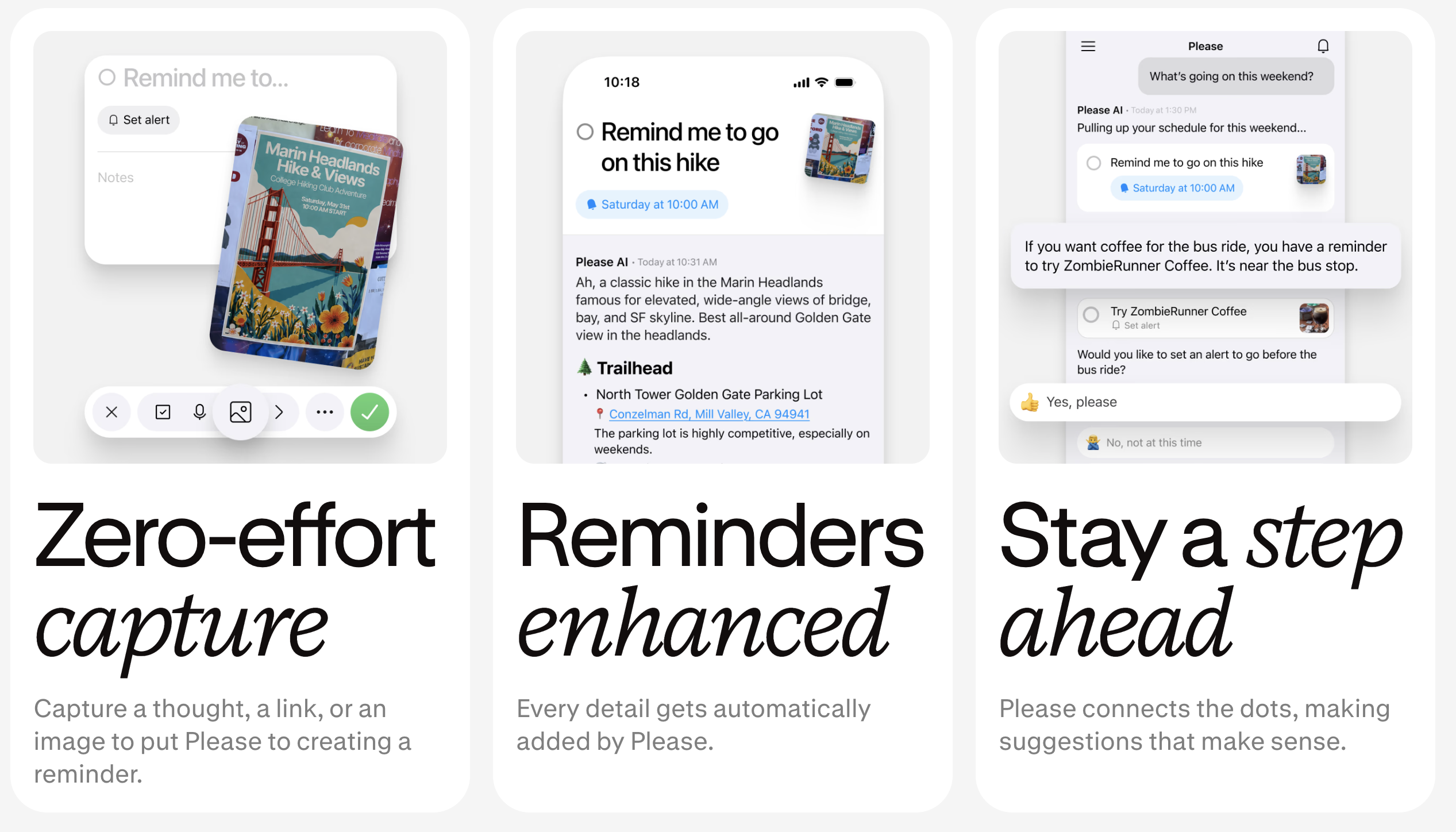
Under Hao Sun's technical leadership, Please AI's system quickly gained over 3,000 customers shortly after launch. In this sense, his value is not just about completing a product feature but leading the establishment of a technical channel that enables Agentic AI to move from concept to users' daily lives.
At Tesla: Making Autonomous Driving Evaluation a Trustworthy Tool
If Please AI represents the implementation of Agentic AI in consumer scenarios, then Tesla AI has placed Hao Sun's capabilities in a higher risk, higher standard system environment.
Starting in September 2025, Hao Sun joined Tesla AI as a Sr Autopilot Software Engineer, responsible for advancing Tesla Full Self-Driving (FSD) evaluations and sign-off tasks. He led the front-end of the model evaluation tool and initiated and built several tool solutions aimed at modeling, labeling, and evaluation teams to support closed-loop evaluations. The evaluation system he led is used to help machine learning engineers assess models from a Level 4 autonomous driving perspective, serving as a critical tool in Tesla's autonomous driving safety and readiness framework, aiding the internal evaluation and scaling process of L4 Robotaxi expansion across multiple cities in the United States.
Evaluating autonomous driving models is not just about whether a model performs well in the test set. It requires integrating numerous complex signals such as real road conditions, simulation environments, user takeovers, vehicle smoothness, safety, and abnormal behavior, allowing engineering teams to locate failure modes, compare different model configurations, and decide whether a system is mature enough to advance to the next stage.
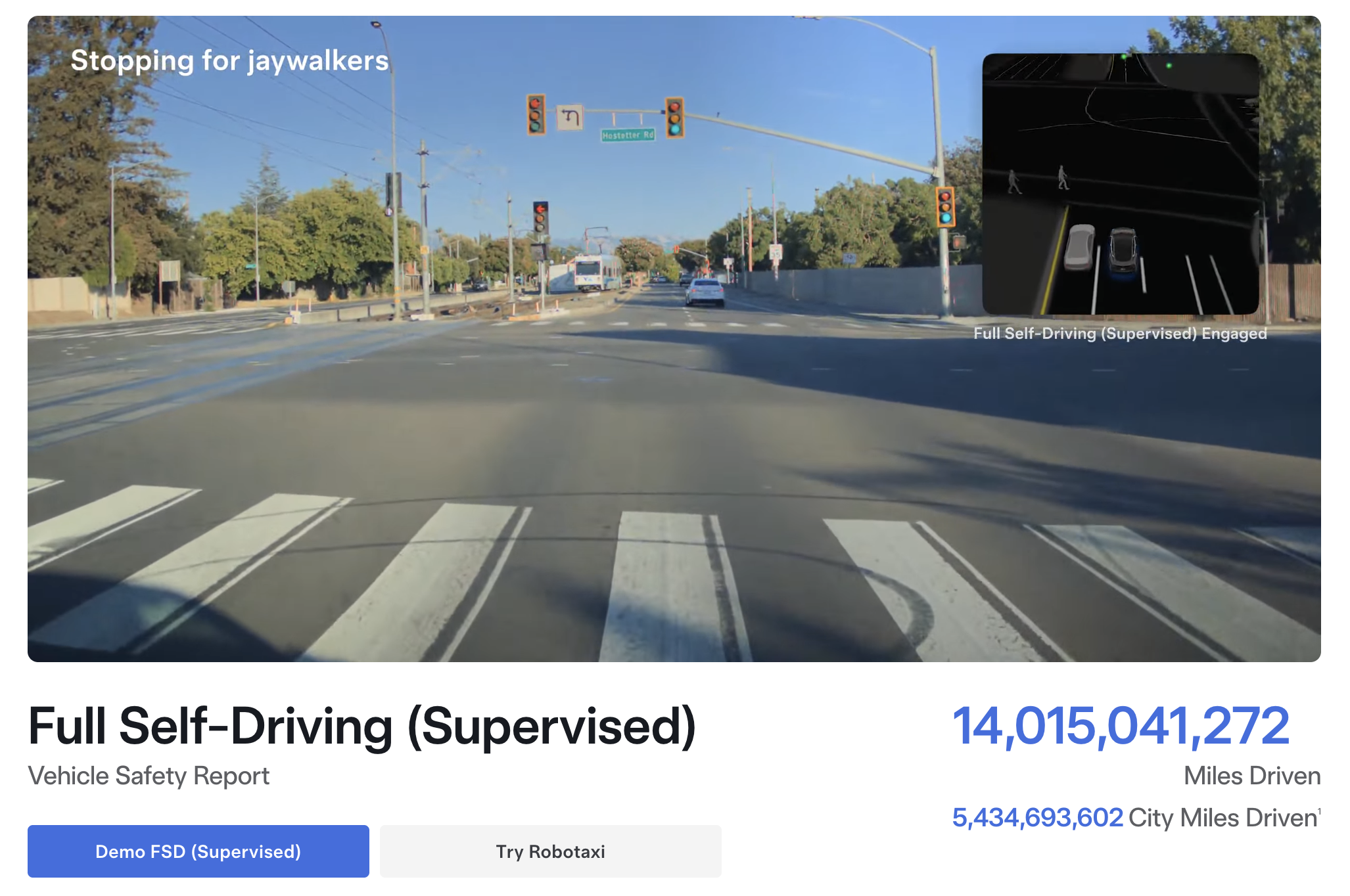
The Labeling, Evaluation, and Comparison Tool that Hao Sun architected revolves around this issue. He is responsible for designing and implementing the relevant interface, integrating the backend data pipeline, and enhancing the evaluation team's efficiency in analyzing failure cases and diagnosing problems through modular design systems, dynamic metric visualizations, real-time data streams, and interactive dashboards. This tool is used to compare autonomous driving models and configurations, analyzing multi-dimensional data including safety, comfort, vehicle movement anomalies, operator or customer takeovers, and comfort metrics, transforming the most critical "why failed, where failed, how to compare" in model iterations into reusable training tools for engineering teams.
This type of work is vital for the safe evolution of autonomous driving systems. For FSD and Robotaxi, the real challenge is not to show one successful drive but to establish a repeatable, comparable, and traceable evaluation mechanism, enabling model iterations to be systematically validated by engineering organizations.
Currently, the evaluation system he leads has become one of the main benchmarks for assessing autonomous driving capabilities in the Tesla AI department and has played a role in internal decision-making as well as communication materials with regulators and the public. It has already supported over 14 billion miles of autonomous driving mileage. Its methodology is also extending into closed-loop evaluation scenarios for Tesla Optimus humanoid robots, considering how robot navigation, task execution, environmental interaction, and obstacle avoidance capabilities can be systematically measured. This means what Hao Sun built is not just a single tool, but a reusable engineering framework.
From AI Agents to Robotaxis to robots, the underlying questions are quite similar: as systems attain greater autonomy, how should humans understand, evaluate, correct, and trust them? Hao Sun's work is providing an engineering answer to this question.
Technical Influence Also Comes from Judgement
In Silicon Valley, excellent engineers are often measured by products and code; but in an emerging technology field, influence is also reflected in whether judgment is trusted by peers.
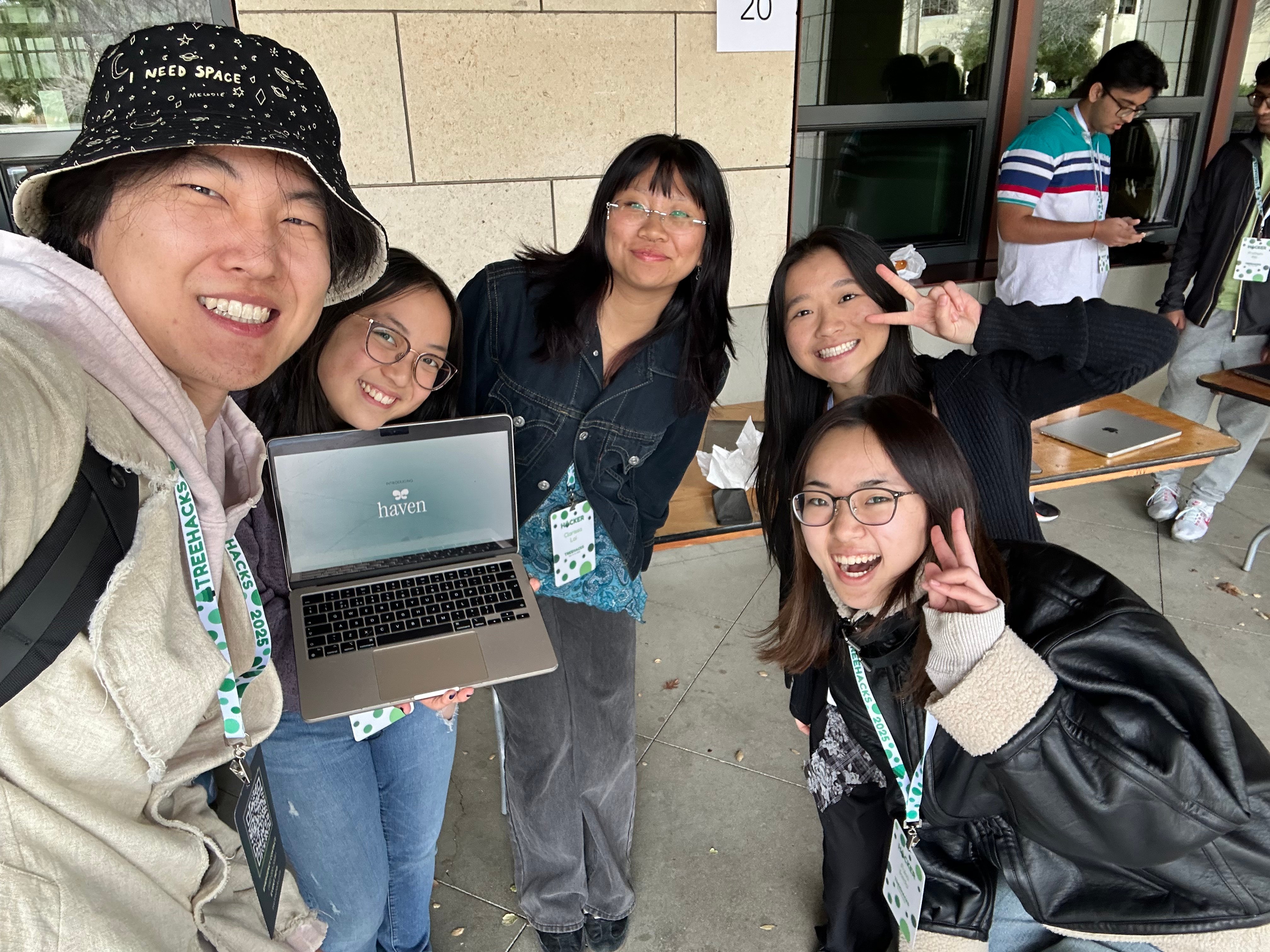
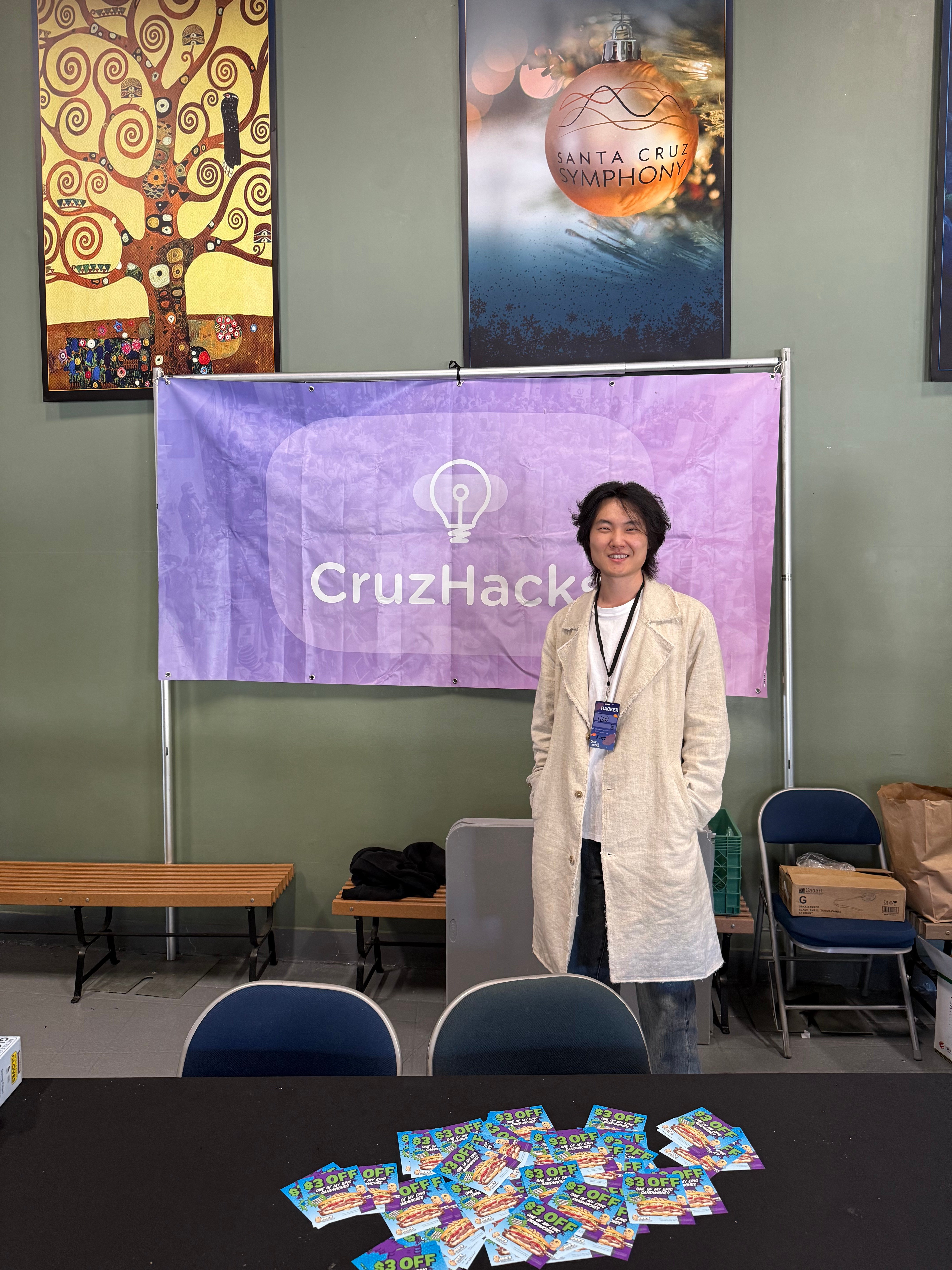
Hao Sun has been invited to serve as a judge for multiple technical competitions and hackathons, including the DevDay x MultiOn API Hackathon, AI Agents 2.0 Hackathon by MultiOn & AgentOps, Stanford TreeHacks 2025, and CruzHacks 2025. These events focus on AI agents, developer platforms, infrastructure, and real-world applications, requiring judges to evaluate from the perspective of top Venture Capital, being able to understand implementation details and also judge whether a proposal possesses scalability, innovativeness, and commercial value. Among them, Stanford TreeHacks 2025 attracted over 1,000 engineering students from 30 universities across 12 countries, with competitors selected from more than 12,000 applications; this judging experience indirectly illustrates that his professional judgment in the AI and software infrastructure field is being embraced by the external community.
Another noteworthy characteristic of Hao Sun's career path is his position between "complex technology" and "ordinary users."
At Meta, he transformed design systems and component capabilities into foundational tools reusable by thousands of engineers; at Please AI, he turned the reasoning and planning capabilities of Agentic AI into one of the first AI products trusted by non-technical users; at Tesla, he made complex data in autonomous driving model evaluation into interfaces that research and engineering teams can judge and act upon. At every instance, he was not simply situated at the technical backend nor stopped at the user interface, but built a bridge between the two.
This ability is especially crucial in the AI era. As models grow stronger, the real bottleneck constraining industry implementation often shifts from "can AI generate answers" to "can the system be reliably used, evaluated, and iterated." What Hao Sun is doing is guiding cutting-edge AI from demonstrations to infrastructure, from single interactions to continuous workflows, and from technical concepts to systems that organizations and users can trust.
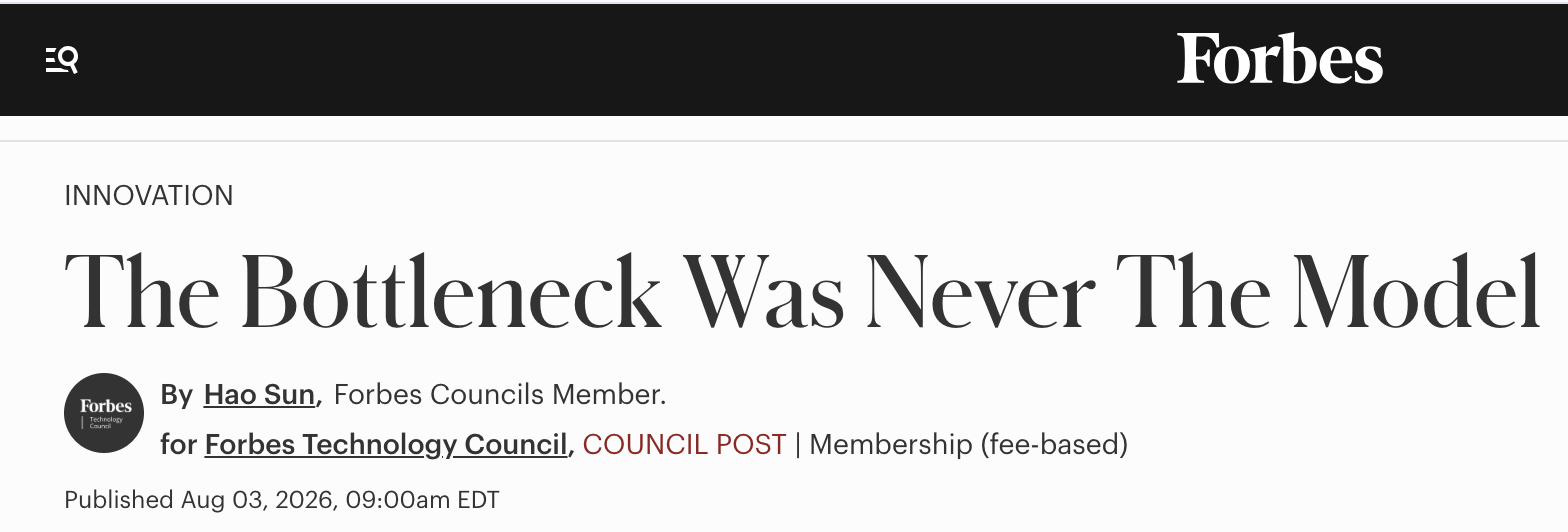
Hao’s technical influence is also beginning to spread to the industry in more public ways. As a member of the Forbes Tech Council, he publishes technical articles on the platform, sharing his original methodologies in AI agent system design: how to break user goals into executable workflows, and how to ensure agentic systems remain controllable, traceable, and reusable in real business environments. For him, writing is not just about expressing viewpoints, but about distilling frontline engineering practices into frameworks that can be discussed and referenced by the industry.
Meanwhile, he has also led an open-source project aimed at industrial scenarios, leveraging agentic workflows to help automate and improve factory processes. In manufacturing environments, many processes are not just one step but comprise scheduling, materials, equipment status, manual checks, anomaly handling, and data feedback collectively. The open-source practices driven by Hao Sun aim to extend AI agents from consumer-level task execution into more complex industrial processes, enabling automation not just to stop at "clicking for people," but to truly understand processes, coordinate steps, and help organizations reduce repetitive labor and response delays.
In the continuous intersection of Agentic AI, autonomous driving, and robotics, Hao Sun's story provides a clear footnote: the real drivers of the industry forward are often not to make technology seem more magical but to make it clearer, more controllable, and more trustworthy.
免责声明:本文章仅代表作者个人观点,不代表本平台的立场和观点。本文章仅供信息分享,不构成对任何人的任何投资建议。用户与作者之间的任何争议,与本平台无关。如网页中刊载的文章或图片涉及侵权,请提供相关的权利证明和身份证明发送邮件到support@aicoin.com,本平台相关工作人员将会进行核查。


