On September 15, 2026, both the Japanese and U.S. 10-year treasury yields reached levels not seen in years: the Japanese yield hit 3.025%, a new high since September 1996; the U.S. surpassed 5.0210%, reaching this level for the first time since mid-2007. As an important benchmark interest rate for global asset pricing, their prolonged high levels indicate that the world has entered an era of significantly increased financing costs. In the same macro cycle, the story of the cryptocurrency industry is also quietly being rewritten: CoinEx, which has been operating for about nine years, announced its shutdown and initiated an orderly exit, leaving users until December 22 to withdraw their assets; on the other side, Binance launched cash dividend distributions for TSMC and Salesforce through bStocks in mid-September 2026, automatically reinvesting the net dividends after tax into additional units or fractional shares, embedding traditional dividend mechanisms into tokenized stock products. Almost simultaneously, CZ commented on X that several gradually closing centralized platforms still allow users to withdraw assets in this cycle, contrasting sharply with the sudden ending of QuadrigaCX in the previous round. These parallel events are not just a simple causal chain, but together outline a clear main line: in an environment with high interest rates and retreating financial dividends, the crypto industry is transitioning from extensive expansion to orderly reshuffling and structural adjustment, with weak platforms exiting, product forms being reshaped, and a new logic of survival beginning to replace old growth narratives.
U.S. and Japanese Treasury Yields Break Key Levels: The Tightening Spell on Risk Assets
On September 15, 2026, the "high interest rate era" had two concrete scales: the Japanese 10-year treasury yield hit 3.025%, the highest level since September 1996, and the U.S. 10-year treasury yield surpassed 5.0210%, returning above 5% for the first time since mid-2007. For global capital, these are not two isolated curves, but different languages expressing the same signal—both major economies' long-term sovereign rates stand at multi-decade highs, meaning the market no longer perceives "short-term rate hikes" as noise but is forced to adapt to a new normal of persistently high financing costs. As a key anchor for global asset pricing, once the 10-year treasury yield rises, the baseline for the so-called "risk-free rate" is pushed upward overall, causing all valuation models based around this baseline to be recalculated.
In this recalculation process, risk assets are the first to feel the tightening grip. Whether it's tech stocks relying on forward growth expectations or crypto assets highly sensitive to liquidity, when investors can obtain higher, perceived safer returns from sovereign debt, the premium they are willing to pay for uncertainty naturally gets compressed. Funding preferences begin to retreat from "chasing imagination" to "locking in certain returns," with marginal funds that once flooded into exchanges and various high-volatility products being gradually drawn back to the treasury curve, one basis point at a time. It is in this context that the current "winter" of the cryptocurrency industry acquires its macro backdrop: it is not about a single interest rate piercing through a specific platform, but the entire yield curve hovering at high levels, gradually pushing the past expansion logic driven by low-cost funds towards contraction and reassessment.
CoinEx Shutdown: The Curtain Call for a Nine-Year Exchange
On the very day when Japanese and U.S. treasury yields simultaneously reached multi-year highs, an announcement from CoinEx added a more concrete stroke to this winter—this centralized exchange, operating for about nine years, announced its shutdown and initiated an orderly withdrawal process. The announcement did not tell a story, merely listing cold, hard steps: the platform would no longer continue, and existing users were clearly informed to complete asset withdrawals within a predetermined time window, with the final deadline written at the end of the announcement—December 22. That was a very specific date, like putting a clear end to a nine-year saga.
What truly distances this "curtain call" from previous painful memories is the manner of this exit. Whether it's the CoinEx announcement itself or CZ's subsequent comments on X, there was no explanation given as to why this platform chose to leave at this moment; the reasons were intentionally left blank. However, what was repeatedly emphasized was "withdrawals still possible" and "orderly exit"—in stark contrast to the sudden disappearance of QuadrigaCX, where users' funds were passively caught in a liquidation storm, this wave of shutdowns in which CEXs choose to ask guests to leave while the lights are still on, at least leaves the assets' exit on the users' side. Within a larger industry context, CoinEx's closure is both a contraction of mid-tier platforms during the crypto winter and a microcosm of the changing rules of this elimination round: surviving is indeed important, but being able to maintain the baseline of "funds are retrievable, processes are transparent" when exiting has become scarce competitiveness in itself.
From QuadrigaCX to Winter: The Shutdown Upgrade in CZ's Eyes
In this winter, as several centralized trading platforms successively announced gradual shutdowns, CZ provided a coordinate system on X that he considered "at least progress": compared to the previous cycle's sudden stoppages represented by QuadrigaCX, where accounts were locked, and asset disposals remained long unresolved, this time—even for the platforms that are leaving, there is still a desperate effort to maintain a key premise—users can still withdraw their coins. For CZ, being able to "withdraw coins" itself has already become a dividing line: on one side of the line is the platform's choice between profit and loss; on the other side lies the long pursuit for compensation after trust completely collapses.
If the QuadrigaCX-style events were the shadow of the previous cycle, then in CZ's view, this wave of shutdowns appears more "mature" at least in three dimensions: in terms of custody, platforms recognized earlier that user asset independence is a matter of life and death, not a gray area that can be explained afterward; in risk management, management no longer sees surviving until the last moment as a virtue, but accepts triggering an orderly exit in advance when losses become irreversible; and in terms of exit methods, moving from a blunt "black box closure" to advance announcements, reserving withdrawal windows, and proceeding with orderly liquidation. For an industry that relies heavily on trust, this transition from "catastrophic endings" to "orderly exits" does not imply that risks have disappeared, but rather indicates that even in winter, the rules themselves are slowly upgrading.
bStocks Dividend Implementation: A Real Experiment in Tokenized Stocks
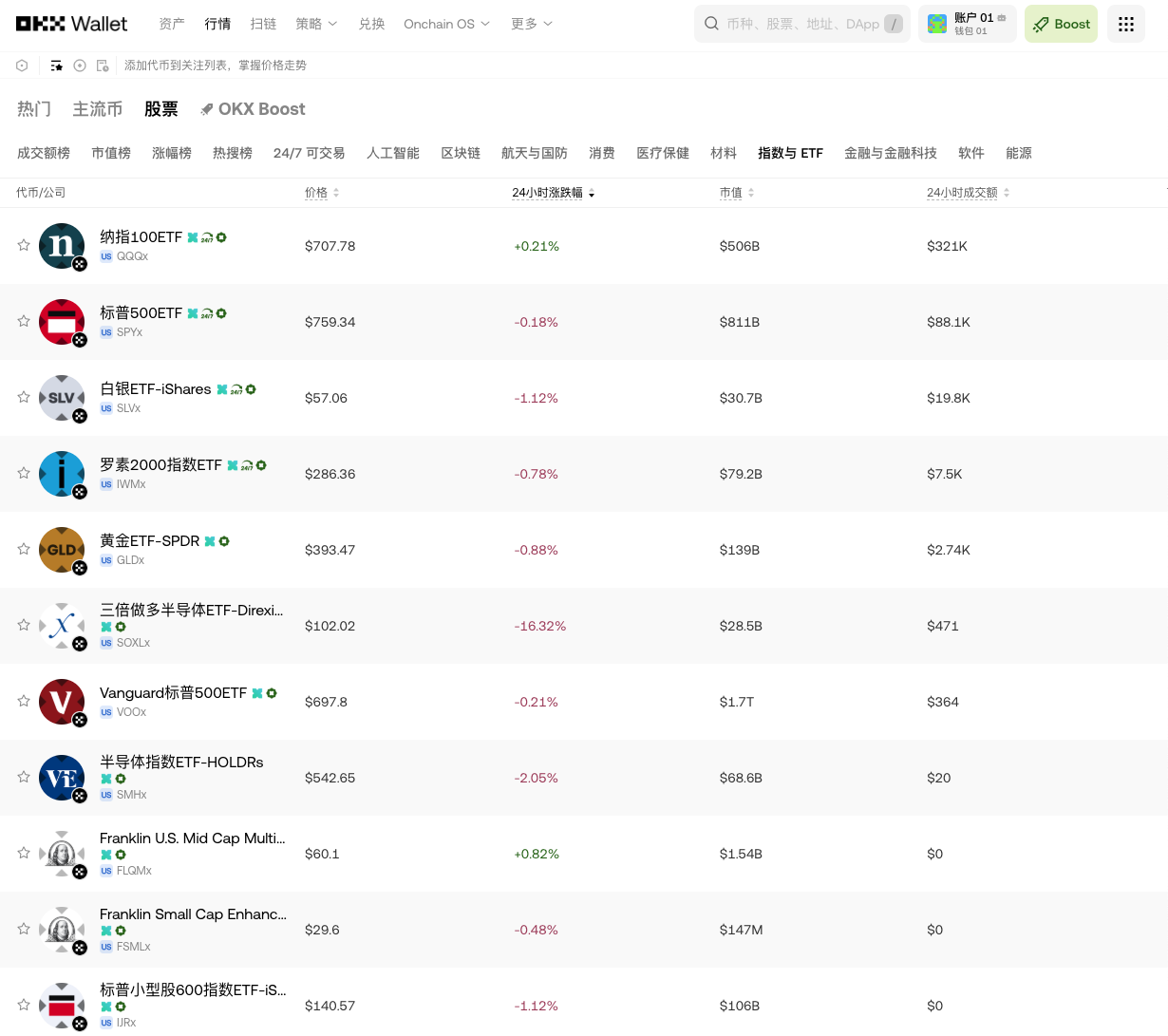
In the same week that a trading platform announced its curtain call and users were busy confirming withdrawal paths, on the other end, the product team was moving the simplest form of return from the traditional capital market onto the blockchain. Binance announced that its bStocks product would support the cash dividend distribution for TSMC and Salesforce: the dividend record date for TSMC is set for September 16, 2026, at 08:00 (GMT+8), while CRMB is on September 17 at 08:00. These two precisely timed points seem to have been deliberately embedded in the current winter narrative—when interest rates rise and established platforms contract, some still bet on the route that "tokenized stocks are not just a concept, but should align with real cash flows."
Even more interesting is the method of dividend distribution itself. The official arrangement is: the net dividend after withholding tax and related fees will not simply be a disposable balance, but will automatically be reinvested into additional units or fractional shares of the corresponding security. For participants accustomed to the "airdrop equals sell pressure" on-chain, this is closer to a mechanism of forced guidance for long-term holding: dividends turning into more positions of TSMB or CRMB instead of a one-time liquidity release. By embedding automatic reinvestment and fractional shares into the product logic of tokenized assets, it essentially tests a proposition—whether on-chain participants are willing to accept a tokenized asset form that is closer to real equity, centered on sustained cash flows and compounding, during a period of high macro rates and industry reshuffling.
The Crypto Track in the High-Interest Rate Era: Parallel Exits and Increases
As the Japanese and U.S. 10-year treasury yields both reached decades-high levels in mid-September 2026, global financing costs quietly rose, and the paths of differentiation within the cryptocurrency industry became clearer within the same timeframe. On one end are platforms like CoinEx, choosing to cease operations during the winter cycle, completing an orderly exit through an open withdrawal window until December 22. CZ's comments on X deliberately contrast this type of shutdown, which "allows users to walk the final mile," with the uncontrollable endings represented by QuadrigaCX in the previous cycle, reminding the market that this is a more gentle yet equally resolute exit. On the other end, Binance, under the same macro environment, pushes forward with bStocks dividends, pinpointing the cash dividend record dates for TSMB and CRMB at 08:00 on September 16 and 17, 2026, respectively, and through automatic net dividend reinvestment and fractional shares accounting, brings the cash flow mechanisms of traditional equity into the tokenized asset system, essentially increasing bets in this track countercyclically. The brief clarifies that one cannot simply link the soaring interest rates in Japan and the U.S. to a single platform's decision, but these parallel events together constitute the reshuffling picture of the crypto industry in the high-interest rate era: small and medium CEXs are more likely to choose decent exits, while leading platforms continue to drive the development of tokenized securities and other refined products under regulatory narratives, centering their business toward visibility in regulation, more complex structures, and clearer cash flows, thus collectively moving the industry toward the next stage of centralization, compliance, and product refinement.
Join our community to discuss together and become stronger!
AiCoin exclusive Hyperliquid benefits: https://app.hyperliquid.xyz/join/AICOIN88
AiCoin exclusive Aster benefits: https://www.asterdex.com/zh-CN/referral/9C50e2
On-chain Telegram community: https://t.me/AiCoinWhaleData
On-chain community: https://www.aicoin.com/link/chat?cid=N6OVMor5g
AiCoin on-chain Twitter: https://x.com/aicoinwhaledata
免责声明:本文章仅代表作者个人观点,不代表本平台的立场和观点。本文章仅供信息分享,不构成对任何人的任何投资建议。用户与作者之间的任何争议,与本平台无关。如网页中刊载的文章或图片涉及侵权,请提供相关的权利证明和身份证明发送邮件到support@aicoin.com,本平台相关工作人员将会进行核查。