Author: Claude, Deep Tide TechFlow
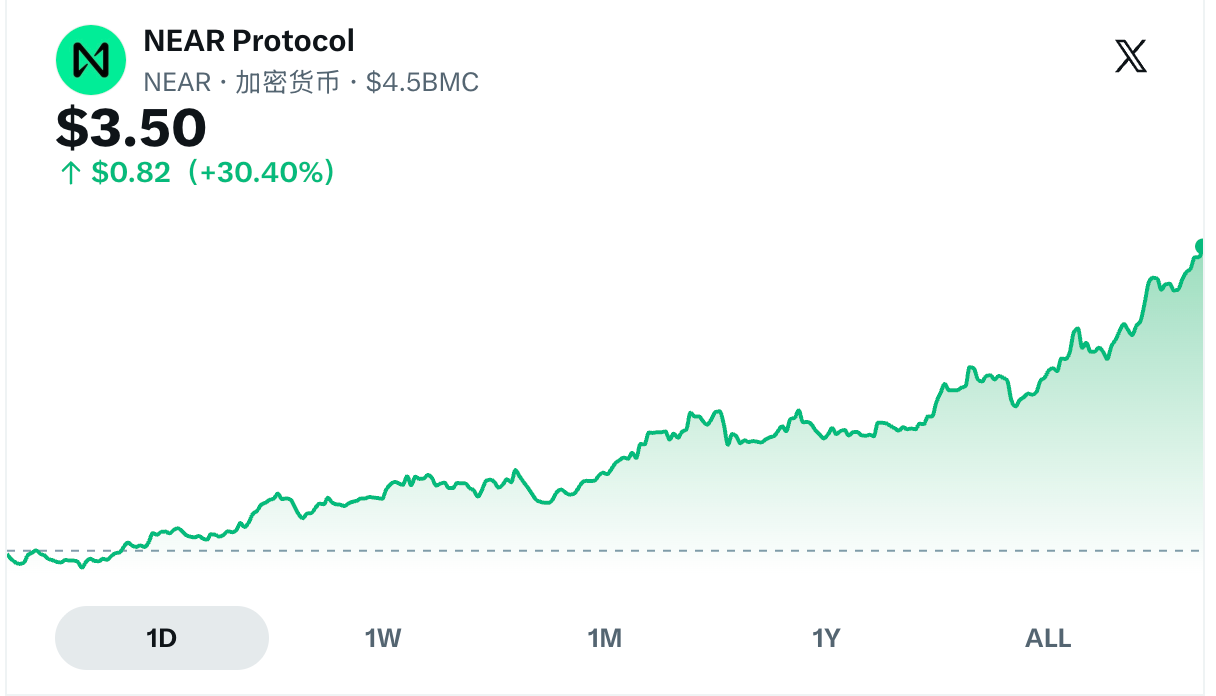
On September 18, NEAR reached $3.45 at one point, with a 24-hour increase of over 26%. Three days prior, it closed at $2.34.
The market quickly summarized this cycle as the "Hit the $3.33" plan. This figure comes from a recently triggered confidential trading incentive for NEAR: funds first enter a confidential account, rewards are subsequently locked, and after the coin price meets targets consecutively, it is converted into tradable NEAR.
This is akin to using an option-like airdrop to simultaneously push product usage and price expectations to the forefront.
$3.33 written into reward redemption conditions
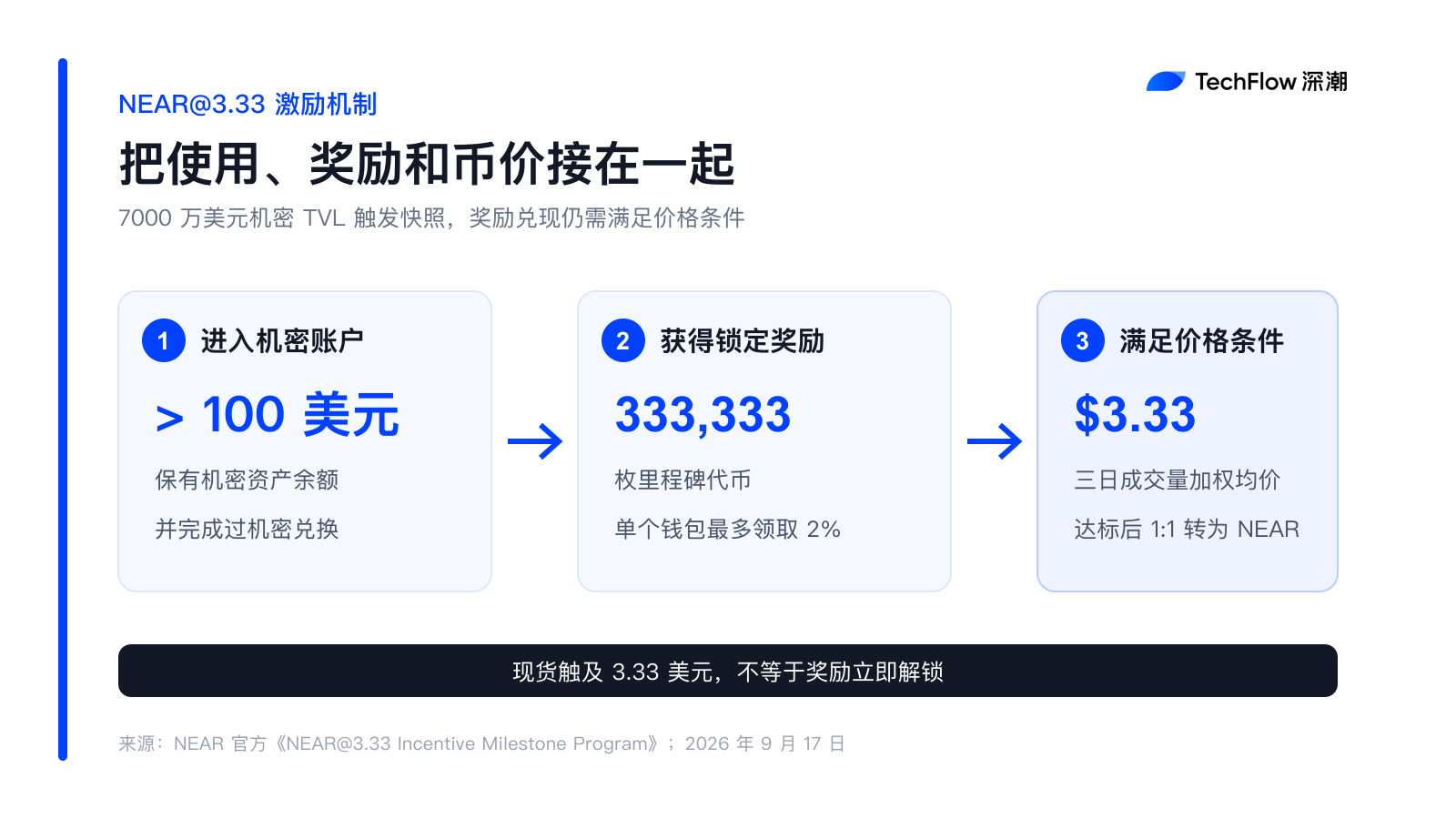
On September 17, near.com announced that the locked assets in the confidential mode (Near Intents) surpassed $70 million, and the first phase of the [email protected] incentive plan completed its snapshot.
Eligible users need to hold over $100 in assets within the confidential account and have completed at least one confidential exchange.
After meeting this condition, the project team will issue 333,333 milestone tokens, with a maximum of 2% per wallet. However, these tokens cannot be sold on the market for the time being.
The rule requires the three-day trading volume weighted average price of NEAR to reach or exceed $3.33 for the milestone tokens to be converted into NEAR at a 1:1 ratio. Based on $3.33, the nominal value of this batch of rewards is about $1.11 million.
This also became one of the important catalysts for NEAR's spot price to break $3.3.
A brief explanation here: NEAR Intents is a cross-chain trading protocol launched by NEAR. Users only need to tell the system what asset they want to exchange for what asset, and market makers are responsible for finding quotes and completing settlements. The so-called "confidential mode" adds a layer of privacy to this trading system.
Orders will enter NEAR's private shard, and the public trading pool cannot see the direction, quantity, and submission time of trades. The aforementioned [email protected] reward plan has a very direct purpose, which is to bring funds and transaction counts into this confidential mode.
The design of the three-day average price also has significance; a spike in the intraday price cannot complete the exchange, and the price needs to hover around $3.33. The activity first uses rewards to incentivize users to deposit assets and complete trades, then uses the redemption conditions to extend attention to the snapshot period.
Ordinary airdrops often experience selling on the redemption day, while NEAR separates redemption and sale.
This activity is cleverly planned and skillfully generates market conditions. The $1.11 million reward has kept the entire market focused on $3.33.
However, this reward cannot explain the over one billion dollar increase in NEAR's market capitalization within three days. Historical data from CoinGecko shows that NEAR's market capitalization increased from about $3.22 billion on September 15 to about $4.46 billion, an increase of over $1.2 billion. The reward value only accounts for about 0.09% of the market cap increase.
The real work done by this money is to bring investors back to NEAR's product page. Funds then revealed the income data of NEAR Intents. The NEAR Revenue Dashboard shows that NEAR Intents has generated about $5.01 million in total fees in the past 30 days, leaving about $1.58 million in net income for the protocol.
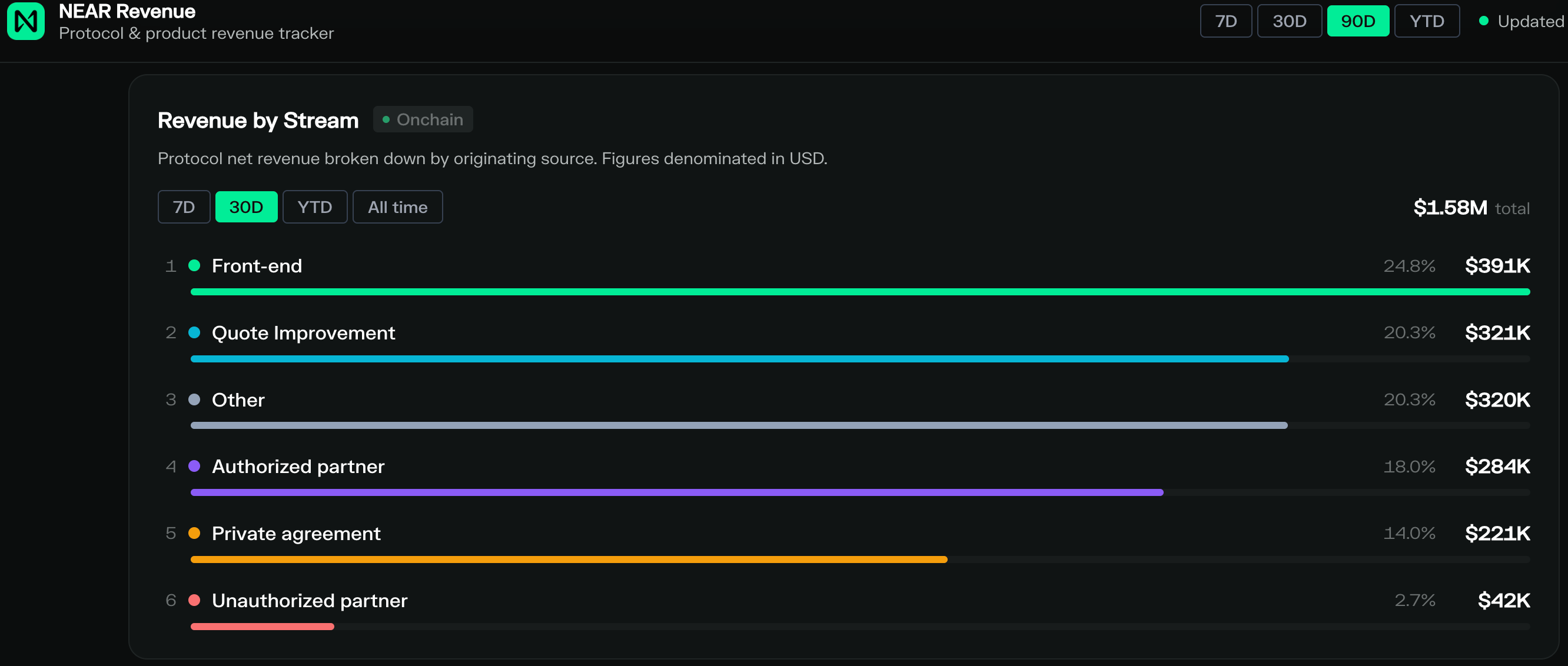
Revenue comes from front-end fees, quote improvements, and partner integrations, and no longer relies on traditional blockchain gas fees.
Additionally, on-chain, there is a buyback multi-signature address that cumulatively holds about 1.158 million NEAR. An old project that used to only discuss sharding and public chain performance now has monthly updated trading revenue. This is the more valuable change in this market cycle.
When ZEC purchase orders occur through NEAR
Confidential transactions can easily become a new concept, but a set of massive whale trades that appeared on September 9 gave it a specific purpose.
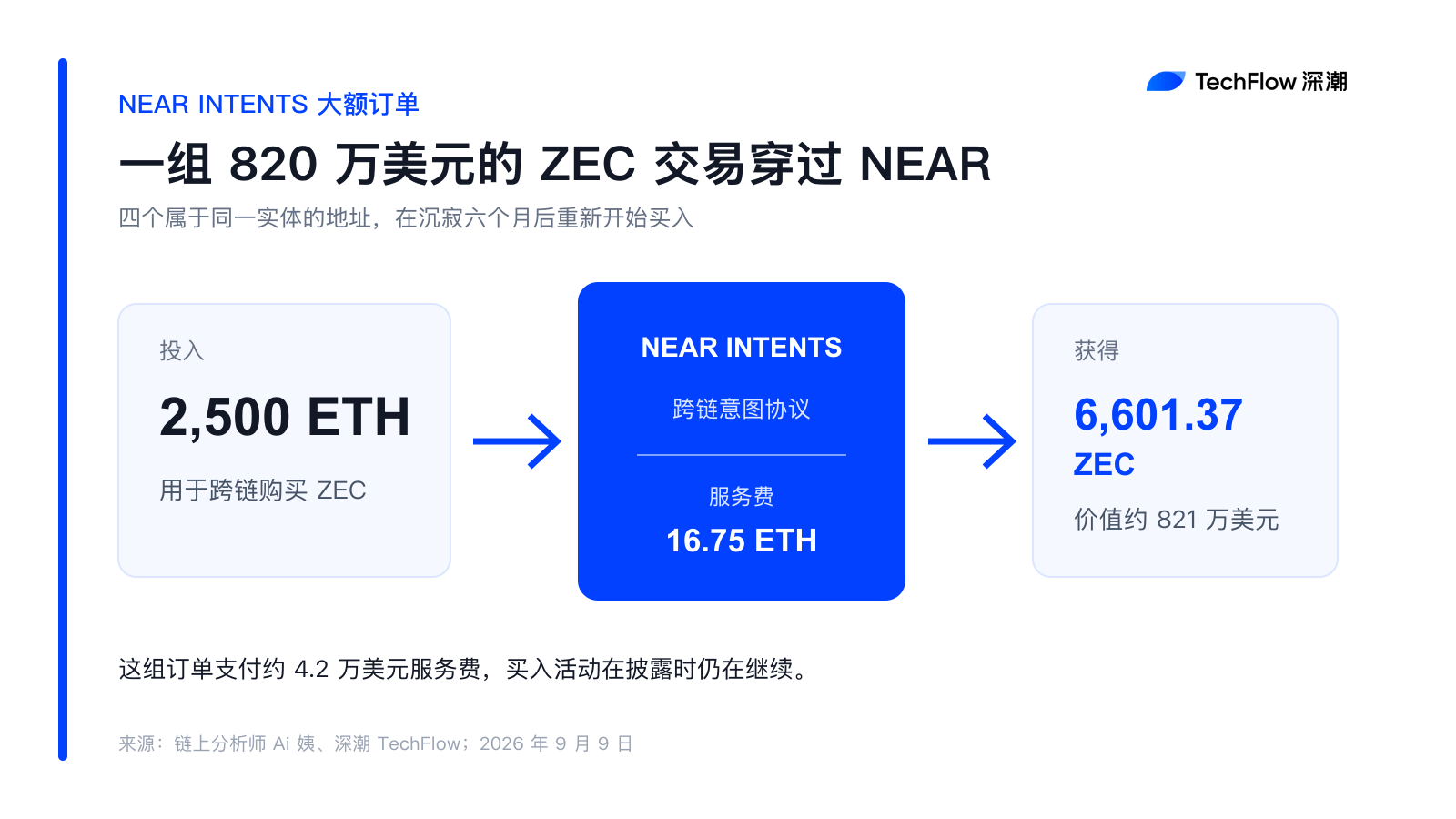
Four addresses belonging to the same entity that had been silent for about six months became active again. They first bought approximately $33.37 million worth of ETH through CowSwap, then took out 2,500 ETH and exchanged it for 6,601.37 ZEC through NEAR Intents, valued at about $8.21 million.
This set of transactions paid a service fee of 16.75 ETH, approximately $42,000. Large buyers are willing to pay this fee to ensure that their trading path is not publicly monitored. The fewer exposure points there are for order size, buying direction, and execution time, the less chance there is for front-running or follow-on trading to drive up prices.
For NEAR, this transaction is more persuasive than the number of airdrop participants. Users don’t even need to understand the NEAR public chain first; the protocol completes settlements hidden behind cross-chain exchanges and retains the fees.
Today, we also reported that near.com has admitted perpetual contracts provided by Hyperliquid for market and liquidity into the confidential account. Users can deposit assets from different chains and open positions using the same account. Position size, entry price, and transaction direction will not directly appear in the public trading pool.
Cross-chain exchanges typically complete and go, while perpetual contracts leave behind positions, margins, and continuously generated fees. Consequently, NEAR Intents have transitioned from being a conversion tool to entering trading accounts.
Therefore, as older coins experience new gains, what you should pay more attention to is the narrative changes, which are the key catalysts supporting short-term price increases:
NEAR has shifted to confidential exchanges, perpetual contracts, and protocol income. The market, which previously regarded NEAR as an old public chain left from the last cycle, is now starting to see it as a privacy settlement channel behind cross-chain trading.
免责声明:本文章仅代表作者个人观点,不代表本平台的立场和观点。本文章仅供信息分享,不构成对任何人的任何投资建议。用户与作者之间的任何争议,与本平台无关。如网页中刊载的文章或图片涉及侵权,请提供相关的权利证明和身份证明发送邮件到support@aicoin.com,本平台相关工作人员将会进行核查。


