Author: Tiger Research Reports
Translation: Shenchao TechFlow
Shenchao Guide: South Korea's crypto tax, after three delays, is set to be implemented in January 2027, but a survey covering 2,423 investors shows that nearly three-quarters oppose the current plan. More notably, 63.4% of the opponents said they would accept taxation if the system were improved: this indicates that the real problem lies not in the tax itself, but in the execution. If pushed through forcibly, the trading volume of Korea's three major exchanges could evaporate by 30%, what does this mean for the entire domestic crypto industry?
Key Points
82.9% of South Korean crypto investors oppose the current plan or support another delay. However, 63.4% of people stated that they would accept taxation if the system were improved. This indicates that investors are more concerned about insufficient system preparation rather than the tax itself.
If the tax is implemented, 69.7% of respondents expect to reduce or stop investing, and 73.1% may decrease their use of South Korean centralized exchanges. The trading volume of the three major exchanges in South Korea could decrease by 30.0%, from 860 trillion won to 602 trillion won.
A decline in trading volume could lead to a 29.5% reduction in total revenue for the three major exchanges, from 1.033 trillion won to 728.2 billion won, weakening the entire domestic industry.
Trading activity may shift to global exchanges, self-custody wallets, and DeFi. In 2025, the paths not covered by CARF in Japan, the UK, the US, and Italy accounted for 59.1% to 76.6% of the outflows from centralized exchanges, highlighting the ongoing limitations of trade tracking.
1. Why Crypto Tax Needs Reevaluation
South Korea plans to tax profits from crypto assets starting in January 2027, after three previous delays. With only a little over three months left until implementation, public attention is intensifying. A relevant petition submitted to Congress has garnered over 50,000 supporters. As the debate heats up again, discussions should not stop at simple support or opposition, but should also examine whether the current tax scheme reflects the actual trading methods of crypto assets.
The principle of taxing profits from crypto investments and whether the current scheme can be implemented as is are two different questions. Crypto assets flow between domestic exchanges, global exchanges, personal wallets, and decentralized exchanges. Investors often exchange one crypto asset for another. For the tax system to function effectively, it must connect disparate transaction records and calculate acquisition costs and actual profits and losses under consistent rules.
The problem is that if these systems are not fully in place, both investors and tax authorities may bear burdens. Investors may have to verify and prove their transaction history and acquisition costs themselves. Tax authorities may also struggle to accurately identify taxable income and tax bases. Therefore, the key issue is not only whether to impose taxes but also whether investors can accurately calculate profits and losses, file taxes, and track transaction records in a real trading environment.
For these reasons, current discussions should not stop at support or opposition but should also examine to what extent the current scheme reflects the actual trading situation, what concerns investors have, and how taxation might affect trading behavior and the domestic market.
2. How South Korean Investors View Crypto Tax
Tiger Research surveyed 2,423 South Korean crypto investors to understand their views on crypto taxation. The survey was led by Tiger Research and executed by the South Korean polling agency PMI. It covered not only the level of support for the tax and its timing but also the reasonableness of the current scheme, the preparedness of the reporting and payment system, and how investors expect their trading behavior to change after the tax implementation.
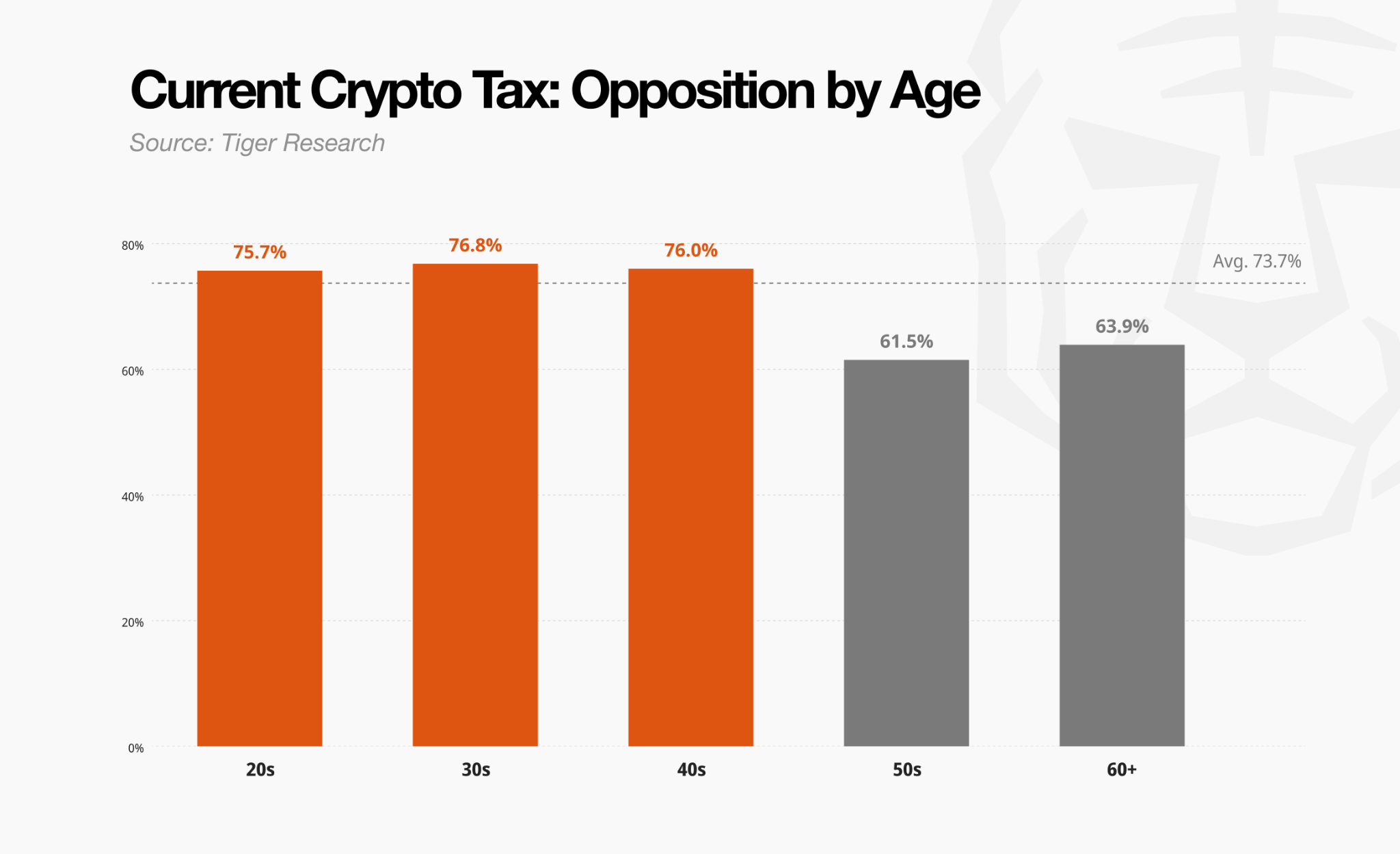
Opposition to the crypto tax is present across all age groups. Overall, 73.7% of respondents oppose taxation. Among respondents in their 20s, 30s, and 40s, the opposition rate exceeds 75%. Among those aged 50 and above, the opposition rates are 61.5% and 63.9%, respectively. The strongest opposition is among those aged 20 to 40, but negative attitudes are not limited to younger investors.
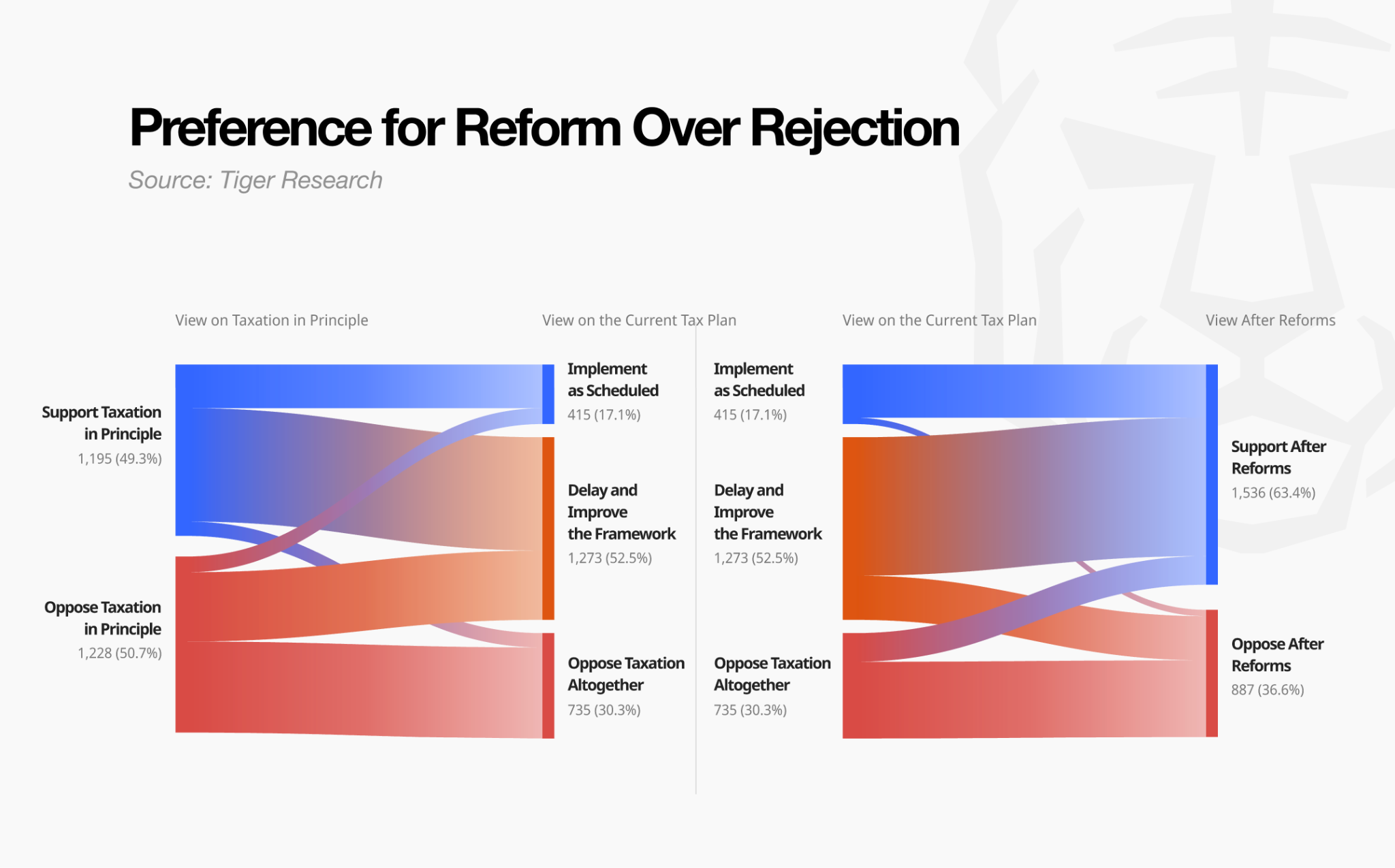
Simply supporting or opposing does not fully explain investors' views. Among those opposing the tax, 51.5% said they could accept taxes if the issues with the current scheme are adequately resolved. Meanwhile, among those who agree that crypto assets should be taxed, 74.5% believe the current scheme should be delayed or modified rather than implemented as is.
These results indicate that many investors distinguish the crypto tax itself from the current tax scheme. Some who oppose taxation stated they could accept it if the system improves. At the same time, many who agree that taxes should be imposed do not support implementing the current scheme. This discrepancy becomes more apparent when investors assess the specific rules and the level of system preparedness.
3. Main Concerns of Investors Regarding the Current Scheme
The detailed survey results reveal why investors have differing attitudes towards crypto taxes and the current scheme. Their concerns focus on three areas:
Whether the tax rate and deductions are appropriate and fair compared to other financial assets.
Whether the system properly handles losses and acquisition costs when calculating taxable income.
Whether the system is ready to support tax reporting, track transactions, and protect investors.
Investors are concerned not just about whether to impose taxes, but also about how much they need to pay, how the system calculates taxable income, and whether it is equipped for implementation. The three issues are discussed below.
3.1. Is the Tax Burden Fair?
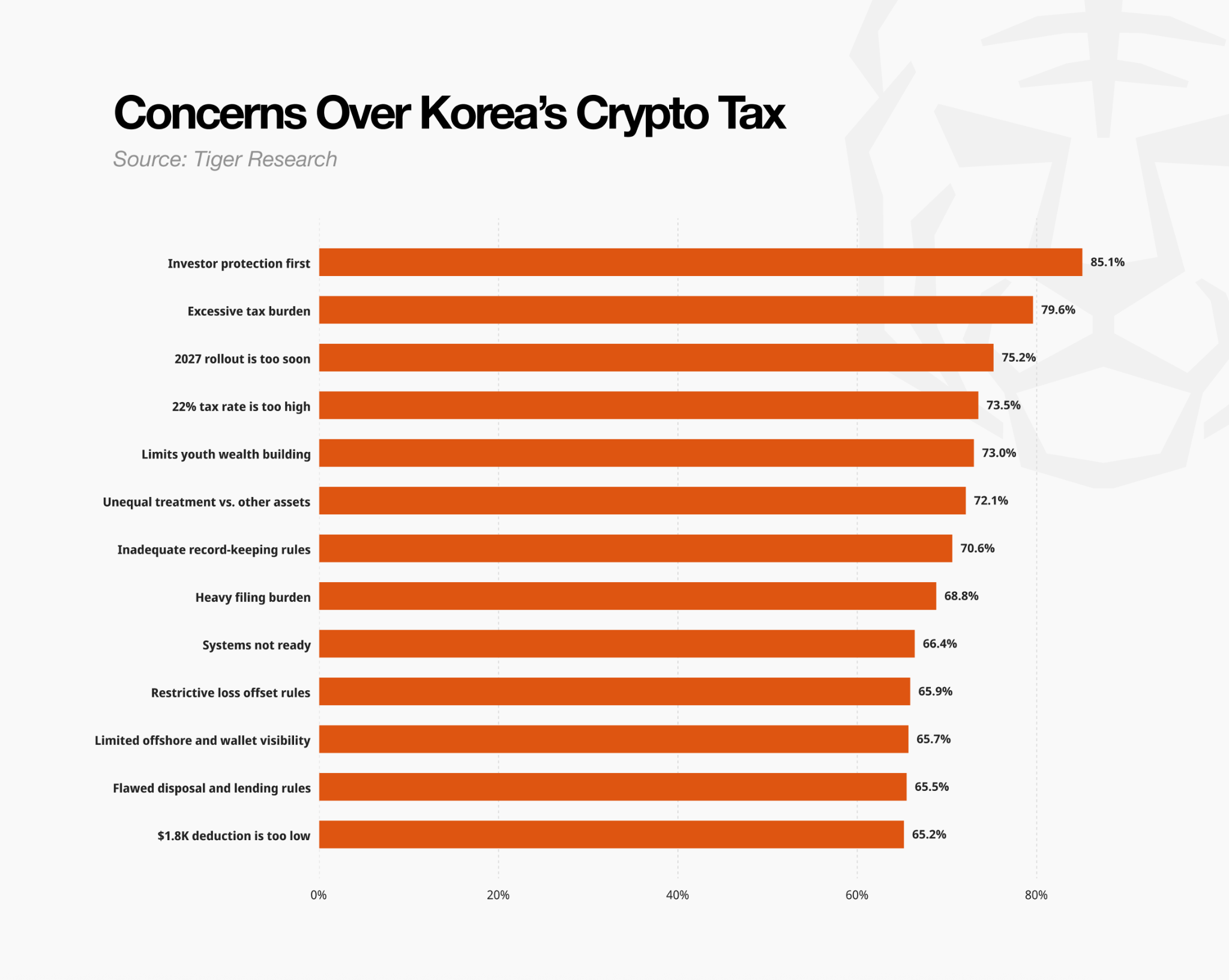
Most respondents are critical of the tax burden under the current scheme. Among all respondents, 73.5% believe that a 22% tax rate is too high. Additionally, 65.2% believe that the annual basic deduction of about $1,800 is too low. Furthermore, 72.1% believe that the tax rules for crypto assets are unfair compared to other financial assets.
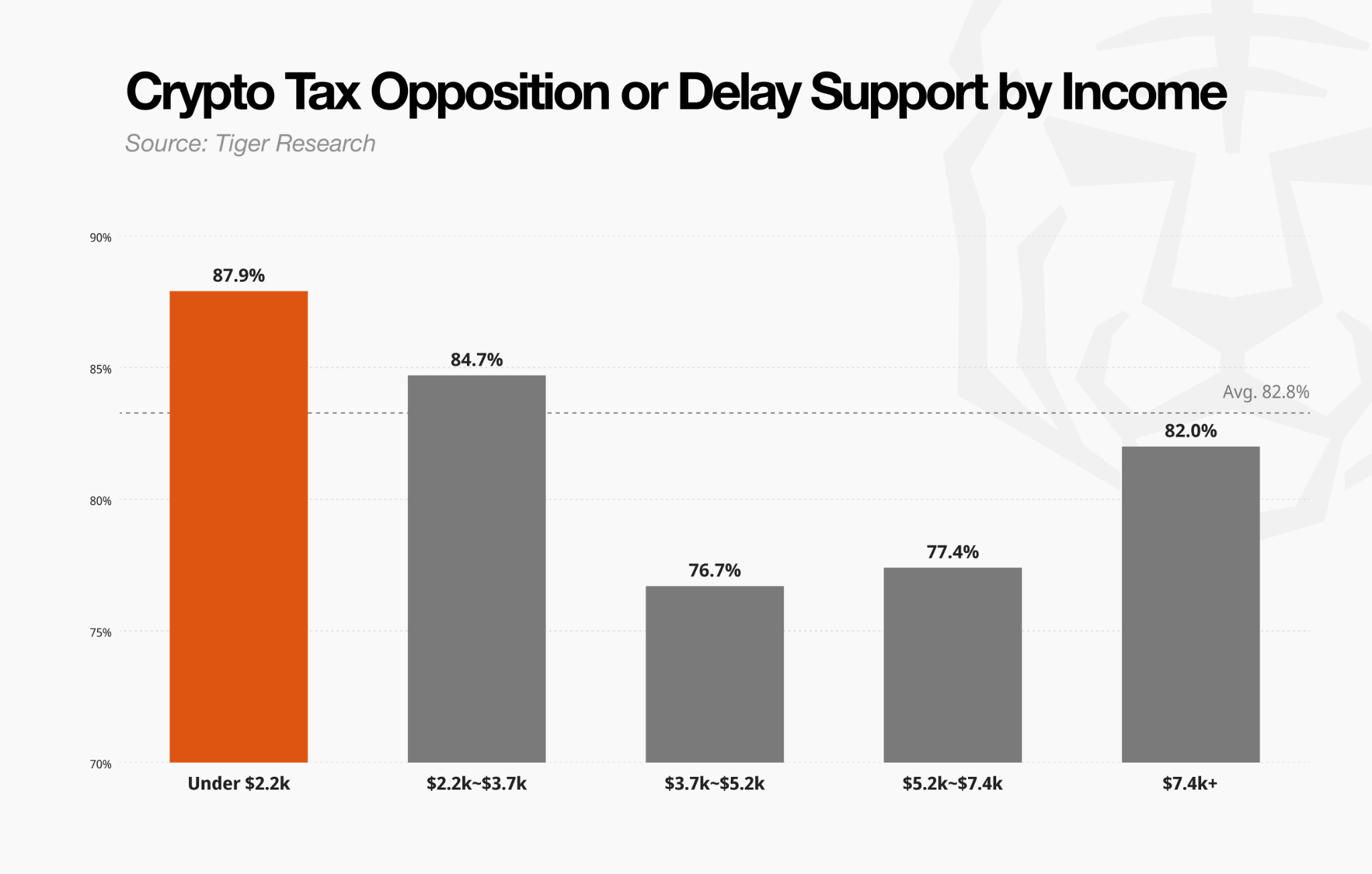
Low-income investors have also expressed strong concerns. Investors with a monthly income below about $2,100 account for 24.9% of all respondents. In this group, 87.9% oppose the planned implementation of the current scheme or call for another delay. This percentage is higher than the overall 82.9% of respondents. The results show that concerns about the current scheme are not limited to high-income investors.
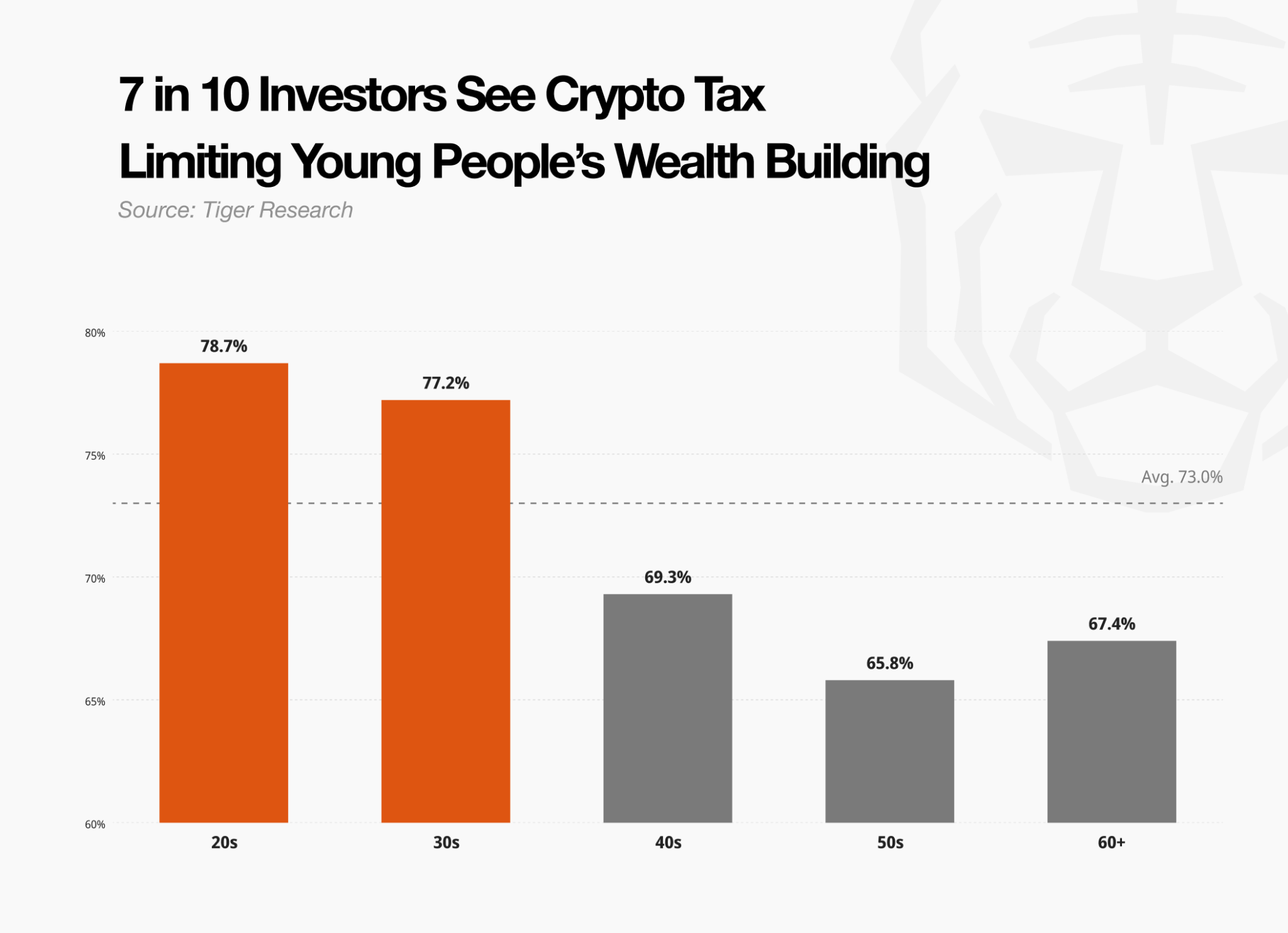
Respondents are also concerned about the impact on the ability of young people to accumulate wealth. Overall, 73.0% of respondents believe that crypto taxation could limit wealth accumulation opportunities for those in their twenties and thirties. The level of concern among respondents in their twenties is the highest, at 78.7%. Respondents in their thirties follow closely at 77.2%. Support for this view among other age groups also exceeds 65%.
The survey shows that investors' concerns extend beyond just the tax rate and deductions. They also question whether these rules are fair compared to other financial assets. Low-income investors share similar concerns. Respondents across all age groups worry about the impact on young investors. Investors are concerned both about the magnitude of the tax burden and about how the rules affect different groups.
3.2. Can Taxable Income Be Accurately Calculated?
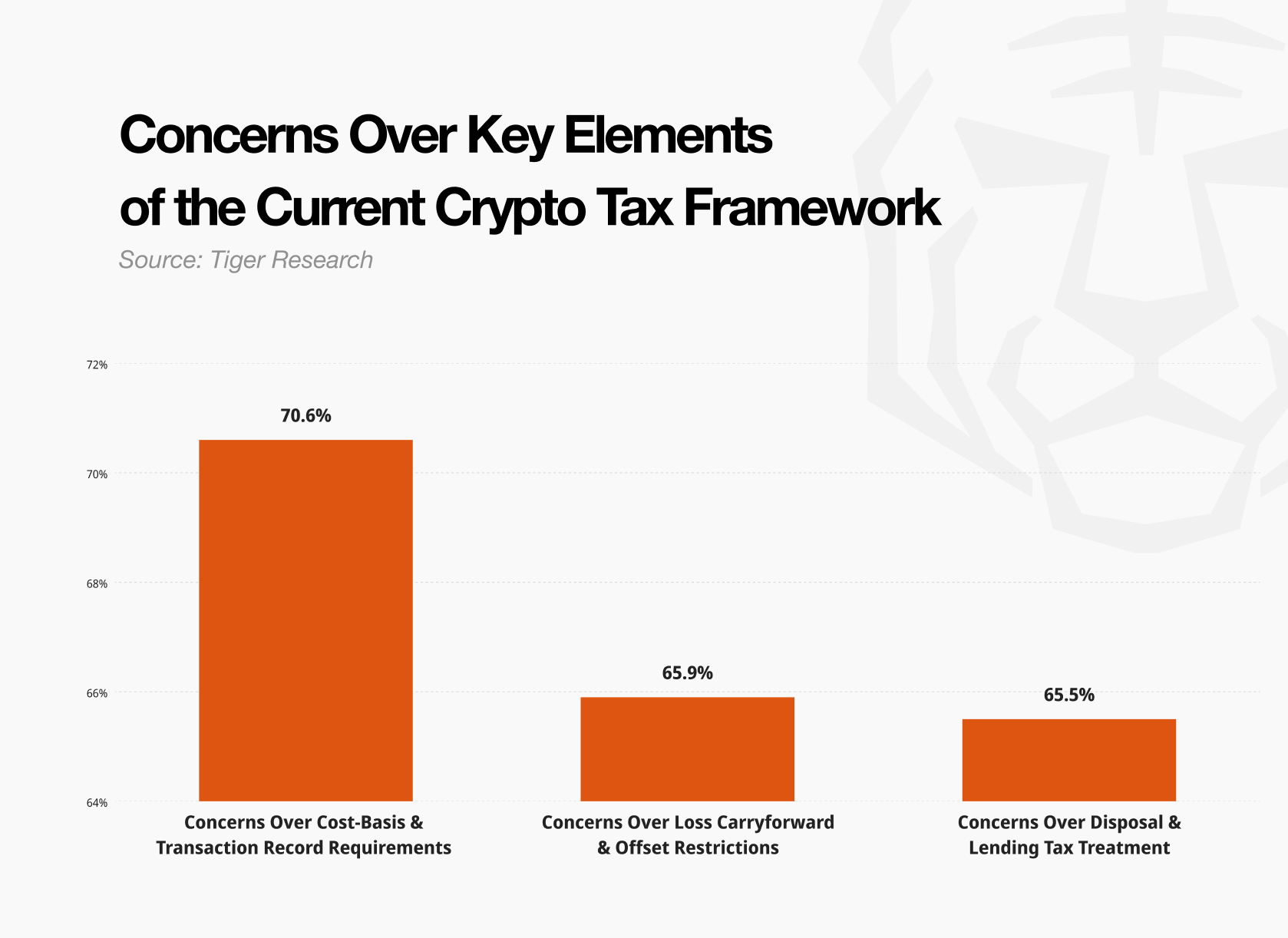
To accurately calculate taxable income, the tax system must first determine how much investors have actually gained or lost. It also needs to establish clear rules for losses, acquisition costs, and different types of crypto income. The survey found strong concerns in all three areas.
First, 65.9% of respondents believe that the current treatment of losses is inappropriate. According to current rules, investors can offset losses with crypto gains within the same year. However, they cannot carry losses forward to offset gains in future years.
Crypto investors may experience profits and losses over several years. Therefore, how the tax system handles these losses will impact the accuracy of calculating taxable income.
Respondents expressed even stronger concerns regarding acquisition costs and transaction records. 70.6% of respondents are worried about the burden of calculating and reporting gains and losses based on their own transaction records and acquisition costs.
Crypto assets flow between domestic and overseas centralized exchanges and personal wallets. Investors frequently exchange one crypto asset for another. As trading paths become more complex, investors may find it increasingly challenging to match initial acquisition costs with subsequent transactions.
Crypto income may also arise from various activities, including trading, lending, staking, mining, airdrops, and providing liquidity. The current tax framework mainly covers income generated from trading and lending. Therefore, the rules need to clarify which earnings are taxable and when the taxes should be paid. About 65% of respondents stated that the current framework fails to adequately cover these different types of transactions.
The survey reveals that investors are concerned not only about tax rates but also about how the system handles losses, determines acquisition costs, and categorizes different types of trading income. These rules ultimately dictate how the system calculates taxable income based on investors' actual profits and losses.
3.3. Is the System Prepared?
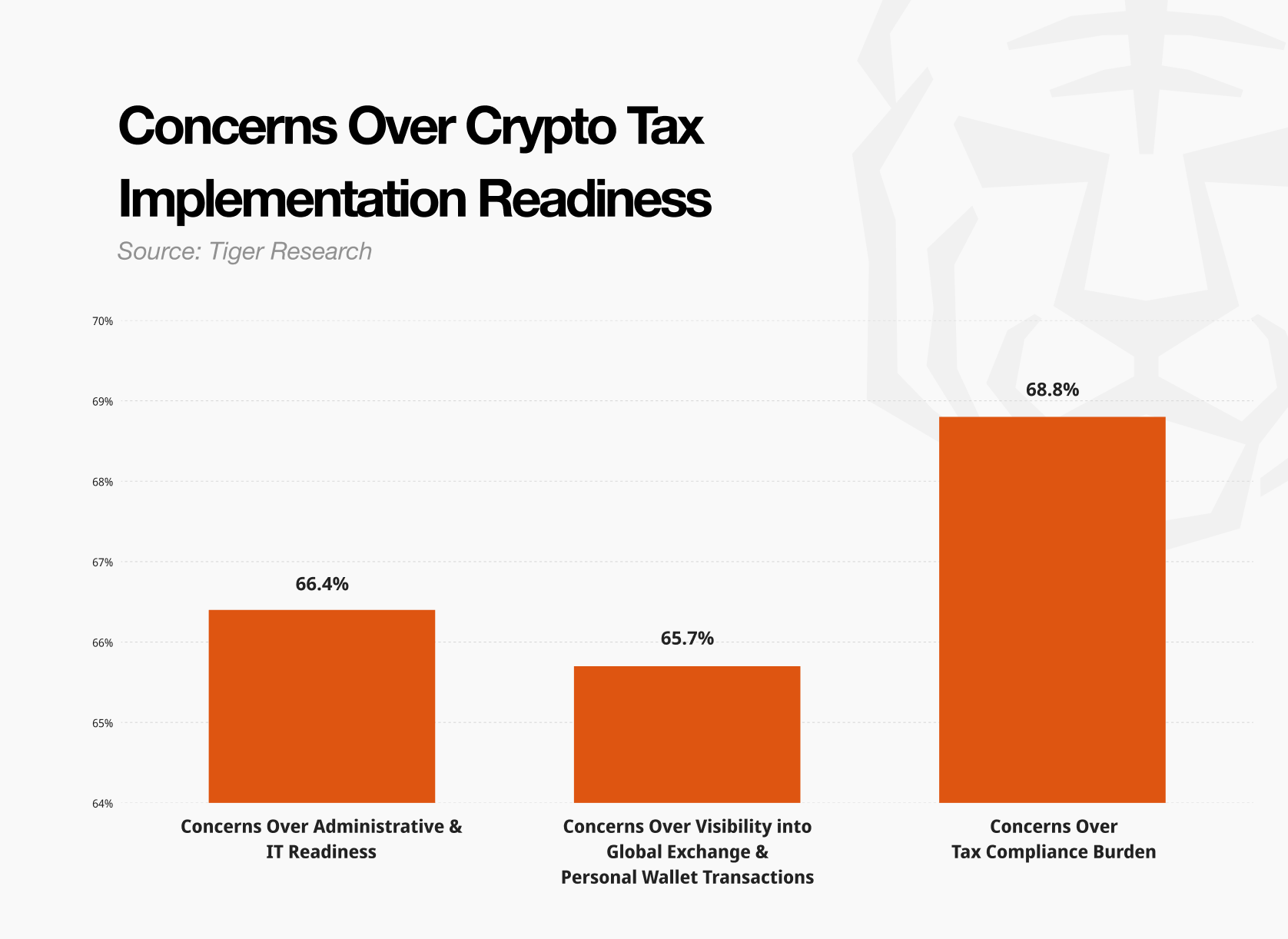
The tax system requires not only clear rules but also administrative and IT systems to implement those rules. In the survey, 66.4% of respondents indicated that the government is unprepared in these areas. Additionally, 65.7% believe it would be challenging to accurately track transactions and tax them between South Korean and overseas centralized exchanges and personal wallets. Furthermore, 68.8% stated that investors would face a heavy burden when filing and paying taxes. Investors are concerned not only about the rules themselves but also about whether the system can operate effectively.
Crypto assets can be transferred and traded outside of South Korean centralized exchanges. When investors use global centralized exchanges and personal wallets, transaction data may be dispersed across multiple channels. This makes it more challenging to gather and correlate the information needed for taxation. It also makes reliable transaction tracking and the reporting burden for investors important considerations.
Investors' focus goes beyond administrative and IT readiness. Overall, 85.1% of respondents believe that the investor protection framework should be in place before the tax takes effect. Taxation will create new obligations for investors. Investors view market safeguards as part of overall readiness, equally important as the government's ability to assess and collect taxes.
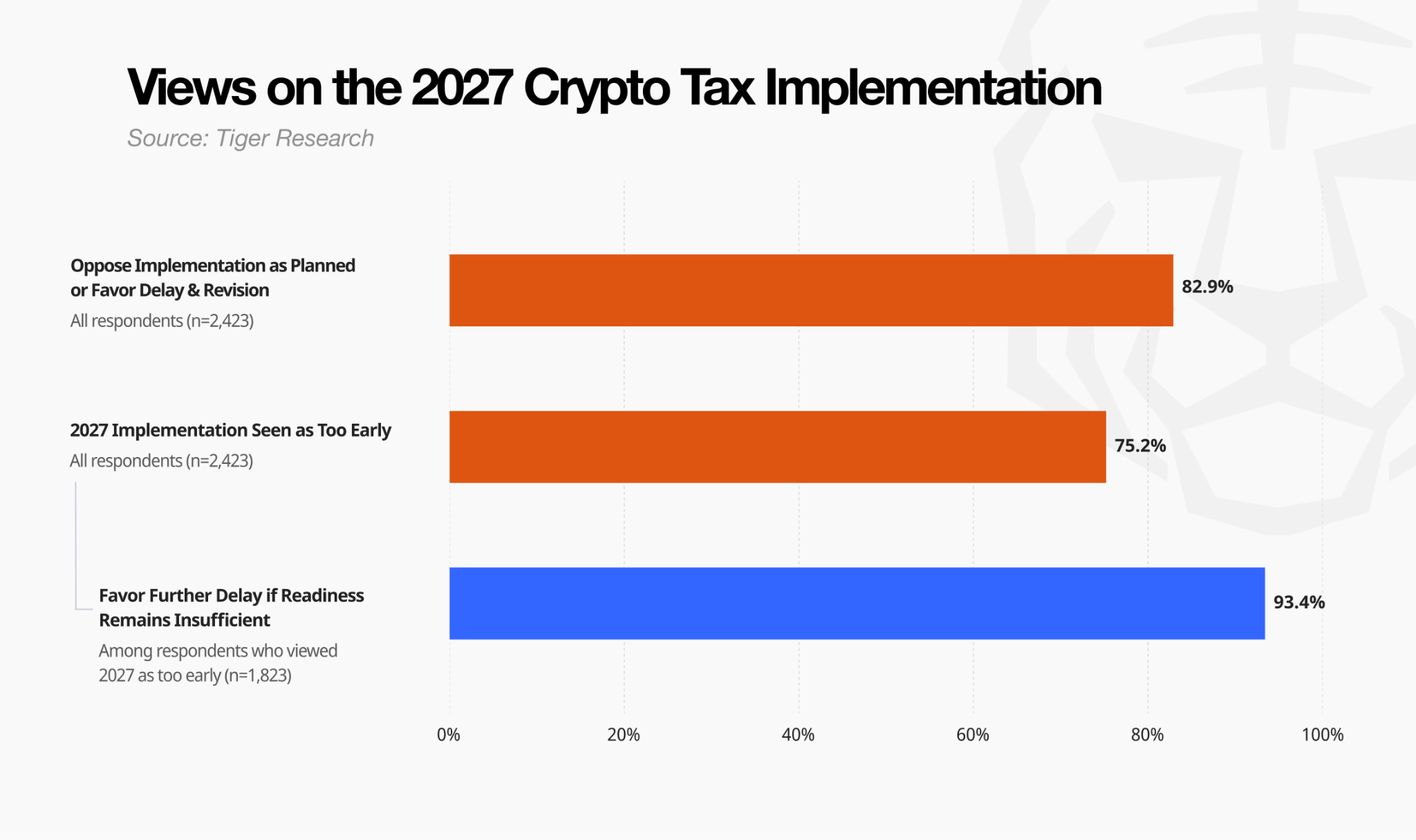
Responses about the timing make this concern clearer. Overall, 82.9% of respondents oppose implementing as currently planned or call for another delay. Additionally, 75.2% believe that 2027 is too early. The survey then asked 1,823 respondents who opted for a later date: what should happen if the necessary rules and preparatory work are still not in place by then. Among them, 93.4% suggested that the tax should be delayed again until the system is ready.
For investors, the key issue is not merely how many years the tax is delayed. They are concerned about whether the conditions for implementation are genuinely in place. These conditions include tax management, transaction data management, filing systems, and investor protection.
4. Impact on the South Korean Market
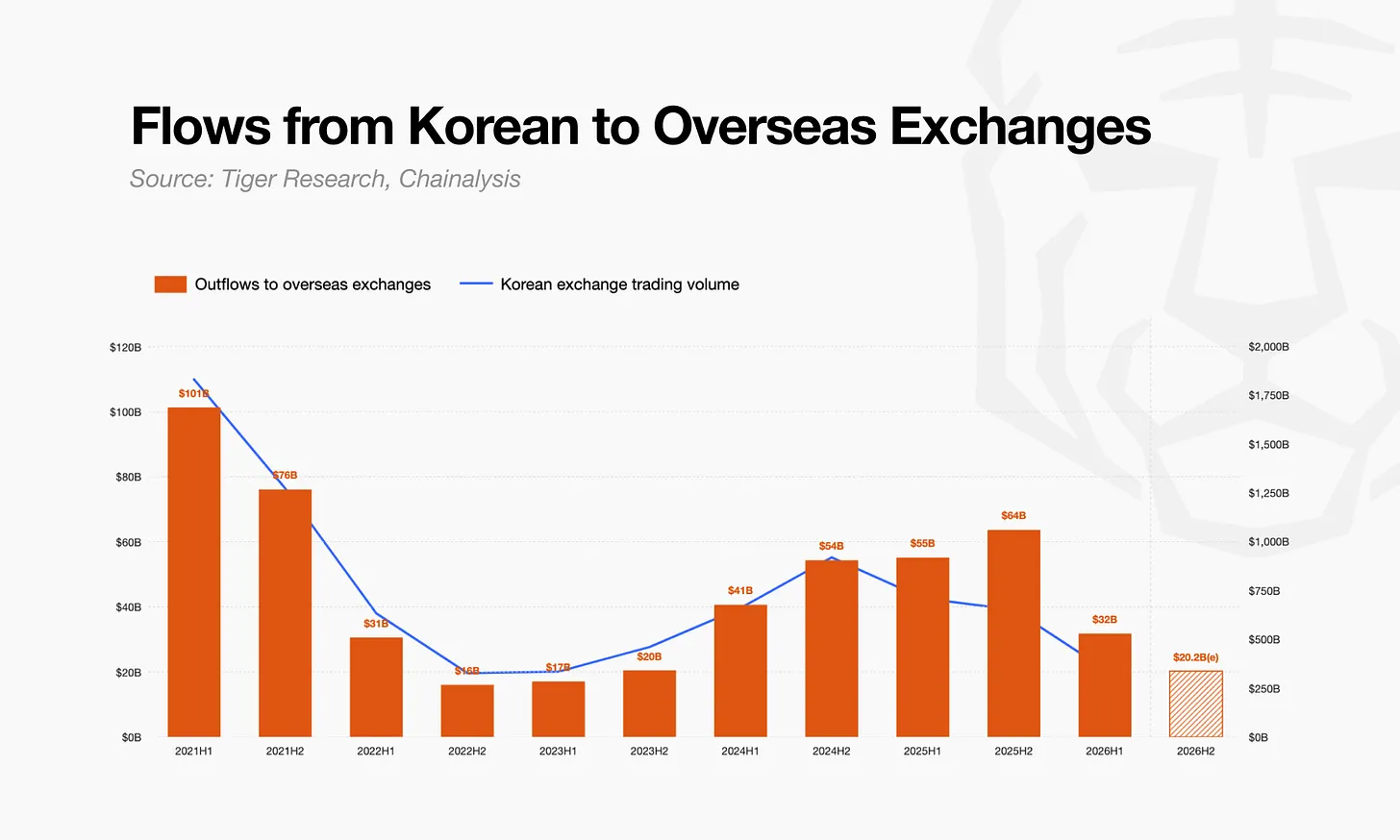
Investors' views on the current tax plan also point to changes that might occur in their trading behavior after implementation. A significant amount of South Korean crypto investment has already flowed overseas. According to previous reports by Tiger Research, it is estimated that approximately 700 trillion won (about $490 billion) flowed overseas between 2021 and the first half of 2026. Investors have also widely used trading channels beyond South Korean centralized exchanges, including global centralized exchanges and personal wallets.
The survey also examined how investment levels and trading channels might change after the tax takes effect. The results indicate that investors may reduce investments, decrease their use of South Korean centralized exchanges, and increasingly use other trading channels. If these intentions translate into actual behavior, such changes could weaken the trading foundation of the South Korean crypto market. They may also make it more difficult for authorities to identify taxable activities and regulate the market.
4.1. The Impact on the South Korean Crypto Industry Extends Beyond CEX
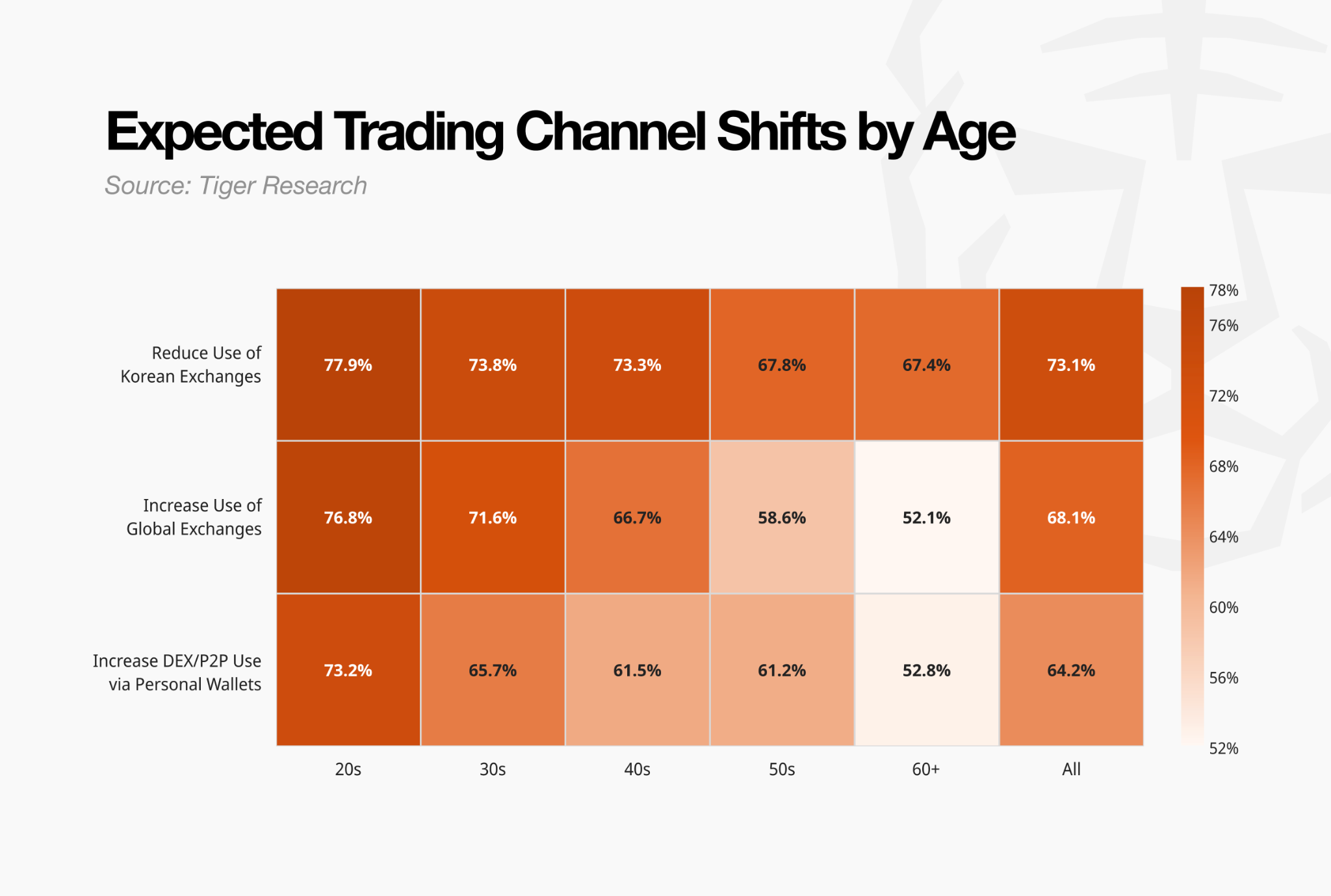
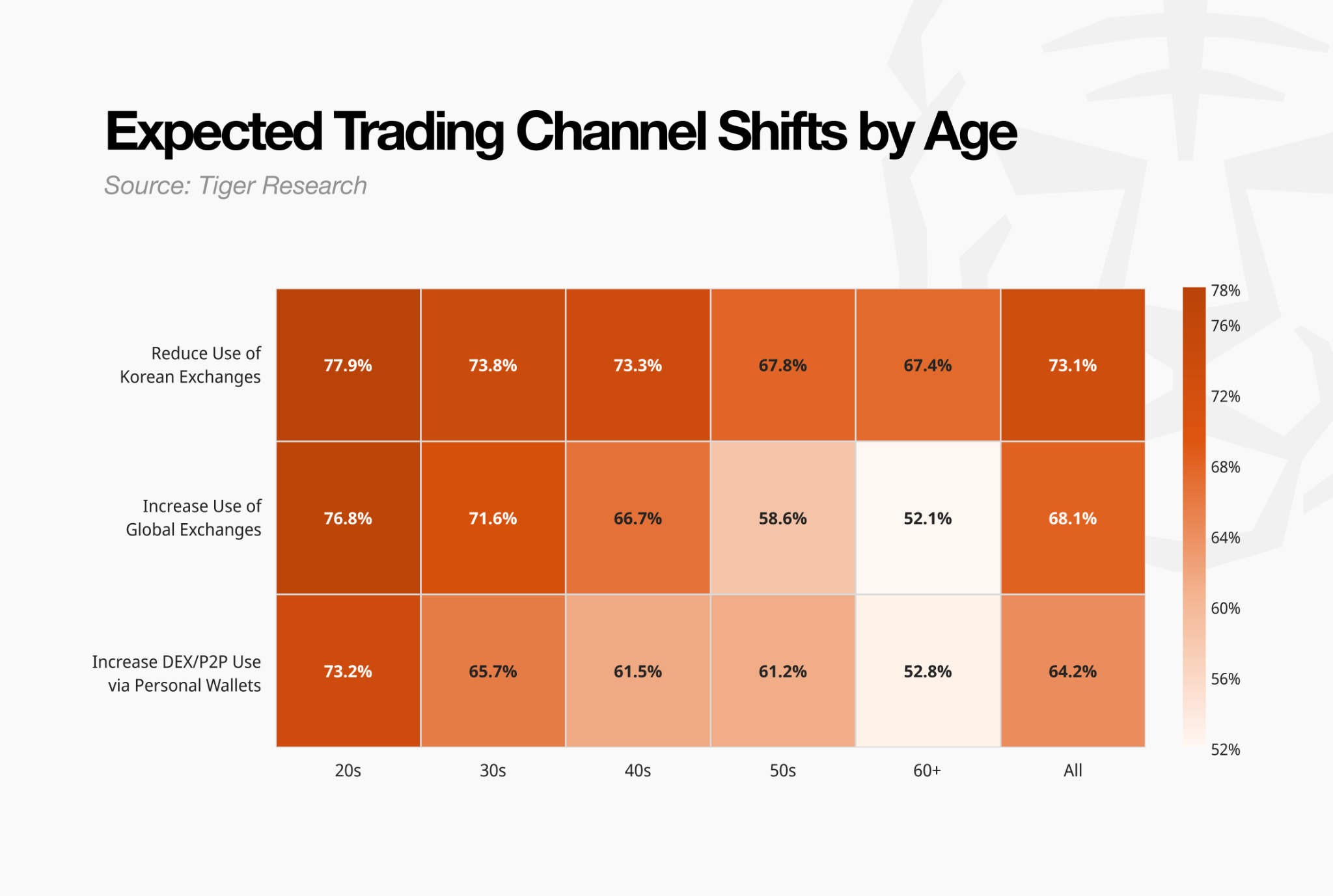
The survey indicates that taxation may reduce both crypto investment and the use of South Korean centralized exchanges. Overall, 69.7% of respondents expect to decrease or stop their crypto investments. Additionally, 73.1% may reduce their use of South Korean centralized exchanges. This may simultaneously decrease the capital flowing into the crypto sector and the trading activity on South Korean centralized exchanges.
Investors also expect these changes to impact the broader South Korean market. Overall, 66.4% of respondents believe taxation will have a negative impact on the South Korean crypto market. If investors reduce their crypto exposure or divert funds to other financial assets, the trading volume and liquidity in the South Korean market may decline.
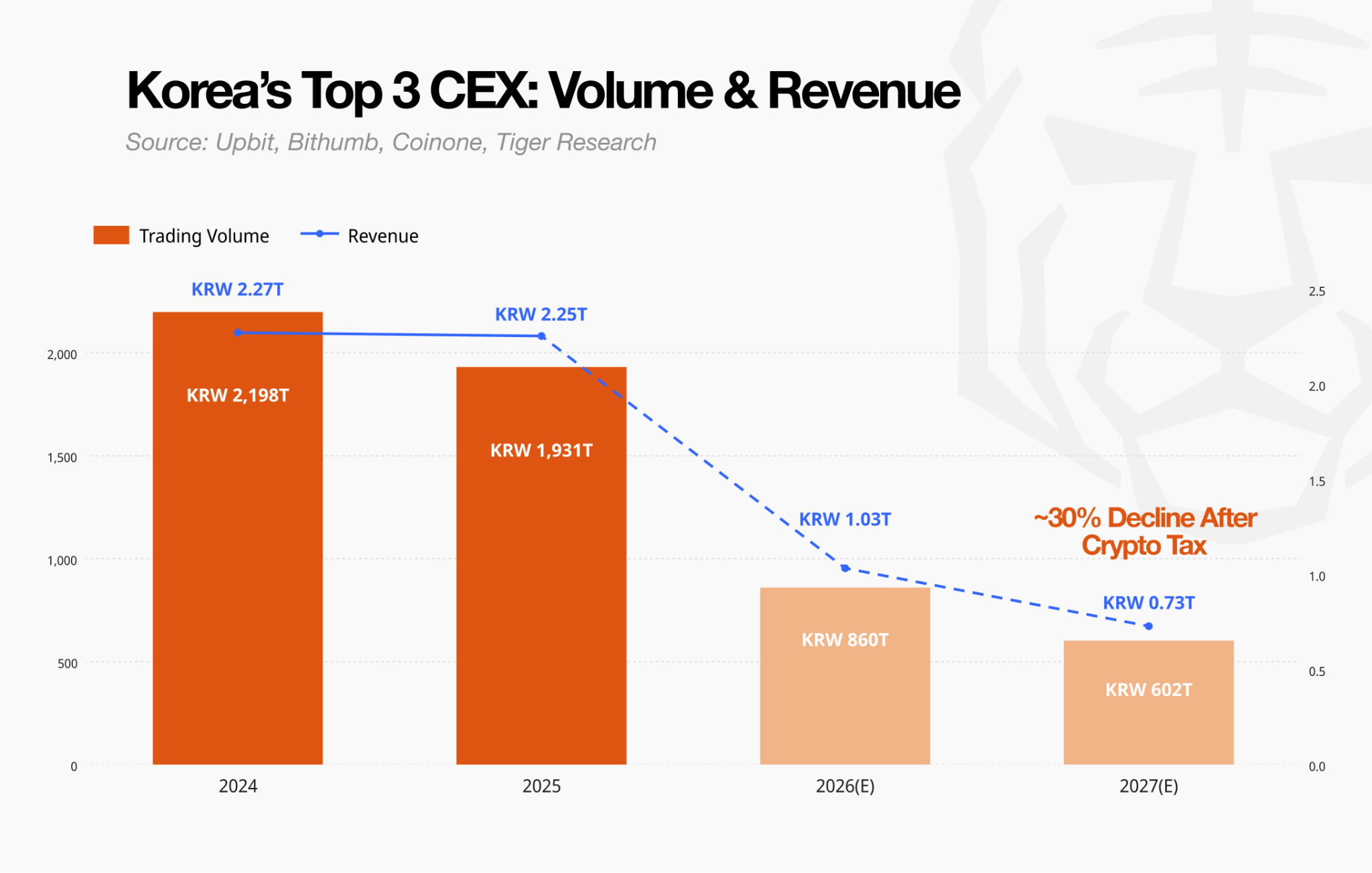
To estimate the potential scale of this impact, Tiger Research analyzed the changes in trading volume and revenue that the major centralized exchanges in South Korea might experience. This analysis combines survey results with changes in crypto trading volume in countries that have implemented crypto taxation.
Tiger Research estimates that the annual trading volume of South Korea's three major centralized exchanges, Upbit, Bithumb, and Coinone, could decrease from approximately $601 billion in 2026 to $421 billion in 2027. This represents a reduction of about $180 billion, a drop of 30.0%. During the same period, the revenues of the three exchanges might decline from about $722 million to $509 million. This translates to a reduction of approximately $213 million, a decrease of 29.5%.
A decrease in trading activity could also impact tax revenues and the broader crypto industry. Lower trading fees may reduce related value-added tax revenues. A decline in profits for centralized exchanges may also lead to reduced corporate tax revenues.
Taxing crypto income could create new tax sources. However, the contraction of the South Korean market might simultaneously reduce existing tax revenues. This could weaken the overall revenue growth brought by the new taxes. The contraction of liquidity and user bases in South Korean centralized exchanges could also undermine associated financial services such as custodianship and prime brokerage.
4.2. Shift to Offshore Trading and the Limitations of CARF
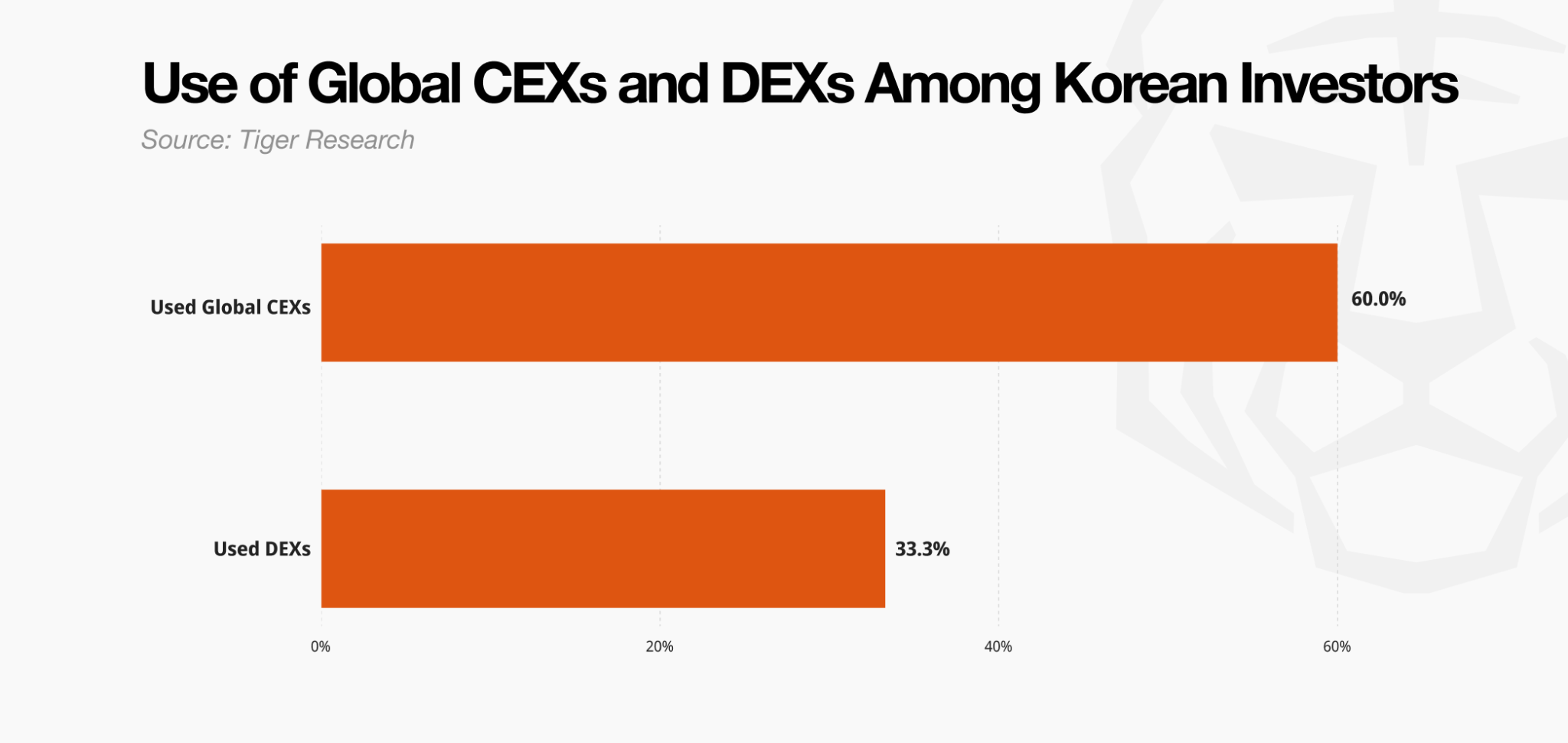
If investors reduce their use of South Korean centralized exchanges after the tax takes effect, some may shift their trading to global centralized exchanges and personal wallets. Among those indicating they would reduce their use of South Korean centralized exchanges, 88.0% said they might increase their use of global centralized exchanges or personal wallets. Among all respondents, 60.0% have already used global centralized exchanges, and 33.3% have used DEX.
Younger investors exhibit the strongest tendency to shift their trading. Among respondents in their twenties, 76.8% indicated they might more frequently use global centralized exchanges after the tax is implemented. Another 73.2% said they may increase their use of DEX or engage in P2P trading through personal wallets. Investors who have already used overseas centralized exchanges and on-chain services may find it relatively easy to move their trading out of South Korean centralized exchanges.
As more trading moves outside South Korean service providers, it may become more challenging for tax authorities to obtain the same level of trading information. CARF can help fill this gap. It allows tax authorities in different countries to exchange transaction data reported by overseas crypto service providers.
This data does not indicate that taxation directly causes the shift. However, it shows that even in countries with established crypto tax and reporting systems, substantial activities flow through channels that cannot be completely tracked by service providers' reports.
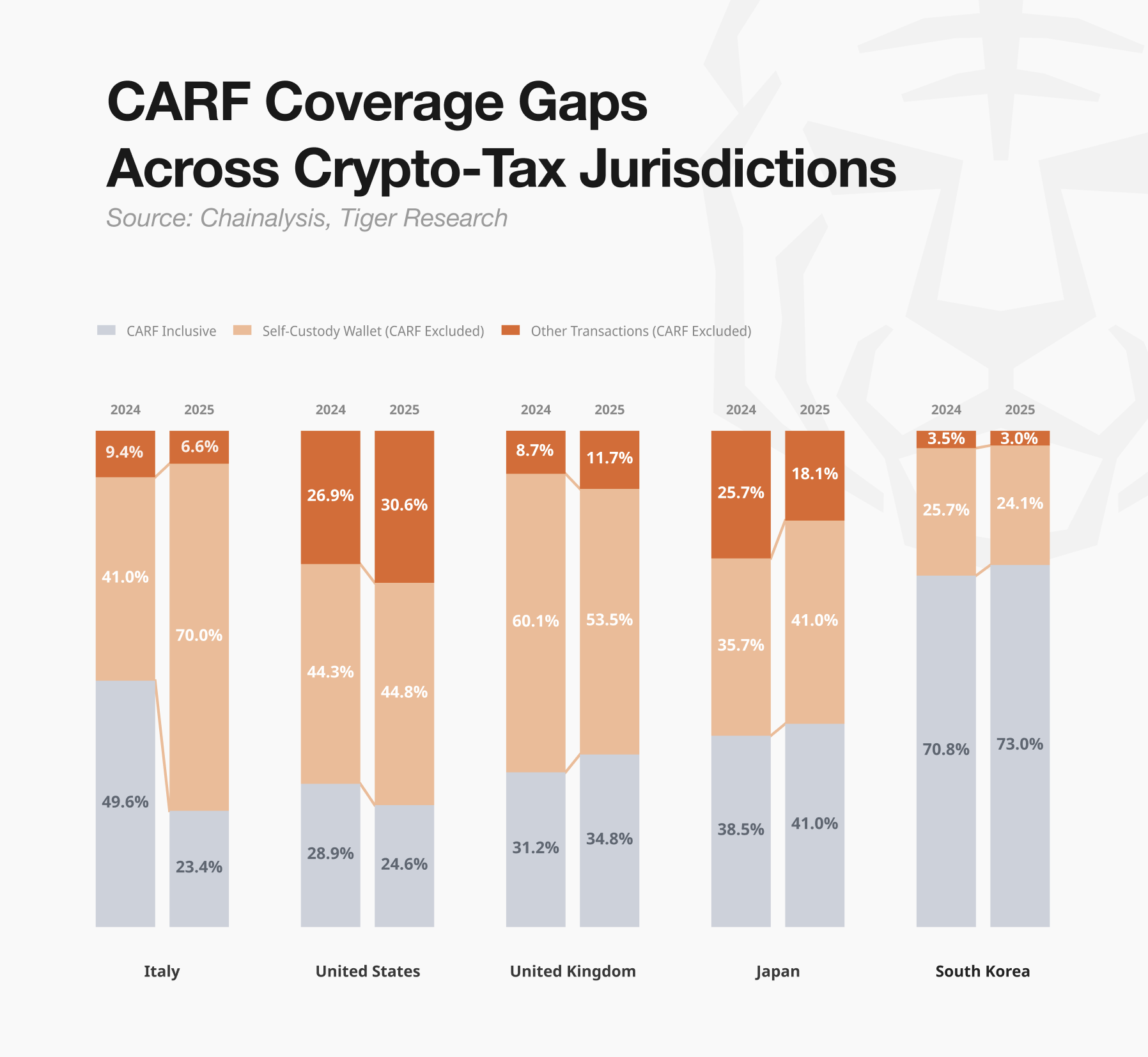
This information gap may also raise concerns about tax fairness. Tax authorities can more easily verify transactions on South Korean centralized exchanges using data reported by service providers. For transactions conducted through overseas centralized exchanges and personal wallets, tax authorities may need to rely more heavily on taxpayer reporting and subsequent verification. If investors believe that tax authorities have an easier time tracking certain trading channels compared to others, this perception may lead to more activities shifting to overseas centralized exchanges and DEX.
Before the tax takes effect, the government needs to clarify the rules for determining acquisition costs and information reporting. It also needs to establish how tax authorities will verify profits and losses from transactions conducted through overseas centralized exchanges and personal wallets.
5. Rushed Taxation Will Harm Both the Industry and Tax Revenue
The core issue does not lie in taxation itself. The question is whether South Korea should implement the current plan in 2027 before the system is ready. According to current law, taxes on crypto income will take effect in January 2027. Surveys show that investors distinguish between the necessity of taxation and the current tax scheme. Even those who support crypto taxation believe the rules need improvement. Some opponents also stated they would accept taxation if the system were improved.
Policymakers also need to consider the market impact of implementing taxes before the system is ready. As mentioned, investment and trading in South Korea may decline. Some activities may also shift to global centralized exchanges and personal wallets.
These changes may weaken the trading foundation and competitiveness of the South Korean market. They may also cause trading data to be dispersed across more channels. This will make it harder for tax authorities to track the tax base. Creating a new tax base and reliably managing the tax base in practice are two different challenges.
Policymakers should first determine whether the system can operate under real market conditions. They should not set the implementation date before addressing the remaining gaps. Surveys indicate that investors are more concerned about whether the system is ready than about the specific year of implementation. Policymakers should clarify the conditions required for implementation before deciding when the tax will take effect.
Three areas need particular attention.
First, policymakers should assess tax readiness in conjunction with the broader market regulatory environment. Tax management alone is not enough. The market also needs clear rules, investor protection, and standards for new assets and services. Policymakers should evaluate both the government's capacity to impose taxes and the preparedness of the markets to which the taxes apply.
Second, policymakers need clear standards to determine whether tax can operate in practice. They should evaluate the system's ability to connect trading data and calculate gains and losses. They should also confirm that taxpayers can correct errors when they occur. These standards will enable policymakers to assess readiness based on actual execution rather than a fixed timetable or reliance on IT systems alone.
Third, policymakers should conduct simulated reporting and pilot projects that reflect real trading situations. Testing should not only cover simple cases involving South Korean centralized exchanges. It should also include global centralized exchanges, personal wallets, and DEX. Policymakers should identify missing trading data, acquisition cost issues, and recurring reporting errors before the tax takes effect.
Policymakers should also consider public acceptability. Surveys show that investors are highly concerned that taxes could limit wealth accumulation opportunities, especially among younger investors. Respondents of all ages have also raised concerns about fairness compared to other financial assets. Technical readiness alone is not sufficient. Investors also need to perceive tax rules and burdens as fair.
The debate surrounding the 2027 tax should not be limited to whether South Korea should maintain the current launch date. Policymakers need to evaluate whether the system can accurately calculate profits and losses under real trading conditions. They also need to confirm whether tax authorities can obtain the necessary trading data. Market rules and investor protection must also be in place. Investors must also perceive tax standards as fair. If South Korea rushes ahead before the system is ready, it could simultaneously weaken the competitiveness of the domestic market and the government's ability to manage the tax base.
Appendix. CARF Trading Classification Standard Based on Chainalysis
This report uses Chainalysis analysis to examine the proportion of crypto transactions that fall within the practical reporting scope of CARF in various countries. Chainalysis analyzed the activities between centralized exchanges, personal wallets, DEX, and DeFi. This allows us to study transactions that may not be fully captured by service provider reports.
The Crypto Asset Reporting Framework (CARF) is an international reporting framework. It requires crypto asset service providers to report user and transaction information to tax authorities, which can then exchange this information across different jurisdictions. Based on Chainalysis's classification, this report defines transactions covered by CARF as "CARF covered," while transactions outside its scope are defined as "CARF uncaptured." CARF uncaptured activities include some transactions after assets are transferred to personal wallets and activities involving DEX, P2P transfers, DeFi, mining, and staking.
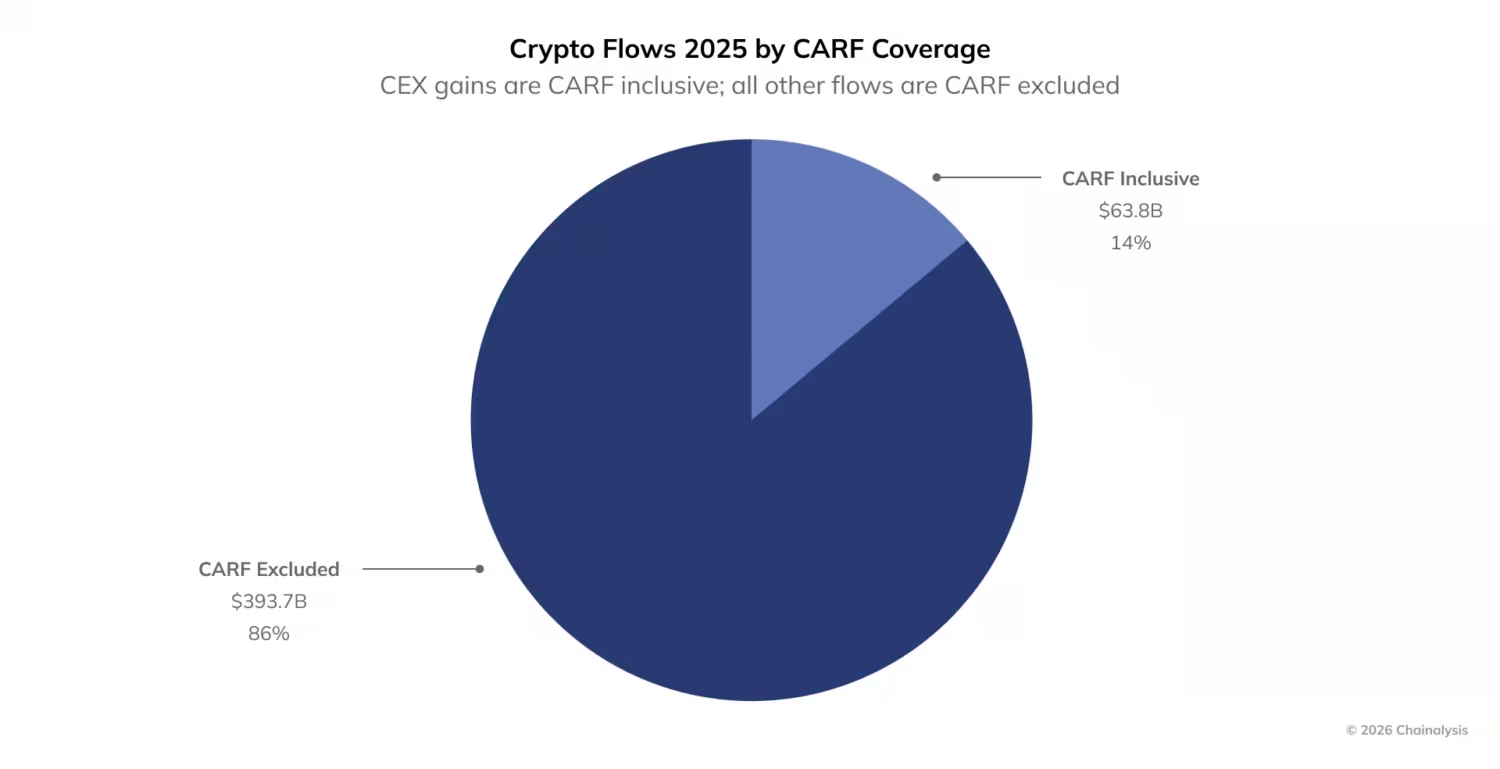
However, "CARF uncaptured" does not mean that taxpayers did not report transactions or evade taxes. Service providers might report initial withdrawals to personal wallets but may not be able to track every subsequent transaction. In this report, "CARF uncaptured" refers only to the range of transactions identifiable by service provider reports.
免责声明:本文章仅代表作者个人观点,不代表本平台的立场和观点。本文章仅供信息分享,不构成对任何人的任何投资建议。用户与作者之间的任何争议,与本平台无关。如网页中刊载的文章或图片涉及侵权,请提供相关的权利证明和身份证明发送邮件到support@aicoin.com,本平台相关工作人员将会进行核查。


