It’s not that “nothing is trustworthy,” but rather that trust boundaries need to be clearly defined.
The phrase “never trust any coin, anyone, any exchange” may sound overly cautious, but it points to a more specific issue: in the crypto market, there is no single entity that you can fully rely on. Coins themselves make no promises; people may relay information based on personal interest or incorrect judgments; exchanges, as intermediaries, provide convenience but also concentrate risk within their authority.
For newcomers, the value of this statement lies not in deterring entry, but in adjusting expectations. The precondition for entering is not to find a “trustworthy” entity, but to keep control over funds, permissions, and information sources within the limits of what you can afford to lose. It's not about finding a reliable coin/person/exchange to enter the market, but recognizing that none are fully trustworthy, and therefore using positions, permissions, and diversification to mitigate risk. After all, in this world, there are no zero-risk options.
Many people new to the crypto market tend to interpret “distrust” as “not engaging at all.” However, the actual path is often the opposite: first, acknowledge that there are no absolutely secure entities, and then decide on a smaller scale, longer duration, and more limited permissions to engage. If this order is reversed, it can easily lead to either complete withdrawal from the market or a large sum of money being placed with an entity marketed as “the safest.”
What is the current state of the market?
The global financial markets have recently experienced increased volatility. Tech and AI-related sectors in US stocks saw significant corrections, with some indexes dropping more than 4% in a single day, and semiconductor-related indexes experiencing even larger declines. Bitcoin prices also retreated in tandem, with an increased correlation to risk assets. Gold was relatively resilient on some trading days, while oil prices have fluctuated significantly due to geopolitical factors.
The crypto market as a whole remains in a high-volatility environment. The total market capitalization and Bitcoin prices have undergone rapid adjustments recently, with leveraged liquidations amplifying volatility during downturns. In this environment, the difficulty of short-term directional judgment increases, while the tolerance for long-term holding and small-scale trial-and-error is relatively greater. For newcomers, the market's volatility itself is not the main barrier to entry; what truly needs to be controlled is the ratio of exposed funds and frequency of operations.
The Binance incident and CZ’s remarks
Around October 29, 2026, Binance experienced a large-scale security incident affecting amounts of over $6 billion. Preliminary investigations revealed that the attack did not directly steal private keys, but instead gained authorization through internal systems (involving DevOps-related devices and signing processes), which were then manipulated to operate the hot wallet. Some assets were frozen by stablecoin issuers, and the exchange stated that it would cover user losses through its SAFU fund and company funds.
CZ stated after the incident that user funds are safe, noting that if exchanges can be attacked, banks are also not absolutely secure. The core of this statement is that attacks are a common risk to financial infrastructure, not unique to crypto. Historically, banks have also faced incidents involving internal personnel, phishing, and system vulnerabilities. The difference is that the banking system has deposit insurance, regulatory recourse, and the possibility of centralized ledger rollback; once crypto assets are transferred on-chain, the difficulty of recovery usually increases.
That an exchange was hacked does not indicate that crypto is completely unsafe and banks are safer; rather, both face attack risks, but the responsibilities, insurance mechanisms, and recoverability of assets differ. For users, exchanges provide convenience and liquidity while also concentrating permissions over hot wallets; banks offer fiat currency accounts and deposit insurance but similarly rely on internal systems and personnel.
Following the incident, the market saw short-term volatility, and some users chose to withdraw or transfer assets. But the more significant impact is that it again brought the issue of “platform permissions” to the forefront. Even at the largest exchanges, if hot wallet signing processes are abused, assets may still be transferred in a short time. This does not negate the existence value of platforms but reminds users that putting funds in an exchange essentially hands over part of the control to the platform.
How is security manifested?
At the exchange level, security is primarily reflected in: the separation of hot and cold wallets, proof of reserves, insurance funds (like SAFU), and the ability to cover losses after an incident occurs. When user assets are at an exchange, actual control lies with the platform. Once internal signing processes are misused, assets can potentially be transferred in a short time.
At the bank level, security is primarily reflected in: regulatory requirements, deposit insurance (within limits), and account freezing and recourse mechanisms. User funds at banks similarly depend on the bank's internal systems. However, the recovery path for fiat currency is usually clearer, with definite insurance caps.
Neither is “absolutely secure.” For newcomers, a more practical approach is to: not put all funds into a single exchange, not delegate all permissions to any single platform, and retain some ability to self-manage assets (e.g., using hardware wallets for long-term holdings).
Correct guidance for newcomers in the crypto space
- Source of funds: Only use disposable funds that you can afford to lose. Clearly define the upper limit of this money; do not add more once the upper limit is exceeded.
- Entry method: Prioritize spot trading with small amounts multiple times. Familiarize yourself with the deposit, withdrawal, and trading processes first, before considering other products.
- Permission management: Enable two-factor authentication, set withdrawal whitelists, and regularly check login devices. Do not click on unknown links and do not provide mnemonic phrases or private keys in chat tools.
- Source of information: Treat KOLs, communities, and tweets as references rather than directives. Consider any “guaranteed profit” or “inside information” as high-risk signals.
- Positions and time: During periods of high market volatility, reduce single-position size and extend observation periods. Do not alter pre-existing plans based on short-term fluctuations.
- Exit mechanism: Predefine stop-loss or reduction rules to avoid making ad-hoc decisions at emotional peaks.
These steps may seem simple, but what is often overlooked in execution is the “upper limit.” Many people add funds when they face losses and increase amounts when they profit, ultimately turning an originally bearable loss into an unbearable one. Clearly defining the upper limit and strictly adhering to it is more important than choosing which platform to use.
How to choose to enter the market during downturns
The current market is quite volatile, so a more suitable approach is to treat entry as a learning process rather than pursuing short-term gains. You can use a very small amount to complete a full deposit-trade-withdrawal process on a mainstream platform, and once you are familiar with the operations, gradually increase your investment. If you are interested in a particular asset, first observe its trading volume, position structure, and macro environment, rather than immediately increasing your position.
Leverage, contracts, and high-volatility altcoins pose significantly higher risks for newcomers. When the market direction is unclear, these tools can amplify small fluctuations into large profits or losses. It's not about seizing opportunities to leverage during turbulence, but rather reducing positions, decreasing operation frequency, and prioritizing basic process learning during such times.
Relatively safe exchanges are still the actual entry point for most newcomers
While acknowledging the premise that “you should never trust any exchange,” most newcomers still need to complete deposits, trades, and withdrawals through exchanges. Fully self-custody can be relatively challenging for beginners and carries the same risks of private key loss or authorization errors. Therefore, selecting platforms with good liquidity, high transparency of reserves, and the ability to cover losses during historical events remains a more realistic path.
Binance and OKX are currently among the two largest cryptocurrency exchanges globally in terms of liquidity. Binance has long been at the forefront of spot and derivatives trading volume, with its proof of reserves mechanism operating for many years and a user security asset fund (SAFU) in place. Despite the impact on hot wallets during the October 2026 incident, the exchange stated that it would cover user losses and had frozen some transferred assets through stablecoin issuers. OKX also offers proof of reserves and supports asset deposits and withdrawals across multiple public blockchains, with its risk control and withdrawal review processes being among the more stringent in the industry.
The relative safety of both is primarily reflected in: trading depth sufficient to support normal buy-sell transactions without being easily swayed by small amounts of capital; proof of reserves that can publicly verify some assets; the ability to cover losses using proprietary funds or insurance funds during historical events; and the provision of relatively complete security settings (two-factor authentication, withdrawal whitelists, device management, etc.). This does not mean they “won't be attacked,” but that in the event of an attack, there is a higher probability that user assets will be covered by the platform, and the daily trading slippage and liquidity risk are relatively lower.
For newcomers, the practical significance of choosing these two platforms is to first use a small amount of funds to complete the full process, familiarizing themselves with deposit, trade, withdrawal, and security settings, rather than depositing a large sum at once. Even when choosing a relatively safe platform, you should still avoid leaving all assets stored in an exchange for the long term; consider transferring long-term holdings to self-managed wallets. Platforms provide convenience and liquidity, but control should still be retained as much as possible.
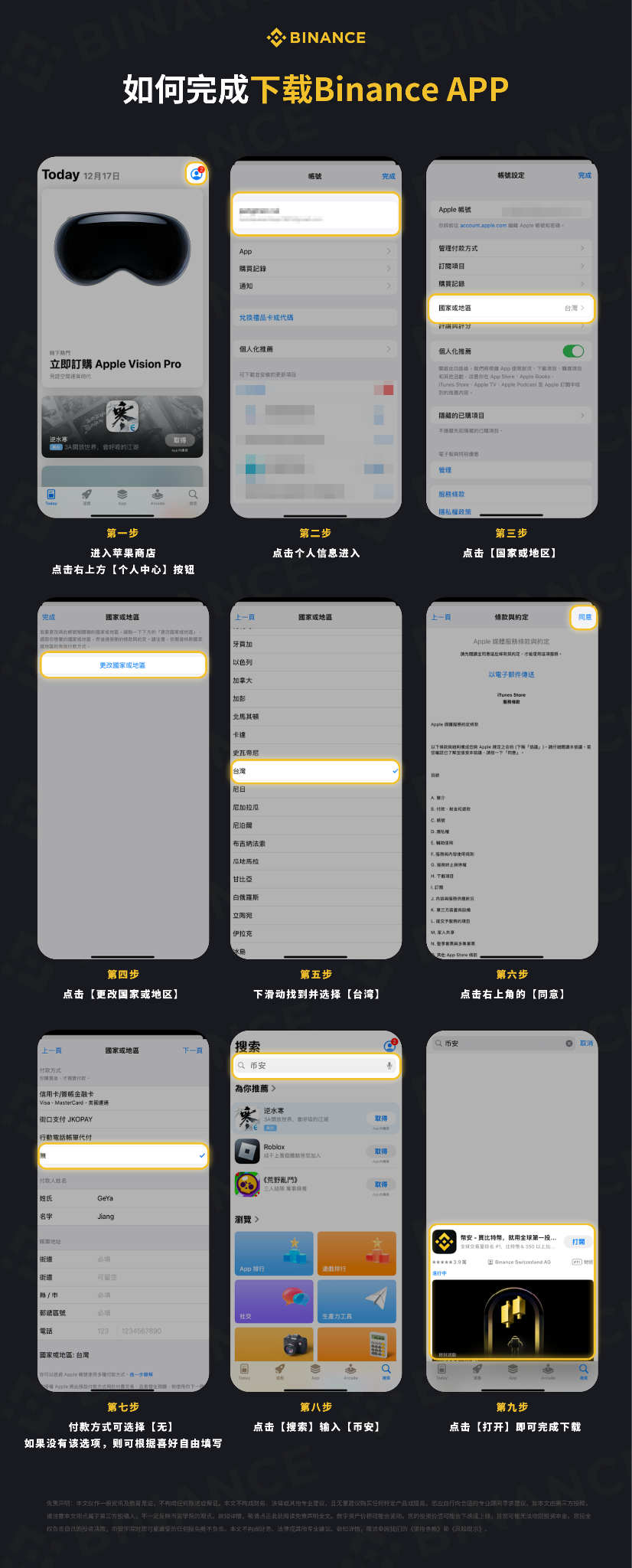
Binance referral link: https://jump.do/zh-Hans/xlink-proxy?id=3
Or log in via the APP to Binance directly and fill in the invitation code aicoin668. Below are the exclusive generous registration benefits of the AiCoin invitation code:
Benefit one: Maximum of $440 for new customers
1. Deposit of $100 + trade $100 → get a $100 position voucher
2. Deposit of $1,000 + trade $50,000 → get an additional $300 position voucher
3. Deposit of $3,000 + trade $200,000 → get an additional $40 cash voucher
Three tiers can be combined; a deposit of $100 qualifies for the first tier.
Benefit two: Blind box opening, up to 25 RE tokens
1. Register + deposit $50 + trade $100 + log in to the App
2. After completion, one blind box is available for activity, randomly drawing RE tokens, with a maximum of 25 tokens.
Essentially, a new user can enjoy two-fold benefits after completing the tasks after registration.
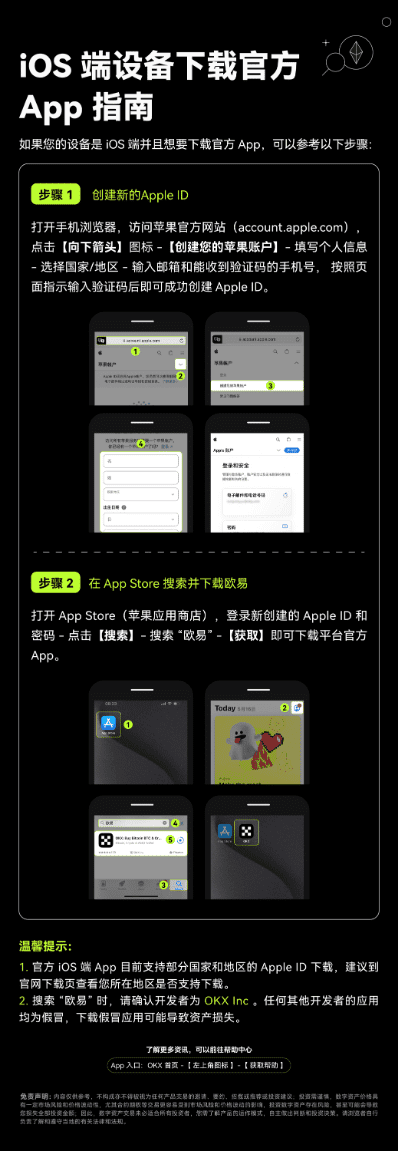
OKX referral link https://jump.do/zh-Hans/xlink-proxy?id=2
Or log in via the APP to OKX directly and fill in the invitation code aicoin20, exclusively enjoy a permanent rebate of 20% on fees.
Risk warning
Cryptocurrency prices are highly volatile and may experience significant retracements or even drop to zero. There is a possibility that exchanges may be attacked, experience system failures, or suspend withdrawals. On-chain actions are irreversible, and the loss of private keys or authorization errors may lead to assets being permanently unrecoverable. Any profit expectations may not materialize. This article does not constitute investment advice; you should assess your financial capacity before entering the market and continuously monitor platform and regulatory developments.
The true meaning of the three reminders is not to keep people away from the market, but to encourage them to narrow the scope of trust to what they can control when entering the market. Keep funds small, manage permissions yourself, and cross-verify information. The market will continue to fluctuate, and platforms will continue to face risks, but these do not change a fundamental fact: for newcomers, controllable losses are more important than uncontrollable trust. When exchanges need to be used, choosing platforms with relatively stronger liquidity and response capabilities is a way to reduce operational risk, rather than a way to eliminate risks.
免责声明:本文章仅代表作者个人观点,不代表本平台的立场和观点。本文章仅供信息分享,不构成对任何人的任何投资建议。用户与作者之间的任何争议,与本平台无关。如网页中刊载的文章或图片涉及侵权,请提供相关的权利证明和身份证明发送邮件到support@aicoin.com,本平台相关工作人员将会进行核查。