Author: CICC Research
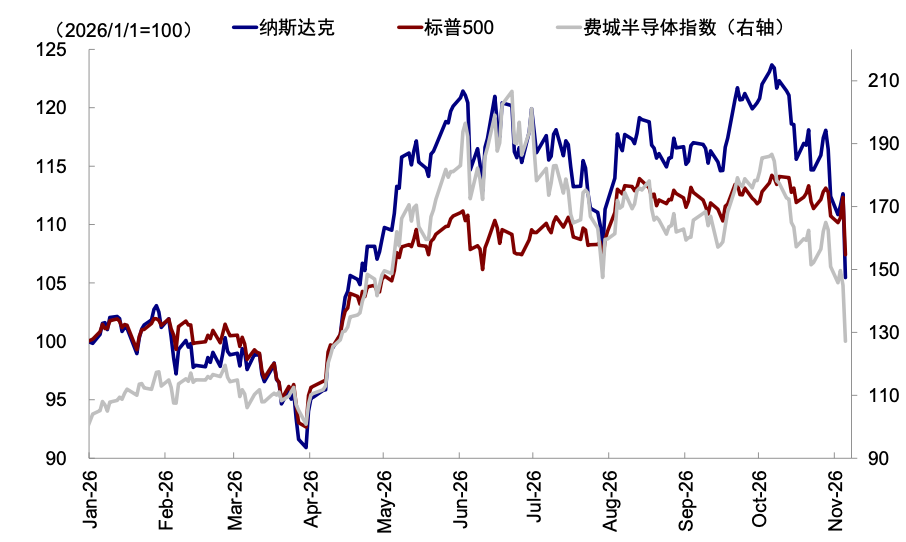
On November 5, Eastern Time, the three major U.S. indices, the S&P 500, Nasdaq, and Dow Jones, fell by 4.4%, 5.5%, and 3.4% respectively, marking the largest single-day decline since the tariff shock in April 2025. The AI industry had significant declines, with the Nasdaq 100 dropping over 6% and the Philadelphia Semiconductor Index plummeting about 12%, both recording their largest single-day declines since March 2020.
Chart: The three major U.S. indices, S&P 500, Nasdaq, and Dow Jones, fell by 4.4%, 5.5%, and 3.4% respectively
Source: FactSet, CICC Research Department
How to view the significant drop in U.S. stocks and the subsequent trend. Our brief comments are as follows:
1. Characteristics of this Drop: Significant Declines, Wide Spread, Signs of Panic and Stampede
1) Significant Decline: The Philadelphia Semiconductor and Nasdaq 100 indices recorded their largest single-day drops since March 2020, down 12% and 6%, respectively.
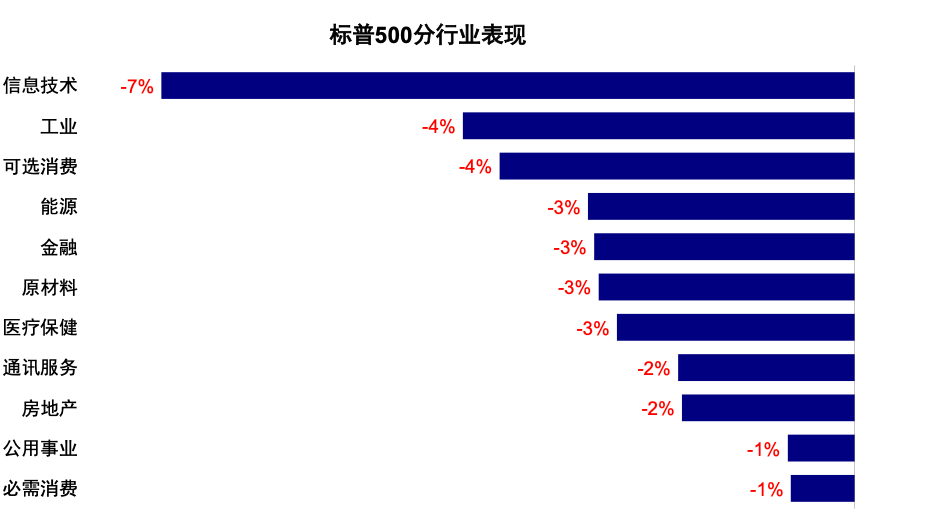
2) Wide Spread Decline: Unlike previous cooling in AI where defensive sectors saw slight rises, all 11 sectors of U.S. stocks fell yesterday, including traditionally defensive consumer staples and utilities, indicating signs of potential stampede.
Chart: All 11 sectors of U.S. stocks fell yesterday
Source: FactSet, CICC Research Department
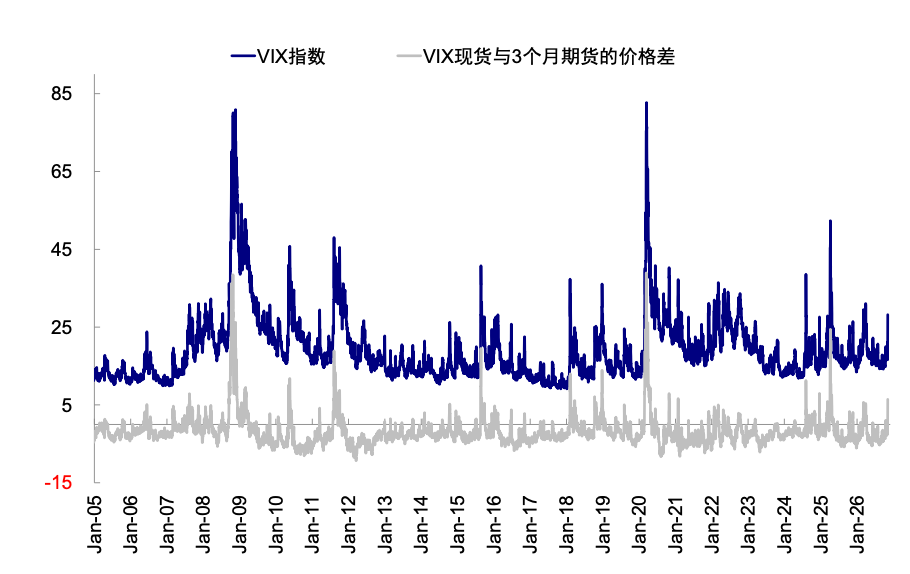
3) Increased Volatility and Panic: VIX rose to 28 (with 25 and above considered dangerous, second only to the Iran situation at the beginning of the year). The gap between the VIX spot and three-month futures widened to its largest since April 2025, which is often a direct reflection of market panic and even a precursor to further pressure.
Chart: VIX rises to 28, second only to the level during the Iran situation at the beginning of the year
Source: Bloomberg, CICC Research Department
2. Reasons for this Drop: AI Regulation Amplified by Emotion
The direct trigger for this decline was still the market's panic over the potential for increased AI regulation and a halt on data center construction following the Democratic victory in the midterm elections. Newly elected Texas Governor Gina Hinojosa stated in a media interview on Thursday, "Texas will introduce laws to protect citizens from the impact of data centers"; at the federal level, Sanders also reiterated calls for a pause on the construction of national data centers. The combined fermenting of state and federal policy proposals exacerbated the market's concerns about the progress and sustainability of AI infrastructure investments.
In the past two days, the market has oscillated, with pre-market futures falling sharply on the day of the election counting, then rebounding substantially, followed by today’s large drop. As we noted in our comments on the implications of the Democratic "sweep," many Democratic issues may have completely opposite effects on the same asset. In an uncertain environment where it’s unclear what can be advanced and whether it will advance, the global market tends to "choose" a direction to trade, where both large ups and downs can find numerous explanatory reasons.
Essentially, the core influence of the midterm elections on asset pricing revolves around whether the dominant market forces aim for "correction" (inflation, the Iran situation, Federal Reserve, tariffs) or interfere with "opposing for the sake of opposing" (AI, public finance). The other day was trading the former, yesterday was trading the latter, but this doesn’t imply the market can judge in advance which direction will develop first. For instance, while local-level pressure concerning AI regulation certainly requires attention, the Democratic Party's advantage in Senate seats still lacks the strength to push through federal-level AI regulation bills.
3. How to View the Current Position? Short-Term Focus on Liquidity, Stabilization Requires Clearing and Catalyst, Market Focus on Gold and Defensive Stocks
Considering the characteristics of the aforementioned decline, regardless of the reason or catalyst as well as whether subsequent concerns materialize, the short-term trend is no longer dominated by fundamental logic.
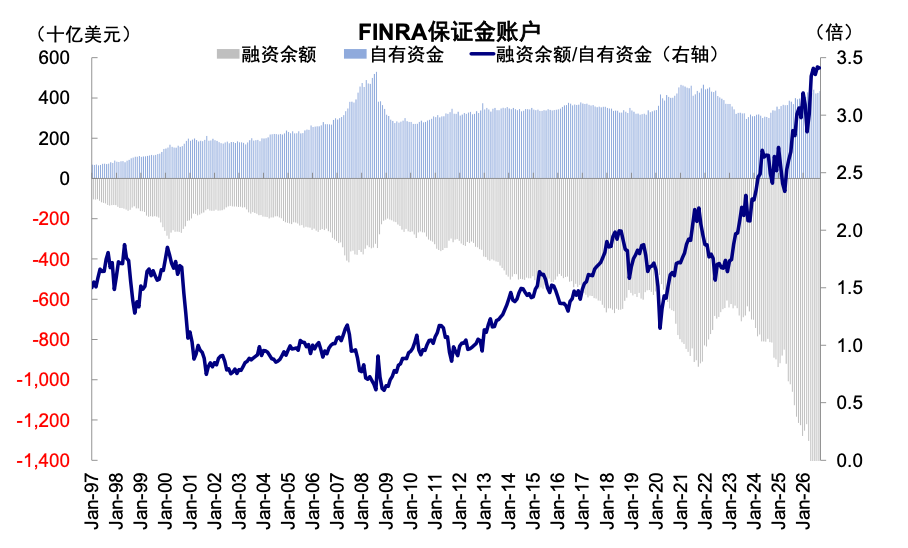
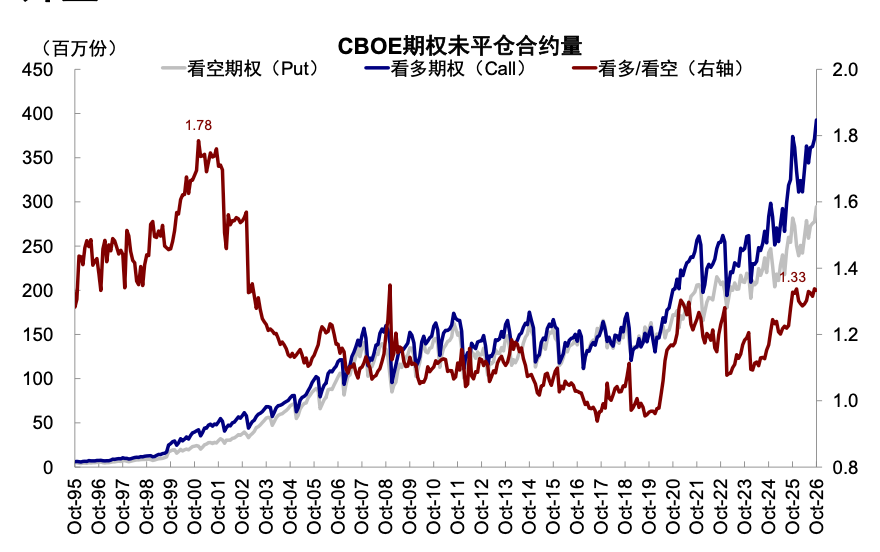
►The emergence of panic and stampede raises the question of whether further liquidation and liquidity risks will reveal themselves over time, as we have already seen some hedge funds making liquidation announcements. Leverage levels in U.S. stocks previously surged to historic highs, with FINRA’s reported margin balance indicating an implied leverage level that reached a historical peak of 3.4, while the put/call ratio of CBOE options also surged to 1.33, a new high since the end of 2018. This means the market is more sensitive to changes in price and volatility; once a rapid decline triggers margin calls, passive position reductions, and derivative hedging adjustments, selling pressure may spread from the AI sector to other holdings, reinforcing price declines and deleveraging.
Chart: FINRA’s reported margin balance reaches a historical peak implied leverage level of 3.4
Source: Haver, CICC Research Department
Chart: CBOE options put/call ratio rises to 1.33
Source: Haver, CICC Research Department
Currently, market concerns remain confined to the stock market; if both U.S. bond rates and the dollar are high, it warrants further vigilance. This indicates the market is selling safe assets, including U.S. bonds, to cover funding gaps, which would sharply increase liquidity risk.
►Currently, AI is in a transitional state, with the critical issue being the lack of demand and the absence of new narratives and catalysts for models, which will also amplify credit risk and regulatory pressure risks. The high intensity of capital expenditures continues to squeeze cloud vendors’ free cash flow, leading to rising concerns about the speed of AI revenue realization and investment returns.Market stabilization requires natural clearing or strong catalysts to reverse pessimistic expectations; in any case, some patience is necessary.
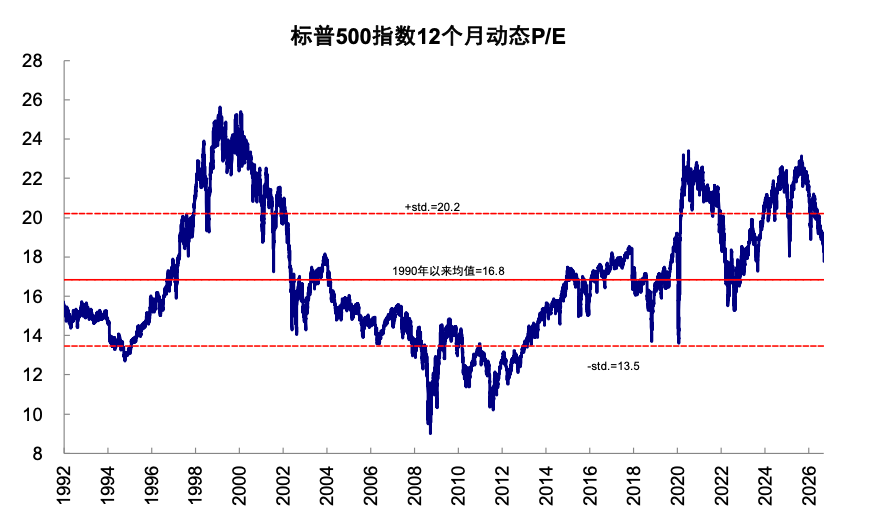
Chart: Overall valuation of U.S. stocks is currently not at extreme high levels
Source: Bloomberg, CICC Research Department
In terms of timing, the first half of next year is a critical validation period. The market needs to see something similar to the outperformance of Anthropic in the first quarter of this year, where business forms actual breakthroughs to boost confidence. Otherwise, as market patience wanes, the outlook for capital expenditures and return prospects for 2028 will further darken, and the main narrative for market trading may shift to recession trades.
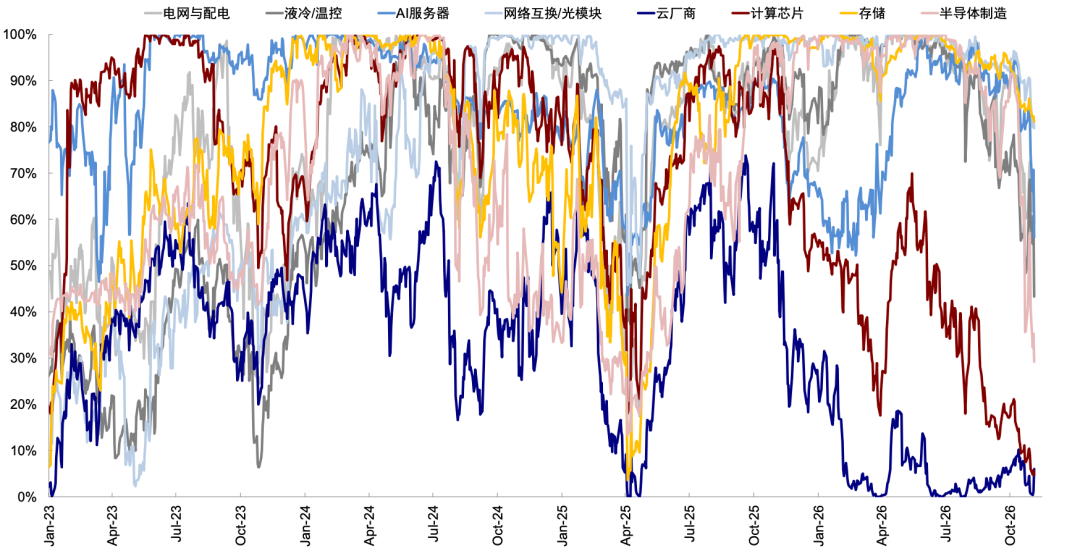
Chart: Previous corrections were more apparent in segments where growth expectations were previously fully priced in, while cloud vendors showed relative resilience
Source: FactSet, CICC Research Department
Structurally, AI may still be the main line, but internally, greater attention should be paid to segments with sustainable profits and higher certainty. Overall, U.S. stock valuations are currently not at extreme high levels, but there is significant differentiation within the AI industry chain. In this AI cycle, hardware infrastructure segments such as network interconnects/light modules, semiconductor manufacturing, and liquid cooling/temperature control have higher earnings growth expectations, while cloud vendors’ pricing is relatively reasonable. Recent market performance reflects this difference, with more pronounced corrections in segments where growth expectations were previously fully reflected, while cloud vendors remained relatively resilient. This also means that cloud vendors’ pricing still leaves room for subsequent earnings growth; however, if profitability in segments like light modules cannot sustain high growth, there is a risk of further valuation adjustments.
► Observing the performance of the midterm elections over the past two days, the direction of market trading with the least resistance has gradually converged on defensive stocks and gold. 1) Defensive stocks are less exposed to AI risks, so there’s less need to worry about AI risks, with expectations of decreased geopolitical risks leading to lower oil prices and inflation, which could also reduce rate hike pressures. 2) Gold benefits from rising political and game theory risks, and could also benefit from falling oil price inflation reducing rate hike pressures, alongside a weakened dollar and U.S. bond rates.
However, the issues with defensive stocks fundamentally lie internally rather than externally. Their "advantage" is the low exposure to AI risks, but relying solely on improvements in external environments and fund reallocations for rebounds faces fundamental pressure and the potential for escalating geopolitical risks. In the past few days of the rebound, significant net selling from the Southbound and increased short selling volumes in Hong Kong stocks indicate growing market divergence (see "How Does the Market Find a Bottom?"). In comparison, gold encounters less resistance, as various factors still provide support.
Technology Hardware: Short-Term Headwinds for Overseas AI Infrastructure, Maintaining Optimism on Domestic Computing Power Development During the 14th Five-Year Plan
Recently, driven by the fact that top AI labs' ARR growth is slowing, overseas market investors have begun consistently worrying that the current high investment returns in AI infrastructure are not sustainable, holding a pessimistic view on the expected growth of North American CSP Capex in 2028. After the U.S. midterm elections on November 5, U.S. stocks further reflected market concerns about the U.S. government's increased regulation of AI and the slowdown in AI infrastructure investments, with the Philadelphia Semiconductor Index dropping over 10%, and the Nasdaq index falling over 5%. Looking back at the A-shares, since July, we have observed that most Chinese AI hardware industry chain stocks (including overseas chains and domestic chains) have corrected by over 50%. We believe that the short-term changes in data center construction in North America will affect hardware demand gradients but will not change the long-term prosperity trend; demand for domestic computing power may be even stronger.
Regarding overseas chain stocks, we believe the current valuation premium of related companies is being significantly digested and that the mid- to long-term prosperity in AI remains intact, with market overreactions reflecting concerns about the pace of overseas AI data center construction. According to Wind data, we estimate the Shenyin Wanguo telecommunications equipment index currently has a PE (TTM) of 28.92 times, which is below the 10th percentile of the past three years. We believe that the recent sharp decline in AI stock prices in overseas chains has sufficiently squeezed valuation bubbles; what needs to be clarified are the potential changes in the construction pace of overseas AI data centers and their impact on the performance realization of core suppliers; however, after the short-term funding shock amplifying volatility, concerns about construction pace and profit realization have been clearly released. Factually, the total capital expenditure of the leading four cloud vendors in the U.S. for Q3 2026 increased by 84.2% year-on-year, while Microsoft Azure/AWS revenue also saw significant year-on-year increases, indicating sustained demand turning into revenue. Looking ahead, we believe that 2027 will still be a year of active investment by cloud vendors.
Regarding the domestic chain, particularly in computing chips and server hardware, domestic data center-driven related demand remains strong, and in the short term, contradictions are still on the supply side; the short-term adjustments in overseas development gradients have allowed time for domestic computing hardware to catch up, and we believe the performance of related companies is expected to continue to be released. In terms of production factors, the core long-term localization logic for wafer fabs, semiconductor equipment, and components remains unchanged. Affected by AI sentiment this year, the short-term price corrections in large manufacturing sectors have become significant, and valuations have become attractive. We continue to be optimistic about the robust development of the domestic computing power industry chain during the 14th Five-Year Plan.
Risks
AI industry progress falling short of expectations; AI hardware localization penetration not meeting expectations; policy changes.
免责声明:本文章仅代表作者个人观点,不代表本平台的立场和观点。本文章仅供信息分享,不构成对任何人的任何投资建议。用户与作者之间的任何争议,与本平台无关。如网页中刊载的文章或图片涉及侵权,请提供相关的权利证明和身份证明发送邮件到support@aicoin.com,本平台相关工作人员将会进行核查。


