Foresight News brings you a quick overview of popular topics and recommended content from the past two weeks:
01 Hacker Era
“How Much Trouble Can One Employee Cause? The Social Engineering Behind Binance's $6.3 Billion Security Incident”
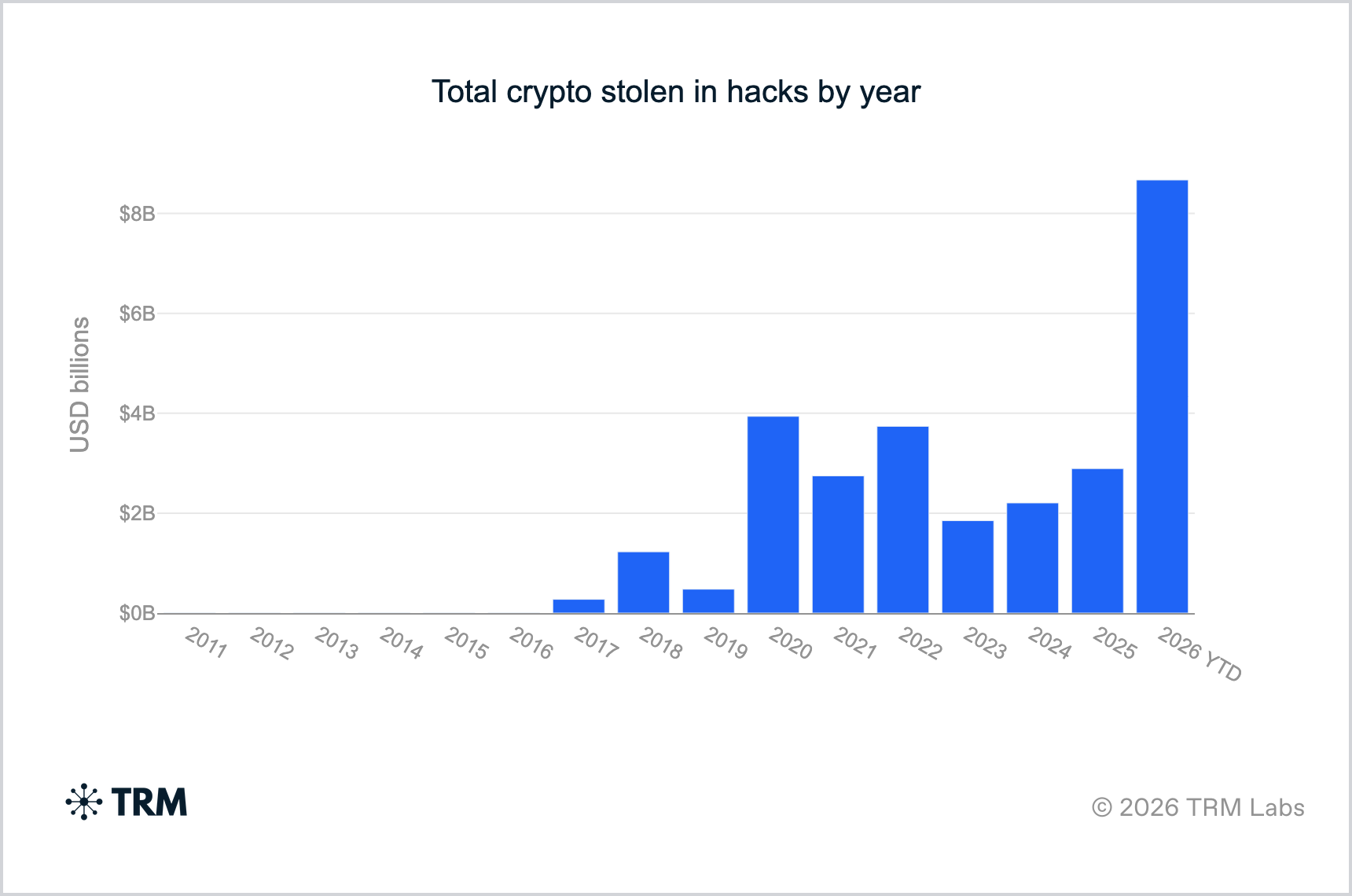
“Crypto Storytelling II | Revealing the North Korean Hacker Empire: For Every $100 Stolen on the Chain, $85 Flows to Pyongyang”
“French Banking Giant Robbed, Hackers Converted €118 Million in 21 Hours Using Crypto”
02 Web3ers
“Those Betting on Web3: Observations from the 2026 Hong Kong FinTech Week”
“No Fundraising, No Home Buying, No Claiming to be an Exchange: The Restraint and Expansion of Hyperliquid's Founder”
“After 100 Days of Mobile Airplane Mode, How Did Vitalik Live?”
03 Political Trends
04 Industry Insights
01 Hacker Era
The $6.34 billion security incident at Binance was not a simple system vulnerability, but a multi-month complex social engineering attack. The attackers leveraged software tampering, fake recruitment, and internal AI tools to gradually infiltrate from employee devices to the wallet signature service. It warns the crypto industry: security defenses cannot only watch contracts and private keys; personnel, development environments, and permission control have become high-risk vulnerabilities. Recommended article:
Binance described this process as a multi-stage attack and clarified that it was not an isolated system intrusion nor a simple phishing attack.
From the supply chain attack in June to fake recruitment in September, and utilizing internal AI tools to expand access in October, the attackers essentially completed a composite infiltration targeting personnel, devices, software, and permission systems.
This attack chain also sounded the alarm for the entire crypto industry: when the core asset security of exchanges connects with the development tools, AI applications, and internal permission systems used by employees, attackers may not need to first breach the strongest door.
Sometimes, all it takes is to get one employee to download what looks like a normal software package.
In the crypto world, the Lazarus Group has launched multiple shocking heists through social engineering and AI disguise, stealing tens of billions of assets from the Bank of Bangladesh to Binance and Bybit. It is not an ordinary hacker group but a tightly organized national cyber force, transforming on-chain theft into a special foreign exchange channel, continuously challenging the boundaries of global on-chain security and cross-border tracking. Recommended article:
In this second installment, we delve into the Lazarus Group. This hacker organization linked to North Korea has been implicated in attacks on Sony Pictures, the theft from the Bank of Bangladesh, and multiple instances of crypto asset theft. After Binance was attacked, it returned to the public spotlight. Where do these people who hide behind the screens come from? How do they approach their targets, and how do they transfer the stolen assets?
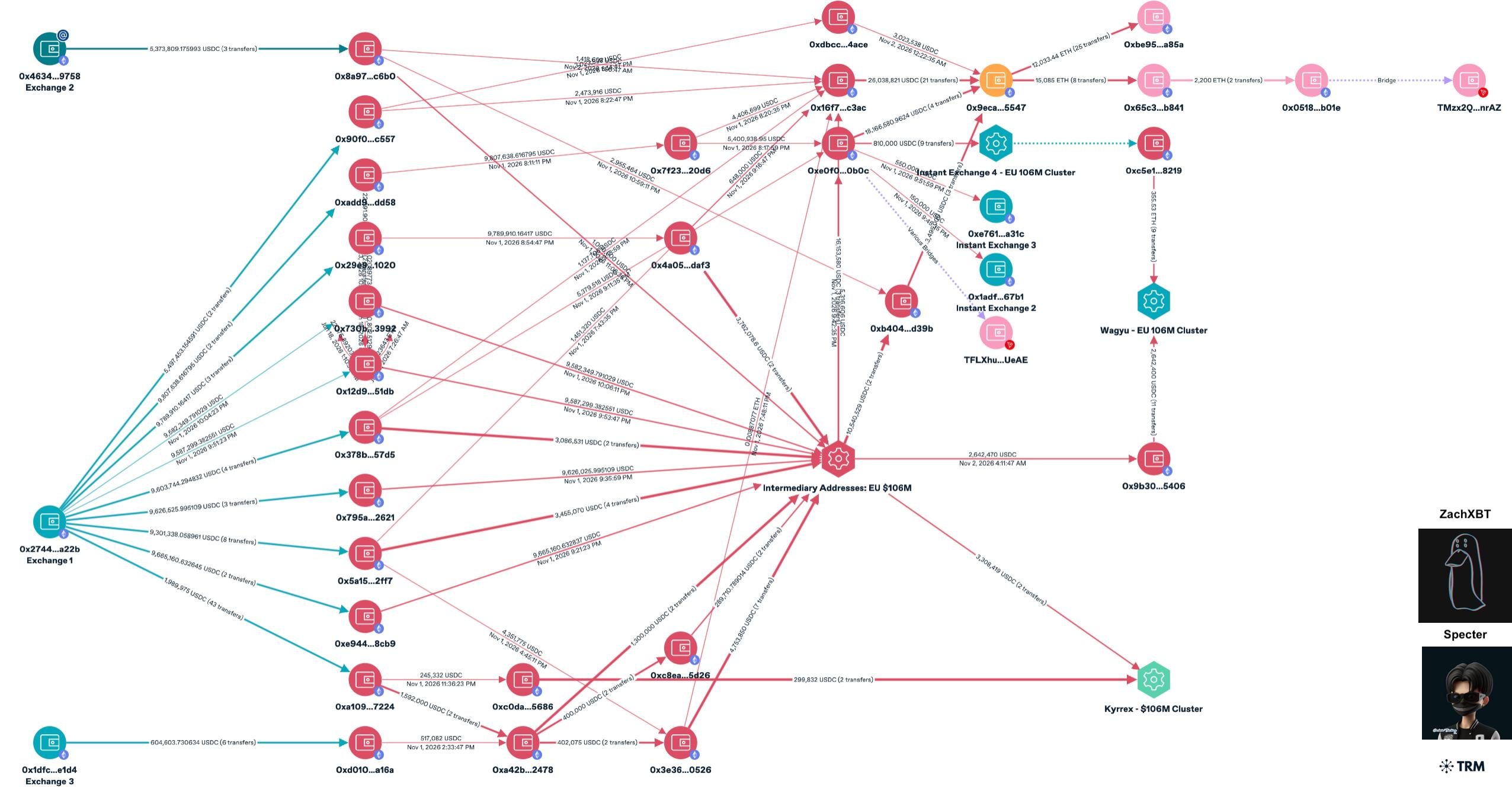
Recently, France's Arkéa bank's online banking service Fortuneo was hacked, involving €118 million. The attackers opened accounts on exchanges using forged KYC, exchanged funds for stablecoins, and transferred them on-chain within 21 hours, laundering through privacy coins, cross-chain, OTC, and other channels. The incident highlights the shortcomings of traditional bank risk control, crypto KYC, and on-chain tracking systems, posing a severe challenge to cross-border capital regulation. Recommended article:
“French Banking Giant Robbed, Hackers Converted €118 Million in 21 Hours Using Crypto”
On November 4, Crédit Mutuel Arkéa confirmed it had suffered a cyber attack that allowed certain fraudulent transactions to take place. According to French media Le Télégramme, the affected amount exceeds $133 million (€118 million). Crédit Mutuel Arkéa has notified the Banque de France about the matter.
Crédit Mutuel Arkéa stated in its announcement that it had temporarily suspended certain transactions as a precaution to prevent further fraudulent fund flows and would restore service as soon as final verification and security measures were completed. Reports indicate that some transfer functions within its banking application are still unavailable.
Grégory Raymond, co-founder and reporter of the French crypto media The Big Whale, cited on-chain investigator ZachXBT, indicating that the specific victim was the group’s online bank Fortuneo. According to his investigation, the hacker team transferred fiat currency from the bank to exchange for stablecoins, then withdrew them to external wallets; the actual losses on the bank's side may be higher than the amount currently tracked on-chain.
02 Web3ers
At the 2026 Hong Kong FinTech Week, there were few Web3 booths, and native practitioners faced difficulties in the bear market. On the other hand, traditional financial institutions have quietly laid the groundwork, continuously entering from RWA, stablecoin payments to compliance infrastructure. This round of “bottom-hunting” no longer just targets token assets but is about competing for licenses, talent, scenarios, and chances for the next cycle. Recommended article:
“Those Betting on Web3: Observations from the 2026 Hong Kong FinTech Week”
Some institutions are secretly bottom-hunting in Web3.
According to my onsite investigation and statistics, over 100 companies had booths at the 2026 Hong Kong FinTech Week, of which only 7 were Web3 companies, accounting for less than one-tenth. They were HashKey, DCS, RedotPay, Obita, AllScale, Interlace, and Native Group.
From the perspective of core business, apart from HashKey, which is a licensed virtual asset trading platform, the other 6 companies relate to stablecoin payments, wallets, or related financial infrastructure.
In conversations with these 7 companies, my biggest impression was that they all found it challenging. No business is easy to run in a bear market, and no one can make money without effort.
31-year-old Jeff Yan is building Hyperliquid in Singapore, insisting on not raising funds and considering himself a neutral protocol rather than an exchange. This public chain is expanding rapidly, relying on the HIP-3 mechanism, launching RWA perpetual contracts for stocks, oil, etc., with trading volumes matching native crypto assets. It is lobbying U.S. regulators while drawing vigilance and collaborative attempts from traditional exchanges, redefining the boundaries of traditional financial trading. Recommended article:
Jeff Yan expressed that the feasible path to enter the U.S., the world's largest financial market, is for HIP-3 partners rather than Hyperliquid itself to accept U.S. regulation, ensuring compliance with KYC and market monitoring requirements. (This is also the core logic behind his statement, “We only provide a technology platform, not an exchange.”) In September, Hyperliquid began testing the revised HIP-3 framework, adding identity verification features to fill previously missing basic due diligence steps. In the same month, the parent company of crypto exchange Kraken initiated discussions to potentially integrate this system, providing Hyperliquid perpetual contracts for U.S. users.

Vitalik began a 100-day mobile airplane mode experiment, practicing digital minimalism. He actively distanced himself from the algorithm-driven social media information flows, kept cell network data off by default, relied on offline tools and public WiFi for living, while reducing high-risk web applications and turning to command line tools. He believes digital minimalism is a new choice today, aiming to reclaim attention and safeguard privacy, letting online tools serve people rather than consume them. Recommended article:
“After 100 Days of Mobile Airplane Mode, How Did Vitalik Live?”
I have followed minimalism in real life for a long time: the fewer items I own, the better, using fewer things to satisfy more needs. Four years ago, I wrote a blog about everything I packed into a 40-liter backpack for a trip.
However, this philosophy of material minimalism emerged from 2000 to 2010 to solve problems and adapt to opportunities of that era. I still find it valuable, and I see opposing views: suitable material possessions can indeed help you better regain control of your life. But I also think that in the present context, we need a brand-new minimalism: digital minimalism.
The core of digital minimalism is to consciously control how you use digital technology. Every time you go online or use an app, it should be an active choice you make, rather than being unconsciously manipulated by algorithms and passively getting lost in them. In this article, I will share some of my attempts in this regard.
03 Political Trends
After the U.S. midterm elections, the Democratic Party controls both houses of Congress, marking a policy turning point for the crypto industry. The previously bipartisan-driven GENIUS and CLARITY bills face changes in their progress, with Elizabeth Warren likely to chair the Senate Banking Committee, making stringent regulation and conflict of interest scrutiny central issues. Although the industry still has some Democratic supporters, future legislation will place more emphasis on investor protection and financial stability, putting greater regulatory pressure on crypto businesses relying on presidential dividends. Recommended article:
“The Democratic Party Sweeps Congress, is There Still a Hurdle for Crypto?”
If the 2024 U.S. election showed the crypto industry the potential for political investment to translate into policy results, then the 2026 midterm elections faced an unexpected reversal.
Two years ago, the crypto industry invested heavily in supporting pro-crypto candidates, and Trump promised to make the U.S. the global crypto center. Following that, the GENIUS Act was signed into law, the government pushed for regulatory reforms, and the industry's expectations for policy dividends continued to rise.
However, just two years later, the power dynamics in Washington have dramatically shifted.
On November 4, the Associated Press reported that in the U.S. midterm elections, the Democratic Party not only regained the House of Representatives but also secured the Senate, achieving dual control of Congress. Trump's legislative agenda for the next two years will face greater resistance.
For the crypto industry, the results in Ohio are particularly dramatic: Sherrod Brown, who was heavily targeted by pro-crypto political funds in 2024 and subsequently lost, has now defeated Republican Senator Jon Husted and returned to the Senate.
The Democratic Party's victory in both houses during the U.S. midterm elections marks a significant political shift. The market showed clear differentiation, with mainstream crypto assets like BTC and ETH rebounding, while TRUMP and WLFI, tied to the Trump family, continued to face pressure. The new Congress will initiate investigations into its crypto projects, bringing controversies regarding foreign capital, stablecoin reserves, and interest transport to the forefront, marking a new phase in the crypto regulatory battle. Recommended article:
“Democrats Control Both Houses, is a Major Disaster Coming for Trump's Family Projects?”
The market reacted quickly and with differentiation. BTC rebounded to a high of $81,196, ETH surged strongly above $2,400, and mainstream altcoins welcomed a rebound. According to Coinglass, the latest data shows that in the past 24 hours, liquidations across the network amounted to $974 million, including $582 million in short liquidations.
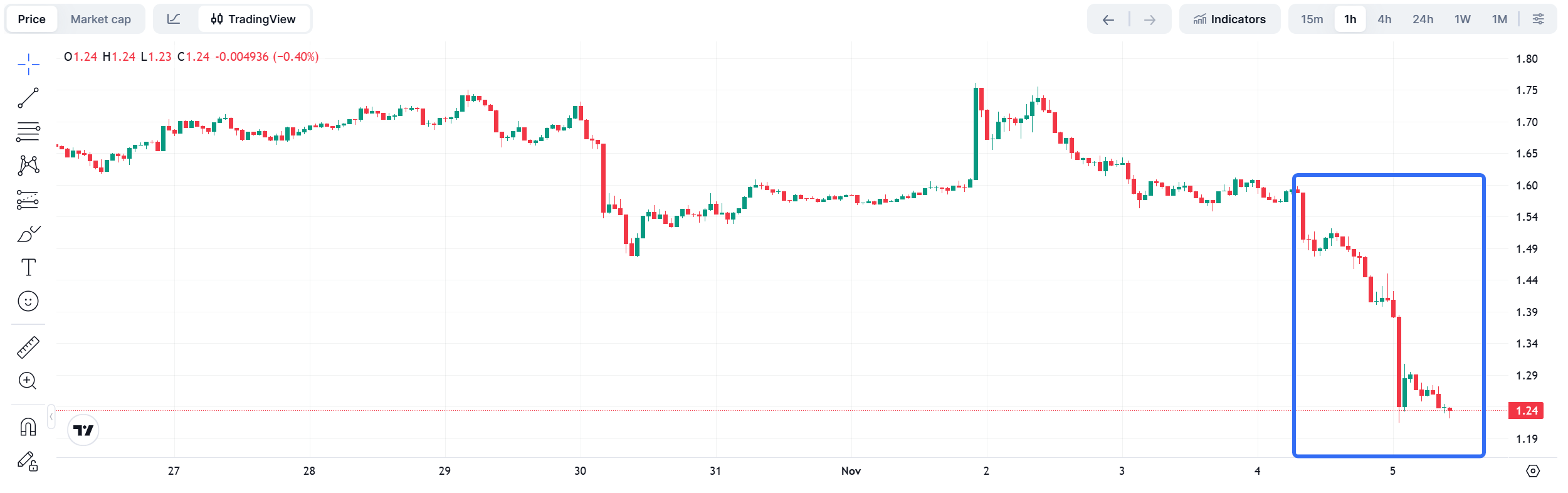
In contrast, the price performance of TRUMP and WLFI, associated with Trump, is a completely different picture.
TRUMP has fallen from $1.6 since early November, currently fluctuating around $1.26. It has dropped over 98% from its historical peak of $77.
The Hong Kong Crypto Asset Declaration Bill was passed by the Legislative Council on November 4. The CARF framework will start collecting crypto asset transaction information from 2027 and will launch cross-border tax information exchange in 2028. The bill covers various types of transactions including crypto-to-crypto exchanges and wallet transfers, awaiting the Hong Kong government to announce whether transaction information of mainland tax residents will be included in the first exchange list. Relevant compliance and tax risks deserve the attention of holders. Recommended article:
In the future, trading Bitcoin in Hong Kong, using USDT to exchange for other tokens, or transferring crypto assets from exchanges to external wallets may become part of tax information declarations.
On November 4, the Hong Kong Legislative Council passed the “2026 Taxation (Amendment) (Crypto Asset Declaration Framework and Revised Common Reporting Standard) Bill.” According to the arrangements, the two sets of rules involved in the bill will be implemented in stages: the crypto asset declaration framework will be implemented from January 1, 2027, and qualifying service providers will begin collecting information from 2027, while Hong Kong plans to exchange information with relevant tax jurisdictions starting from 2028; the revised Common Reporting Standard will take effect from January 1, 2028, with Hong Kong planning to exchange financial account data per the new standard starting in 2029.
This arrangement has raised the attention of many holders. For those using Hong Kong exchanges, to whom should they declare? Will transaction records of tax residents from Mainland China be transmitted back to the mainland? If holding Hong Kong identity, do they not need to worry about foreign tax issues?
From the legislative text and the tax bureau’s explanation, it’s necessary to differentiate between the three stages: information collected by the trading platform, declaration to the Hong Kong tax bureau, and information exchange between Hong Kong and other tax jurisdictions. The taxpayer's residency status, operating entity of the exchange, transaction type, and the declaration list published by Hong Kong will all impact the final outcome.
The OCC national trust bank license in the U.S. is becoming a key entry ticket that crypto institutions are competing for. It belongs to the federal trust charter, focusing on digital asset custody and stablecoin reserve management, and does not equate to full commercial banking qualifications. From Anchorage to Circle, Ripple, a number of institutions have been approved successively. Combined with the implementation of the GENIUS Act rules, digital assets are rapidly integrating into the U.S. federal financial infrastructure. Recommended article:
“Is the OCC Trust Bank License Becoming Hot Property?”
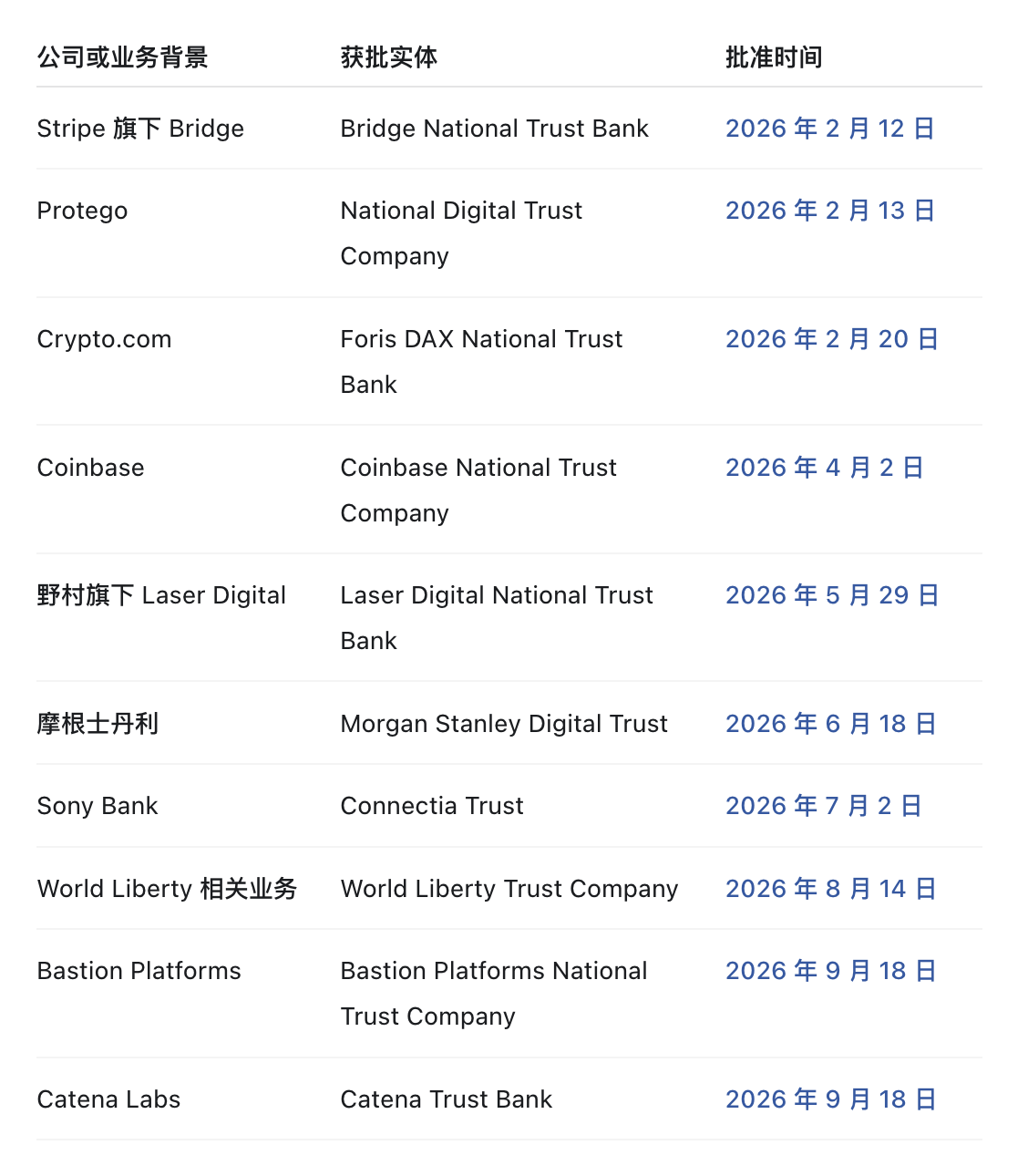
Since the beginning of this year, various companies including Bridge under Stripe, digital asset and cryptocurrency financial services company Protego, Crypto.com, Coinbase, Nomura's Laser Digital, Morgan Stanley, Sony Bank’s Connectia Trust, World Liberty affiliated partners, enterprise-level white-label stablecoin infrastructure Bastion, Catena Labs, and Agora have successively received conditional approvals from the OCC. Among them, Bastion's approval is for state trust conversion while the others are for preliminary conditional approvals for newly established banks.
04 Industry Insights
On November 4, Eastern US time, Circle released its Q3 2026 report, with revenues and profits exceeding expectations. However, the impressive results were largely supported by the one-time income from the presale of Arc tokens. Core USDC reserve earnings declined year-on-year, circulation growth has slowed, and market share is under pressure, yet on-chain usage remains consistently high, with significant divergence in the market over whether its second growth curve can be realized. Recommended article:
“Circle’s Q3 Report: Surprising Performance Supported by Selling Tokens, Core Business Slowing Down”
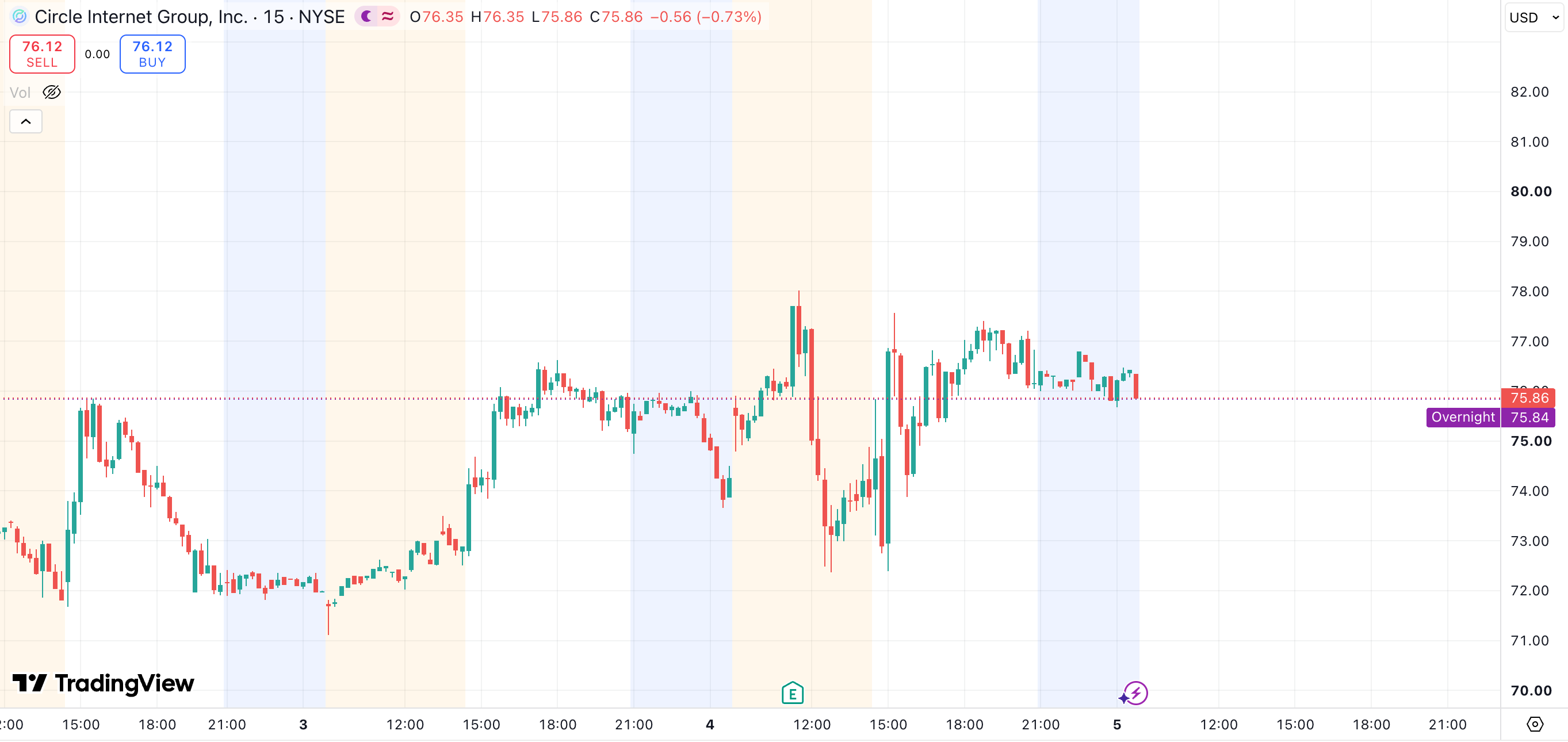
On November 4, before market opening, Circle released its Q3 2026 financial report. Data shows that the company achieved total revenue and reserve earnings of $865 million in the quarter, a year-on-year increase of 17%; operating net profit was $226 million, a 5% year-on-year increase; adjusted EBITDA was $317 million, a year-on-year increase of 85%.
After the report was released, company stock rose more than 3% before dropping over 6%. After the opening, Circle's stock stabilized and rebounded, finally closing at $76.12, a 1.2% increase from the previous trading day’s closing price.
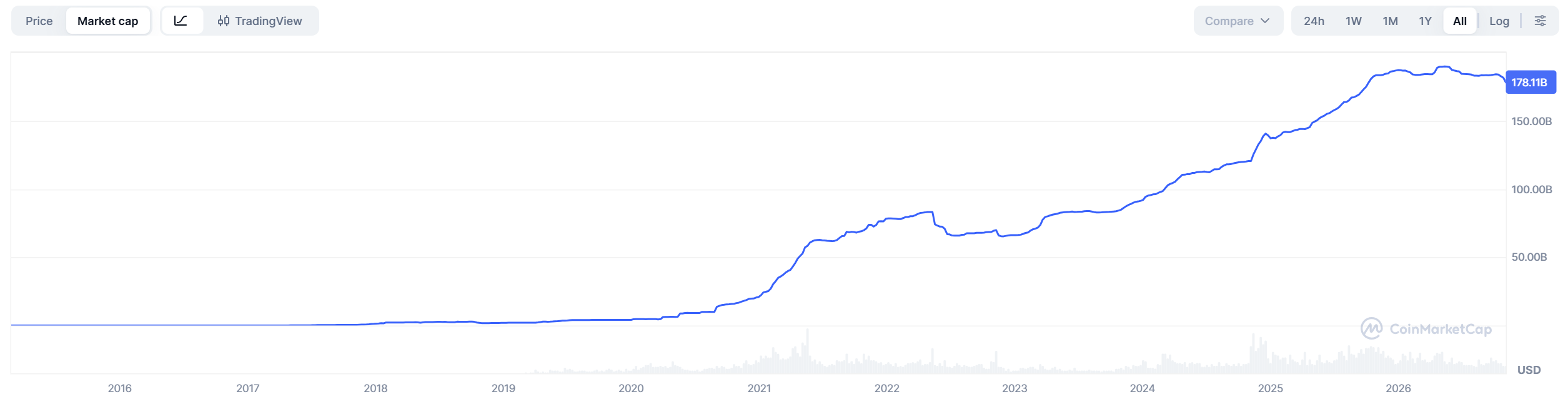
Tether's Q3 2026 attestation report has been released, showing reserves exceeding $190 billion, with a quarterly profit of $1.5 billion. Its reserves are anchored by short-duration U.S. Treasuries, while also increasing Bitcoin and gold allocations; the excess buffer benefits from rising cryptocurrency prices. However, the buffer's stability is highly reliant on asset appreciation, coupled with multi-line expansions and compliance arrangements, posing both risks and growth prospects. Recommended article:
“Tether Data Disclosure: $1.5 Billion Profit in Q3, Total Asset Reserves Surpass $190 Billion”
As of September 30, Tether held $122.84 billion of weighted average duration of less than 90 days in U.S. Treasury bills (T-Bills), which significantly increased by $7.88 billion from the end of Q2; along with overnight repurchase agreements fully backed by U.S. Treasuries totaling $9.519 billion (the underlying U.S. Treasury collateral had a fair value of $9.509 billion), Tether's total direct and indirect exposure to U.S. Treasuries reached $132.4 billion, accounting for 69.1% of total assets.
However, a closer look at cash and cash equivalents shows that Tether made a noticeable repositioning during Q3.
While increasing direct U.S. Treasury exposures, its overnight reverse repo scale shrank from $18.63 billion at the end of Q2 to $9.519 billion, a decrease of $9.11 billion in one quarter; along with $7.178 billion term reverse repos, $2.198 million in non-U.S. Treasury bills, and a mere $2.043 million in cash and bank deposits, the total “cash and cash-like assets” for Q3 amounted to $139.578 billion, which is slightly down by $1.06 billion compared to $140.64 billion at the end of Q2.
Block's Q3 earnings report exceeded expectations, with gross profit up 22% year-on-year, and stock prices surged after the earnings report. Both Cash App and Square drive growth, with Bitcoin business shifting to customer acquisition tools, while AI commercialization is about to land. Despite facing $964 million in regulatory settlement fees and other risks like loan defaults, the company continues to raise its performance guidance, and the market is positively pricing its new narrative of finance + AI. Recommended article:
“Block’s Stock Surged 15% on the First Day After Earnings Report, What Makes the Market Buy It?”
According to Block’s Q3 earnings report released on November 4, the company's gross profit increased 22% year-on-year to $3.24 billion, exceeding the analyst average estimate of $3.1 billion. The company raised its 2026 full-year gross profit forecast from about $12.5 billion to about $12.6 billion, marking the third consecutive increase in guidance.
After the earnings report was released, according to Bitget market data, Block's stock surged over 9% in after-hours trading, reaching $83.45. The first-day opening increase after the earnings report was 15.3%, closing at $87.63, with a market capitalization of approximately $52.974 billion.
The analyst consensus is to “moderately buy,” with an average target price of around $95 to $98. The Bank of Montreal (established in 1817, Canada's oldest bank) upgraded its rating to “outperform” after the earnings report with a target price of $100; Morgan Stanley previously downgraded its rating to neutral due to concerns over lending credit risks, with a target price of $80.
免责声明:本文章仅代表作者个人观点,不代表本平台的立场和观点。本文章仅供信息分享,不构成对任何人的任何投资建议。用户与作者之间的任何争议,与本平台无关。如网页中刊载的文章或图片涉及侵权,请提供相关的权利证明和身份证明发送邮件到support@aicoin.com,本平台相关工作人员将会进行核查。


