Author: Jonah Burian, Blockchain Capital Investor
Translated by: Gu Yu, ChainCatcher
Large-scale cloud providers and laboratories may be squeezing startups out of the most critical input for AI: computing power. This has sparked extensive discussions about establishing power exchanges—a market where GPU hours can be traded like oil. While several companies are working in this direction, there is still a lack of a deep and highly liquid computing power market. In this article, we will explain why establishing a liquid computing power exchange is far more complex than it seems. We will demonstrate how GPU credit market structures hinder the formation of a spot market and explore potential solutions at the end.
Part One: The Problem
Imagine you are an AI lab looking to acquire 100,000 GPUs to train the next large model. If you go to procure today, you will find almost no available capacity. Almost all cloud resources have been booked out years in advance.
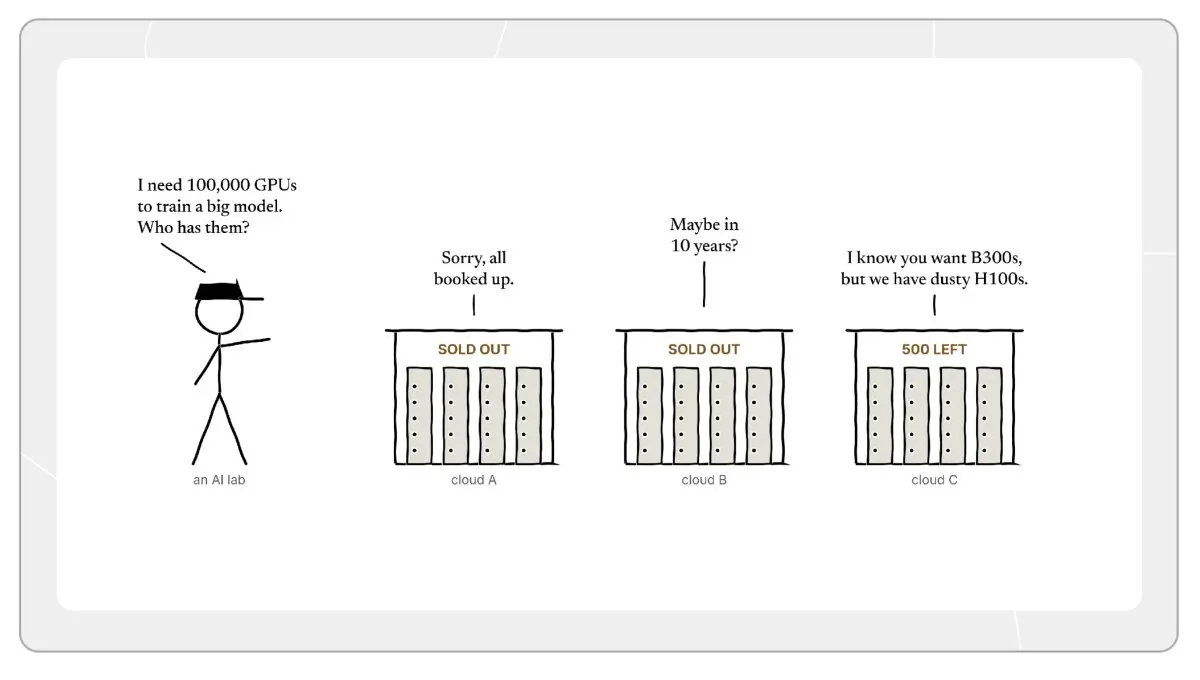
The common reasoning given is that supply cannot meet demand. Everyone is eager for GPUs, and new supply takes years to come online.
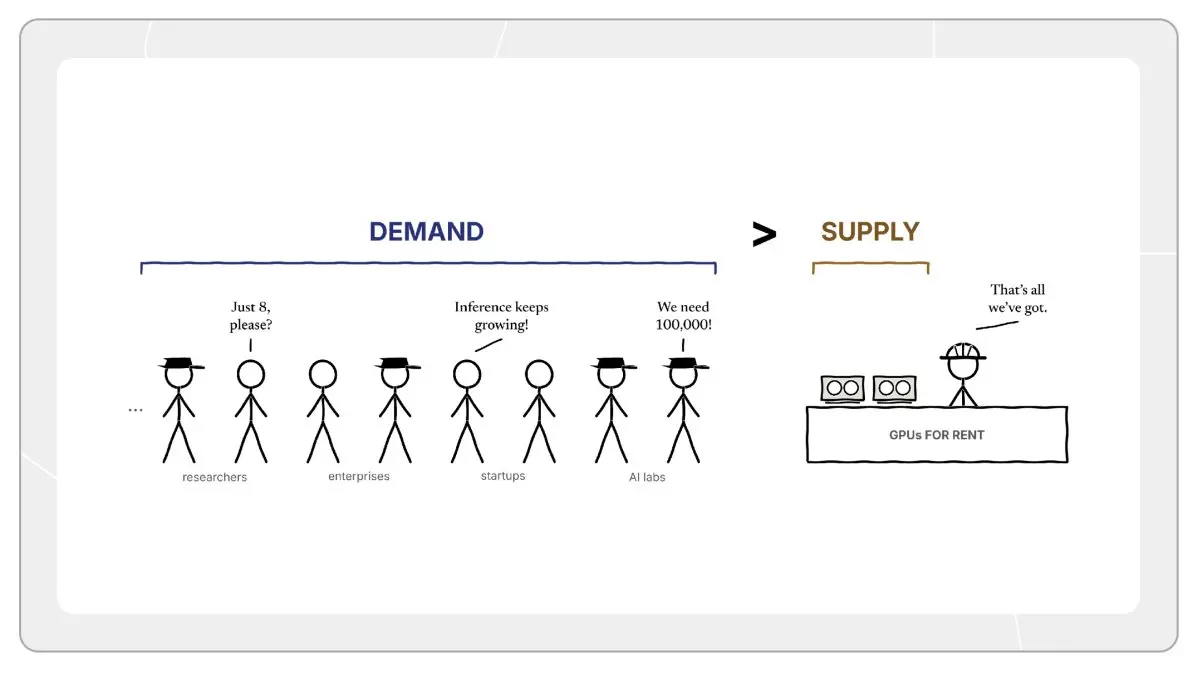
However, "supply cannot meet demand" is not entirely accurate. There is an inconvenient truth that goes against the mainstream narrative: there is actually a considerable amount of idle computing power in the market.
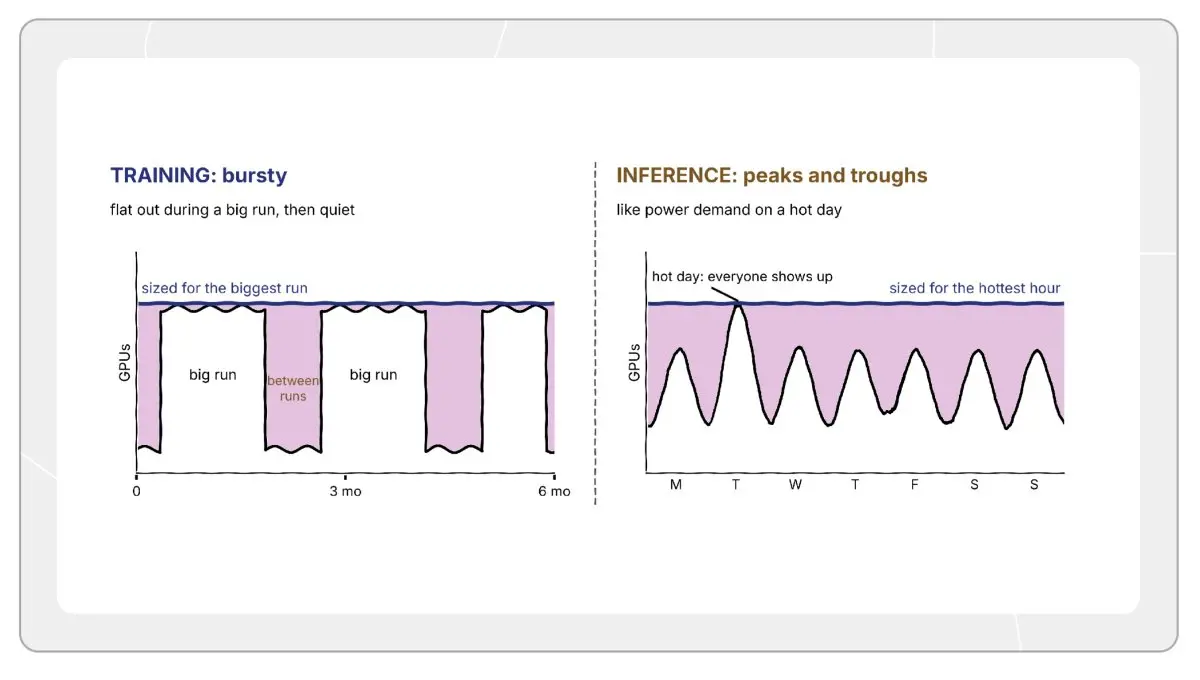
If you talk to existing buyers of computing power (those institutions with substantial power reserves and strong balance sheets), you will find that many of them do not utilize their power at full capacity all the time. Model training is sporadic: during large-scale training runs, they call upon most of the GPUs, but in the gaps between training cycles, a lot of computing power remains idle. Inference tasks are volatile: usage tends to be much lower at night, on weekends, and holidays compared to peak days, while overall capacity is often allocated based on peak demand.
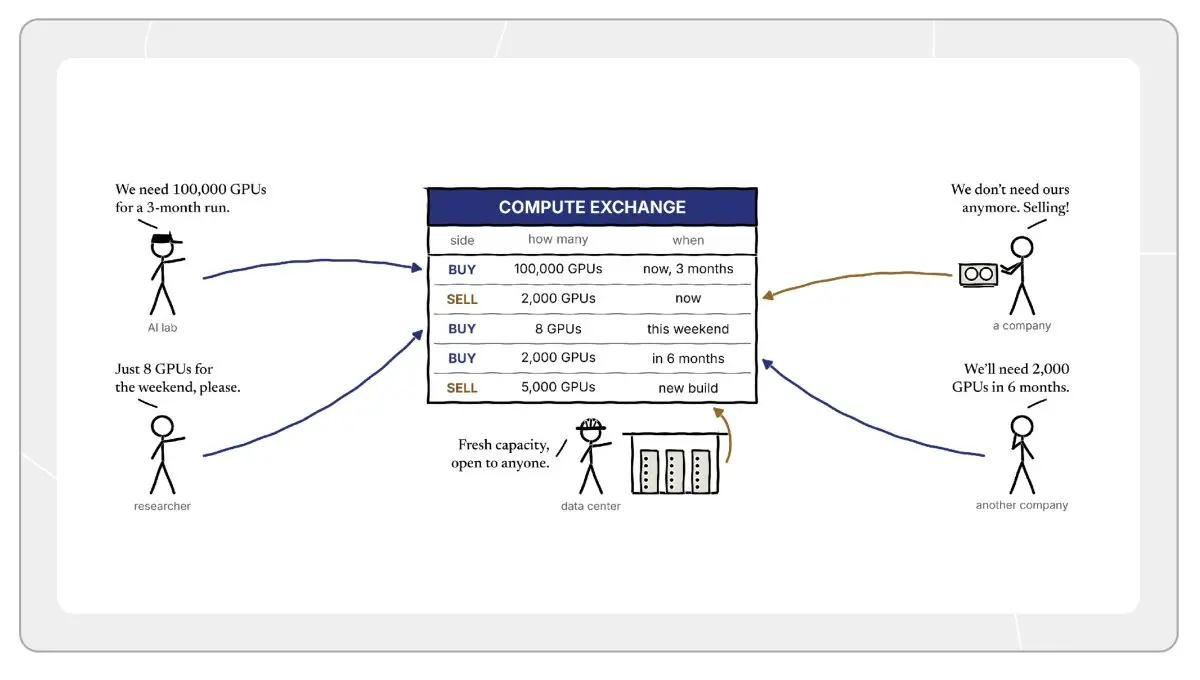
All this idle computing power points to an idealistic vision: establishing a GPU hour exchange. Markets are extremely efficient in resource allocation and price discovery, and since we can see the current GPU allocation might lack efficiency, theoretically, a trading platform could smooth out this mismatch in supply and demand. However, there is still no example of a large-scale, deep computing power market. Although some platforms support renting out small amounts of GPUs, such as Vast.ai, where GPU owners can list and price their GPUs, giant clusters cannot complete trades on such platforms. In March of this year, CoreWeave launched Spot, offering lower-priced but potentially reclaimable capacity. Yet, there is still no centralized, large-scale, and liquid order book. What is the reason for this?
A common explanation is that computing power is not a homogeneous product. The market includes H100s, B200s, and B300s, with differences in networking architectures like InfiniBand and Ethernet, as well as various cooling solutions and physical locations. How can a unified market be constructed facing such heterogeneous assets?
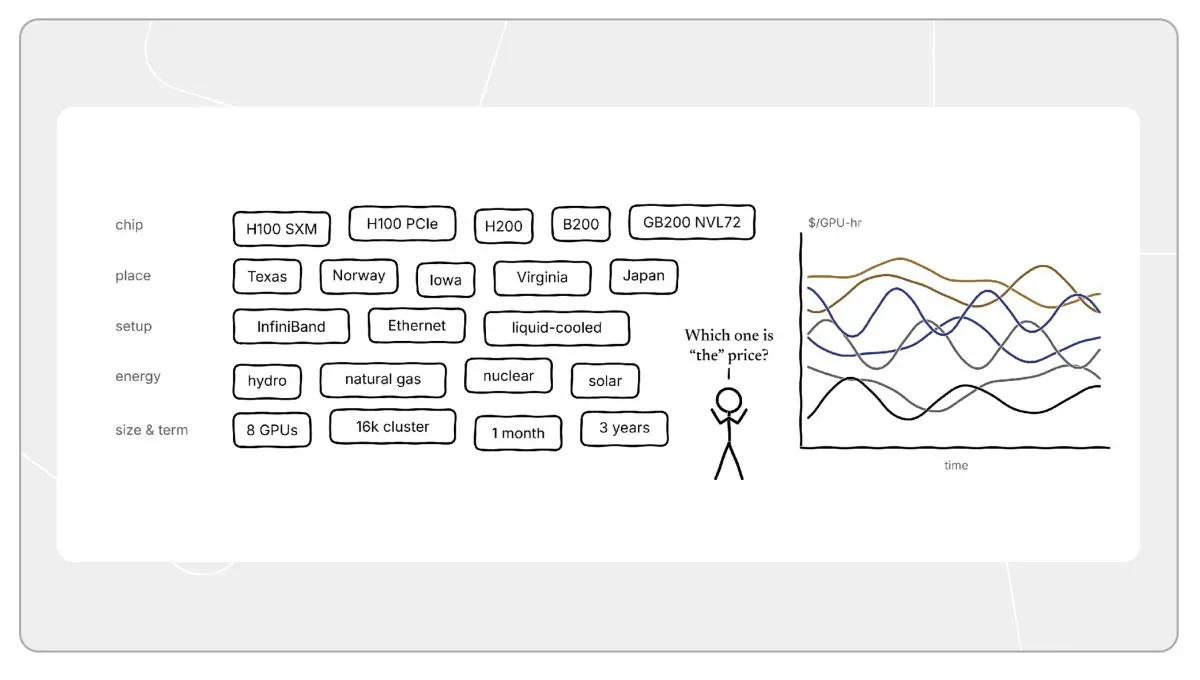
I believe this is not the only driver. Crude oil also comes in hundreds of varieties. Markets eventually achieved standardization around a few benchmarks (such as WTI and Brent crude), with other varieties priced according to those benchmarks. Many markets trading heterogeneous goods also operate effectively, so while heterogeneity is a reason, it is not the only one.
Another less mentioned underlying reason lies in the financing model for GPUs. Large GPU clusters often rely on borrowed funds for their construction. The loan terms ultimately determine who can sell computing power and to whom they can sell it. To understand this, we first need to examine the current financing models for GPUs.
Part Two: How GPUs are Currently Financed
Today, GPUs are often financed via "take-or-pay" contracts: this is a multi-year agreement where clients must pay for the capacity regardless of whether they actually use the computing power. This means that almost all computing power is subscribed before it is even powered on. For instance, CoreWeave generates 96% of its revenue from committed contracts, and the contract lengths are getting longer: about three years two years ago, four years a year ago, and now most are five years, with some even extending to six years.
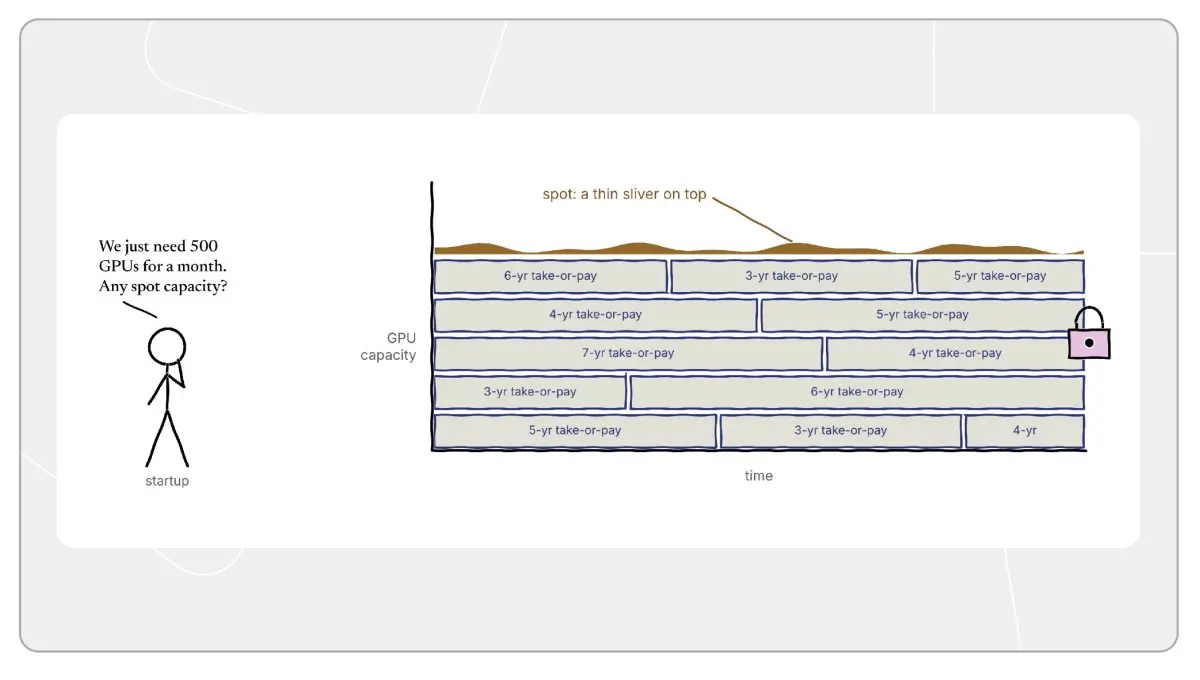
The Mechanism of "Take-or-Pay"
Here is the underlying logic of how GPUs are built in this manner. Suppose you are an AI lab needing 100,000 GPUs, and all sources in the market are sold out. A data center (like a new cloud service provider or a colocated developer) is willing to build a cluster for you, but it itself does not have billions of dollars in idle funds. It needs the intervention of lenders.
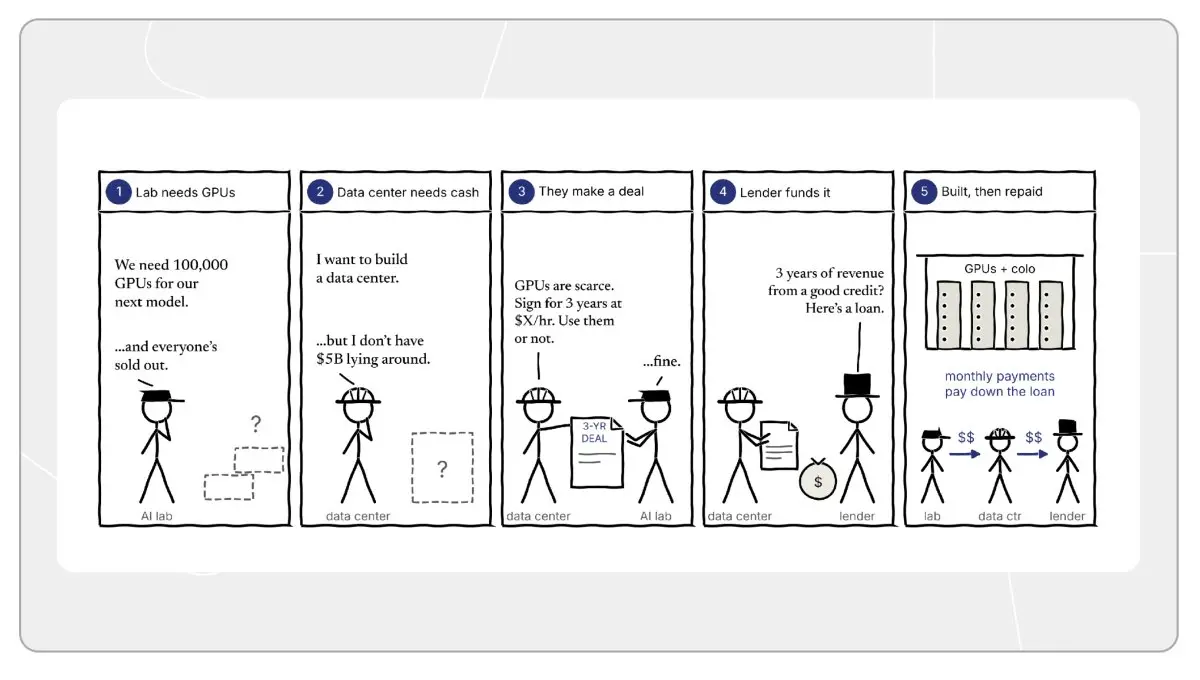
Now imagine you are a lending institution facing an emerging market and are being asked to invest billions in an asset you do not know how to value. How much will these GPUs be worth in three years? What if the customers of the data center go bankrupt? You cannot know the answer.
The "take-or-pay" contract solves this dilemma. Lenders need not speculate on the residual value of GPUs because cash flows (and payment responsibilities) are relatively certain. Lending institutions can underwrite based on the income from well-known tenants. The data center procures GPUs and space, and the lab's monthly rental payments are used to repay the loan.
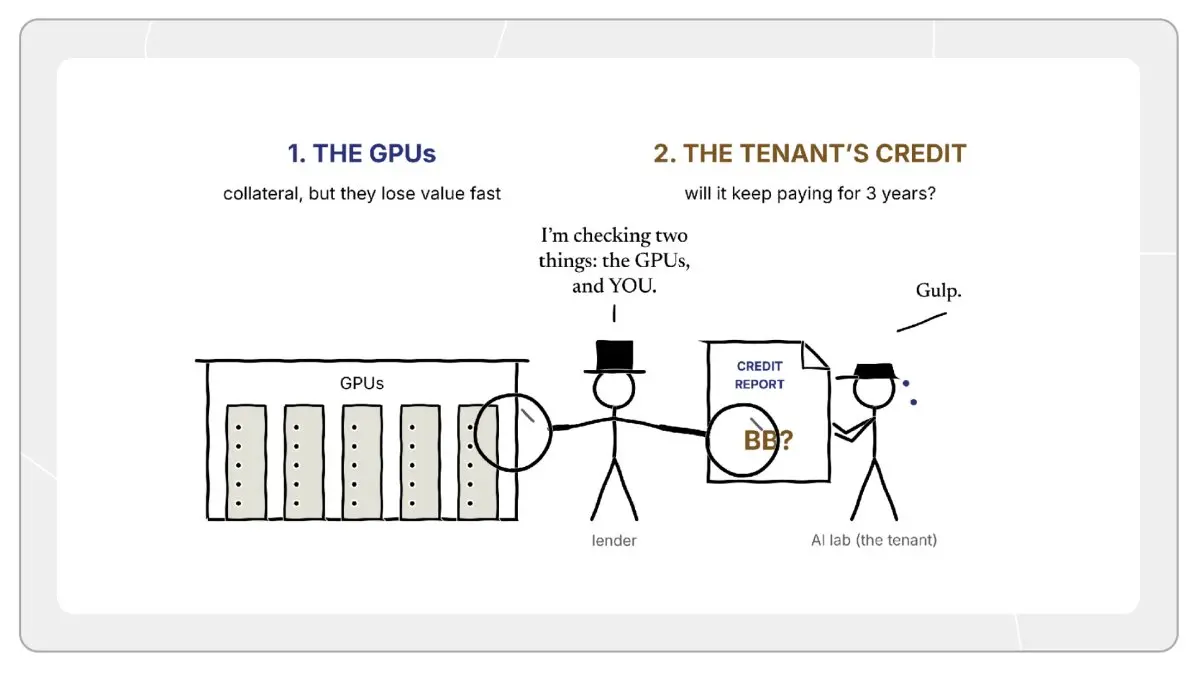
It is important to note that the creditworthiness of the tenant directly determines the cost of capital for the data center.
Customer Perspective
From the customer's perspective, prices are locked in for several years; if market prices rise, as the H100 leasing price index demonstrated in early May, the client's costs do not change. This is a favorable aspect. Moreover, GPU supply is guaranteed: clients have assured capacity throughout the entire contract period.
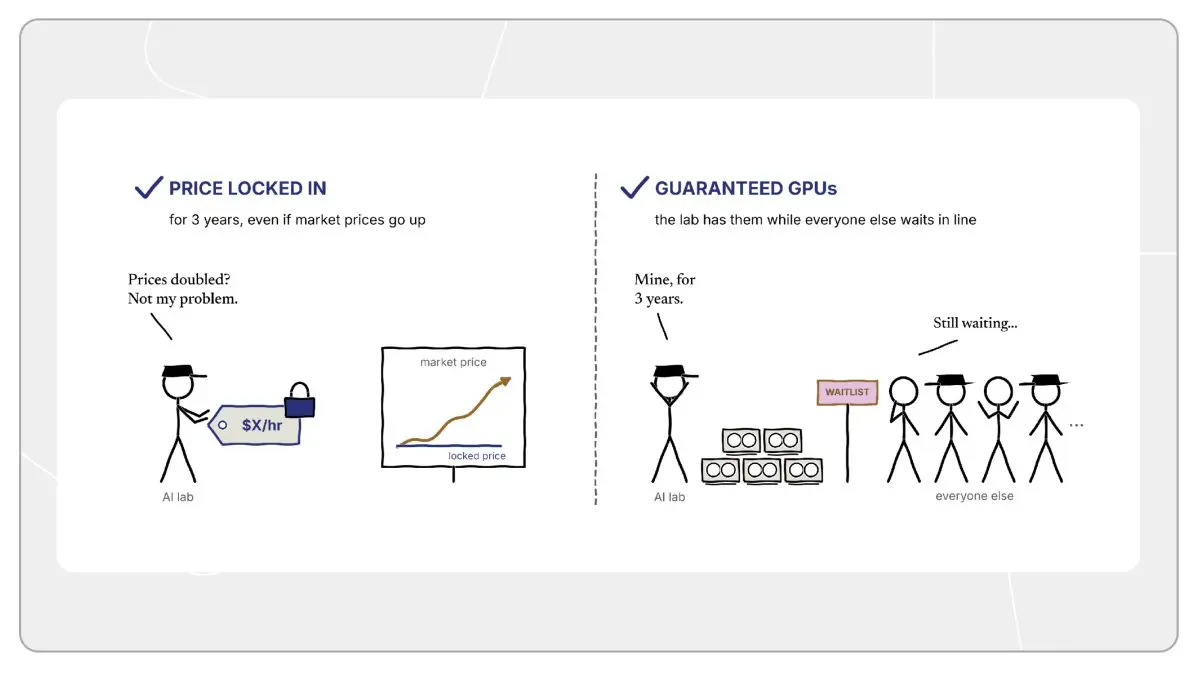
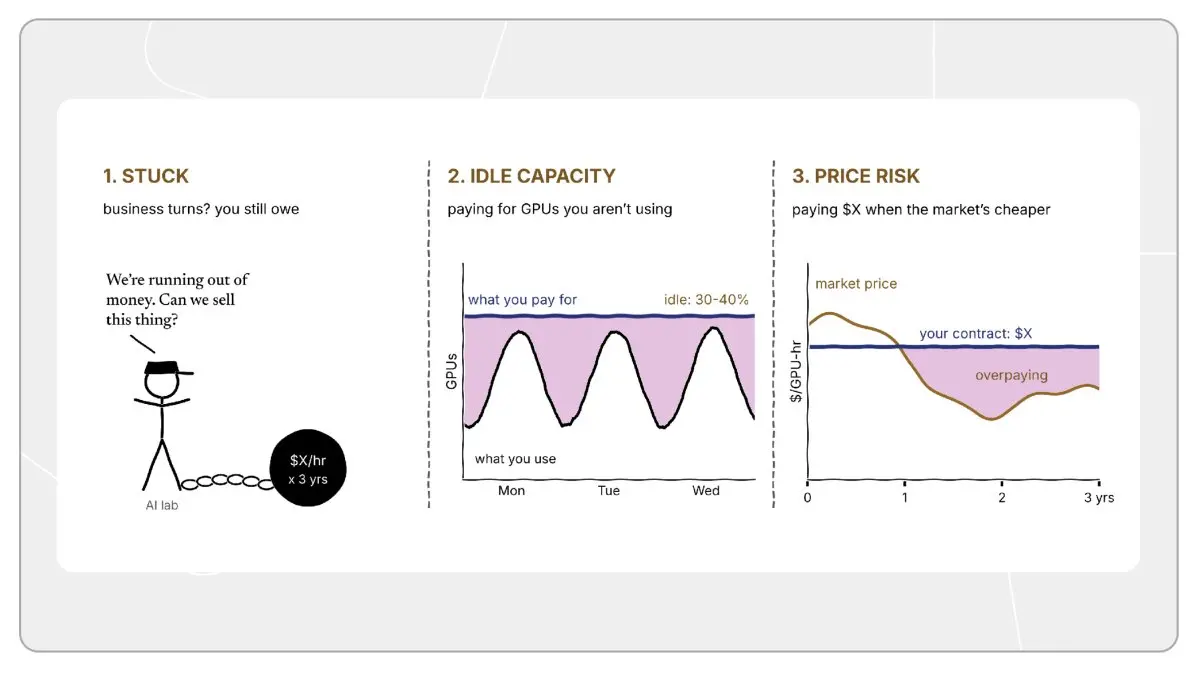
Conversely, clients also bear multiple risks. First, if the business runs out of funds or transforms, they still owe payments for each installment. Second, clients are paying for idle capacity. Since the acquisition is done based on peak demand, they are often paying for GPUs that are not actually used. Finally, if market prices fall, clients still have to fulfill contracts at the locked-in high prices.
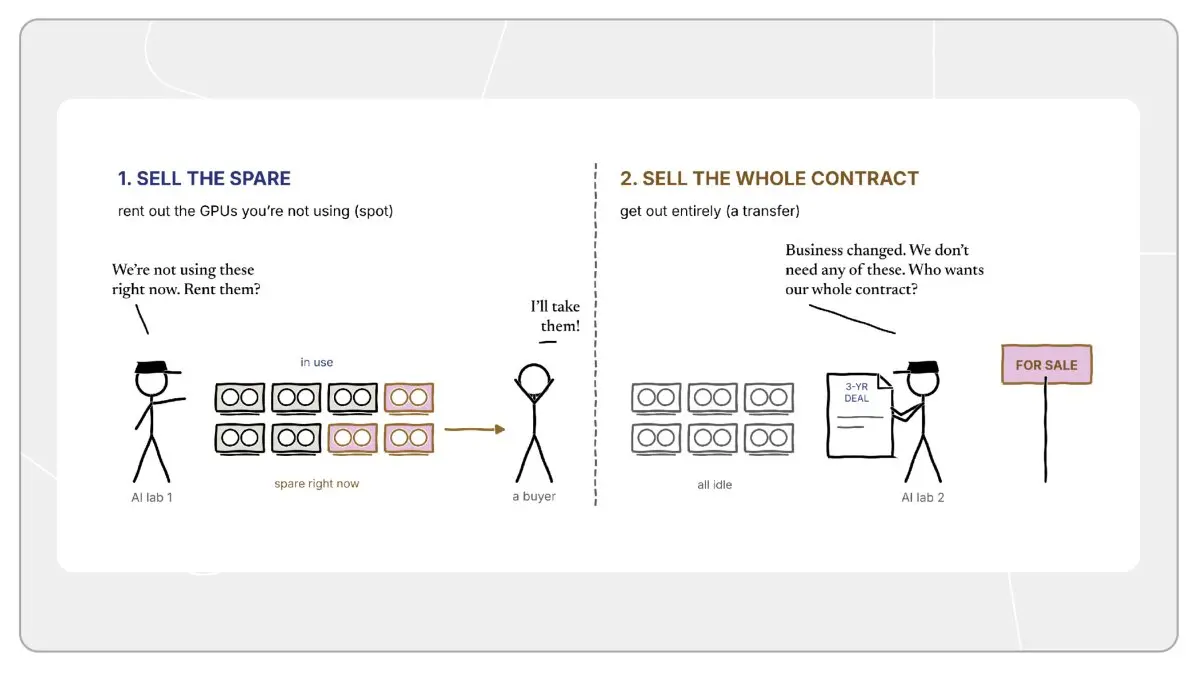
In this scenario, one can naturally envision the emergence of a market: some clients may have excess capacity they want to sell at certain times, while others might want to completely transfer their contracts and exit.
Part Three: Why Exchanges are Difficult to Form
Imagine a large lab no longer needs the GPUs it owns and wants to resell the contract to another institution. The lending institution will be skeptical of this practice because at the time of the loan's issuance, it was essentially underwriting the credit of that lab.
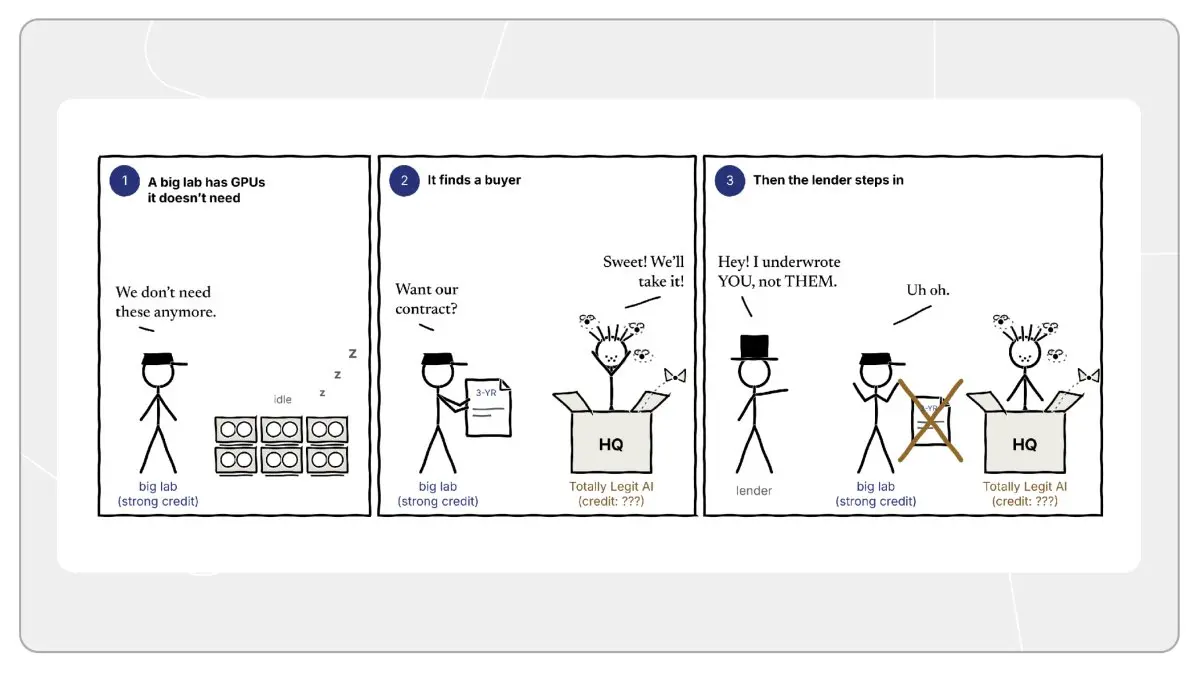
If your tenant is a large corporation with a high investment rating, you can obtain loans at much lower interest rates. If it is a higher-risk startup, the same GPU cluster financing rate will be much higher. The tenant determines the price of the loan, which is why lenders typically need to approve the tenant change. Therefore, the current market often operates through subleasing: the original AI lab continues to pay the data center, while the new buyer pays the original AI lab.
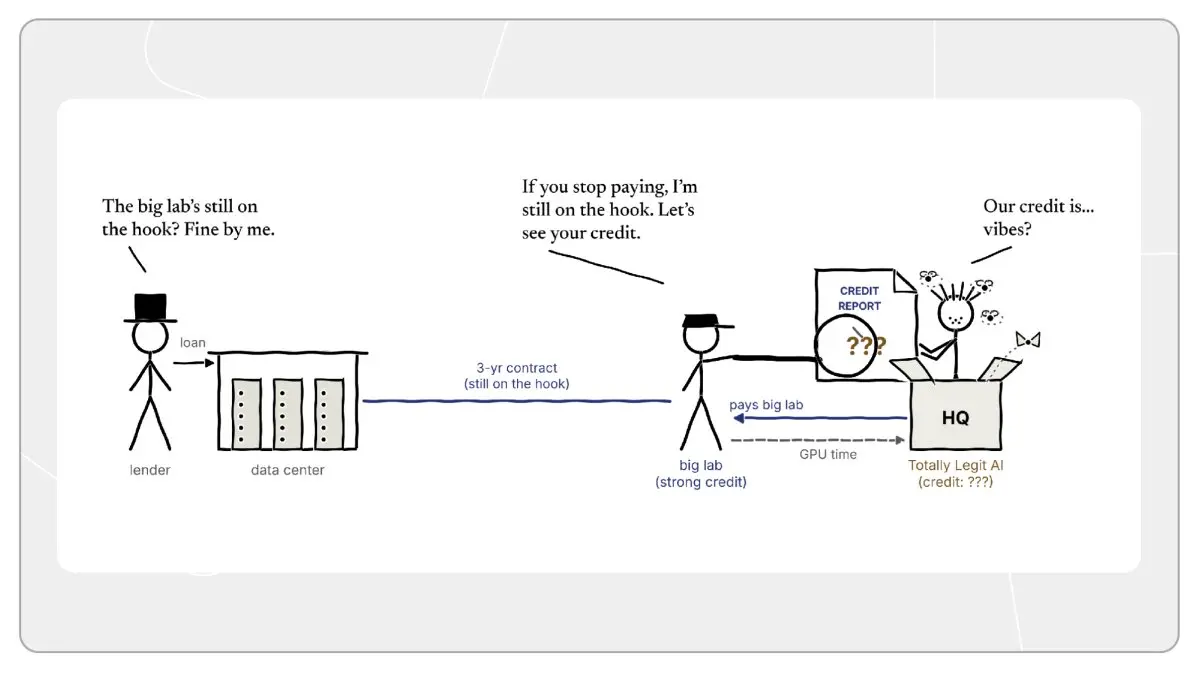
If the sublessee stops paying, the original AI lab still has repayment obligations to the data center. This mechanism makes it difficult for the market to adapt to traditional order book forms.
If I sell Apple shares on an exchange, from the moment the transaction clears, my connection with the buyer is severed. I don’t even know who bought the stock; the best price wins. However, in computing power transactions, even after selling, you still cannot escape the joint obligation to fulfill, so you must know the identity of the counterparty. The highest bidder may be a startup facing default risk, and lenders may not accept the next highest buyer.
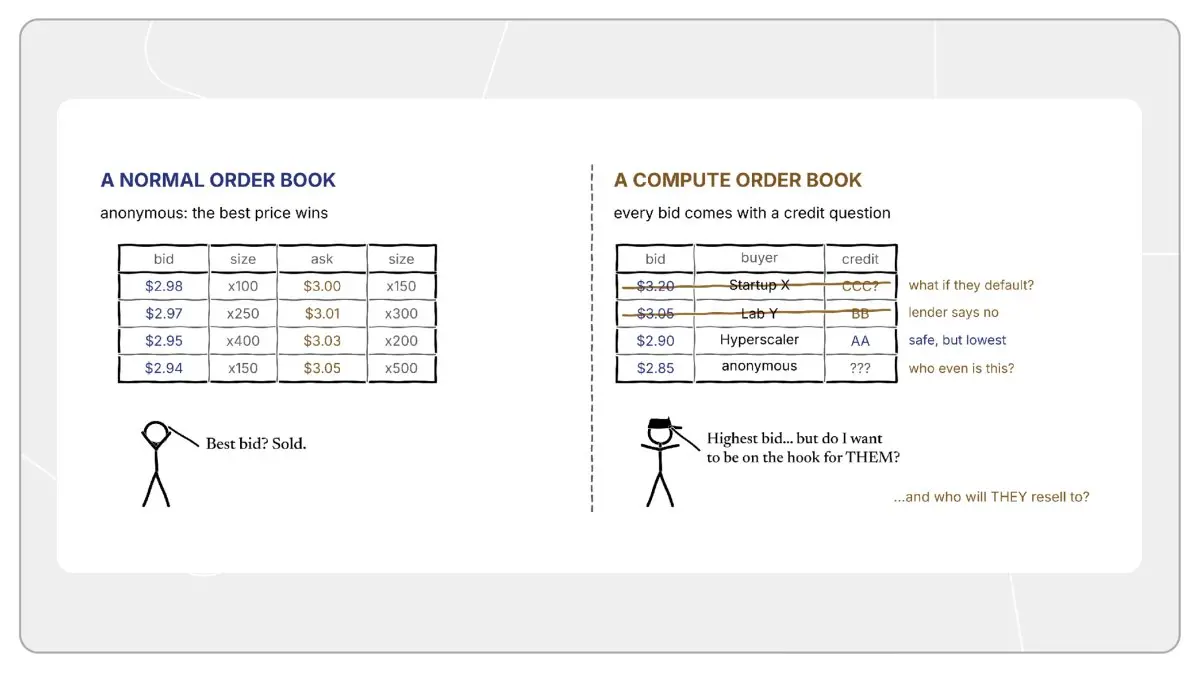
This will also lead to a series of more complex scenarios: can that buyer resell to others? Does the original AI lab, still responsible for obligations, need to know the identity of the buyer?
What you are ultimately faced with is a complex credit network, making it difficult for computing power to achieve scalable transactions.
Part Four: Potential Breakthroughs
It can be found that many issues stem from one point: in the eyes of lenders, GPUs and clients are bundled as a whole. Most mature markets are not like this. A barrel of crude oil does not care who the final buyer is.
To get the computing power market running, lenders need to trust the underlying asset itself, not customer credit. In other words, lenders need to be confident that even if a customer drops out midway, they can quickly find another customer to rent the GPUs. Trusting the asset requires two prerequisites: predictable future prices (similar to forward prices for crude oil) and a buyer market ready to take on that price at any time. Only when both are in place can clients be interchangeable, and contracts can flow smoothly.
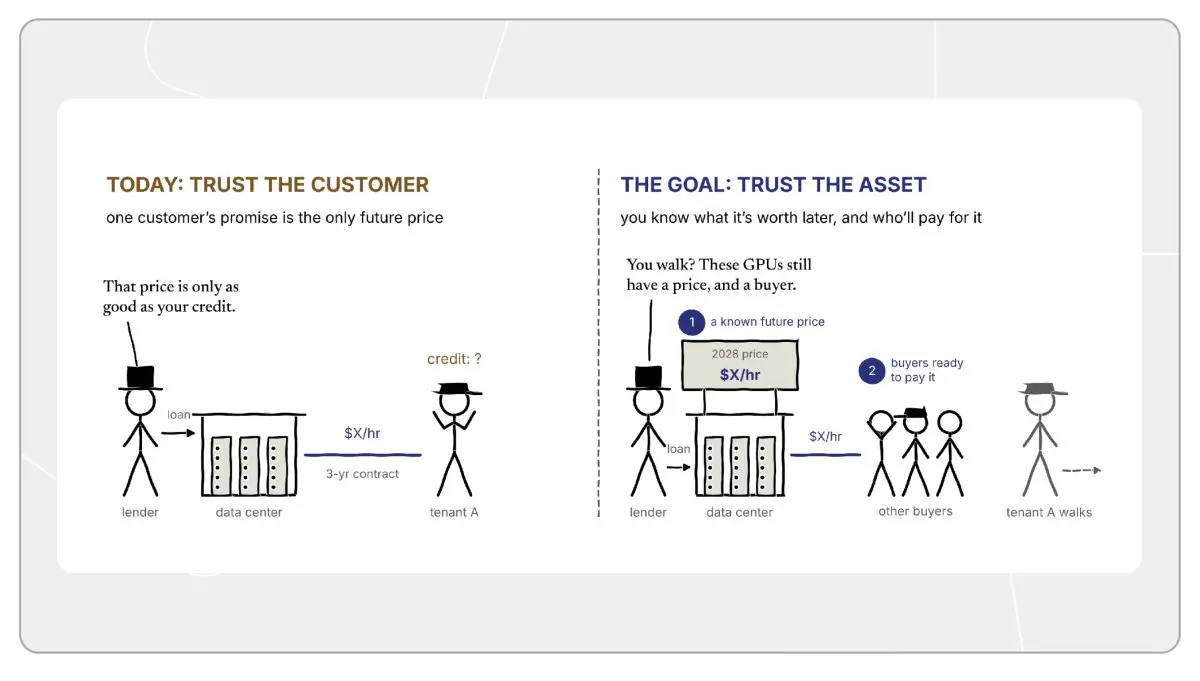
However, the reality is far more complicated than it appears. To trust the asset, lenders need a deep spot market to monetize computing power when tenants exit. However, a deep spot market first requires lenders to trust the asset, thus allowing GPUs to be built without "take-or-pay" contracts. This is a chicken-and-egg dilemma.
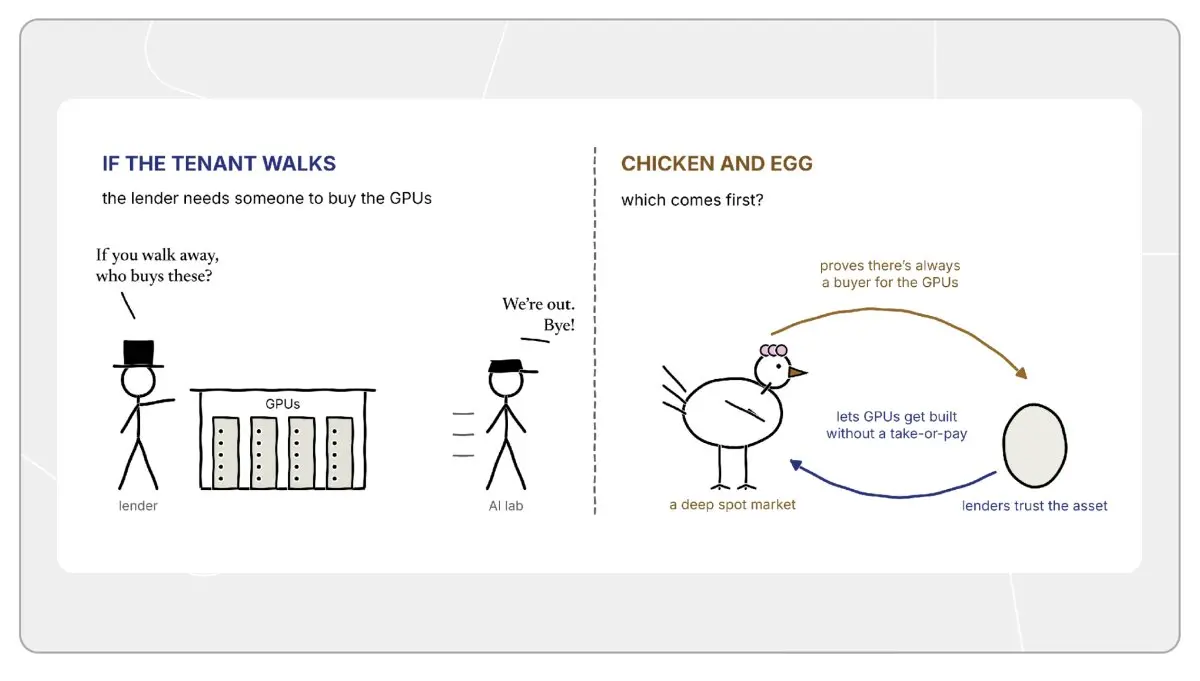
Moreover, even if we overcome the chicken-and-egg dilemma, it is uncertain whether a deep spot market can fully solve the problem because risks are often systemically correlated. If a tenant defaults, the market typically faces a deeper systemic crisis, meaning many people are also trying to sell GPUs they hold. Therefore, when lenders genuinely need buyers to take over, it is often precisely when buyers are the most scarce and prices are the weakest.
So where is the hope for a breakthrough? The GPU market is one of the most important in the world, with endless market demand and inefficient resource allocation: idle GPUs on one side, and buyers waiting in line on the other. In extreme situations, profit-seeking mechanisms will ultimately find ways to smooth out this inefficiency.
If you are also an entrepreneur pondering this problem, feel free to reach out for discussion. My Twitter DMs are always open: jonah_b.
Appendix
Top AI labs are exceptions. Because they simultaneously carry out model training and inference services, rather than just engaging in a single business, they can achieve much higher utilization rates. Additionally, as individual agents begin executing planned tasks, they can insert these jobs into any remaining idle time windows, further boosting utilization rates.
** I do not want readers to conclude that “the credit market is the only reason there is no liquid spot computing power market” after reading this article. The essence of this article is to clarify that the credit market structure is one of the core driving forces hindering the formation of spot markets.
* The explanation of “take-or-pay” in Part Two is a simplified version. In actual commercial operations, the construction of large computing power clusters involves more participants, and their credit commitments are often layered.
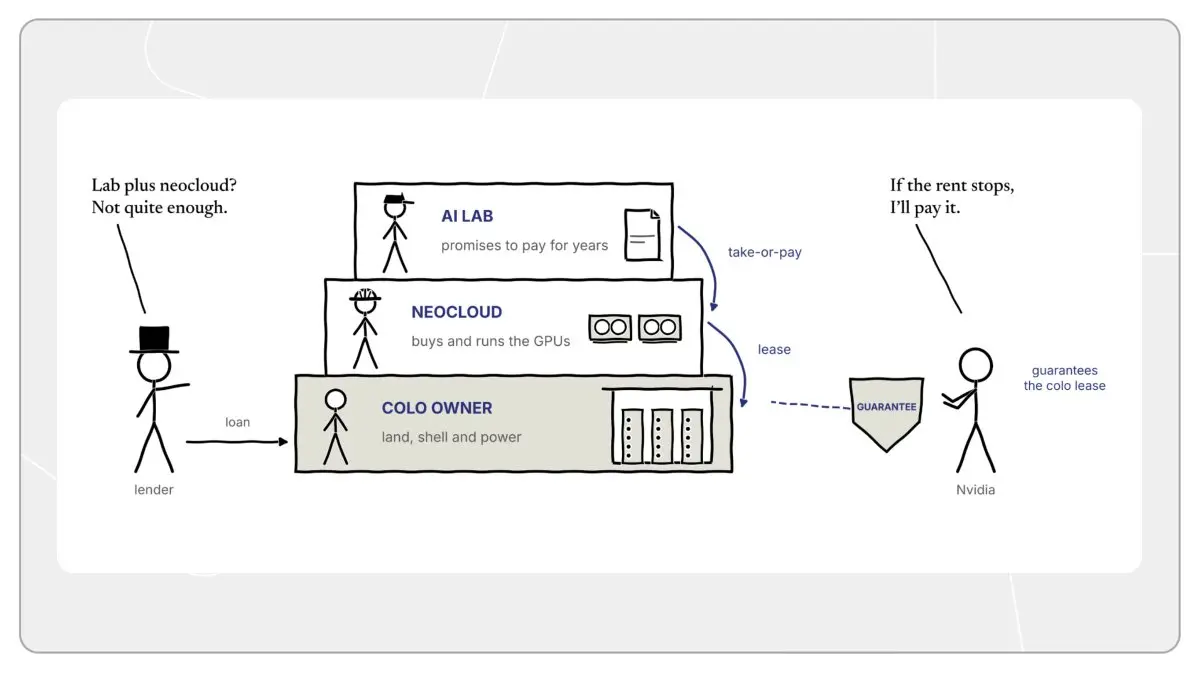
Property owner of the data center (bottom layer): Usually a real estate investor. Owns land, building structures, cooling facilities, rack shells, and electrical resources, rents out physical space, and borrows against this lease to construct.
New cloud service provider (middle layer): Procures and operates GPUs, pays rent to the hosting party, and borrows against contracts signed with AI labs to cover chip procurement costs.
AI lab (top layer): The ultimate buyer. Signs a “take-or-pay” agreement, committing to pay the new cloud service provider for several years.
The lending institutions of the hosting property owners price the risk based on the rental payments to be made by the new cloud service providers. New cloud service providers often have limited capital, and laboratory contracts typically last a few years, while hosting leases can last over ten years. Therefore, lenders may require the introduction of guarantors: that is, more creditworthy entities backing the lease. Nvidia has begun intervening and playing this role.
** Some contracts indeed allow transfers to new tenants; this operation is called assignment. Lenders may accept replacements with tenants having equivalent credit risk ratings but will not accept those with worse qualifications. Additionally, unless formally relieved of contractual obligations, even after a transfer, the original signatory may still carry residual liability. This mechanism fundamentally cannot support a truly programmatic, auto-matching order book system.
免责声明:本文章仅代表作者个人观点,不代表本平台的立场和观点。本文章仅供信息分享,不构成对任何人的任何投资建议。用户与作者之间的任何争议,与本平台无关。如网页中刊载的文章或图片涉及侵权,请提供相关的权利证明和身份证明发送邮件到support@aicoin.com,本平台相关工作人员将会进行核查。


