The US dollar index rose to a nearly 19-month high, erasing losses triggered by Trump's "liberation day" tariff policy. The persistently high inflation in the United States and the rising expectations of interest rate hikes from the Federal Reserve are driving global funds back to the dollar.
Written by: Yang Dapan, Jinshi Data
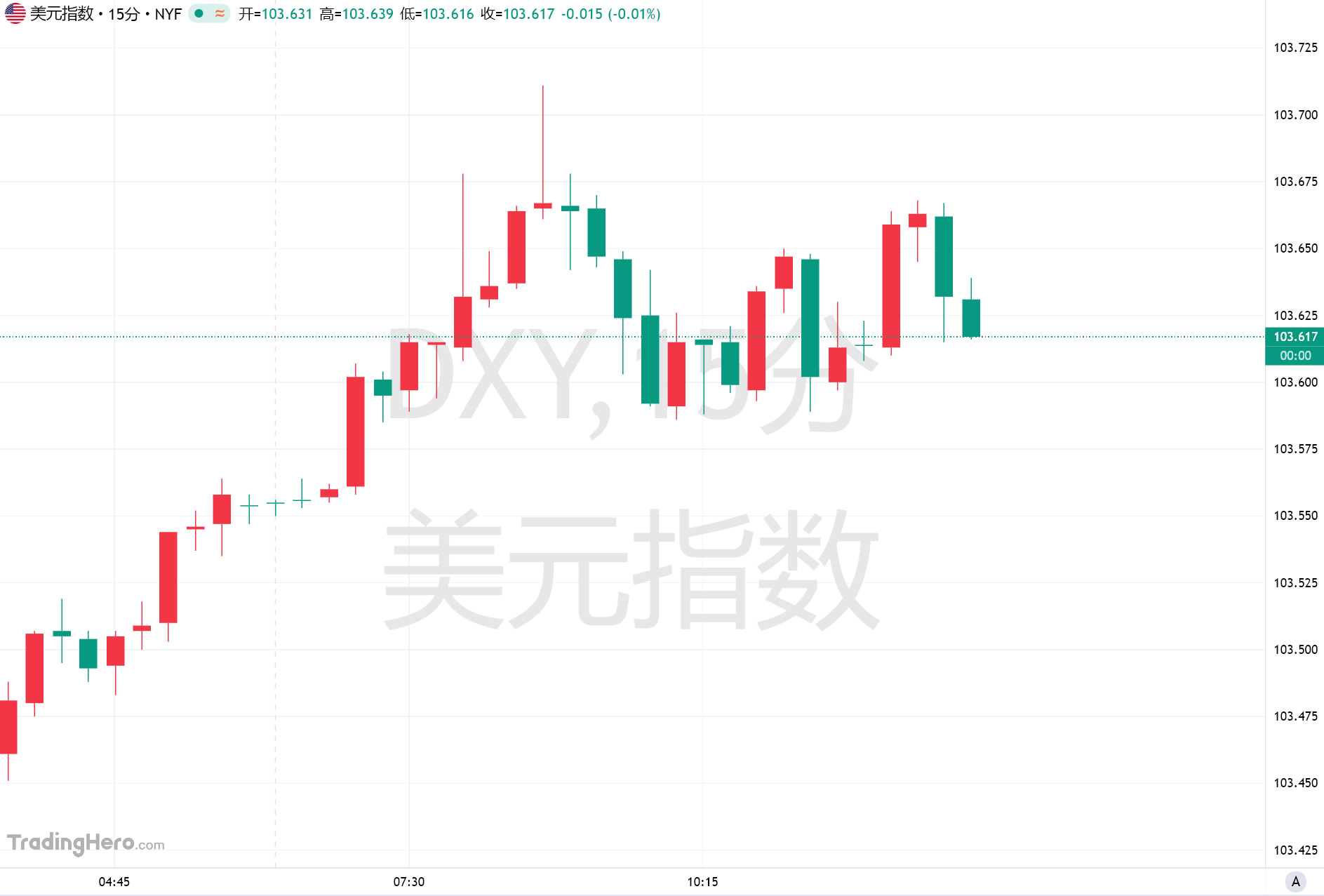
The dollar is completing a significant reversal. With ongoing inflationary pressures in the US and stronger expectations for further interest rate hikes by the Federal Reserve, the dollar index has recovered all the declines since April 2025, when Trump announced large-scale tariff measures. As of Tuesday, the dollar index has accumulated an increase of about 1.7% this month, returning to the level when US President Trump announced the so-called "liberation day" tariff policy on April 2 of last year.
On Wednesday, the dollar index hovered around 103.6, continuing its strong performance after reaching a 19-month high earlier. The euro against the dollar fell below the 1.10 mark on Monday for the first time since the tariff shock in April 2025.
Compared to last year, when the market worried that US trade policies would harm economic growth and sold off the dollar, the main drivers of the exchange rate have now shifted to the Federal Reserve's policy outlook and the relative resilience of the US economy.
Inflation exceeds expectations, Fed rate hike bets become the mainline for dollar rise
The core driving force behind the current rise of the dollar comes from the market's repricing of the US interest rate path. The Federal Reserve implemented its first interest rate hike since 2023 in September this year, raising the target range for the federal funds rate to 3.75%—4.00%.
Since then, US inflation data has consistently exceeded expectations, further reinforcing the market's judgment on tightened monetary policy. In October, the US Consumer Price Index (CPI) rose 0.4% month-on-month, higher than market expectations. Fed Governor Waller previously stated that if inflationary pressures persist, the Federal Reserve should consider a one-time rate hike of 50 basis points in December.
Interest rate futures data show that traders have largely priced in a scenario of a 25 basis point hike in December, and expect two more hikes of the same magnitude by 2027.
St. Louis Fed President Bullard further remarked on Tuesday that to control inflation in a timely manner, the US economy may need to undergo several rate hikes before the spring of 2027. He believes the current policy rate may be about 1 percentage point lower than what is needed to restore price stability.
As the market raises interest rate expectations, US Treasury yields have risen significantly, with the 10-year Treasury yield breaking through 5% again, and the US Treasury market experienced its worst sell-off in 18 months last week.
The higher yield on dollar assets also further enhances the dollar's appeal to international funds. ING strategist Francesco Pesole believes this is a round of dollar appreciation driven by macroeconomic factors. US inflation and the Federal Reserve's hawkish stance continue to push up rate expectations, while falling energy prices lead investors to question how long other central banks can continue to raise rates.
The US economy remains resilient, European debt risks amplify dollar advantages
In addition to monetary policy, the relatively strong performance of the US economy is also an important reason for the dollar's recovery. Despite pressure from the US-Iran war, trade policy uncertainty, and recent corrections in tech stocks, the US economy still exhibits a certain degree of resilience.
Recent data shows that the US GDP grew at an annual rate of 3.4% in the third quarter. Retail sales in October grew by 0.2% month-on-month, while core retail sales excluding autos, gasoline, building materials, and food services grew by 0.6%, exceeding market expectations.
This performance supports the market’s assessment that the US economy can still withstand relatively high interest rates.
Russell Investments' Global Solutions Strategy Head Van Luu stated that the hawkish Federal Reserve combined with the previous strong performance of the US stock market has created a favorable environment for the rise of the dollar.
Meanwhile, economic and political risks outside the US are also increasing. European investors remain concerned about the fiscal sustainability issues in France and Belgium, and rising debt pressures in some Eurozone countries are putting pressure on the euro and other major currencies.
Lee Hardman, Senior Foreign Exchange Analyst at Mitsubishi UFJ Financial Group (MUFG), pointed out that despite the adverse effects of falling energy prices and declining US tech stocks on the dollar, it has still shown strong resilience. Over the past month, the other nine major G10 currencies have all depreciated against the dollar.
Concerns about policy independence weaken, emerging markets face dual pressures
Another change in the dollar's trend is the market's reassessment of the Federal Reserve's independence. Previously, some investors were concerned that the Trump administration might pressure the Fed to maintain low interest rates, thereby undermining the appeal of dollar assets.
However, after the November midterm elections, the Democrats won control of both houses of Congress, and some institutions believe that the political pressure faced by the Federal Reserve may have lessened.
Barclays analysts noted on Tuesday that the midterm election results have reduced market concerns about interference with the Federal Reserve’s independence. However, the continuous appreciation of the dollar is also putting pressure on emerging markets.
A stronger dollar typically means increased repayment costs for debts denominated in dollars, which may exacerbate capital outflows from emerging markets and the risk of local currency depreciation.
Simon Dawe-Keanes, Strategy Head at Macro Hive, believes that some emerging market currencies are simultaneously facing the dual impact of a rising dollar and political uncertainty in their own countries.
For the future trend of the dollar, market focus will shift to the Federal Reserve's December policy meeting, as well as whether inflation and employment data in the coming months can continue to support rate hikes.
If US inflation slows down again or if continued adjustments in tech stocks weaken international capital inflows, the dollar may still face new downward pressure.
免责声明:本文章仅代表作者个人观点,不代表本平台的立场和观点。本文章仅供信息分享,不构成对任何人的任何投资建议。用户与作者之间的任何争议,与本平台无关。如网页中刊载的文章或图片涉及侵权,请提供相关的权利证明和身份证明发送邮件到support@aicoin.com,本平台相关工作人员将会进行核查。


