Anthropic's IPO failed to boost confidence in the AI sector, affected by pessimistic sentiments regarding the prospects of artificial intelligence trading. The Asia-Pacific market faced a sharp decline on Friday, with technology stocks being the most affected, and global indices are heading towards the longest streak of consecutive declines in nearly three years.
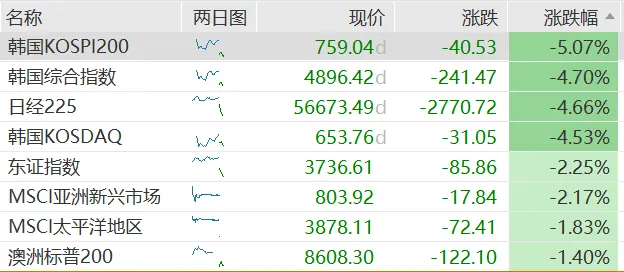
The MSCI Asia-Pacific stock index dropped 1.7%, closing lower for the seventh consecutive trading day, nearing its lowest closing position since April, dragging the MSCI global index towards its longest decline since September 2023. The Korea Composite Stock Price Index fell 4.7%, while Japan's Nikkei 225 index saw its decline widen to 4.6%. Japan's latest inflation data raised concerns about potential interest rate hikes by the central bank, further suppressing sentiment in technology stocks.
Anthropic saw a 17% increase on its first day of trading on Thursday but immediately retreated more than 5% in after-hours trading, falling below $92, below its first-day low. Several strategists on Wall Street pointed out that this sentiment reflects deep-seated doubts in the market regarding the commercial prospects of AI—investors are re-evaluating whether hefty capital investments can be converted into sustainable business returns.
Meanwhile, commodities and assets like gold also faced sell-offs, while U.S. Treasuries strengthened due to inflows of safe-haven funds.
Asia-Pacific Tech Stocks Face Concentrated Sell-off, Korea and Japan Lead Declines
The Asia-Pacific technology sector faced significant selling pressure.
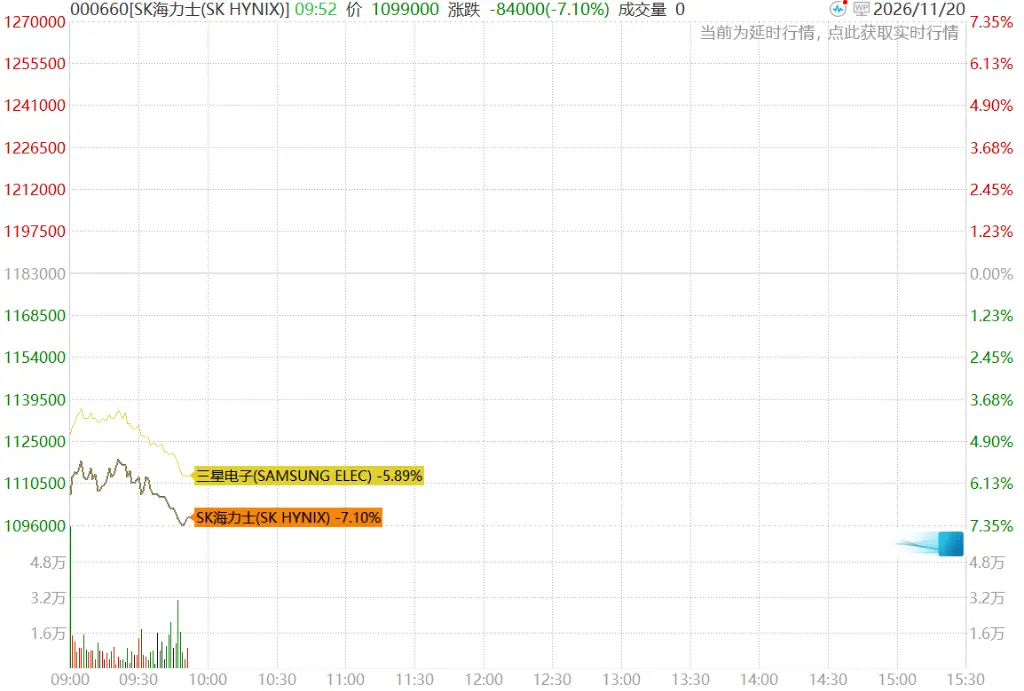
South Korea's SK Hynix and Samsung Electronics plunged 7% and 6%, respectively, dragging down the Korean Composite index by 4.7%, while the Kosdaq index, which is heavily weighted with small-cap tech stocks, fell 4.5%.
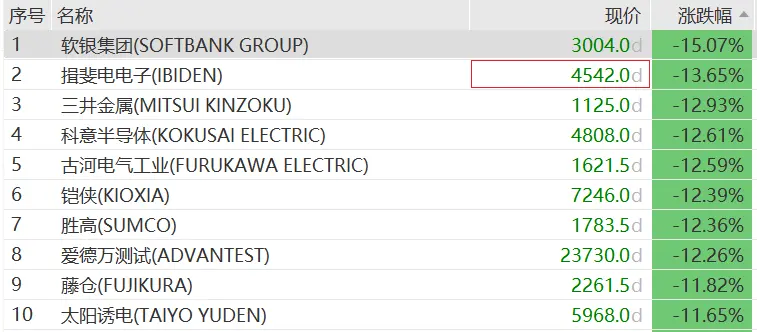
The Japanese stock market saw an even sharper decline. The Nikkei 225 index fell 4.6%, SoftBank Group plummeted 15%, semiconductor testing equipment manufacturer Advantest dropped more than 9%, and Tokyo Electron slid 7%. The Australian S&P/ASX 200 index fell 1.3%.
Saxo Markets' Chief Investment Strategist Charu Chanana stated:
Investors are questioning whether cutting-edge AI is becoming an incredibly successful technology while also becoming an increasingly challenging business to achieve substantial returns. Reports of Apple developing its own AI agent only further reinforce this concern.
KCM Trade's Chief Market Analyst Tim Waterer also noted:
The initial excitement surrounding Anthropic's IPO is gradually fading, and the strong first-day performance has not translated into broader enthusiasm in the AI sector.
Japan's core CPI in October rose 2.2% year-on-year, reaching a new high since 2026, up from last month's 2.1%, but slightly below the 2.3% expected by economists in a Reuters survey. Energy prices surged sharply after government subsidies expired in September, with energy prices rising 2.2% in October compared to a decline of 0.6% in September, and natural gas prices jumped from a monthly increase of 2.4% to 5.8%.
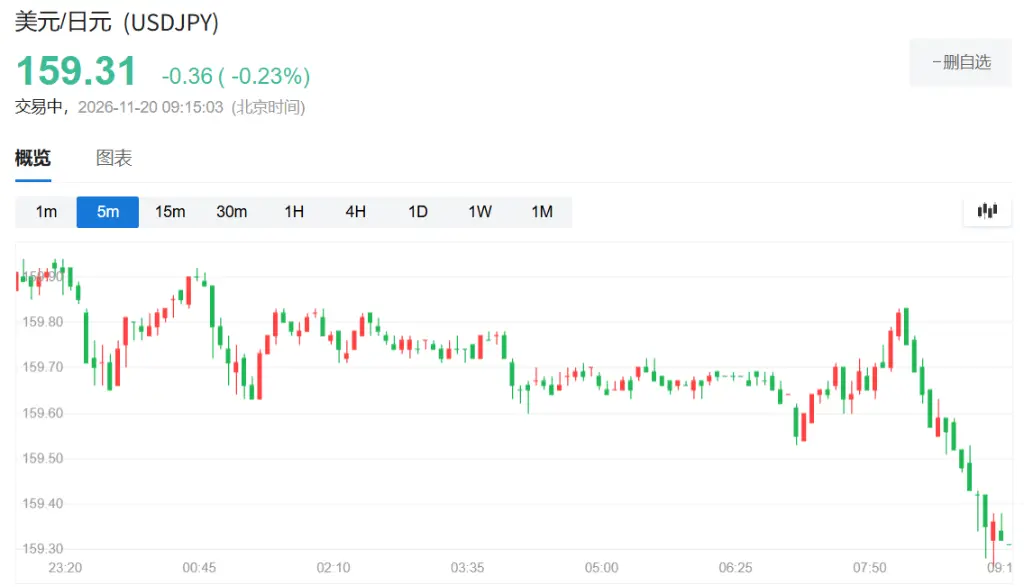
According to LSEG data, the market currently estimates the probability of a Bank of Japan rate hike in December has risen to 72%. The rate hike expectations led to a slight strengthening of the yen by 0.23%, with the dollar trading at 159.31 yen, and the yield on Japan's 10-year government bond fell by 2 basis points to 2.800%.
Commodities and Gold Under Pressure, U.S. Treasuries Supported by Safe-Haven Buying
The deterioration of global risk sentiment has negatively affected commodities.
The Bloomberg Commodity Index fell to its lowest point since July. Spot gold fell about 1% on Friday, trading around $3,590 per ounce, with a cumulative decline of over 7% this week, approaching its lowest level since September 2025.
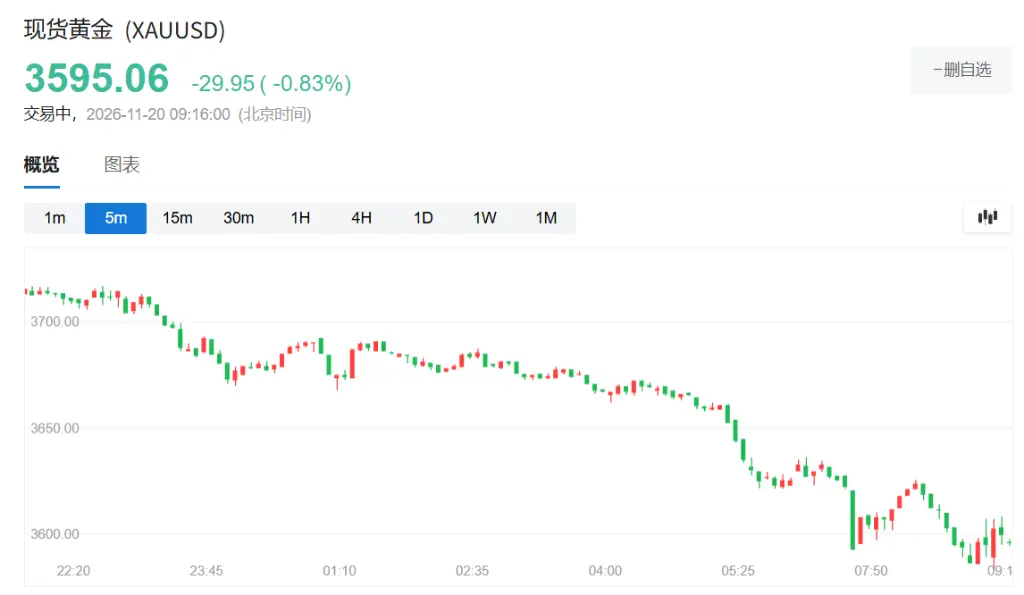
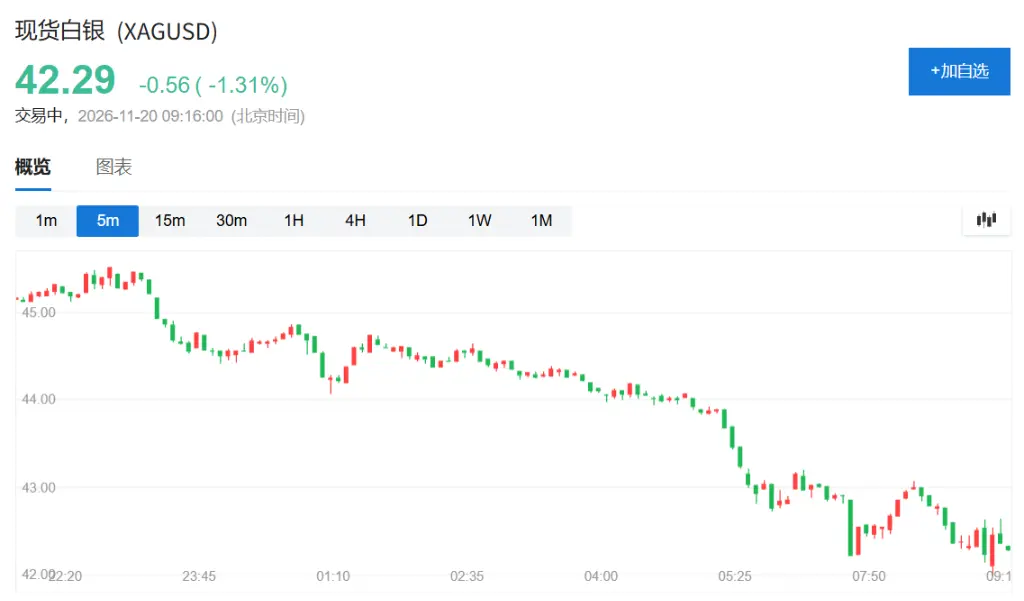
The decline in gold prices was partly due to the sharp drop in AI stocks prompting investors to sell gold to cover losses, while hawkish statements from Federal Reserve officials also dampened the appeal of the safe-haven metal. Silver also fell another 1.3%, cumulatively down 13% for the week.
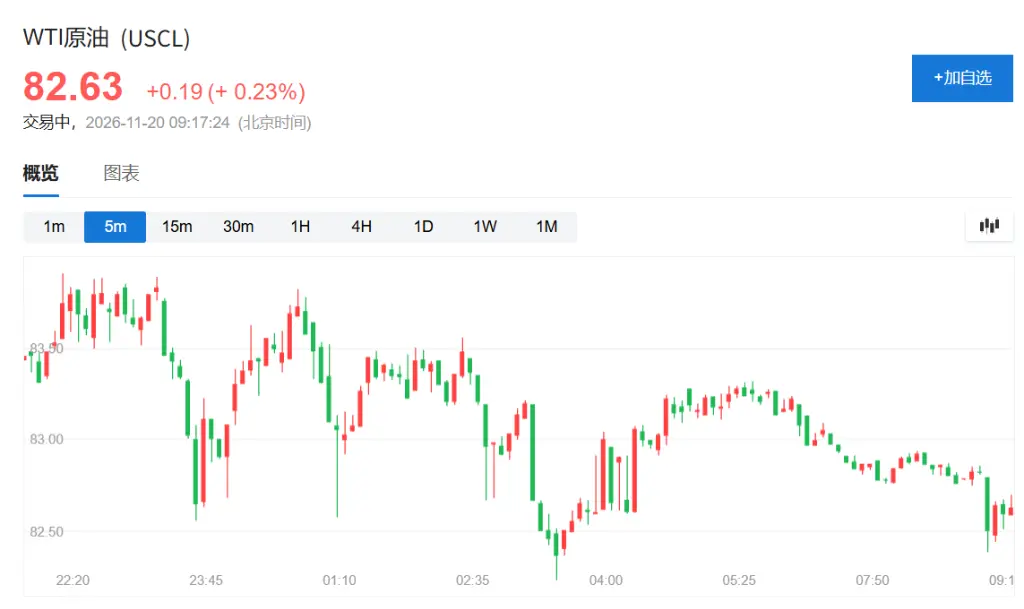
On Friday during the Asia-Pacific session, WTI crude oil slightly rebounded by 0.23%, with a cumulative decline of about 5% this week, hovering around $83 per barrel; Brent crude settled near $92 per barrel. The uncertainty in the Middle East has caused oil prices to fluctuate more than $2 during the previous trading session.
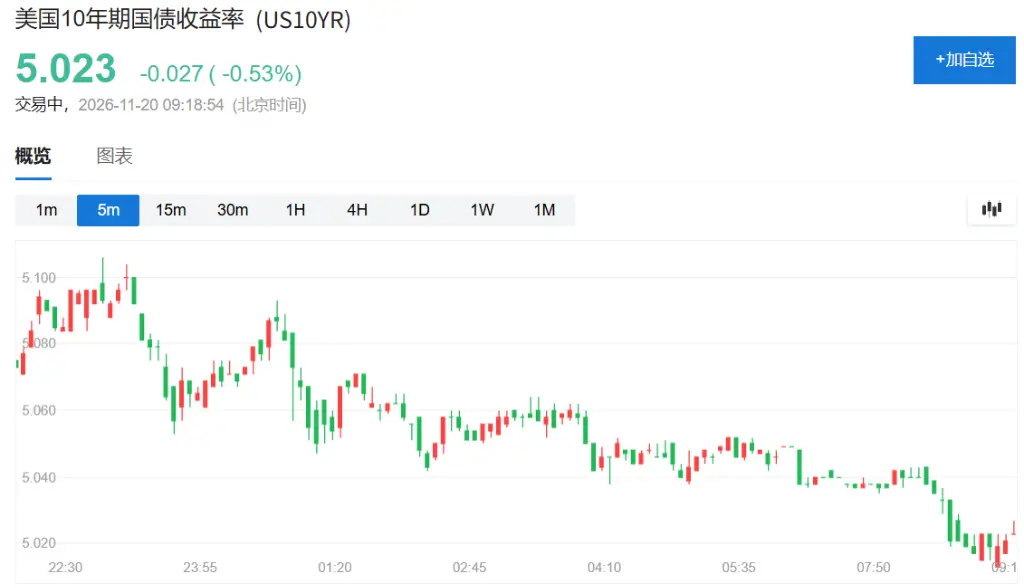
Regarding U.S. Treasuries, the yield on the 10-year U.S. Treasury bond fell by 2.7 basis points to 5.023% on Friday, but it has been approaching the longest record of remaining above 5% for a single year since 2007.
Recent comments from Federal Reserve officials have consistently released hawkish signals, with Chicago Federal Reserve President Austan Goolsbee stating on Thursday that he will consider all options at next month’s policy meeting, including the possibility of a larger rate hike. He said:
We have been experiencing persistently high inflation that is concerning for several months, and there has been almost no improvement in areas where we expected progress, so to me, all options are on the table.
Traders currently expect the Federal Reserve to raise rates in December and to hike rates two more times in 2027.
免责声明:本文章仅代表作者个人观点,不代表本平台的立场和观点。本文章仅供信息分享,不构成对任何人的任何投资建议。用户与作者之间的任何争议,与本平台无关。如网页中刊载的文章或图片涉及侵权,请提供相关的权利证明和身份证明发送邮件到support@aicoin.com,本平台相关工作人员将会进行核查。


