Author: Chen Xiaomeng
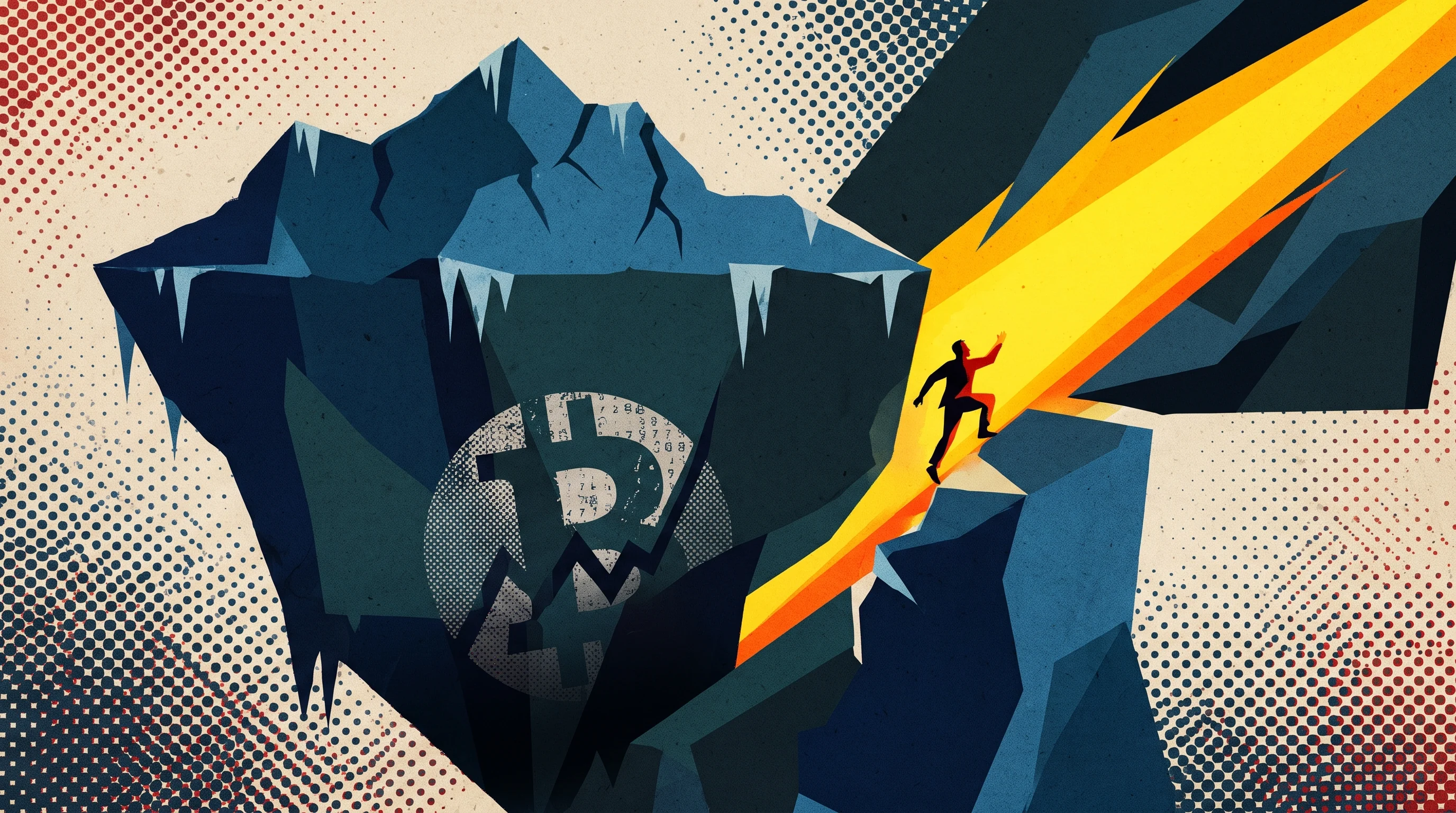
During each bull market, 70% of impressive projects were launched during the bear market, and only 30% are those that are unexpected or suddenly appeared.
1. Last round's unfinished products are the next round's super leaders
The crypto industry rarely sees entirely new financial demands emerge; the vast majority of truly significant projects are just reconfigurations of previous round's discredited, poorly experienced, or turned purely speculative old propositions with a new underlying architecture.
Failures in 2017 → Success in 2021
- In 2017, on-chain order book exchanges were laggy and lacked depth, leading to near total collapse during the bear market; by 2020 to 2021, Uniswap abandoned order books in favor of automated market makers, directly igniting the DeFi wave.
- The "Ethereum killers" financed through white papers back in 2017 have mostly disappeared; by 2021, the projects that truly absorbed high concurrency overflow were Solana and Avalanche, which had been building during the bear market.
- After CryptoKitties blocked the mainnet in late 2017 and rapidly went to zero, the entire network ridiculed non-fungible tokens as meaningless; four years later, the same proposition grew into the tens of billions frenzy involving OpenSea, Bored Apes, and Axie Infinity.
Failures in 2021 → Success in 2025
- In 2021, the first generation on-chain contract exchanges were far less user-friendly than centralized platforms; by 2024 to 2025, Hyperliquid relied on self-developed high-performance chains and non-venture capital token structures to achieve a direct $10 billion valuation.
- Algorithmic stablecoins from 2021 crashed due to Ponzi-like printing, leaving the market shadowed over "decentralized yield-generating dollars"; by 2024, Ethena reconfigured them into a structure that combines spot long with perpetual short to earn funding rates, quickly surpassing $10 billion.
- The fixed-rate and principal-interest separation sector was so neglected in 2021 that it was virtually abandoned; by 2024, Pendle completely turned around in the yield-bearing assets and point cycles.
- In 2021, the old-school prediction market Augur had virtually no users; four years later, Polymarket broke into the mainstream in election year with stablecoin settlements and minimal interactions.
Looking ahead to 2026 to 2029 along this trajectory, the answer is quite apparent: the three directions that are currently being highly touted yet will ultimately become unfinished products or air speculation — AI intelligent economy, RWA and tokenized US stock that are only at the static on-chain stage, and on-chain asset issuance mechanisms ruined by memes, are likely to be the breeding grounds for the next round of new architectures that will yield tenfold or even hundredfold leaders.
2. The richest meat grows in the deep waters of the bear market
Arranging the new stars from the last two rounds that broke into the top thirty by their launch time reveals three distinctly different winning paths:
- Survivors from the tail end of the last bull market to the beginning of the bear market include typical representatives like Aave, Chainlink, Uniswap, Solana, launched from 2017 to 2018, as well as Pendle, Morpho, and Polymarket launched from 2021 to 2022. Their commonality lies in being severely impacted during the bear market but not clinging to old models, instead achieving thorough mechanism reconstruction — for example, Aave transforming from peer-to-peer lending to liquidity pools, and Pendle transitioning from regular pools to a focus on yield-bearing assets.
- New species emerging in the late bear market include typical representatives like Curve, Yearn from 2019 to 2020, and Hyperliquid, Ethena, EigenLayer, and Pump that began during the deep bear of 2023. These projects are the real underdogs of each round: they target the pain points that just exploded in the previous round, having no historical high-stake locked positions, and possess a clean token structure. According to the timeline, the end of 2026 to the first half of 2027 is just the next round's concentration of launches, yet to be priced by the secondary market, forming a golden window.
- Emotional amplifiers that explode during the main upward wave of the bull market (the only truly unknown part) include notable representatives like the NFT craze of 2021, later Ordi, and the one-click token issuance in 2024 to 2025. This part essentially stems from the emotional products that arise post liquidity flooding, which cannot be predicted during the bear market and can only be identified based on intuition once the right side bull market starts.
3. 90% of old stars lag behind
Compared to the last two rounds, the market's pricing metric for projects has been tightening, never reverting to old paths:
Last round's unfinished products → New champions:
(1) 2018-2021 on-chain order books → Uniswap; first-generation public chains → Solana; CryptoKitties → OpenSea
(2) 2022-2025 early on-chain contracts → Hyperliquid; Ponzi-like stability → Ethena; Augur → Polymarket
New species from deep bear market
(1) 2018-2021 Curve, Yearn, FTX
(2) 2022-2025 Hyperliquid, Ethena, EigenLayer, Pump
Lagging old-timers
(1) 2018-2021 Most public chains and payment coins
(2) 2022-2025 Most chain games, metaverses, and high-inflation old DeFi
This comparison chart reveals a painfully harsh elimination line: 90% of last round's star tokens will not even reach their previous highs in the next round. The very few old faces that can transcend more than two rounds are either like BTC, Ethereum, and Aave, which have become the non-withdrawable underlying liquidity standards, or like Solana and Pendle, which have undergone transformations in the bear market.
4. Who still remains at the table?
Dividing the crypto table at the end of 2026, which assets can traverse cycles, and which are merely cannon fodder, the outline is already quite clear:
Aave, Pendle, Morpho, Uniswap, Polymarket; the DeFi head effect intensifies, with leading protocols monopolizing nearly 47% of the industry's protocol revenue, while cross-chain protocols and compliant yield sources continue to absorb traditional institutions' incremental assets.
Hyperliquid's HIP-3 all-asset perpetual market, Kalshi and prediction markets as secondary tools, new types of DeFi yield vaults built around tokenized US stocks and high-yield preferred stocks, and the AI intelligent payment settlement layer based on x402 protocol.
High FDV low circulation air infrastructure chains, re-staking periphery protocols relying solely on points with no retention, AI chat shell coins that merely ride the wave, and meme-driven one-click token issuance schemes with no competitive moat cannot survive.
5. Projects rising in the bear market
This round, you will notice an abnormal phenomenon distinct from 2018 and 2022: the previous bear markets involved price crashes, business shutdowns, and user exodus, while 2026 is witnessing sharp divergences between price and fundamentals.
On the secondary market side, the total crypto market value has nearly halved from $4.3 trillion to around $2.2 trillion, with altcoins generally losing 70% to 95%. However, the opposite is true for the first half of 2026, where the global number of holders increased by 4.5% to 777 million, and the global crypto economy's total scale maintained at $9.4 trillion, only slightly down by 1.6% year-on-year. Prices have collapsed into a bear market, but the four directions that are actually on track to grow into the next big players are showing visibly explosive data in this bear market.
(1) Stock perpetual contracts and all-asset on-chain exchanges
In the last round, on-chain contracts were focused only on crypto assets for stock exchanges; the biggest surprise for 2026 is bringing traditional US stocks and commodities onto on-chain perpetual contracts. In August 2026, monthly trading volume for stock perpetual contracts soared to $665.4 billion, a staggering 56-fold increase from the beginning of the year; by September, the share of on-chain perpetual contract exchanges in global perpetual trading volume had risen to 12.33%, whereas this number was only 0.11% at the start of 2023.
In this wave of contrarian growth, Hyperliquid has captured the largest share, processing $688.7 billion in a single quarter and holding about 58% of on-chain open contracts, with stock and commodity contracts launched on HIP-3 becoming the core engine during the bear market. A more crucial signal is that five compliant exchanges, including Coinbase and Kalshi, filed with U.S. regulators in September to prepare to introduce stock perpetual contracts to U.S. domestic users.
(2) Prediction markets completely transitioned from election fireworks to consumer-grade underdogs
Many initially thought that after the 2024 election, prediction markets would fall completely silent; instead, in 2026, they have become the fastest-growing breakout track during the bear market. With over $50 billion in trading frenzy generated in the first month of the 2026 World Cup, the total trading volume for prediction markets in September surged by 1079% year-on-year, approaching $20.1 billion.
The data from the leading duo is striking: Kalshi set a record of $60.7 billion in single-month contract value in September, exceeding $303.9 billion in total since the beginning of the year; Polymarket also recorded $4.7 billion in a single month and continued to expand its share in U.S. compliant exchanges. During a bear market characterized by BTC's decline and frequent spikes in high-leverage contracts, the structure of binary contracts in prediction markets has attracted a large number of traders tired of being liquidated.
(3) RWA 2.0: From static U.S. Treasury to tokenized U.S. stocks and DeFi combinable yields
During this round of bear market, nearly all narratives that are purely on-chain have shrunk, while only RWA has doubled against the trend. As of mid-October 2026, the on-chain distribution value of RWA without stablecoins has risen from approximately $21.5 billion at the beginning of the year to $39.18 billion, with over 5.26 million holding addresses. Among them, the size of tokenized U.S. Treasury funds reached $14.71 billion, led by BlackRock's BUIDL, Ondo's USDY and Circle's USYC.
A true qualitative change is occurring at the level of tokenized stocks and yield Lego. As of mid-October, the on-chain scale for tokenized stocks and ETFs has reached $3.28 billion, with Binance's bStocks leading at $930 million, and Securitize officially launching tokenized U.S. stock trading in October. The next high-flexibility DeFi opportunities will no longer be about issuing a static on-chain asset, but rather constructing yield-bearing Lego that can connect with Pendle, Morpho, and Curve around high-yield preferred stocks like U.S. stocks and Treasury bonds, thoroughly transforming traditional Wall Street assets into combinable yield-bearing Lego on-chain.
(4) AI intelligences clear air coins, shifting towards payment protocols and real computing power
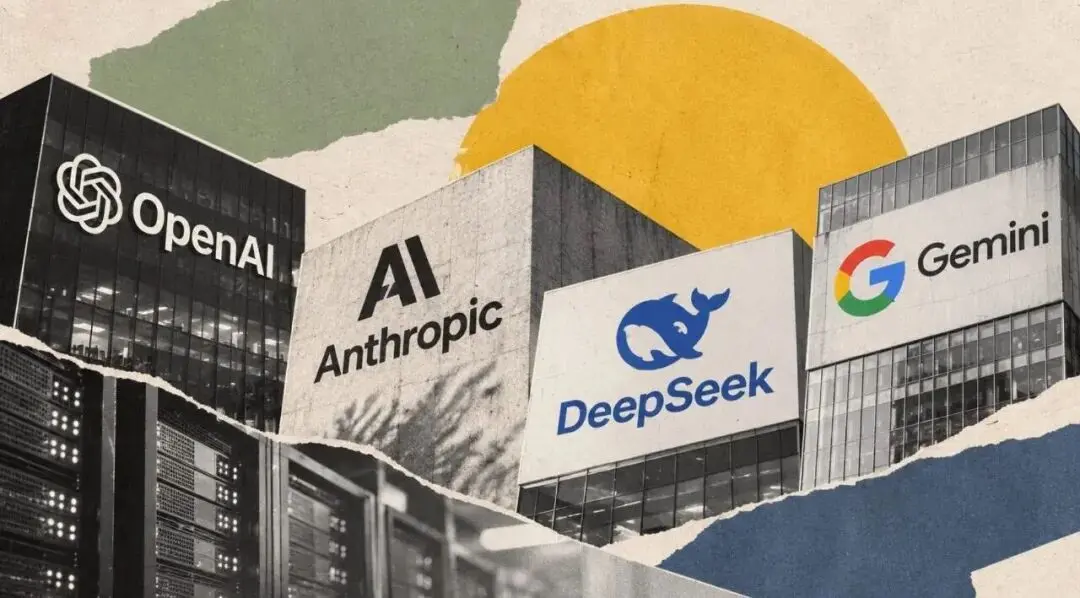
In the first quarter of 2026, the previously rampant AI intelligent concept coins faced severe liquidation, with those named AI but merely idly chatting dropping 80% to 90% in value.
- Machine micro-payment standard: The x402 protocol, initiated by Coinbase and handed over to the Linux Foundation for management in April 2026, specifically addresses the issue of AI intelligences autonomously paying to call interfaces. By April, it had processed a cumulative 165 million transactions covering 69,000 active intelligences, with Cloudflare officially following suit to initiate internal testing in the second half of the year.
- Practical computing power network: The DePIN track completely bids farewell to storytelling; at the beginning of 2026, the total market valuation reversed and grew by 25% to $9.4 billion, with leading networks generating approximately $150 million in on-chain revenue per month, with competitive focus directly contrasting AWS’s inference costs and computing power utilization. For example, $PEARL and Flop
6. How do we proceed?
In the last two bear markets, as long as you accurately judged whether DeFi or high-performance public chains were the next big direction, you could reap substantial rewards by blindly buying leading tokens. However, the 2026 market introduces a trap not present in the previous rounds: infrastructure development no longer waits for BTC to hit $200,000, but many infrastructure dividends may not necessarily be distributed to secondary market tokens.
BlackRock, Goldman Sachs and JPMorgan are promoting tokenization alliances in the UK, Franklin Templeton is issuing on-chain funds, Hyundai is using USDT for settlements, and Cloudflare is connecting to x402 — these giants are upgrading financial pipelines, with many businesses running directly on permissioned chains or pure equity structures. Even if these businesses triple by 2027, the vast majority of air cure tokens in the market will still not see a penny.
Therefore, viewing the chip selection of this round from the perspective of the end of 2026, the actions are actually narrower and clearer than in the previous two rounds: the direction of the track is already laid out — all-asset on-chain derivatives, prediction markets, combinable RWA yield Lego, and AI intelligent payment and computing foundations — firmly focus on those with clean token structures and business revenues that can directly convert to token buybacks or real on-chain dividends, and that is enough.
Specifics of the bull market can be discussed when the bull market comes again~
Don't wait for the wind, the wind has already come
免责声明:本文章仅代表作者个人观点,不代表本平台的立场和观点。本文章仅供信息分享,不构成对任何人的任何投资建议。用户与作者之间的任何争议,与本平台无关。如网页中刊载的文章或图片涉及侵权,请提供相关的权利证明和身份证明发送邮件到support@aicoin.com,本平台相关工作人员将会进行核查。