Article Author: Lesley, ChainCatcher
Prologue: The Birth of a Coordinate
On January 5, 2026, at 4 PM (Beijing time), what seemed like an ordinary moment marked the beginning of a new phase in the most dramatic power transition in cryptocurrency history.
On this day, Binance's global services were officially taken over by three licensed entities in the Abu Dhabi Global Market (ADGM): Nest Exchange Services Limited was responsible for operating the trading platform, Nest Clearing and Custody Limited handled clearing and custody, and Nest Trading Limited provided over-the-counter trading services. This global giant, which once claimed to have "no headquarters," finally established a clear legal domicile.
It had been exactly one month since He Yi was appointed as co-CEO.
In this month, Binance experienced: an employee being suspended and referred for prosecution for using insider information to post content for personal gain on social media; a $100,000 reward for whistleblowers being distributed equally among five informants; He Yi publicly admitting on multiple occasions that Binance had "poor token listings, no wealth effect," "products were not good enough," "the gap in wallet products was obvious," "the organization was too large and rigid," and "issues with talent iteration"…
From a chaotic era dominated by one person's will to today's modern corporate structure with three entities, two co-CEOs, and a seven-member board, Binance took eight years.
But building the structure is just the beginning. The real question is: when individual will can no longer cover the whole, and the system has yet to operate coherently, what is this global behemoth with 300 million registered users experiencing?
The Gold and Shadows of the Centralized Era
In the summer of 2017, in an office in Shanghai, Zhao Changpeng (CZ) and He Yi began building Binance. At that time, no one could have imagined that this makeshift team would become the largest cryptocurrency exchange by trading volume within 180 days.
The early success of Binance was built on extreme efficiency—CZ's will was the company's direction, and the people below were responsible for execution. There was no board of directors, no lengthy approval processes, and not even a fixed headquarters. The company moved quickly like a nomadic tribe, strategically navigating regulatory gaps: from China to Japan, then to Malta, always maintaining strategic fluidity.
This model created miracles. By the end of 2021, with the surge in cryptocurrencies like Bitcoin, CZ became the richest Chinese person with a net worth of $94.1 billion, briefly ranking among the world's top ten wealthiest individuals. Binance processed an average of $65 billion in transactions daily, capturing up to 70% of the market share.
But the other side of the miracle was the accumulation of systemic risks.
In the old era under CZ's rule, in pursuit of extreme user growth, management often ignored compliance department warnings about "high risks," even demanding to "cancel KYC" to ensure users could start trading within ten minutes of registration. The marketing and growth teams ran rampant, and the compliance department's status was low, often seen as an obstacle rather than a protector.
A Reuters investigation revealed the cost of this culture: Binance admitted to prioritizing growth and profit over compliance with U.S. laws. Court documents showed that He Yi had participated in planning strategies to evade regulation. The internal decision-making logic of the company was simple and crude—if it could bring users and trading volume, everything else was negotiable.
This model created astonishing growth in the short term but buried significant hidden dangers for the future.
In Binance's power map, "listing rights" were the most tempting piece of meat, concerning immediately realizable wealth. As the largest exchange globally, Binance's user base and liquidity, along with its credit endorsement of projects, created a significant wealth effect; "listing means takeoff" was Binance's core weapon to outpace competitors in the chaotic era.
Because of this, listing rights were highly concentrated and strongly personalized in the old structure, with their processes and systems reflecting the current goals and values of the exchange or founding team.
During the phase of reckless expansion and exploration, the early Binance angel system played a subtle role. Nominally a community promotion channel, due to its short reporting chain directly reaching the core decision-makers, it effectively became a "fast track" for certain projects to enter the spotlight. Some people made good use of this channel, which is why it was sometimes difficult for outsiders to see the unified logic behind the listing rhythm—because the logic itself was diverse and even competitive.
Of course, Binance also established its own listing system early on, which is the foundation of its current listing framework. According to public information, BitWell co-founder Jeff Young was responsible for listing-related business at Binance, while Buidlpad founder Erick Zhang was more deeply involved in building Binance's listing standards and processes.
The uniqueness of this group of "system builders" lies in the fact that they not only understood the rules but also defined them. When they left Binance and turned into project incubators or investors, this understanding did not reset—it became a scarce resource.
From public results, it appears that after leaving Binance, the founders of BitWell had several projects associated with or recommended by them successfully listed on Binance's spot market; similarly, four projects incubated by Buidlpad completed their listing on Binance, claiming a 100% "Binance selection rate." This above-average "hit rate" is hard to explain solely by project quality. A more reasonable understanding is: when you have personally written the scoring criteria, you naturally know how to achieve a high score.
Additionally, Binance Labs is also a representative of this. Although Binance repeatedly emphasizes that there is a "firewall" between departments, historical data and market consensus indicate that obtaining investment from Binance Labs is one of the strongest "passes" for listing.
According to insiders, the early listing framework was pushed for formulation by Erica Zhang, Jeff Yang, and others. The early Labs team also had a voice in listings, but later there were significant personnel changes, with several core members leaving around June 2022, including head Bill Qian.
Binance has never publicly explained the reasons for this concentrated departure, but the coincidence in the timeline—the overall replacement of the Loss team (now the Yield security team) and the subsequent tightening of the listing process—suggests that this was not a simple strategic adjustment.
Rumors within the industry involve internal governance issues, but due to the lack of official confirmation, no qualitative assessment will be made here. What can be confirmed is that after this personnel upheaval, Binance clearly strengthened its internal control over the listing decision chain.
It is noteworthy that even during the most centralized period of power, listing decisions were not solely determined by one person. Insiders familiar with the internal processes revealed that major listing decisions required signatures from multiple key positions, meaning that even the highest management had to seek balance within an established approval system.
After experiencing the aforementioned growing pains, Binance systematically restructured its listing power structure. Historically, there had been a centralized Global Head of Product (such as Mayur Kamat), but since Kamat's departure in 2023, this role has been split and reorganized. The current model is: the decision-making power for spot listings has been divided among product managers and trading operations heads along multiple parallel lines, no longer centralized in a single department or individual. The cost of this design is a decrease in decision-making efficiency, but the benefits are evident—by increasing "veto nodes," any attempts to influence outcomes through a single relationship or channel will face higher coordination costs.
The evolution of Binance's listing system is essentially a history of transformation from personal governance dividends to institutional defenses. However, institutional transformation never means the end of problems.
On February 2025, CZ, who had stepped down as CEO, publicly stated that Binance's listing process "had some issues" (a bit broken); in the same year, a leak involving the listing information of a certain MEME coin was exposed, once again revealing the fragility of internal information control. These events indicate that even after multiple rounds of power structure adjustments, the inertia of old gray areas remains stubborn, and the soil for loopholes and corruption has not been completely eradicated.
On December 17, 2025, Binance issued a stern announcement, officially releasing a complete listing framework covering Alpha, futures, and spot, explicitly prohibiting any third-party intermediaries from participating, and published a blacklist naming individuals and institutions such as BitABC, Central Research, and Andrew Lee, while also establishing a reward of up to $5 million for whistleblowers.
This announcement is both a milestone in institutionalization and a footnote to the long-standing issues. When Binance needs to emphasize in black and white that "applications can only be made through official channels" and offers substantial rewards to combat brokers, it precisely indicates that the previous "distributed checks and balances" did not completely close the gaps of personal governance. It is noteworthy that Binance did not designate a "single person in charge of global spot business" in its external announcement. The company dispersed the decision-making power of the spot product line among several product managers and trading operations heads.
The $4.3 Billion Turning Point
On November 21, 2023, in a federal court in Seattle, USA.
47-year-old CZ admitted that he failed to maintain an effective anti-money laundering program and resigned as CEO. At the same time, Binance agreed to pay $4.3 billion to U.S. authorities to resolve criminal charges—this is the largest corporate settlement agreement in U.S. history involving executive criminal charges.
According to the terms of the plea agreement, CZ is prohibited from participating in Binance's daily operational management and cannot engage in any activities related to Binance for three years. However, the agreement does not prohibit him from retaining ownership shares or from "providing advice."
This is a subtle way of exiting power: CZ is no longer the CEO, but he remains the largest shareholder; he no longer directs operations, but he controls investments; he no longer appears internally, but his name is always associated with Binance.
On that day, Richard Teng, who had long served as a senior executive at Binance, was announced as the new CEO. An exchange facing regulatory pressure needed someone who could engage with global regulators to stand in the spotlight. He is one of the few executives within Binance with an "insider" background.
Before joining Binance, Richard Teng held key positions at the Monetary Authority of Singapore and the Singapore Exchange (SGX). In 2015, he participated in the establishment of the FSRA (Financial Services Regulatory Authority) and helped ADGM become one of the first jurisdictions in the world to introduce a cryptocurrency regulatory framework. This composite background also allows him to navigate both traditional finance and cryptocurrency fields.
The $4.3 billion fine changed not only CZ's trajectory but also began to transform the large ship that is Binance.
In the settlement agreement reached with U.S. regulators, the CFTC (Commodity Futures Trading Commission) explicitly required Binance to establish a corporate governance structure that includes an independent board of directors. Additionally, the U.S. Department of Justice and the Treasury Department required Binance to accept external compliance oversight—Forensic Risk Alliance and Sullivan & Cromwell were appointed as independent overseers, who will continuously review Binance's operations over the next three years.
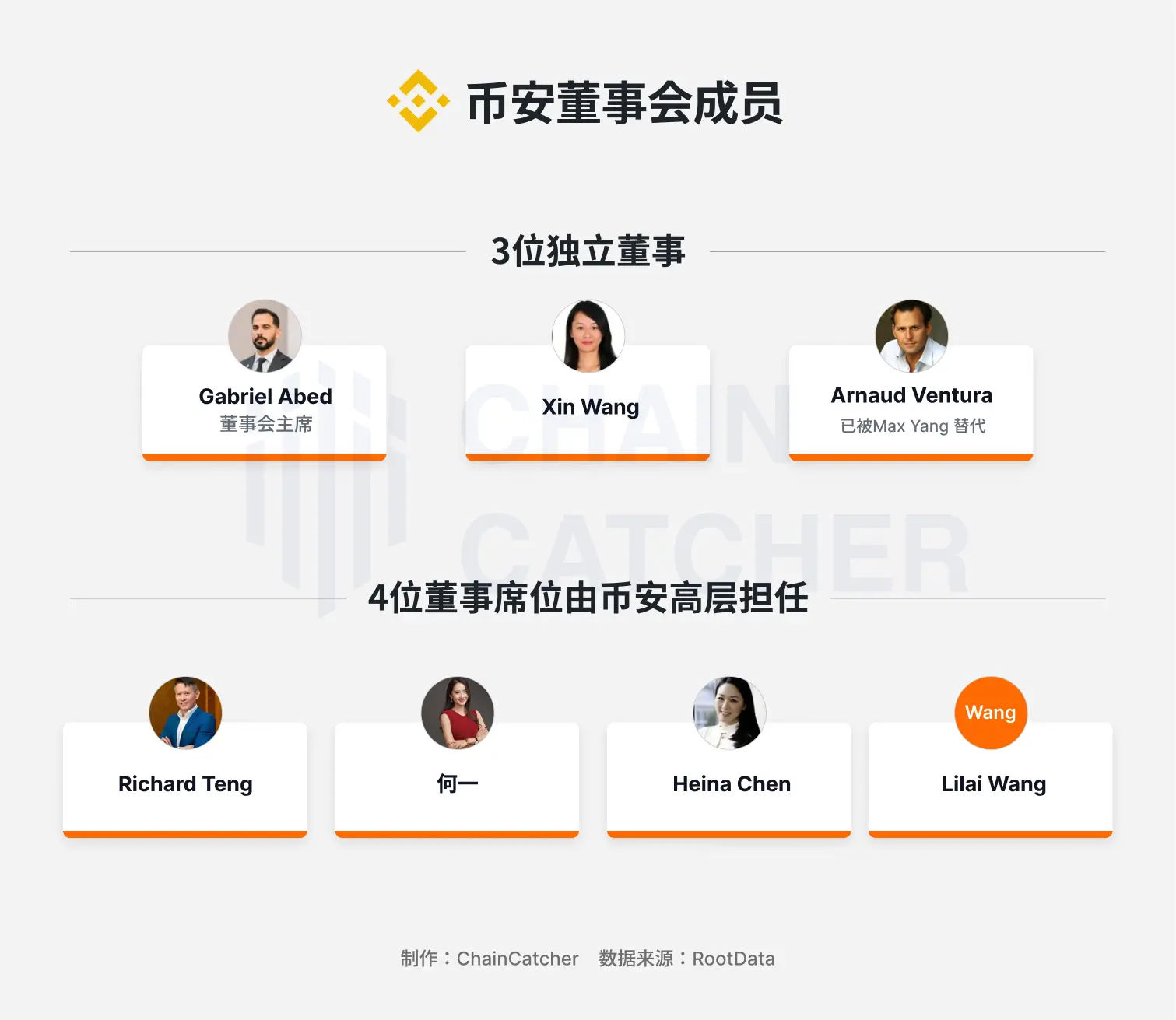
Thus, in the summer of 2024, Binance, which had been established for seven years, held its first board meeting. The seven-member board gathered around a long table in a conference room in the Abu Dhabi Global Market. Sitting in the main seat was Gabriel Abed, a former diplomat from Barbados; opposite him was Richard Teng, the newly appointed CEO who had consumed a lot of coffee to stay awake.
Among the seven board members, three are independent non-executive directors—they do not receive salaries from Binance and can theoretically make judgments independent of management. Gabriel Abed was elected as the chairman of the board, a choice that carries significant meaning: a former diplomat from a small Caribbean nation, he is neither aligned with U.S. regulators nor with CZ's camp, making him a somewhat acceptable "intermediary" for all parties.
The other two independent directors were also carefully selected:
Xin Wang is the CEO of Bayview Acquisition Corp., familiar with capital market operations, and she is also a practicing lawyer. The other independent director has transitioned from Arnaud Ventura in 2024 to the current Max Yang, who, according to Binance's official website, is a strategist and business leader with extensive international experience.
The remaining four directors are insiders from Binance: Richard Teng, Lilai Wang (a founding member), Heina Chen (co-founder), and He Yi. Notably, Jinkai He was an original board member but has now been replaced by He Yi. Among them, Heina Chen is a relatively mysterious yet highly influential executive at Binance. She has long controlled multiple company bank accounts and serves as a director or signatory for several Binance entities, overseeing clearing, settlement, and treasury-related matters. In investigations by the SEC, Forbes, and others, she has been repeatedly mentioned as one of the core figures "managing the purse strings" of Binance.
What does this configuration mean? On the surface, independent directors make up less than half, unable to form a majority in key votes. However, from an external perspective, the significance of independent directors lies not just in voting; their presence itself is a form of constraint—at least formally, Binance is no longer a one-person show.
The Appearance and Substance of Decentralization
In December 2025, at the Dubai Blockchain Week, Binance announced that He Yi would serve as co-CEO. As Binance's global user base surpassed 300 million, this woman, who had been co-founding alongside CZ since 2017, finally transformed from the "invisible second-in-command" to a visible center of power.
According to insiders, this arrangement was not a last-minute decision but a governance requirement when Abu Dhabi invested $2 billion in Binance in 2024: He Yi was to serve as CEO in the following one to two years to facilitate the transition of power and governance structure.
There are multiple considerations behind this arrangement, the most significant being business complementarity: Teng excels in compliance and regulatory liaison but is not particularly seasoned in the cryptocurrency industry; whereas He Yi, as a co-founder, has an intuitive understanding of products and markets that Teng lacks. Teng manages compliance and regulation; He Yi oversees products, markets, and user growth, with both lines advancing in parallel.
But a deeper question arises: does He Yi's return signify the resurgence of CZ's influence?
Court documents show that He Yi was involved in planning strategies to evade regulation. Media reports citing anonymous sources indicated that the U.S. Department of Justice initially sought to have He Yi resign during early settlement negotiations but ultimately did not hold her accountable, for reasons that remain unclear. The media described the situation: the U.S. authorities toppled the king of cryptocurrency, but the queen remains standing.
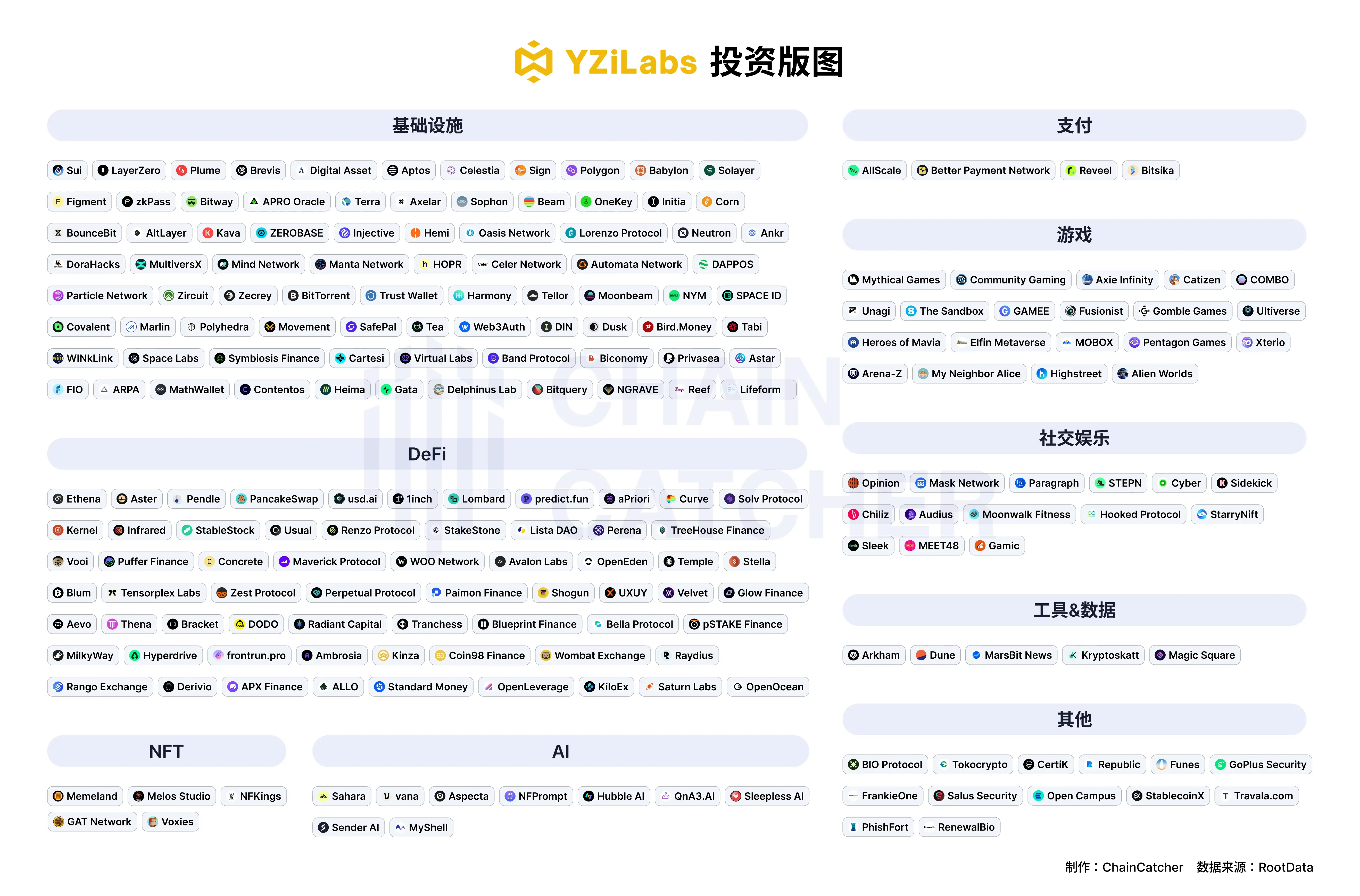
Additionally, on January 23, 2025, when Binance Labs was renamed YZi Labs, CZ's name appeared in the "co-founder" section. The name "YZi" itself is significant—it derives from the "Yi" in He Yi's name and the "Z" in CZ's name. This investment department manages approximately $10 billion in crypto-related assets.
According to insiders, CZ has a tremendous influence on investments—his informal opinions on a particular sector or technology shared on X directly sway the judgments of YZi Labs' investment managers.
Has power truly been decentralized? Or is it merely a change in presentation?
During the CZ era, the compliance team held a low status within Binance. The company's culture was one of "acting quickly and breaking norms," with compliance often viewed as an obstacle rather than a safeguard.
But now, everything has changed.
In January 2023, Noah Perlman joined Binance as Chief Compliance Officer (CCO). Perlman's career spans traditional finance and cryptocurrency: he previously oversaw financial crime compliance at Morgan Stanley and later served as COO and CCO at Gemini Exchange. Perlman led the rapid expansion of the compliance team, establishing global AML (anti-money laundering), sanctions screening, law enforcement liaison, and listing approval processes.
According to Binance's 2024 annual report, the internal compliance team has grown to 650 experts, and if external contractors and related personnel are included, the broader compliance team numbers even exceed 1,000. A Bloomberg report in August 2024 indicated that Binance's annual spending on compliance had surpassed $200 million. This means that the compliance department is becoming one of the largest cost centers within Binance.
More importantly, the power dynamics have shifted. Within Binance, if compliance does not approve, no business can proceed. Perlman is no longer just the head of a functional department; he has become a key participant in the company's strategic decision-making.
In interviews with media outlets like CNBC, Chief Compliance Officer Noah Perlman explicitly stated that his task is to find a new "balance," which will inevitably bring "friction" and "unpleasant experiences" to the business.
The data on token listings is the most direct measure of this tension. According to official announcements from Binance, the exchange launched 80 new projects in 2021, which dropped to 19 in 2022. During the eight months from the CFTC's lawsuit in March 2023 to the $4.3 billion fine issued by the Department of Justice in November, Binance launched only 10 projects—the power of the compliance department's veto has never been stronger. However, in the three months following the resolution of the penalties, Binance quickly launched another 10 projects, nearly matching the total during the entire lawsuit period. The marketing department's impulse has never disappeared; it has merely been temporarily suppressed.
Growing Pains in the Process of Institutionalization
If the reconstruction of the power structure is Binance's "software upgrade," then the events of October 11, 2025, exposed the "hardware's" fatal flaws.
On that day, Bitcoin plummeted from around $115,000 to approximately $86,000, with a maximum drop of over 25%. However, what truly transformed this crash into an "epic slaughter" was the system failure of the Binance exchange at the most critical moment.
Numerous users reported being unable to log in, unable to add margin, unable to close or reduce positions, and some even claimed that their accounts were frozen and stop-loss orders failed during the market crash. Within 24 hours, the total forced liquidation across the market reached approximately $19 billion, with over 1.6 million accounts liquidated, setting a new record for daily liquidations in the cryptocurrency market.
Social media unanimously accused Binance of "pulling the plug at a critical moment."
On October 12, Binance issued a statement acknowledging that "some system modules experienced brief technical failures under extreme traffic" and stated that it would compensate users who suffered losses due to asset decoupling issues, with total compensation amounting to approximately $283 million.
Despite Binance's official explanation, market skepticism regarding the exchange's system handling capabilities and technology has not subsided. The technology side is overseen by CTO Rohit Wad—this technical veteran, who joined Binance in 2022, previously held technical leadership positions at Microsoft, Facebook, and Google for over 30 years.
However, the events of October 11 proved that this system still has vulnerabilities in truly extreme situations.
If the technical collapse was an accident, the issues exposed during the listing process represent systemic institutional flaws.
In February 2025, an article titled "To All Practitioners, Investors, and Industry Observers Concerned About the Future of Web3" sparked industry attention on The Medium. The author listed projects suspected of "backdoor dealings" and "interest transfers," detailing the issues faced when engaging with Binance.
Former CEO CZ publicly stated that Binance's listing process "had some problems."
On December 17, 2025, Binance issued a stern announcement, officially releasing a complete listing framework covering Alpha, futures, and spot, explicitly prohibiting any third-party intermediaries from participating, and published a blacklist naming individuals and institutions such as BitABC, Central Research, and Andrew Lee, while also establishing a reward of up to $5 million for whistleblowers.
This announcement is both a milestone in institutionalization and a footnote to the long-standing issues. When Binance needs to emphasize in black and white that "applications can only be made through official channels" and offers substantial rewards to combat brokers, it precisely indicates that the previous "distributed checks and balances" did not completely close the gaps of personal governance.
Even more concerning is the failure of internal controls.
On December 7, 2025, reports surfaced that a Binance employee was suspected of using their position to benefit personally, with consistent content between an on-chain token issuance (13:29) and a tweet from the official account (13:30). Binance immediately suspended the involved employee and cooperated with the judicial jurisdiction to advance legal proceedings. The official reward of $100,000 for whistleblowers was distributed equally among the first five individuals who submitted valid reports through audit@binance.com.
This is not an isolated case. Throughout Binance's development history, incidents of listing information leaks have been exposed multiple times, repeatedly revealing the fragility of internal information control.
The root of the problem lies in the fact that when a company transitions from "personal governance" to "rule of law," systems can be established quickly, but cultural change takes time. The behavioral patterns formed during the chaotic era—informal flow of information, the influence of personal relationships on business decisions, and prioritizing "getting things done" over "following processes"—will not disappear immediately due to an announcement or a penalty.
Talent Density—The Real Dilemma
In December 2025, when He Yi officially took on the role of co-CEO at the Dubai Blockchain Week, she candidly stated in a media interview that Binance's biggest challenge currently is the issue of talent density.
"With the development of technology, not only in the cryptocurrency field but also in AI, traditional industries, whether in finance or internet companies, have a very high talent density. In fact, we are competing with top talents in these fields."
He Yi emphasized, "I have always believed in one thing: if you don't believe in something yourself, you won't be able to do it well. Such employees are very difficult to help the company build a top global team and enterprise. So, I think the biggest pain point is still our talent pool. This is also an important responsibility I feel I carry—finding the best talent for Binance."
This is not the first time He Yi has publicly discussed talent issues. It raises the question: as the world's leading cryptocurrency exchange, why is there talent anxiety? Salary is clearly not the issue—given Binance's scale and profits, it has sufficient purchasing power to offer top industry salaries.
The real problem may lie in a more hidden place.
According to insiders, CZ personally approached a leading project in a certain sector, wanting to acquire it for a highly attractive amount, but the founding team rejected the offer. Previously, Binance had made multiple acquisitions, and being acquired by Binance would typically be seen as a good outcome, so why was it rejected?
The reasons behind this are worth pondering. The credibility crisis is one of the most difficult risks for Binance to ignore at present—it is transforming into a pervasive deficit of trust.
In the past, projects acquired or deeply collaborated with Binance often lacked public information, and this asymmetry of information itself formed a signal: for potential partners, the real uncertainty is not market prices, but rather who holds the interpretive power over the rules. Discussions in the community about the complexity of terms, payment rhythms, and betting arrangements, although not verifiable one by one, have long crystallized into an industry consensus—when negotiating with the platform, you are always at a disadvantage.
This concern about "credibility" has triggered a chain reaction among top geeks and successful entrepreneurs. For this group, while monetization is important, whether the team can gain respect after integration and whether the system can uphold initial commitments are core indicators of a platform's attractiveness.
The employees He Yi mentioned who "believe in something" at Binance not only face the pressure of multinational collaboration but also contend with a highly pragmatic and somewhat cold organizational character. When this character translates into doubts about "contractual credibility" during mergers and executive recruitment, Binance's talent pool experiences a structural shortage: ordinary talents flock to the company, but top elites with independent value who value long-term credibility remain on the sidelines.
In February 2025, He Yi publicly admitted that Binance currently faces issues such as being too large to pivot, expending energy on regulatory pressures, organizational rigidity due to size, and talent iteration.
From the "attraction center" of wealth effects to the current "systemic bottleneck" of talent density, this chapter of Binance's talent history essentially reflects its brand credibility transitioning from early chaotic expansion to modern professional governance. If it cannot provide top talents with a sense of "certainty" for a good ending institutionally, relying solely on rewards and high salaries will likely be insufficient to fill the "talent pool" that He Yi is anxious about.
The "regional autonomy" model previously implemented by Binance was seen by outsiders as an attempt at institutional decentralization, but key decisions still heavily relied on CZ's personal influence. This seemingly decentralized structure once brought high efficiency but could not maintain continuity after the founder's exit. The introduction of the board and the current co-CEO is essentially an institutional compensation for the vanished will of the founder.
However, this compensation is incomplete.
Personal rule can rely on a few core confidants, but institutional operation requires the stable collaboration of thousands of professionals. Binance has entered a vacuum period where "power remains concentrated, but individuals cannot execute"—when personal will cannot cover the entire landscape, the core issue shifts from institutional design to talent density: does Binance have enough people to support this global giant under strong regulation?
Conclusion: Between Certainty and Uncertainty
From the chaotic era of one-person rule to today's co-CEOs, a seven-member board, and a compliance team of 1,000, Binance's power structure has undergone tremendous changes. But structure is merely a container; the real challenge is: what will fill this container?
Corruption in token listings indicates gaps in the system, technical failures reveal vulnerabilities in the system, internal leaks show cultural inertia, and talent anxiety highlights limitations in attractiveness. When personal will exits, the system has yet to be self-consistent, and organizational culture is still in transition, Binance faces not just a specific problem but a whole set of interrelated systemic challenges.
At the Hong Kong Crypto Finance Forum in April 2025, He Yi stated: "The essence of Binance is three things: first, to create good products; second, to serve users and employees well; and third, to communicate effectively with regulators."
These three things sound simple but are difficult to execute, especially in a context of 300 million users, global distribution, strong regulatory pressure, and the founder's exit.
Perhaps Binance's biggest challenge now is not regulation, but how to maintain innovation within a compliance framework, how to repair credibility during the institutionalization process, and how to find people who "believe in this thing" amid talent competition.
As Binance is no longer the ambitious dragon-slaying youth and has even begun to transform into the dragon of yesteryear, can the dragon-slaying spirit it embodies continue? Under the shadow of internal stability and centralization, is there room for the emergence of more business models and innovative capabilities? The era of barbaric growth has passed, but the real challenge has just begun. How far can it go?
免责声明:本文章仅代表作者个人观点,不代表本平台的立场和观点。本文章仅供信息分享,不构成对任何人的任何投资建议。用户与作者之间的任何争议,与本平台无关。如网页中刊载的文章或图片涉及侵权,请提供相关的权利证明和身份证明发送邮件到support@aicoin.com,本平台相关工作人员将会进行核查。


