On March 19, 2026, in the Eastern Eight Time Zone, Sky Venture and other institutional investors launched a set of highly aggressive macro positions on the decentralized derivatives platform Hyperliquid: shorting S&P 500 index contracts with approximately 20 times leverage, while going long on Brent crude oil with about 7 times leverage, and continuously planning to increase their positions through TWAP (Time-Weighted Average Price) orders. With the tense situation in the Middle East and the Federal Reserve only providing a vague outlook of "possibly lowering interest rates only once for the entire year," traditional macro hedging that occurs on Wall Street's proprietary desks and OTC swaps is beginning to migrate to the on-chain derivatives world. The asymmetrically high leverage combined with algorithms builds up positions slowly, raising the question of whether this is using refined execution for "defensive hedging" or a gamble that ties macro and on-chain liquidity together, becoming the most tense suspense in the current market.
Asymmetric Chips: 20 Times Short on S&P, 7 Times Long on Oil
Sky Venture and other institutions have chosen to construct a typical macro combination on Hyperliquid of "shorting the index + going long on oil," but the key structural aspect is the leverage asymmetry: the S&P 500 shorts use about 20 times leverage, while the Brent crude oil longs are limited to about 7 times. This means that under the same unit nominal principal, the equity leg bears higher price sensitivity and liquidation risk, while the oil leg is closer to a "directional bullish position with medium-high leverage." This structure is not simply a 1:1 hedge but is more like betting that "the speed and magnitude of the stock market decline will significantly exceed the retracement potential of oil prices."
In the current context of geopolitical tension in the Middle East, market concerns over supply disturbances have raised expectations for Brent crude oil prices, while the Federal Reserve’s maintenance of high interest rates and its signal that it expects to lower rates only once in 2026 continue to suppress the valuations of risk assets represented by the S&P 500. The compounding of pressures on the stock index and support for oil creates a macro intrinsic consistency for the "short stock index, long oil" reverse pairing: on one hand is a dual squeeze from interest rates and earnings expectations, and on the other hand, inflation and geopolitical shocks collectively provide a floor. It is under this asymmetric macro picture that market voices such as "macroeconomic uncertainty drives institutions to adopt asymmetric leverage strategies" have begun to be frequently cited in the media, reflecting that institutions hope to hedge against macro black swans while being reluctant to give up the complex mindset regarding the embedded option value brought about by sharp price fluctuations.
From Wall Street to On-chain Market: A Mirroring Experiment
In traditional financial markets, the correlation between equity indices and commodities (especially crude oil) in times of crisis, recovery, and easing cycles has historical precedents. After the 2008 financial crisis, the world entered an easing cycle, during which the equity indices and commodities once showed "risk asset resonance upward"; however, in stages of geopolitical conflict or supply shock, oil often remains resilient or even surges against the odds when inflation expectations rise, while the equity indices face re-evaluation pressures due to earnings compression and rising risk premiums. This complex relationship, sometimes positively correlated and sometimes negatively correlated, has long been primarily played out through OTC swaps, option structured products, etc., by Wall Street proprietary desks and hedge funds within closed ledgers.
Now, similar macro hedging attempts have been moved to crypto derivatives platforms like Hyperliquid, and the risk-return structure has changed accordingly. First, the liquidity depth and intraday slippage of on-chain derivatives are highly sensitive to large positions; under high leverage, any instantaneous gap can be amplified into a liquidation risk. Second, the settlement rules are centered on full automation; once margin coverage is insufficient, on-chain contracts will trigger liquidation immediately and mechanically, leaving traders with much less "manual margin for error" than in traditional OTC markets. The combination of shorting the equity index and going long on inflation-sensitive assets, once the macro narrative evolves as anticipated, will magnify the profit curve through leverage; but if faced with extreme market conditions—such as sudden ceasefire news collapsing oil prices, or a central bank unexpectedly becoming dovish igniting a stock market rebound—this same structure would push a basket of assets that were supposed to be "hedged" right to the brink of liquidation with the same leverage multiplier.
The Stealth Strategy of TWAP Ambush Positioning and Potential Backfire
To execute positions in such a high-sensitivity environment, Sky Venture and other institutions opted to adopt the TWAP (Time-Weighted Average Price) order algorithm, splitting large orders into multiple smaller transactions over a preset period to attempt to approximate the average transaction price while reducing instantaneous impact on the market. For on-chain trading, the logic of TWAP is similar to traditional algorithmic trading: by buying or selling gradually at slightly different prices at different times, it blurs the correspondence between a single order and the actual position size, thereby hiding risk exposure to some extent and reducing the probability of being "hunted" by counterparties.
In a high-leverage environment, the advantages of building positions in batches and smoothing costs are particularly highlighted: if the underlying price experiences adverse fluctuations during the position-building period, TWAP can dilute the risks of single-point entry to some extent, transforming the profit and loss curve from a "cliff-like" drop to a "slope-like" adjustment. However, this algorithm also carries the risk of failing in extreme volatility—when prices exhibit extreme unilateral movements in a short period, unfinished TWAP remaining orders could be passively executed in high-volatility ranges, resulting in an overall deterioration of average costs, while leverage would multiply these unfavorable slippages. In addition, all on-chain order actions are traceable; counterparties familiar with address profiles and order rhythms could potentially interpret certain repetitive TWAP patterns as "codes," engaging in reverse betting against so-called "stealth hedging" through encirclement and liquidity withdrawal, creating a persistent tug-of-war over visible data and invisible intentions.
Interest Rates Held Steady and the Theatrical Effect on Oil Prices
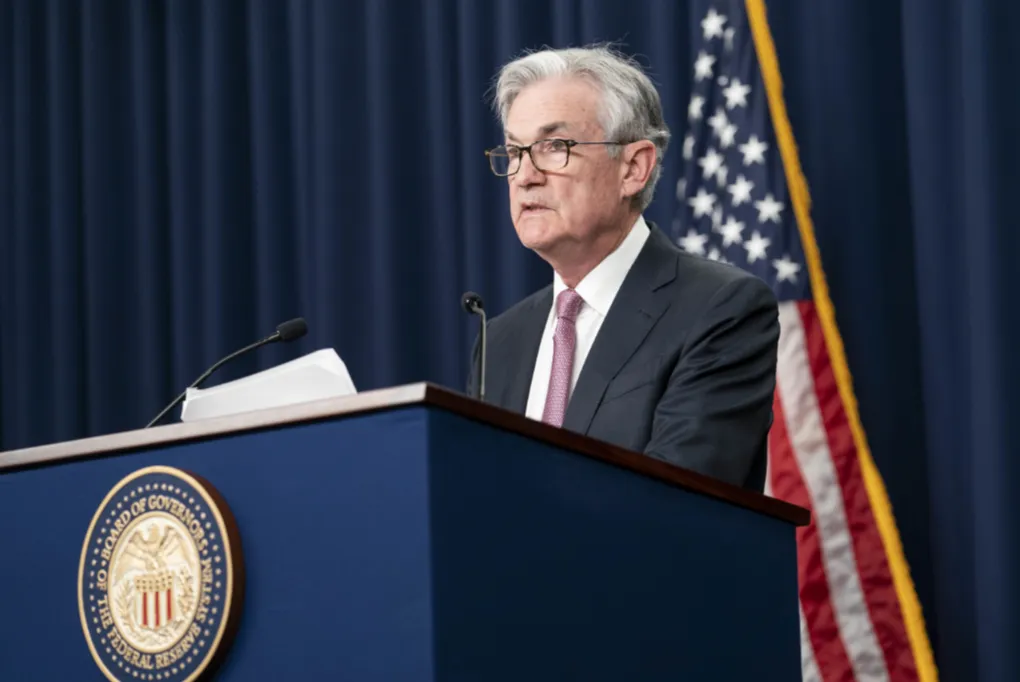
At a macro level, the Federal Reserve's latest meeting chose to maintain interest rates without change and released forward guidance indicating that it may only lower rates once in 2026, suggesting that the high interest rate environment is likely to persist for a longer time. For risk assets like the S&P 500, maintaining high discount rates forces investors to reassess the matching of earnings and valuations, with the "liquidity premium" part being continuously squeezed out, making price paths more likely to show single-sided upward resistance and intensified range fluctuations rather than a smooth continuation of a bull market. In this context, the 20 times leveraged short position on the equity index is essentially an amplified bet on the combination punch of "high interest rates + earnings downgrades."
Conversely, in a scenario where inflation expectations and geopolitical shocks coexist, crude oil and other commodity assets are more naturally viewed as hedging channels. On one hand, supply-side uncertainty and rising freight costs directly push up the center of oil prices; on the other hand, even if demand is suppressed by high interest rates, the market tends to hedge against "re-inflation" risks by allocating part of the long positions in commodities when safety margins are inadequate. For the crypto market, these macro bets are not disjointed from on-chain assets: when funds undertake macro hedging demands through platforms like Hyperliquid, part of the liquidity that might have flowed towards purely crypto Beta shifts towards derivatives linked to equity indices and crude oil, thereby altering the rhythm and direction of fund rotations. Each pulse of macro sentiment may, through margin occupancy, funding rate changes, and risk limit adjustments, reshape the pricing framework of on-chain crypto assets.
Crypto Native Infrastructure Takes the Macro Stage
All of this is happening on-chain, rather than being confined to Wall Street’s spreadsheets, due to the rapid maturation of crypto-native infrastructure in recent years. For example, with the instant cash-out service for US dollars launched by Kraken, institutional funds can more efficiently transfer profits back to their US dollar bank accounts after completing on-chain hedging or arbitrage, significantly reducing the time costs and uncertainties of fiat entering and exiting, alleviating concerns about being "trapped on-chain." The improvement in the efficiency of these fiat channels is quietly lowering the threshold for institutions to adopt on-chain hedging and speculative strategies.
Meanwhile, platforms like Hyperliquid are gradually aligning their contract offerings, leverage limits, and ease of short selling with traditional investment banking trading desks: not only providing contracts linked to macro assets like the S&P 500 and Brent crude oil but also allowing high leverage and flexible margin management, making "using a crypto account to create a global asset portfolio" a realistic option. On a broader capital market level, Ripple-supported Evernorth is preparing for a SPAC merger by filing an S-4 form, which is also seen as a signal of "interconnection between crypto and traditional capital markets"—though its specific business details have limited relevance to the main narrative of this article, the interconnection in regulations and capital provides a broader institutional corridor for on-chain derivatives to emerge on the macro stage.
From Experimental Field to Battleground: On-chain Macro Games
In summary, the asymmetric combination of 20 times short on S&P + 7 times long on oil led by Sky Venture and others has exceeded the scope of "on-chain strategy experimentation," resembling a public declaration of treating crypto derivatives as a real macro battlefield. High leverage, cross-asset hedging, TWAP algorithm execution—all these tools originally belonging to Wall Street's quantitative and macro hedge funds have now been transplanted to on-chain, being re-evaluated in a more transparent and fragmented liquidity environment.
However, due to the lack of publicly available position sizes and complete participant lists, external perceptions of the systemic impact of such bets can easily lead to misjudgments. On one hand, the market might exaggerate potential chain reactions based on high-leverage actions observed on-chain; on the other hand, in cases where certain positions are hedged through OTC agreements or other platforms, relying on data from a single platform might underestimate actual risk exposure. For regulators, traditional institutions, and crypto-native players, how to build a more accurate risk perception mechanism while respecting privacy and strategic confidentiality will become a necessary question for the next stage.
Looking ahead, amid the multifaceted interweaving of geopolitical conflicts, resurgent inflation, and erratic monetary policies, the trend for the crypto market to undertake macro hedging demands is likely to strengthen rather than weaken. On-chain derivatives platforms are not only incubators for new liquidity and strategies but also focal points for potential risks and regulatory scrutiny. When macro trading truly evolves from an "on-chain experimental field" to an "on-chain battleground," the crypto industry must tackle two issues simultaneously: one is how to provide a market structure that is sufficiently deep and stable to sustain these high-energy games; the other is how to retain space for innovation under increasing regulatory involvement without falling into the same pitfalls that led to traditional financial crises.
Join our community to discuss and grow stronger together!
Official Telegram community: https://t.me/aicoincn
AiCoin Chinese Twitter: https://x.com/AiCoinzh
OKX benefits group: https://aicoin.com/link/chat?cid=l61eM4owQ
Binance benefits group: https://aicoin.com/link/chat?cid=ynr7d1P6Z
免责声明:本文章仅代表作者个人观点,不代表本平台的立场和观点。本文章仅供信息分享,不构成对任何人的任何投资建议。用户与作者之间的任何争议,与本平台无关。如网页中刊载的文章或图片涉及侵权,请提供相关的权利证明和身份证明发送邮件到support@aicoin.com,本平台相关工作人员将会进行核查。