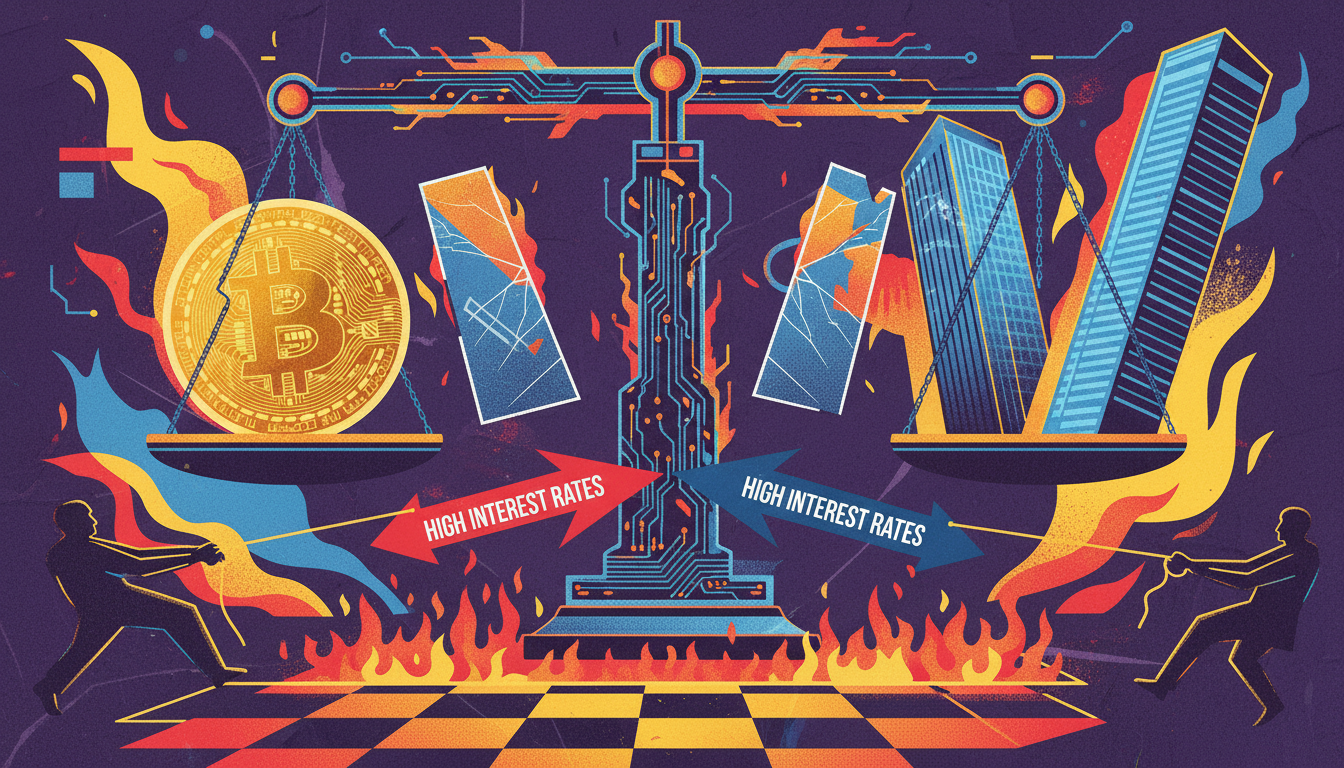
GMX Labs is handing over the steering wheel of the protocol from the founders to a professional management team. Through a leadership structure upgrade proposal initiated and voted on by the DAO, GMX has decided to shift from a founder-driven model to a traditional management structure led by a professional CEO, with a voting approval rate as high as 96.42%. The community has also defined a CEO compensation framework centered on a base salary plus GMX token incentives, aiming to establish an alignment of interests between “professional managers” and the “token holder community.” Behind this decision lies an increasingly sharp tension between the narrative of decentralization and the reality of scaled operations, and GMX's choice is becoming a typical example of DeFi maturing and moving towards institutional governance.
GMX's High-Approval Reform: From Founders to Professional Management
The proposal passed focuses on restructuring GMX's leadership: firstly, officially establishing a CEO position, centralizing the execution authority for daily decision-making, business advancement, and team management from a loose collaboration mechanism involving founders/core developers to a relatively clear “first responsible person.” At the same time, the DAO retains governance rights over major directions, budget allocations, key parameters, etc., forming a division of responsibilities where “the DAO sets rules and objectives, and the professional management team is responsible for implementation and feedback.” In other words, GMX is not handing over power to a specific center but layering an execution layer that better fits the logic of complex business operations on top of DAO governance.
With a voting approval rate of 96.42%, this number itself is a strong signal in the context of a DAO known for consensus and decentralized opinions. It indicates that both early supporters and later protocol users and liquidity providers have formed a common understanding of “professional management” in the face of a highly competitive environment and organizational scale expansion: relying solely on founder passion and community autonomy has become insufficient to support the long-term evolution of a leading perpetual DEX. At the same time, transitioning from a founder-led model to a traditional leadership structure also addresses multiple pressures—internally, it is a response to the need for decision-making efficiency and responsibility boundaries; externally, it is a positive response to market competition, compliance uncertainties, and expectations for sustainable development.
During the founder-driven phase, many decisions depended on the judgment and input of core individuals, which are flexible but easily influenced by personal energy, preferences, and risk tolerance. As GMX expanded, its product line and partnerships became more complex, leading to increasingly sharp questions like “who has the final say,” “who is responsible for implementation,” and “who bears responsibility when issues arise.” By introducing a CEO and accompanying management structure, GMX attempts to institutionalize these originally vague responsibilities and boundaries, pushing the protocol from a “project” to an “organization,” from “hacker-style experimentation” to “sustainable business.”
The Perpetual DEX Battlefield: Why GMX Needs a “Professional Brain”
To understand the context of GMX's reform at this time, one must consider the landscape of perpetual contract DEXs. Since GMX's rise, competitors around on-chain perpetuals have rapidly increased, with new protocols and mechanisms emerging continually, shifting the market from an “early bonus” phase to one of comprehensive competition in product iteration, liquidity operation, marketing, and compliance response. Leading projects must battle on multiple dimensions like capital efficiency, trading experience, risk control, and cross-chain layouts; a simple “developer-led + community-driven” approach is no longer sufficient to handle such complexity.
The phrase “the early flat structure is difficult to sustain” in the original proposal highlights the pain point. Early DAOs tended to have flat and temporary coordination, with an open decision-making process and unclear role boundaries, which could stimulate creativity and bring the project closer to the community during the product iteration trial-and-error phase. However, as the trading volume, asset size, and potential regulatory focus of the protocol continue to rise, flat DAOs expose bottlenecks in resource allocation, risk management, and external coordination, such as long feedback chains, blurred responsibilities, and slow response times. In a complex business environment and under potential regulatory pressure, this structure is hard to sustain.
In an increasingly competitive atmosphere, introducing a traditional leadership structure with clear responsibilities has become the tool by which GMX aims to resolve these structural issues. On one hand, the CEO can expedite the closed loop from “information gathering—decision making—execution—review” within the DAO-authorized framework, avoiding delays in community discussions for every operational and product decision; on the other hand, a clear management structure is conducive to interfacing with external partners, service providers, and potential compliance advisors, allowing GMX to participate in a broader range of battles in a more “comprehensible” organizational form. For a perpetual DEX, this is not merely a management upgrade but a reconstruction of defensive and offensive capabilities.
DAO Hires CEO: Bundling Benefits with Stablecoins + GMX Tokens
Aside from the power structure adjustment, the proposed CEO compensation framework is also noteworthy. According to the briefing, GMX designed a salary structure for the CEO that includes a base annual salary of $150,000 to $200,000 (paid in stablecoins), combined with a maximum incentive of 7,500 GMX tokens. The former meets the professional manager's need for predictable income with a relatively stable cash flow, while the latter uses native tokens as an “equity-style incentive” to closely tie the management's incentives to the long-term value of the protocol.
Using native tokens as incentives is not new in the crypto world, but in the context of “DAO hiring a CEO,” it adds another layer of complexity: on one hand, token rewards deeply bind the CEO’s earnings to the development of the GMX protocol—only if the protocol's ecosystem expands and income and usage increase will the long-term outlook for GMX tokens improve, thus highlighting the actual value of the token portion and pushing the CEO to focus more on long-term construction rather than short-term embellishment of data; on the other hand, excessive token incentives may also lead to risks exacerbated by “power concentration” and “information asymmetry,” for instance, the CEO leveraging an information advantage to influence key decisions for personal gain. Therefore, such a compensation design is both a binding mechanism and a challenge to the DAO's supervisory capabilities.
It is important to emphasize that the currently disclosed information only includes the overall amount and form—the base salary range and “a maximum of 7,500 GMX token incentives.” As for the specific conditions for the allocation of these tokens, unlocking periods, whether they are tied to performance metrics, or whether there is a clawback mechanism, more detailed terms have yet to be published, and the briefing explicitly states that speculation about missing information is prohibited. Before these critical details are finalized, it is difficult for outsiders to assess the actual constraints and long-term effects of this incentive mechanism. For participants interested in the governance evolution of GMX, what is truly worth tracking will be the subsequent publication of formal terms and the DAO community's feedback and potential for revision of these terms.
From X to Kal: The Transition Test of the Temporary Committee
Before the new CEO assumes office, GMX has not chosen a “power vacuum” but instead has maintained the protocol's daily operations through a temporary leadership committee (X/Coin/B/Kal). This arrangement is essentially a transitional bridge: while retaining the existing operational rhythm and continuity of key decisions, it reserves time and buffer space for the introduction of a professional management team. For a community used to direct involvement from the founders, the existence of the temporary committee serves as an extension of the old structure and lays the groundwork for the new structure to take over.
According to the briefing, GMX expects to complete the organizational restructuring and the implementation of the new token incentive plan by June. This timeline itself serves as a pressure test: within a limited number of months, the team needs to finalize the selection and confirmation of the CEO, redefine the internal organizational structure, design and approve the incentive plan, while maintaining the stability of protocol operations, product iteration, and market communication throughout the process. Any delay in any aspect could be amplified as market skepticism towards governance capabilities.
The risks during the transition period mainly focus on two levels. The first is decision-making risk: the temporary committee must maintain the current path while reserving adjustment space for the future CEO; balancing the need to make necessary decisions without “locking in” new management options is a balancing act. The second is community trust: DAO members need assurance that this series of changes will not evolve into a script where “a few people behind the scenes take over the protocol.” Therefore, transparent and frequent communication will be a key tool to buffer uncertainty and consolidate trust—including but not limited to publicly sharing transition progress, clarifying the boundaries of the temporary committee's authority, and maintaining an on-chain traceable record for major decisions.
Traditional Financial Thinking Enters: A Shift in DeFi Governance Style
GMX's profile for the future CEO has already articulated a key phrase in the proposal and recruitment requirements: “the candidate must understand decentralized infrastructure and its scalable paths.” Behind this statement is a dual expectation for the ideal candidate: on one hand, he or she must genuinely understand on-chain infrastructure, DAO governance, token economics, and other crypto-native elements, and not merely manage the protocol as if it were a company; on the other hand, they must have the ability to translate these native elements into scalable operational paths, bringing in experiences from the traditional business world in aspects like organizational structure, process design, risk control, and compliance planning.
In the larger industry context, this echoes a clear trend: an increasing number of executives from traditional finance and the internet are beginning to enter the core management layers of DeFi protocols, bringing stronger process awareness, risk management frameworks, and sensitivity to regulatory environments. This change in talent structure is altering the operational styles of many protocols—from extreme risk-taking to a greater focus on lifecycle, from merely pursuing TVL and transaction volume growth, to weighing compliance paths, reputational risks, and diversified revenue structures. For cryptocurrency-native participants accustomed to “geek autonomy” and “fast-paced experimentation,” this represents a slow yet profound style shift.
More broadly, GMX's governance upgrade is only part of the broader shift among DeFi projects. After experiencing a founding period marked by hacker culture and extreme experimentalism, leading protocols are beginning to introduce more systemic corporate governance elements: clear organizational structures, professional management teams, formal incentive and evaluation systems, and proactive connections with external regulators and traditional capital. This does not mean abandoning the ideal of decentralization; rather, it attempts to find a sustainable middle ground between the dominance of on-chain code and the rules of the real world—maintaining openness and composability while introducing enough order and accountability.
The Next Act in the Game between Decentralization and Professionalism
Looking at a longer timeline, GMX's governance structure upgrade is a landmark case in the maturation process of DeFi. The DAO's introduction of a professional CEO and a traditional leadership structure through a high approval rate vote is not a simple negation of the ideal of decentralization, but an adjustment on “how to continue promoting this ideal under real-world constraints.” The passion narrative driven by the founders has brought GMX to where it is today, while the institutional arrangement of professional management attempts to help it navigate a more complex market and regulatory environment in the future.
Whether the professional CEO model can significantly enhance the protocol's competitiveness while maintaining the spirit of decentralization still requires time to test. How the CEO acts within the authority granted by the DAO, how they engage in two-way communication and negotiation with the community, and how they handle the tension between growth and risk, short-term metrics and long-term value, will all become key variables to observe in GMX's future. For DeFi participants, it is equally important to see how the DAO constrains and supervises the professional management team institutionally, avoiding new risks arising from excessive power concentration and information asymmetry.
It is foreseeable that as GMX takes this step, more leading protocols will accelerate their follow-up in governance structure, talent introduction, and incentive design—some may replicate the “DAO hires CEO” model, while others may explore more executive departments, council systems, or even deeper integration with entity company structures. A new round of narrative competition around “who will steer the protocol,” “how to allocate power and benefits,” and “how to balance decentralization with governance efficiency” has already unfolded. GMX is merely the first wave of participants stepping into the spotlight, but the direction of this game will largely shape the next stage of DeFi.
Join our community to discuss together and become stronger!
Official Telegram community: https://t.me/aicoincn
AiCoin Chinese Twitter: https://x.com/AiCoinzh
OKX benefits group: https://aicoin.com/link/chat?cid=l61eM4owQ
Binance benefits group: https://aicoin.com/link/chat?cid=ynr7d1P6Z
免责声明:本文章仅代表作者个人观点,不代表本平台的立场和观点。本文章仅供信息分享,不构成对任何人的任何投资建议。用户与作者之间的任何争议,与本平台无关。如网页中刊载的文章或图片涉及侵权,请提供相关的权利证明和身份证明发送邮件到support@aicoin.com,本平台相关工作人员将会进行核查。