Written by: Curry, ShenChao TechFlow
The Hong Kong Web3 Carnival ended almost a week ago.
The excitement dissipated quickly. During those few days of the event, X was still sharing funny videos of Vitalik suddenly jumping near the event's fence, bags branded with the Bitget CEO being joked about by hotel staff, male and female models lining up in front of the exchange's booth, and buses bringing in a crowd of elderly people to join in...
By this week, none of this was mentioned anymore.
The dissemination curve of industry conferences generally follows a similar pattern: three days of highlights during the event, followed by a few soft recaps a week later, and then the matter fades away.
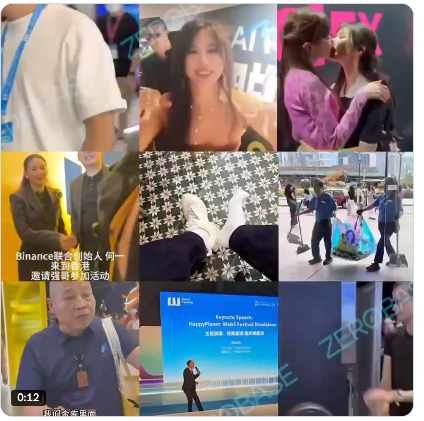
Image source: Various gossip highlights summarized by X users, but is this really what we want?
However, looking back at the serious content of this year, it actually feels a bit different.
The Wanxiang Hong Kong Web3 Carnival is an annual barometer for the Chinese-speaking crypto circle. Every year around this time, from the Hong Kong SAR government to the largest exchanges worldwide, from the founder of Ethereum to veteran players in traditional finance, those willing to fly over to stand in the same venue indicate that everyone still needs this occasion to reflect the industry's current position.
This event has never been an isolated incident. When it takes place, compliance, policy, and traditional finance are all simultaneously in place.
Looking back at the few core guests who walked on this main stage, they spoke from different positions and with various identities, but pieced together, it actually forms the same picture:
The amateur era of the crypto industry has ended.
For the past ten years, the industry has been in an amateur age. Living off faith, narratives, and the next wave of hotspots, and making money in the early stages. This way of living is fine when prices are good, but when they're bad, all that's left is gossip to discuss.
At this conference, the words spoken by a few individuals on stage do not quite correspond to this way of living, but they are definitely worth revisiting.
Hong Kong is selling a table
First, Financial Secretary of Hong Kong, Paul Chan, spoke a lot during the opening address on April 20, but there was one sentence the crypto industry had been waiting for over a decade.
"Equal activities, equal regulation."
It means that on-chain assets and off-chain assets, as long as they carry the same risks, will be regulated according to the same standards.
Ten days prior, on April 10, the Hong Kong Monetary Authority announced the first batch of stablecoin issuer licenses. Out of 36 applicants, only 2 were approved: HSBC and Dock Financial Technology, the latter being a joint venture of Standard Chartered, Hong Kong Telecom, and Anxin Group. Both have a background as currency issuers.
Ten days later, Chan took to the stage at the carnival. Standing at a position where licenses had already been issued and signed, he informed the industry how to proceed going forward.
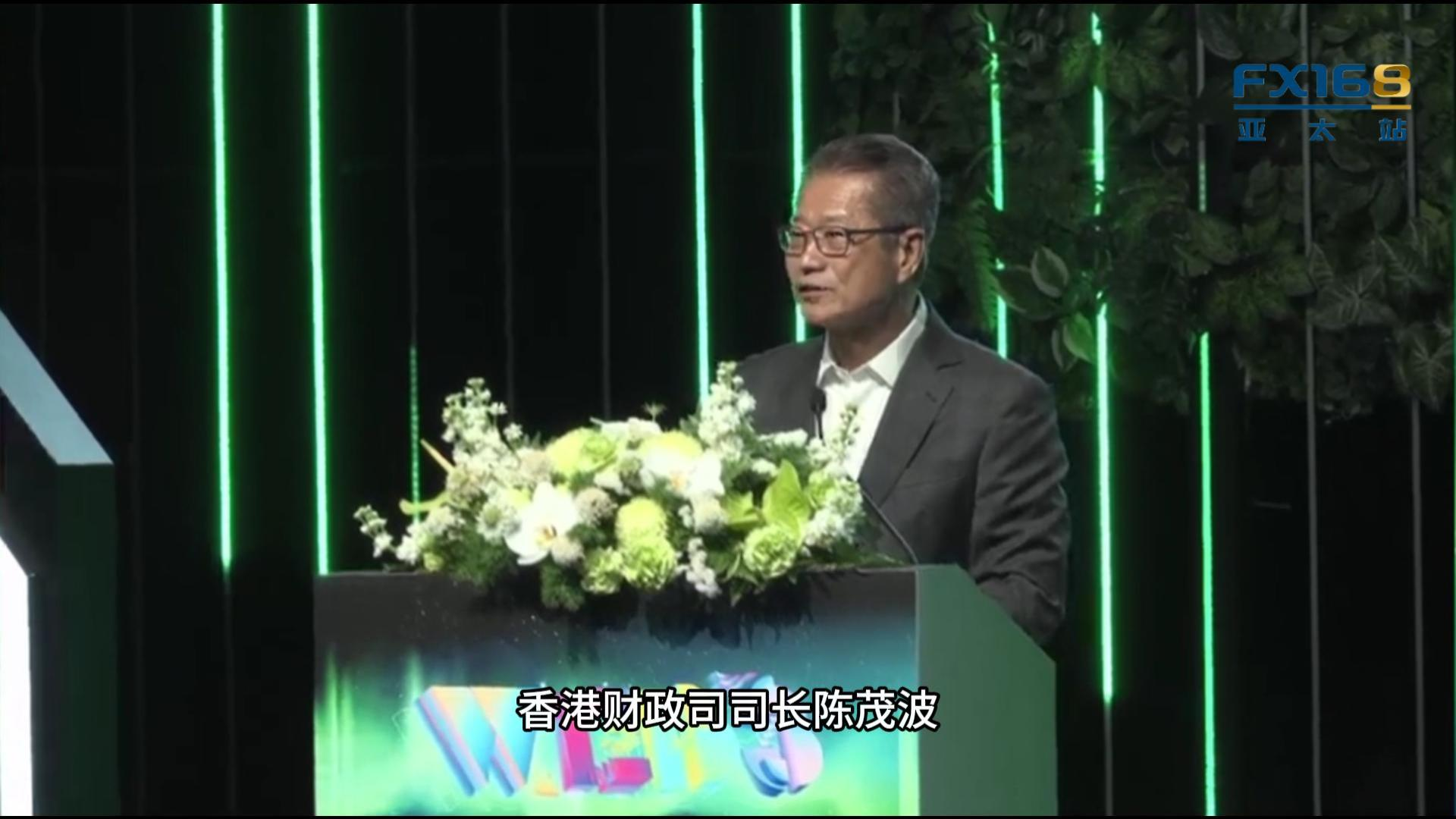
The phrase "equal regulation" is the most significant takeaway the crypto industry heard at this carnival, yet everyone seems to have overlooked it while focusing on gossip.
For the past decade, the crypto industry has primarily heard two kinds of regulatory voices: one that observes and the other that prohibits. This time, Hong Kong provided a third option, applying the same set of rules to you.
Applying the same set of rules means that starting today, the crypto industry is allowed to move indoors. Inside, there are banks, insurance companies, and brokerages, all gathered around the same table. This table has been set in the traditional financial industry for hundreds of years; in the past, crypto players observed from the outside, but this time, they are seated at the table.
However, the cost is that they must play by the rules set on the table.
Chan had a statement during his speech that was not very prominent but critical: "Decentralization and digital intelligence do not mean that accountability will weaken." The idea that code decides on its own, and what happens on-chain is not controlled off-chain, does not hold at this table.
Yet, sitting around the indoor table is much harder than staying outside.
HSBC has been engaging in the HKMA's tokenization pilot and digital Hong Kong dollar project since 2022, taking nearly 4 years to obtain its license this April. Of the 36 applicants, 34 were left outside.
The flip side of "equal regulation" is "equal opportunity." These two things have always been one in mature financial markets. This is the real signal released by the Secretary at the carnival.
For the past decade, the crypto industry has relied on first doing then talking to grow large, taking advantage of regulatory gray areas to make the most of information disparity and compliance gaps. The characteristics of the early bonus period were that the rules were not yet in place; whoever moved first would benefit.
This path may become impassable after the issuance of stablecoin licenses. The rules are laid out in front, and practitioners must prove themselves capable of creating value within these rules.
At the end of his speech, the Secretary did something unexpected. He asked the international guests in the audience, "Please stay in Hong Kong a few more days," and then listed seven-a-side rugby matches, Michelin-starred restaurants, tax-free wine, and country parks...
I think this can be interpreted as a friendly sales pitch. Hong Kong is not just making a statement to the crypto industry; it is attracting investment from it. A year ago, there were doubts over whether policies would be consistent, but this time the Secretary personally welcomed everyone.
The table has been set, and the host is inviting guests to take their seats.
Fu Peng, another marketing effect from the outside
Another highlight, naturally, is Fu Peng.
"These days, many people are frantically asking me one question: why do I get so close to the crypto circle?" This statement itself is the biggest news of this speech or about identity transformation.
The crypto industry's view of Fu Peng has been quite complex recently. Some feel his investment skills are mediocre, coming to the crypto circle to harvest fame, while others have complained on X about him blocking a group of KOLs. These controversies are real, but within the context of this carnival, one fact outweighs these controversies:
What he has genuinely been doing for the past 25 years seems to have no parallel in the crypto industry over the last decade.
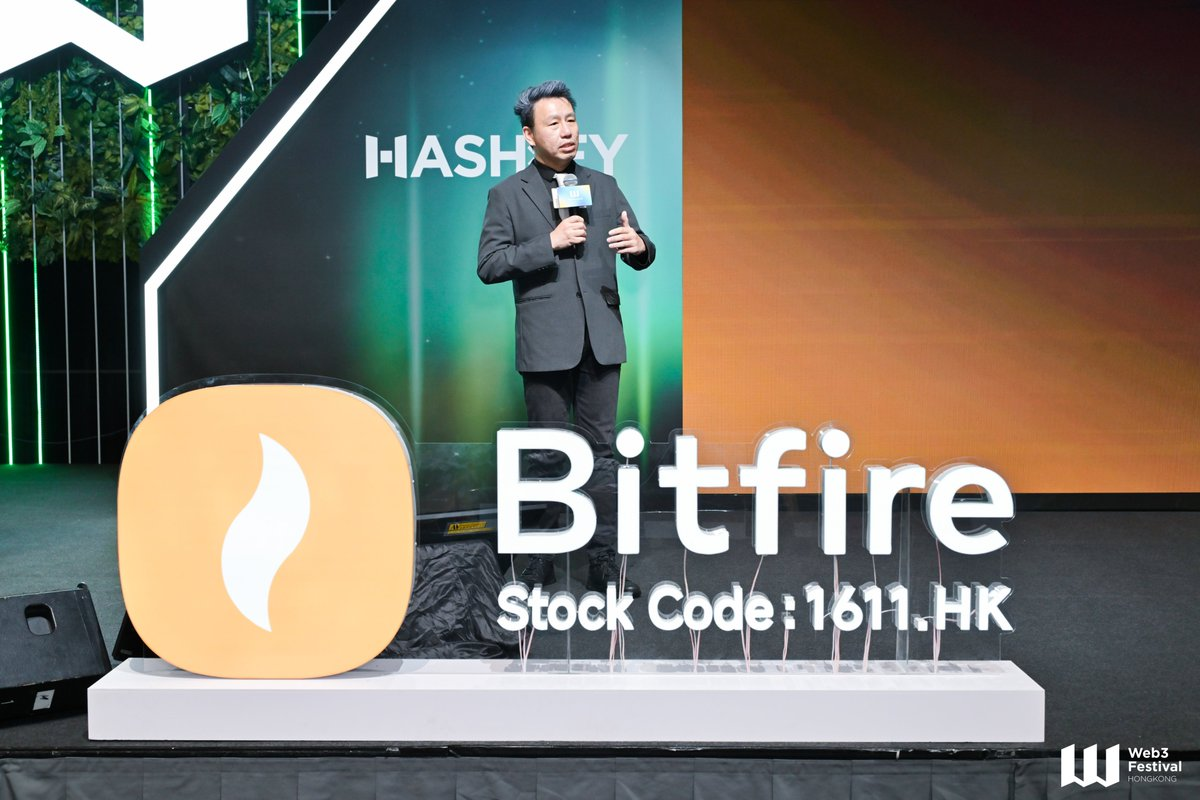
Fu Peng's core business is traditional hedge funds, focusing on asset allocation across categories. In the industry, it is called FICC, which translates to integrating interest rates, commodities, currencies, and stocks into a cross-asset strategy.
Whether he is personally effective or not is one thing, but this is the language used by Wall Street’s most profitable sector; the crypto industry has existed in parallel tracks over the past decade, as what people were concerned about wasn't portfolio allocation but rather which meme coin could gain hundreds of times in value.
Fu Peng's judgment is, "Between 2025 and 2026, there may be a historic turning point in the field of crypto assets." Looking forward, the standard menu for asset allocation will add a "C" for Crypto assets.
This level of judgment is not as important; what matters is that it is much more interesting coming from Fu Peng than from a crypto big shot.
The crypto circle has been talking about crypto assets entering the mainstream for over a decade, repeating the same narrative at every market peak, while the speakers have mostly been insiders trying to sway outsiders. Fu Peng is not an insider; he comes from that previous system.
The narrative power in the crypto industry has always been insiders talking among themselves. This method was narrative when the market was good and self-indulgence when the market was bad.
Fu Peng's "FICC+C" more symbolizes that traditional finance people are also incorporating crypto into their asset allocation considerations. This trend has already begun to materialize; however, Fu Peng's identity, past, and position aligned, and saying it at the conference seems to have a better effect.
At the same time, Fu Peng posed the most critical question during his speech: "I wonder if my speech today will be recorded in history?" This statement from him does seem open to ridicule.
Whether it will be recorded in history is uncertain, but while crypto spoke of faith in the amateur era, in the mainstream era it truly needs to discuss asset allocation.
To some extent, Fu Peng did a good deed.
Vitalik's tone change, initiated by AI
The third notable aspect is still Vitalik.
Vitalik spoke with Xiao Feng for an hour and a half, but the actual vision portion added up to less than 5 minutes; the rest of the time he was essentially discussing three concrete matters using an engineering mindset: anti-quantum, anti-AI, and security redundancy.
Vitalik shared a story from the past.
During the Ethereum Developer Conference in Shanghai in 2016, four hours before the opening, the Ethereum network suffered a DoS attack, and he was woken by a call to fix it with his team for 3 hours to get it back online.
His greatest concern this time is that AI will accomplish what that attacker did back then in 2-3 years. "If it's not secure, the AI three years from now will definitely find every vulnerability, and this will bring us immense pain."
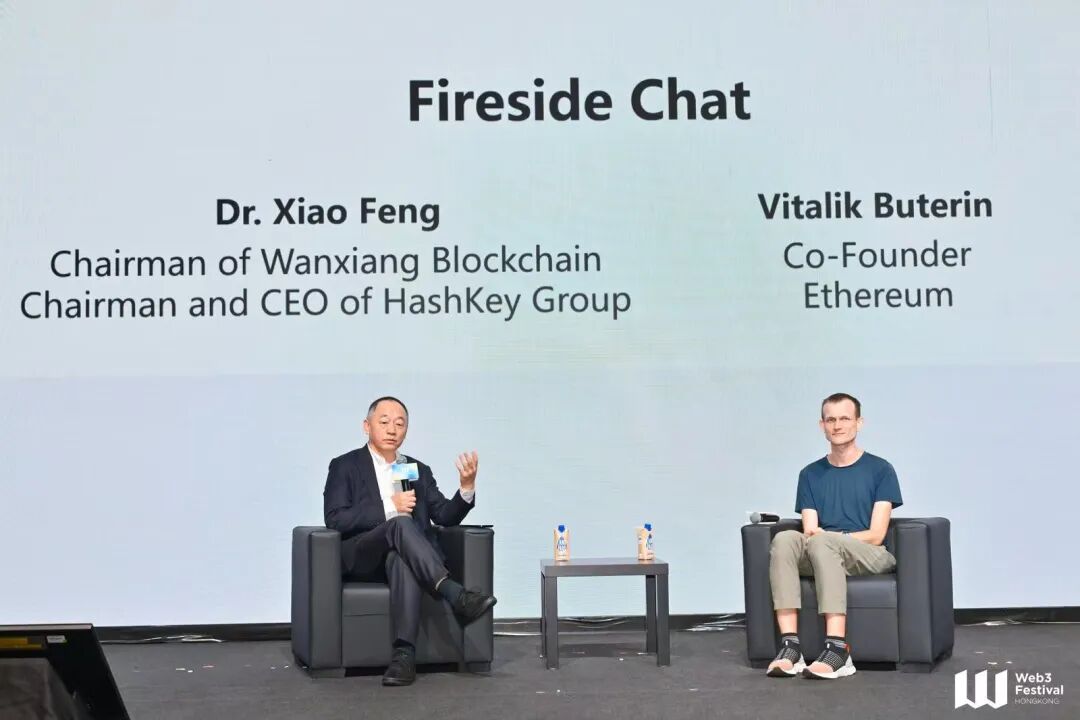
Anti-quantum is the other side of the same timeline. A recent paper from Google provides a conservative estimate that by 2035, quantum computing could break the elliptic curve signatures currently used by Bitcoin and Ethereum. However, Vitalik does not believe this timeline; he and Sun Ge share a similar perspective that AI acceleration will bring this timeline forward by 3-5 years.
Thus, Vitalik is concerned about how Ethereum will survive in the future, especially in the face of technological advancement and rapid iterations of AI. This reflects a strategic choice: in recent years, the crypto industry's narrative heat has been briefly hijacked by Solana and various new chains.
Each wave of new chains emerges faster, cheaper, and with higher TPS. He now positions Ethereum to leave performance issues to L2 and hardware acceleration, with L1 focused only on decentralization and security—a L1 that does not participate in the race for speed.
At the same time, he declared the most crucial statement in this conversation:
"I hope everyone does something completely different from past Ethereum."
He made this remark when asked, "What message do you have for the Chinese community?" The message is typically an emotional part, but in his response, he did not mention the community, belief, or a bright future; instead, he discussed the hope that everyone would rethink what the world currently needs from core principles, "This answer may not necessarily include the technology of Ethereum."
Therefore, looking back at what Vitalik did at the carnival, he is essentially setting the tone for the next decade of Ethereum, shifting from idealistic-driven to engineering-driven. In the amateur era, anyone could survive by shouting slogans; in the engineering era, one must rely on real skills.
Whether the industry exists might hinge on considering whether Ethereum still exists. Of course, I am not referring to the price of ETH.
He Yi, in search of the next wave of users
He Yi's conversation with Wanxiang Blockchain was originally themed around the impact of AI on Binance, but during her half-hour, the heaviest point she discussed was not AI, but user numbers.
"In the past, we said we aimed for one billion users; this year I say we should aim for three billion users."
This goal sounds like a PR statement. However, within the context of Binance’s current situation, I feel that there is anxiety behind this number.
Binance has not been having a good few months. Since the liquidation incident on October 11, controversy surrounding Binance has not dissipated. How to adjudicate these controversies is not the focus of this article, but more obviously, there is one detail: old users are leaving.

A wave of users has exited due to losses, some leaving because they believe crypto profits cannot compare to US stocks, and others lying flat feeling the market has no hope... The industry has relied on "the next bull market" to retain users over the past decade; now that the bull market hasn't arrived, retention has become difficult.
During the dialogue, He Yi articulated this concern.
"The early bonus period of the industry has passed. When the early bonus period diminishes, complaints will increase. Why hasn't Bitcoin continued to drop, making it impossible for me to buy at the bottom? Why isn't Bitcoin continuously increasing?”
During the early bonus period, exchange fees, new coin listings, and contract leverage all relied on the notion of "every day someone enters the market to take a gamble." Now, fewer people are entering the market, and money is diminishing.
So, since existing individuals in the crypto circle are not retaining, Binance needs to evolve into something that serves not only crypto users. She articulated it straightforwardly: "Becoming a company with a scale of three billion users means BN is not just an exchange but also a global financial infrastructure."
User scale increases tenfold. From where will this increase come? He Yi provided a second answer in the dialogue.
“Crypto itself is not for humans; it is for AIs... In the future, users could be at the level of ten billion or one hundred billion.”
The logic behind this narrative is that human bank accounts tie to identities, while AIs lack identities. To make payments, orchestrate, and make autonomous decisions, on-chain accounts are the only viable path. This logic was also mentioned by Sun Ge and Xiao Feng at this carnival, but only He Yi spoke from the position of the largest user base exchange.
We still do not know how to implement this, but being willing to articulate it signifies that Binance is publicly indicating to the industry that the old customer acquisition logic needs to change.
He Yi ended with a remark I noted down on a sticky note.
"Our work today is somewhat like that of candle factory workers in the past, but electricity has already arrived."
In the amateur era, the primary occupation in the crypto industry was trading coins. In the mainstream era, the main occupation in the crypto industry might be creating accounts for AI agents, carving out a share of the market in the payment space with AI becoming the main line.
The distance between them is akin to that between candle factories and electric lights.
Those organizing the event are already crossing the bridge
Many conferences are held in the crypto industry every year, but Wanxiang's event is a bit different.
Since the establishment of Wanxiang Blockchain Lab in 2015, when the crypto industry was still growing wildly, founder Xiao Feng invested real money into Bitcoin mines, Ethereum, Polkadot... Many traditional capitals that entered early have exited in the past decade, but it seems he has remained on the scene.
After listening to the live speech this time, I thought for a while.
Xiao Feng discussed specific内容 like AI Tokens, blockchain Tokens combined with privacy computing to transform hospital data into callable and chargeable assets... Whether these technical details can be realized remains to be seen.
What we should ponder more is the position from which he spoke.
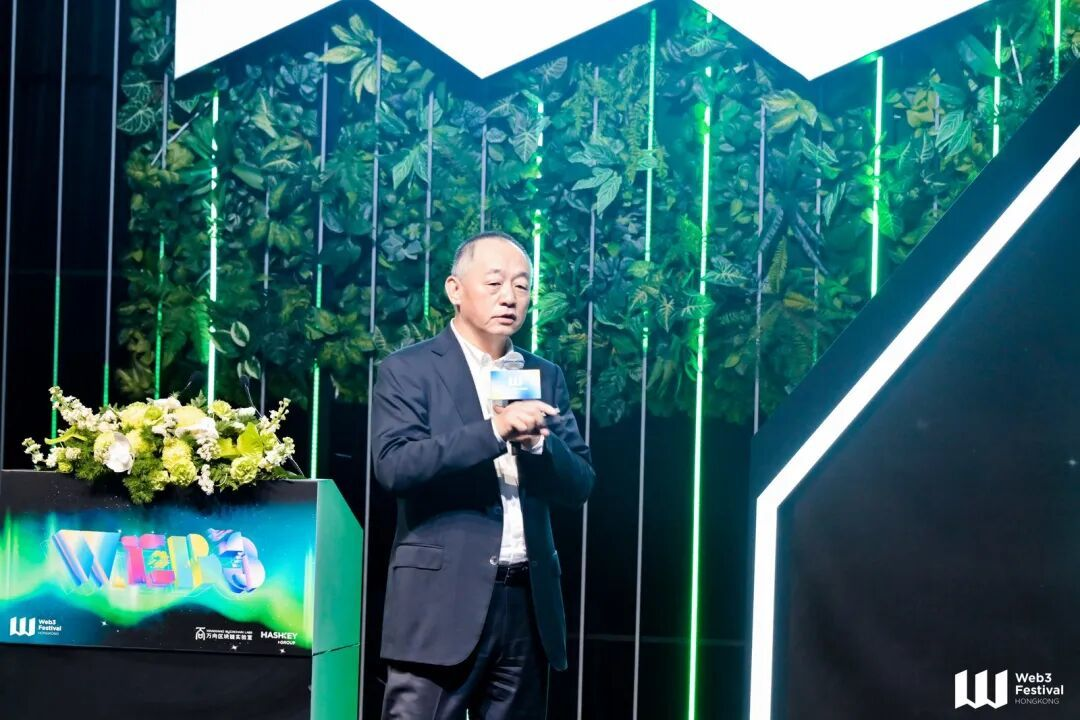
Over the past two years, HashKey Group has undertaken several actions. The parent company was listed on the Hong Kong Stock Exchange via IPO, establishing a compliance and equity structure. HashKey Chain operates as an Ethereum L2, primarily serving traditional financial institutions. HashKey's research team recommends blockchain solutions to regulatory bodies, with cooperation aimed at banks, insurance, and custodial agencies.
These moves collectively indicate not that "we are optimistic about crypto's future," but rather that Xiao Feng or Wanxiang/HashKey has repositioned themselves as a bridge. One side connects the native crypto world, while the other links to traditional financial regulatory frameworks.
Hosting this carnival essentially involves collecting traffic, influence, and projects on the crypto side; and on the HashKey side, transforming these into services usable by banks and regulators.
The more smoothly the bridge connects, the more valuable the endeavor becomes.
Xiao Feng's statement that "in the future, all commercial institutions will be Token factories" seems directed towards traditional finance. He is not telling the crypto circle, "We need to transform into infrastructure," but is informing traditional finance, "In the future, you all need to issue Tokens; I can help you with that."
The person who first changed their tone at this carnival may actually be him. Others may only now be starting to change their language over the past two years, but if you are a regular at Hong Kong events, you will find he has already been building bridges between two sets of languages for three or four years.
Those organizing the event are not necessarily forever spectators of the industry. They may be the ones who first see clearly where to go and have already taken the initiative.
Postscript
This week in Hong Kong, the most common complaint heard was, "The main venue has nothing; everything is in the side events."
Indeed, you can finish strolling through the main venue in 20 minutes; real trading, collaboration, recruitment, and negotiations all happen outside the main venue. However, without the main venue, none of these side events could take place.
The role of an industry conference is not to have speakers talk on stage, but to bring tens of thousands of relevant people to the same city within the same week. When people have gathered, true value occurs between individuals.
During downturns, bringing people together in a specific physical space facilitates face-to-face meetings, handshakes, meals, exchanging business cards, and assessing each other's reliability. The real function of this carnival may indeed be this.
After the crypto bonus period has passed, the next step is to embrace AI, RWA, or predictive markets; you need to feel which trend it is on-site. Even if crypto changes to a new business model, the rules, cooperation, and long-term relationships must be re-discussed.
This business requires "a场." And the people in it need to be "on场."
The next Hong Kong Web3 Carnival will likely still be at this time next year. Will you be present then?
免责声明:本文章仅代表作者个人观点,不代表本平台的立场和观点。本文章仅供信息分享,不构成对任何人的任何投资建议。用户与作者之间的任何争议,与本平台无关。如网页中刊载的文章或图片涉及侵权,请提供相关的权利证明和身份证明发送邮件到support@aicoin.com,本平台相关工作人员将会进行核查。


