Written by: Vivi
When a top AI researcher leaves Google, people say: this is a career choice. But when three high-profile AI talents leave one after another, many begin to write Google’s “obituary”.
Noam Shazeer, Google's Vice President of Engineering and co-lead of Gemini, announced he is leaving Google to join OpenAI. Noam is not an ordinary AI researcher. He is one of the authors of the legendary paper "Attention Is All You Need" from 2017. This paper proposed the Transformer architecture, laying the foundation for today’s large language model era.
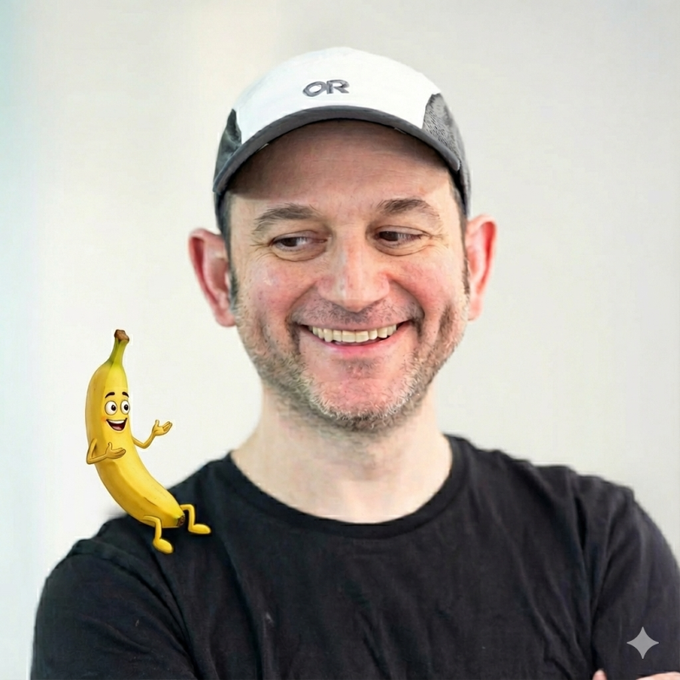
Image source: Noam Shazeer LinkedIn profile
John Jumper, Vice President of Google DeepMind, is leaving Google DeepMind to join Anthropic. Jumper helped create AlphaFold, the protein structure prediction system that changed biology and drug development. In 2024, he will receive the Nobel Prize in Chemistry along with Demis Hassabis, co-founder and CEO of Google DeepMind.
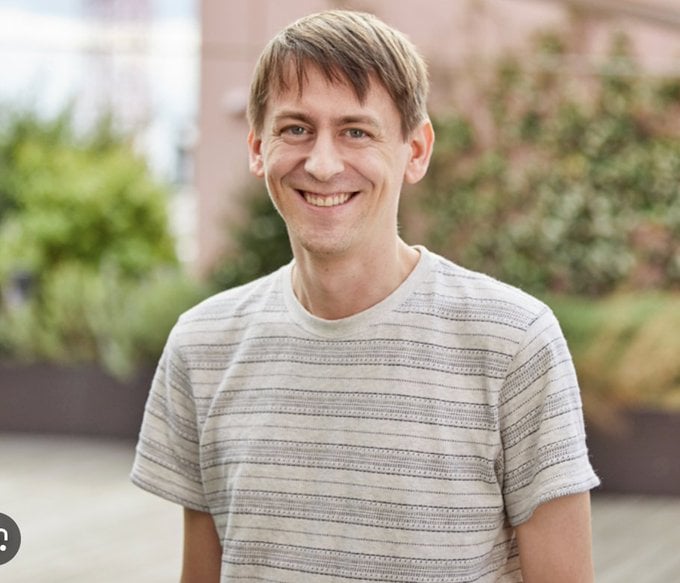
Image source: The Gairdner Foundation
Daniel De Freitas, Noam Shazeer's long-time collaborator and co-founder of Character.AI, is also part of this talent exodus story. He may not be as well-known as Noam, but he is very important in the history of conversational AI. He and Noam both worked on conversational AI at Google before leaving in 2021 to create Character.AI, which developed one of the earliest popular consumer-grade AI chatbots. In 2024, Google brought them and parts of the Character.AI team back through a deal worth about $2.7 billion. Now, their names are again linked to the question of “Can Google retain the talents that defined the conversational AI era?”.
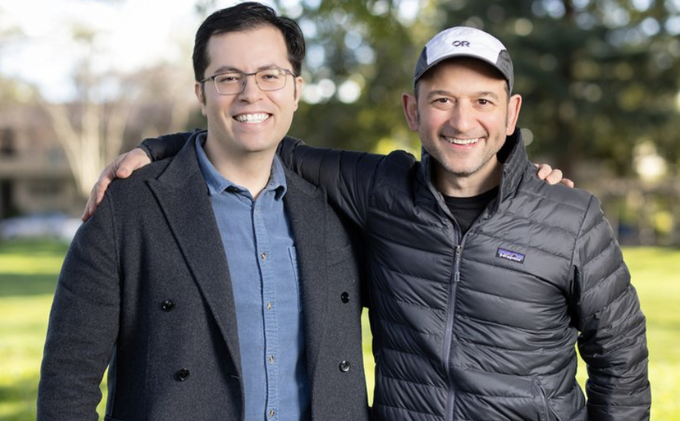
Image source: Business Insider
So yes, the market's concerns are understandable because these are not ordinary employees leaving. These three individuals have touched upon three of the most critical threads in modern AI: Transformer, conversational AI, and AlphaFold.
For Google, which is struggling to prove to the world that Gemini can compete with OpenAI and Anthropic, this is undoubtedly painful.
But “obituary” is not the correct framework. Talent loss is a warning sign, but not a death certificate.
From another perspective, Google being poached is not because it has become unimportant. On the contrary, it is precisely because it is still very important.
OpenAI and Anthropic are both young, hungry AI giants on the eve of an IPO. They are competing for talent, reputation, and market momentum. Where do they go when they want the world's top AI talents?
They go to Google.
From another angle, this itself indicates one thing: Google is still one of the deepest talent pools for AI in the world.
The departures are certainly significant. Losing talents like Noam Shazeer, John Jumper, and Daniel De Freitas is undoubtedly painful. They are not names that can easily be replaced.
But the real question should not be: “What exactly went wrong with Google?”
But rather: “What else does Google have besides any single genius?”
I prefer to view this as a stress test, and Google may still be one of the few companies capable of withstanding this pressure test.
Let me elaborate.
1. First, the background: This is a typical IPO eve talent battle
First, it is essential to understand that this is not just a story about Google. This is also a typical talent battle on the eve of an IPO in Silicon Valley.
OpenAI and Anthropic are no longer the small research labs they were a few years ago; they have become AI giants entering the scrutiny of the capital markets.
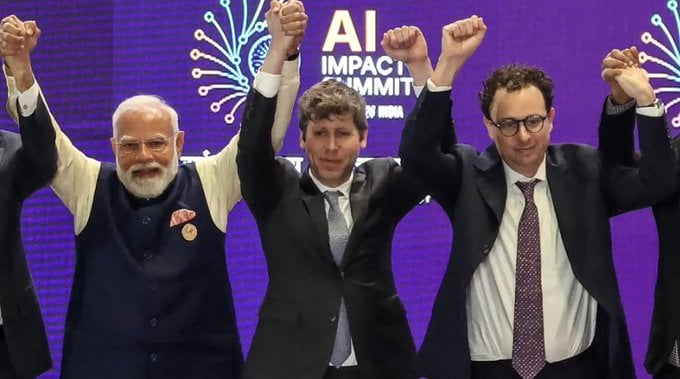
Image source: TechCrunch
They need capital, customers, computing power, corporate trust, regulatory credibility, and most importantly, top talent.
At this stage, top AI talents themselves will become part of the valuation narrative.
Noam Shazeer joining OpenAI sends the message that OpenAI can still attract those who invented the foundational technologies of the LLM era.
John Jumper joining Anthropic signals that Anthropic is not just about Claude; it wants to be viewed as a serious frontier AI and AI for Science organization.
These hires tell investors, employees, customers, and the entire AI community: the best talents still believe in our mission.
That is why this talent battle appears so dramatic.
But to simply understand it as “Google must have major problems for talent to leave” is too hasty.
Silicon Valley has never operated this way. Talent will move. It is normal for excellent people to leave excellent companies. They may be seeking new missions, greater equity returns, faster decision-making, more autonomy, or just moving into different life stages.
This is not necessarily a scandal.
In fact, one key reason why Silicon Valley can become an innovation engine is the high fluidity of talent. Especially in California, non-compete restrictions are strictly limited, allowing people to move freely, start businesses, compete, and restart.
This freedom can be uncomfortable for many companies. But it is essential for the ecosystem.
2. Then look at Google’s real advantage: It is not just a model company
Another common misconception is to simplify the AI race into model rankings.
But Google’s advantages are much greater than benchmarks.
Of course, benchmarks are important.
Heavy users will care about whether Claude writes better code, whether GPT has stronger reasoning, whether Gemini performs better in long contexts, multimodal tasks, and tool utilization, or whether a model has a stronger sense of personality, usability, and agentic workflow.
Gemini does indeed need to continue proving itself in some areas where OpenAI and Anthropic have already established strong positions.
But the AI market is far larger than benchmarks.
Most average users do not wake up each day thinking: “Which model should I use today?”
What they want is: emails summarized; schedules organized; photos searchable; YouTube videos interpreted; Docs, Gmail, Search, Maps, and Android to become smarter.
This is Google’s tremendous advantage.
OpenAI and Anthropic are exceptionally good model companies. But Google’s positioning is entirely different from theirs: it is a full-stack AI company.
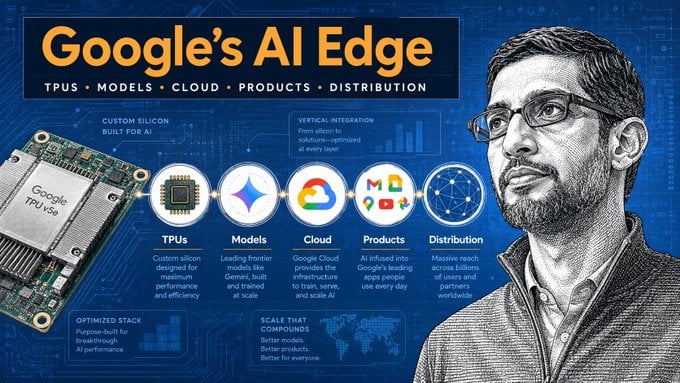
It has infrastructure: TPU, data centers, Google Cloud, AI Hypercomputer.
It has models: Gemini, Gemma, Veo, Imagen, AlphaFold, and a rich research tradition from Google Brain and DeepMind.
It has products: Search, YouTube, Android, Chrome, Gmail, Workspace, Maps, Photos, Pixel.
It has revenue engines: search ads, YouTube ads, subscriptions, Cloud, enterprise products.
Most importantly, it has distribution: billions of users already in its ecosystem.
Most AI startups need to spend substantial costs acquiring users, while Google already has a vast user base ready-made. Most AI startups need to establish user habits from scratch, while Google is already integrated into many people's daily habits.
This is why the narrative of “Google’s doom” does not hold up.
Public opinion can easily create panic. However, upon closer examination, you will find that Google holds advantages that the vast majority of companies do not have: an invisible AI intelligence layer.
The most successful consumer-grade AI may not make users feel like they are “using AI”.
OpenAI and Anthropic need to pull users into their products, while Google can push AI into the products users are already using every day.
This is a very deep distribution advantage.
Search is also part of this advantage, even though it is often described as Google’s biggest weakness.
The logic behind being bearish on Google is clear: if AI changes how people access information, Google’s core search business might be disrupted.
This risk is real.
Google's search ad business is one of the most profitable businesses in tech history. It supports AI research, YouTube infrastructure, Cloud expansion, moonshots, and enormous capital expenditures.
Thus, Google’s actions in this area will be exceptionally cautious. But Search is not just Google’s weakness; it is also Google’s super weapon.
Search contributes distribution, user intent data, advertiser relationships, billions of user interactions daily, and serves as a direct entry point that pushes AI to mainstream users.
If Google can manage this transformation well, Search will not simply be replaced by AI but will evolve into an AI-native engine for answers.
This process will undoubtedly bring about chaotic scenarios—publishers will complain, advertisers will have issues, regulators will pay close attention, and users will need time to build trust in AI-generated answers.
But if Google can evolve Search from a list of links into a personalized, multimodal, agentic answer engine, it will remain one of the most important gateways on the internet.
The current question is: Can Google change itself before others change Search?
Google also has another severely underestimated advantage: Google can win even when competitors succeed.
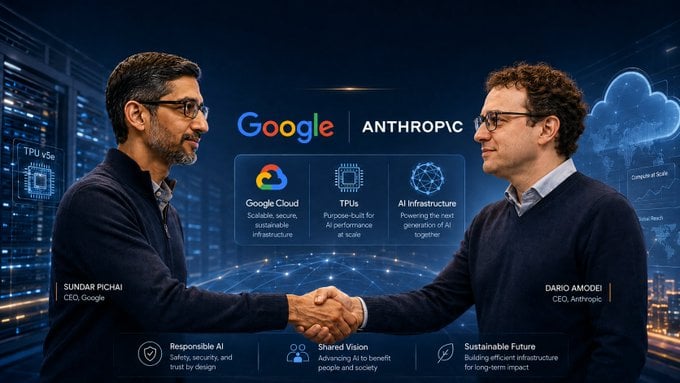
Anthropic is not just Google’s competitor. It is also its strategic partner.
Let’s look at the data:
Google's parent company Alphabet has committed to investing up to $40 billion in Anthropic, including a $10 billion cash investment, reportedly valuing it at $350 billion, and another $30 billion tied to performance targets.
Meanwhile, Anthropic is reportedly committed to spending $20 billion on Google Cloud over five years.
This is not just a financial investment. Anthropic has also announced plans to use up to 1 million Google TPUs, worth billions of dollars, and expects to bring over 1GW of computing capacity.
This means that one of Google's most important AI competitors may also become one of Google Cloud's most important customers for AI infrastructure.
OpenAI has also reportedly turned to Google Cloud for additional computing power.
So Google is not only participating in the AI model competition; it is also becoming a part of the underlying infrastructure for other leading AI companies.
In the AI gold rush, Google is not just trying to mine gold itself.
It is also selling shovels, roads, electricity, and cloud infrastructure.
This is a very strong position.
The model race is very expensive. Training and serving cutting-edge models requires massive computational power. Even the most successful AI companies need infrastructure partners.
Google has spent many years building proprietary chips, cloud capacity, and AI infrastructure. Now, even its competitors may rely on part of its technology stack. This is its foundational strength.
Lastly, it is worth mentioning that Google’s AI ambitions are not just limited to chatbots; they also include AI for Science.
AlphaFold, which won a Nobel Prize, is the best example. AlphaFold changed scientists' understanding of protein structure prediction, accelerated biological research, and demonstrated that AI can not only generate text but also tackle genuinely difficult scientific problems.
This is crucial for the long-term AI competition because ultimately, the biggest AI winners may not only be the companies that have the strongest consumer-grade chatbots; they might also be those that can apply AI to science, medicine, climate, education, robotics, and deep-tech infrastructure.
Google DeepMind has always harbored this greater ambition.
Indeed, John Jumper's departure may represent Google’s “unresolved feelings,” as he represents one of Google’s most significant victories in AI for Science.
But AlphaFold is not the product of any single genius working alone. It comes from a team and from a research culture: a commitment to investing long-term in global challenges even before the market fully pays attention.
This culture is rare, and Google still has it.
3. The real existence of the innovator's dilemma
So, does Google face an innovator's dilemma?
Certainly, no company is immune.
Google's core Search business is both its biggest asset and its greatest constraint.
Startups can move forward with pure hunger. Google has to protect a global business, a brand, regulatory risks, advertisers, publishers, enterprise clients, and billions of users.
This can slow decision-making; make product releases more cautious; and complicate internal coordination - this is a part many people criticize.
Google has also made mistakes, such as Bard's poor start.
Gemini itself has faced several public setbacks during its growth.
But the important question is not whether Google has weaknesses, but rather: Is Google adapting and adjusting?
I believe it is.
The story of Character.AI reflects this willingness well.
Noam Shazeer and Daniel De Freitas left Google to found Character.AI in 2021 and grew rapidly. Later, Google took decisive actions through a significant deal to bring them and part of the Character.AI team back.
This is the core tension in Google AI's narrative: Google was initially too cautious, seeming heavy-footed compared to startups; but later, Google reorganized and refocused, beginning to push Gemini throughout its ecosystem, becoming an intelligent layer across Search, Workspace, Android, Cloud, and consumer-grade products.
This does not mean Google can act like a 200-person startup. That is unrealistic.
But when the organization aligns, it can operate like a full-stack AI empire.
This distinction is crucial - the innovator's dilemma is real, but Google is not ignoring it.
From the revolution of Search to a series of actions integrating Gemini, we see efforts from a tech giant in transition.
4. Summary: This is a stress test, not an obituary
The departure of top talent feels more like a stress test for Google rather than an obituary.
This company is facing one of the most challenging transformations in its history, yet it is also one of the few companies with enough resources, technology stack, and distribution capacity to navigate this transformation.
In the age of AI, the shiniest model may win a news cycle; the most radical startup may top the headlines in the talent battle.
But the best-integrated system may win the next decade.
This is why I still have confidence in Google - not because Google is perfect, but because Google is one of the few companies that can compete at every layer of the AI future.
The AI race is far from over, and Google is playing a long game.
免责声明:本文章仅代表作者个人观点,不代表本平台的立场和观点。本文章仅供信息分享,不构成对任何人的任何投资建议。用户与作者之间的任何争议,与本平台无关。如网页中刊载的文章或图片涉及侵权,请提供相关的权利证明和身份证明发送邮件到support@aicoin.com,本平台相关工作人员将会进行核查。


