Author: Jingwei Venture Capital
Everyone is anxious that AI is taking away jobs. "AI Mother" Fei-Fei Li's latest interview directly exposes the truth of the times: In ten years, the workplace will only retain two types of people, the mediocrity in between who is neither rising nor falling, and their living space will continue to shrink. Currently, there is widespread industry talk that "the cost of intelligence is approaching zero," and she bluntly stated that it is a highly misleading one-sided assertion. The unique human abilities of perception, empathy, space, and embodied intelligence, evolved over billions of years, cannot be replicated by large models.
Most companies fall into three major pitfalls of automation thinking: treating AI as a tool for layoffs, piling up tools as digital transformation implementation, and issuing blunt commands for comprehensive AI deployment that trigger employee panic. True transformation with AI is never about eliminating human labor, but rather enhancing human value. The article throws out a painful "barbell effect": on one end are the top 1% of experts deeply engaged in their fields, using AI to strip away repetitive tasks and focus on irreplaceable deep judgment; on the other end are proactive polymaths who reconstruct workflows, independently harness tools, and build dedicated business systems.
Ordinary people do not need to fear technological iteration, the key to breakthrough lies in stepping out of passive execution thinking. Below, enjoy:
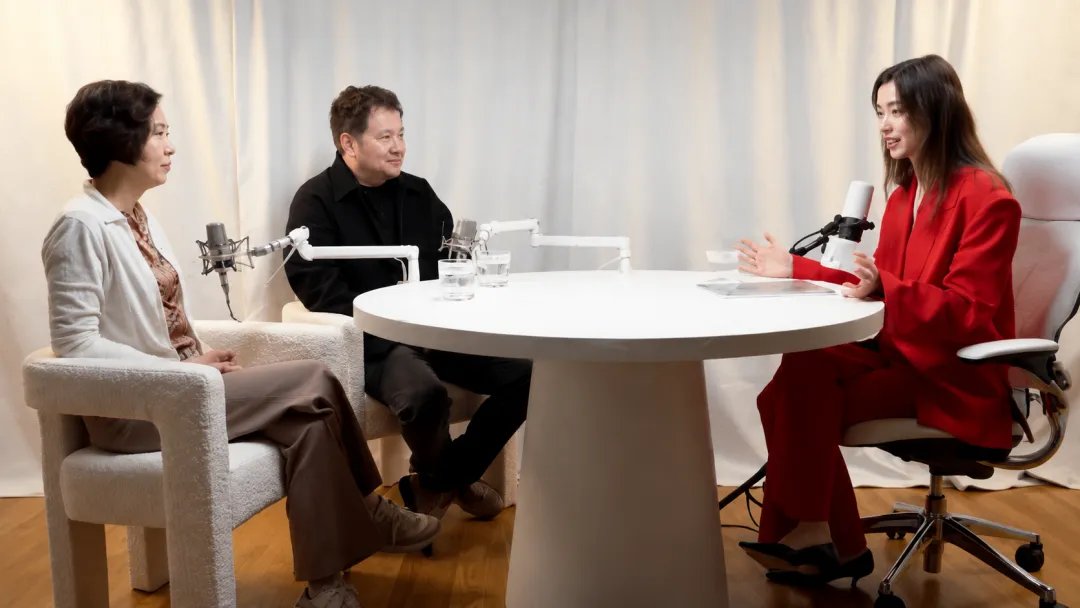
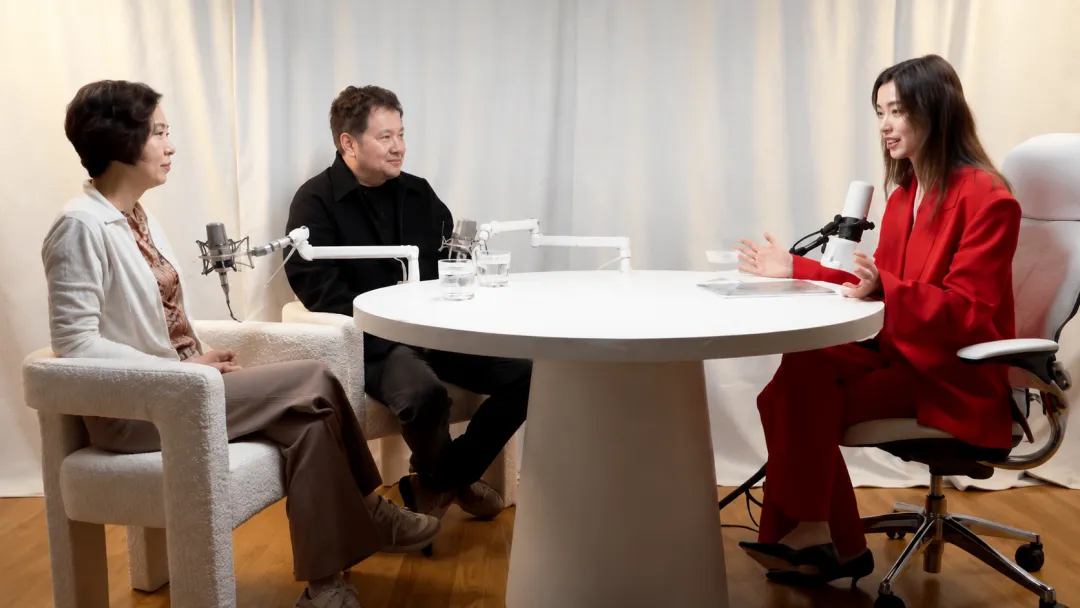
“AI Mother” Fei-Fei Li and MasterClass founder and CEO David Rogier had a podcast interview titled "AI Mother: In 10 Years, There Will Only Be Two Types of Workers Left".
The host asked Fei-Fei Li how she viewed a widely circulated statement: the Industrial Revolution automated physical labor, and now AI is to automate intellectual labor, what shall we do?
Fei-Fei Li responded that the Industrial Revolution did not automate labor. It made labor more efficient, expanded the scale of labor, and indeed changed the labor market. But it did not automate labor. Moreover, we cannot imply that labor lacks intelligence; that assumption is absurdly incorrect.
The form of labor changed, but the judgment put into labor by humans, the intuitive experience that artisans accumulate over a lifetime, and the cognitive judgments embedded in physical labor have never truly been automated.
The same misunderstanding is being replayed with AI.
01, "The cost of intelligence is zero," is a misunderstanding
A saying has recently become popular in the AI industry: the cost of intelligence is approaching zero.
Fei-Fei Li directly responded to this statement: Physical labor, cognitive labor, emotional labor, human activities and human intelligence are profoundly intertwined.
Human intelligence remains an unsolved mystery for nature. We do not truly understand the depth and nuances of human intelligence. Therefore, anyone claiming that "the cost of intelligence is approaching zero" is being irresponsible.
She then provided a second reason.
Even looking solely at language intelligence, large language models are indeed powerful; "they have already shown their power in helping business intelligence, software engineering, logical reasoning, and even deeper tasks."
But besides the language intelligence we are somewhat familiar with, we also have perceptual intelligence, spatial intelligence, bodily intelligence, and emotional intelligence. We still have not figured out where creativity truly comes from. Each person's creativity arises from different parts of their brain and from various aspects of their life experiences.
For instance:
A teacher determining why a student cannot learn relies not only on text analysis but on observing expressions, tones, and moments of hesitation.
A team leader deciding whether to say something in front of a key client has no algorithm to make that judgment for them.
If "the cost of intelligence is zero" is taken as a premise for management decisions, it misses precisely the most valuable part of being human.
02, Three Practices Expose Automation Thinking
Fei-Fei Li repeatedly reaffirmed the same position in the interview: I truly believe it is a technology, meaning it is just an extremely powerful tool. But this tool is for humans to use, to make things better. At the same time, how to use this tool is something we must be very vigilant about.
She added a more important point: “We teach children how to use fire, knives, and now the internet. Now, as a species and a society, we must learn (how to use AI).”
Whether tools are used to replace people or elevate them does not depend on the technology but on the person deploying it.
Three practices in the interview correspond to three types of inertia in automation thinking.
The first is treating AI as a head replacement tool.
Fei-Fei Li used products managers as an example.
The standard product manager ten years ago "was more like a conductor. They did not need to code and were typically not software engineers."
For prototypes, they would find designers. For development, they would wait for engineers. After getting prototypes, they would send them to users, wait for feedback, and then integrate. "The lifecycle of product management might take months in a typical company."
And now?
Many product managers now write code themselves. They do not need to wait for a team to make prototypes; they can use AI to help design some very simple things and do "atmospheric programming." This shortens the cycle significantly.
But this does not mean we should throw away designers and software engineers; it just saves time, allowing them to work on the more complex parts.
AI has not replaced anyone. It has pushed everyone up a level. Product managers have shifted from "conductors" to "doers." Designers and engineers have transitioned from "executors" to "those specializing in the most difficult problems."
Managers with automation thinking might see this example and think, "Then we can hire two less engineers." The same fact, the same tool, leads to completely different conclusions. The difference lies not in the technology but in how one understands the technology.
The second is equating "using tools" with "doing it right."
Buying tools, starting training, teaching employees to write prompts, and considering the task complete once done.
Fei-Fei Li spoke about an educational judgment in the interview: the goal of education is not closed-book tests or open-book tests, nor standardized test scores.
The aim of education is to cultivate individuals, making each person a meaningful contributor to their community and society, and to lead a meaningful life. AI should not take away any of these basic goals. But AI should help achieve these goals better and more effectively.
By replacing "education" with "management," and "students" with "teams," every sentence holds true. The aim of introducing AI is not "to implement tools," but rather what you are redesigning using AI.
Rogier, not from a technical background, mentioned something he was doing:
I found that most of the applications I use are built by myself using Claude Code or Cursor.
My CEO tool stack consists entirely of applications I've created. Even my efficiency apps and to-do list apps are ones I constructed myself. The cost of making an application has shrunk from several months to just one weekend.
He is not showcasing technology; he is demonstrating: In the age of AI, outstanding individuals are not "those who execute tasks well," but "those who better design work systems." No matter how many tools are purchased, if the team lacks design thinking, the tools will only become electronic versions of old processes.
The third is thinking "comprehensive AI deployment" is a technical directive.
Sending a notice stating "the company will comprehensively deploy AI" sounds to employees like "people will be laid off." Sitting down to tell them "Let's see what you can do with AI that you couldn't do before," sounds to employees like "you can become stronger."
This is a very interesting phenomenon; employees hesitate not because they cannot use the tools, but because they do not know what management truly wants to do with AI. Is it to replace them, or to elevate them?
The same tool, the same budget, the same personnel. Different premises yield completely different results.
In the latter part of the interview, when the host asked Fei-Fei Li what the simplest way for someone who has no idea where to start with AI is, she gave this answer:
Go find a young person. Your child, nephew, or niece, as long as they are under 25, most of them are already using AI.
With a pure curiosity, ask them to show you how they use it and what they do with AI. Once you truly understand what it is, that world won't seem so frightening.
03, In the next 10 years, there will only be two types of workers left in the workplace
After stepping out of the trap of automation thinking, looking again at Rogier's description of workplace structure, the two ends of the barbell acquire entirely different meanings.
Rogier stated in the interview: My hypothesis is that you will see the emergence of a barbell effect. A group of people is becoming true experts.
A so-so copywriter can now be effectively replaced by anyone using a large language model. But if I am the best copywriter in the world, or in the top 1%, it will not be easy to beat me.
The other role we see is the highly proactive polymath. They can do many different things and possess strong skills in judgment and initiative.
At both ends of the barbell, one end consists of the top 1% of elite experts, while the other end comprises highly proactive polymaths who can manage multiple tasks. Those "so-so" individuals in the middle are seeing their space diminish.
Fei-Fei Li agreed with this judgment and added another layer of analysis:
Whether on the expert side or the polymath side, you need to have proactivity, and you should be able to use tools in a unique, creative, and in-depth manner.
The top experts at the left end of the barbell use augmentation to the fullest extent. AI helps them eliminate 90% of repetitive work, allowing them to focus on the 10% that requires human judgment. Their value is not compressed but released.
The polymaths on the right end are those who actively initiate augmentation. They get hands-on, build tools themselves, and define workflows. They are not waiting for an augmented future; they themselves are the starting point of augmentation.
The problem of the middle layer is not a skills issue but a posture issue. AI has raised the execution level of "good enough" to an extremely high standard. Those who remain at the level of "can execute" will be caught up regardless of what they do.
But as long as they switch from "waiting to be told how to use AI" to "I will try to see what I can do," the middle layer will have the chance to push themselves to either end of the barbell.
Fei-Fei Li specifically discussed this switch, stating: “The term 'entrepreneur' largely equates to 'proactivity.'”
04, Why is augmentation not a one-sided desire?
Someone might ask: What if technology advances and human judgment, creativity, and emotional intelligence are all automated?
Fei-Fei Li spent a substantial portion of the interview discussing the scientific version of the same question. Her company and research focus is on spatial intelligence.
Spatial intelligence encompasses four aspects: understanding, reasoning, generation, and interaction.
It includes several capabilities that humans demonstrate today in a 3D environment.
First, we can understand what is happening;
Second, we can reason;
Third, we can generate;
Fourth, and equally important, we can interact.
Fei-Fei Li provided an example of shooting a basketball:
Even the act of shooting a basketball itself is a highly complex moment of intelligence, where language reasoning plays a part. As an athlete, you will keenly recognize whether the shot went in and what it means for the game, at that moment.
At the same time, seeing the entire court, noticing the positions of other players, aiming at the hoop involves deep spatial awareness. Then adjusting your body and knowing how to make that motion involves deep physical intelligence.
The three types of intelligence—linguistic, spatial, and bodily—work in unison during the moment of shooting a basketball; they do not operate sequentially like "first language, then space, then body."
Most of what we do in life is actually a mixture of linguistic intelligence, spatial intelligence, and bodily intelligence. They are highly complementary and work together.
Then Fei-Fei Li offered a judgment from an evolutionary perspective: It took over 500 million years for spatial intelligence to mature, while language intelligence took a much shorter time. Thus, this is a very deep, ancient, and fundamental intelligent capacity shared by both animals and humans.
Collectively, these judgments point to the same conclusion. Today, the tasks that AI can truly accelerate are those on the language level: writing reports, researching data, conducting data analysis, writing code, and generating images.
It grants people more time and energy to pursue tasks beyond language: making judgments, creating, empathizing, making decisions in ambiguous circumstances, maintaining calm under pressure, and focusing on the most important signals amidst various conflicting messages.
Augmentation is not a wish; it is not a choice of values. At this stage of technological development, it is a scientific judgment: Humans still possess numerous capabilities that AI cannot match.
With the framework of augmentation, what is saved is repetitive labor, and what is gained is the released professional judgment.
Fei-Fei Li once stated in an interview, which can serve as a litmus test for all AI management decisions: We teach children how to use fire, knives, and then the internet. Now, as a species and society, we must learn how to use AI.
The keyword is not "learning," but "we." It is not about letting employees learn on their own, or letting the IT department deploy it, but about managers and teams working together, treating AI as something that needs to be understood collectively, using it to elevate everyone a level higher.
免责声明:本文章仅代表作者个人观点,不代表本平台的立场和观点。本文章仅供信息分享,不构成对任何人的任何投资建议。用户与作者之间的任何争议,与本平台无关。如网页中刊载的文章或图片涉及侵权,请提供相关的权利证明和身份证明发送邮件到support@aicoin.com,本平台相关工作人员将会进行核查。


