Liquidity has become the only moat, and the income gap between public chains and application revenues continues to widen.
Written by: Noveleader, Castle Labs
Translated by: AididiaoJP, Foresight News
Block Space Commercialization, Public Chains Face Survival Dilemmas
For any public chain, its core business essentially revolves around selling "block space." However, this product is easily replicable and has almost no substantial differentiation. The block space offered by various public chains is highly homogeneous on a functional level, with the only distinguishing feature left being "liquidity."
A chain with a mature ecosystem and deep liquidity can attract more developers, thus driving an increase in block space utilization — this is the simple flywheel on which the business model of public chains operates. However, as industry technology continues to evolve, the supply cost of block space keeps decreasing. Even as developers and usage increase simultaneously, their contribution to the revenue of the public chain itself becomes increasingly limited.
As a result, the gap between public chain revenue and application revenue continues to expand, making it increasingly difficult for public chains to support their valuation levels based on existing income.
More and more public chains are starting to acknowledge the widening gap between "on-chain fees" and "application fees," and are attempting to internalize more value generated within the ecosystem into their own systems.
Overall, the public chains currently undergoing active transformation can be categorized into two main types:
- Ecological expansion type: represented by Arbitrum and Polygon. The Arbitrum Stack has been adopted by large institutions like Robinhood, while Polygon is transforming into a payment public chain aimed at fintech.
- Product expansion type: represented by MegaETH and Sophon, with a strategic focus on developing applications independently to directly capture application layer value.
Ecological Expansion: Increasing the Size of the Pie, Then Sharing the Profits
The primary pathway for public chains to increase revenue lies in expanding the ecological boundaries.
Optimism was the first to pioneer this model, offering the OP Stack to different Layer 2 networks via Superchain, and collecting 15% of net on-chain profits or 2.5% of L2 revenue (whichever is higher). This model initially operated well and was adopted by multiple Layer 2 networks. However, following Base's announcement to exit Superchain in February this year, Optimism's revenue sharply declined — previously, Base contributed over 90% of revenue to Superchain, far exceeding the contribution from Optimism’s own network.
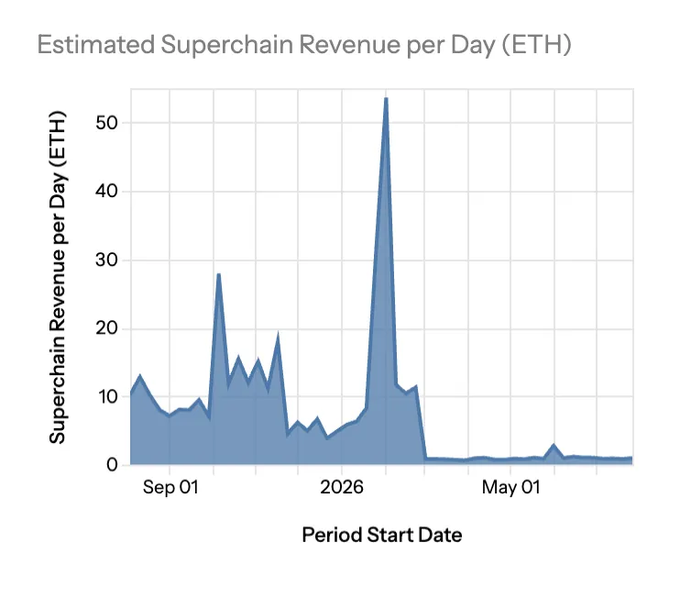
Notably, just weeks before Base's exit, OP token holders had proposed to allocate 50% of Superchain's revenue for OP buybacks. However, after losing the main source of revenue, the value of the tokens that could be accumulated through buybacks has significantly diminished.
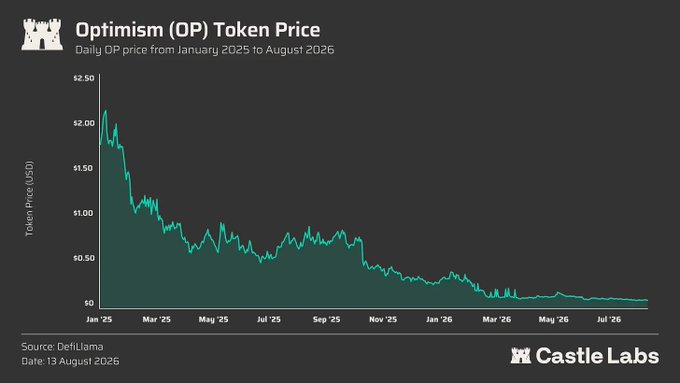
The cracks appearing in Optimism's model do not necessarily mean that there is a fundamental error in the ecological expansion pathway itself. Superchain is still utilized by multiple networks such as Celo, Ink, and Unichain, and remains a continuously growing tech stack.
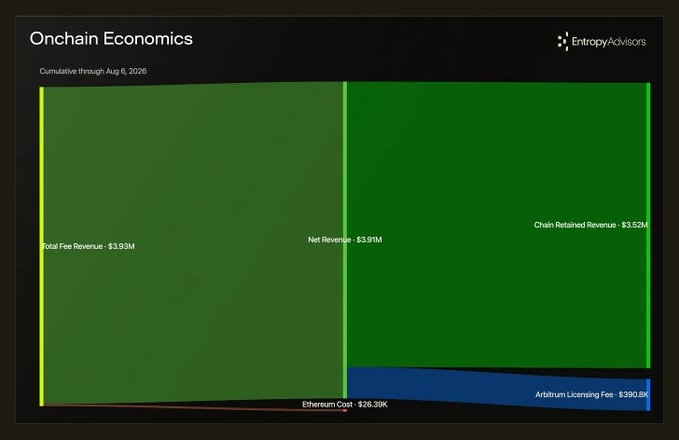
Arbitrum has followed a similar strategy, creating its own Arbitrum Stack and becoming one of the most successful cases in the "betting on technology stacks" path. Last month, Robinhood launched its own Layer 2 network based on the Arbitrum Stack, generating approximately $4 million in revenue to date, of which about $390,000 belongs to Arbitrum (based on a 90/10 revenue-sharing ratio).
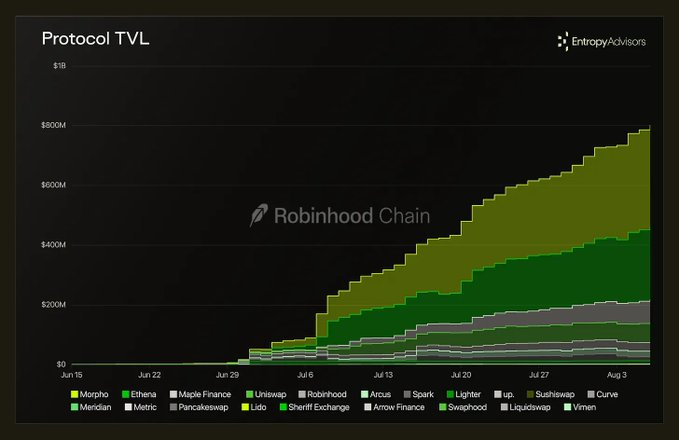
In addition to Robinhood, Arbitrum Stack has also been adopted by the RWA public chain Plume Network. Currently, Robinhood is the largest contributor to the growth of its tech stack, and the total locked value (TVL) of the entire stack has exceeded $800 million. Robinhood's deployment has also expanded the scale of tokenized stocks within the Arbitrum ecosystem, now reaching $25 million. Within just a month of launch, Robinhood Chain's TVL has approached half that of Arbitrum’s mainnet ($1.63 billion).
Apart from ecological expansion, Arbitrum has also launched the Timeboost mechanism — users can pay higher fees to gain transaction priority. Since its launch in April 2025, Timeboost has contributed over $7.7 million to the treasury.
Arbitrum applies the revenue it receives to actual operations. The Arbitrum DAO treasury deploys both on-chain and off-chain assets, generating substantial returns. With a net deployment scale of about $90 million, it has cumulatively earned $4 million in interest income. This practice is worth emulating for many DAOs and treasuries — most projects merely passively hold depreciating native tokens, ultimately harming the long-term sustainability of their treasuries.
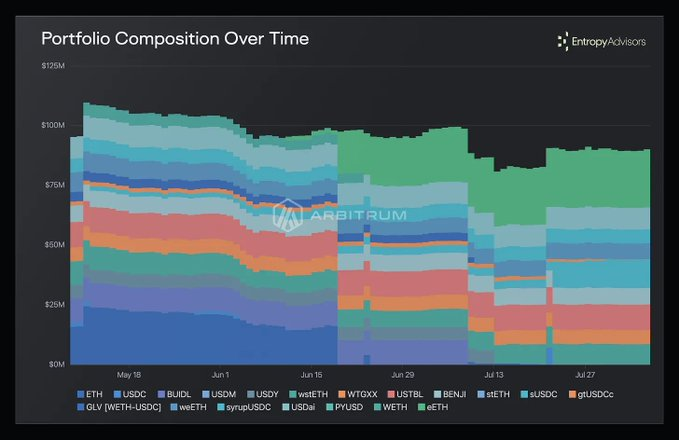
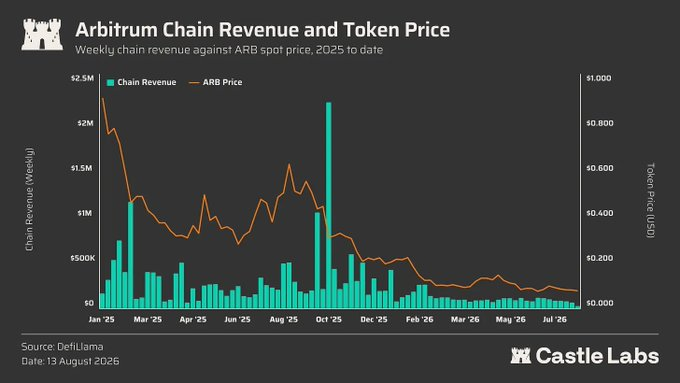
Despite Offchain Labs announcing a buyback plan last year, the success of Arbitrum Stack and the price of the ARB token have yet to form a clear correlation. ARB remains under pressure due to ongoing token emissions and unlocks.
Another public chain focusing on ecological expansion is Polygon, which is positioning itself as a payment public chain aimed at fintech and general users.
This strategic positioning is sensible for Polygon: Stripe utilizes Polygon to route stablecoin payments, Mastercard leverages it to settle merchant payments and support the Agent Pay product, while Revolut, Paxos, Cash App, and others are also using Polygon's infrastructure. These institutions value Polygon's high throughput, ultra-low fees, and its ongoing enterprise-level control features, which facilitate easy access for large fintech companies.
As of now, Polygon has processed approximately $2.9 trillion in stablecoin transaction volume, with the current stablecoin supply around $3 billion, growing over 80% since 2025.
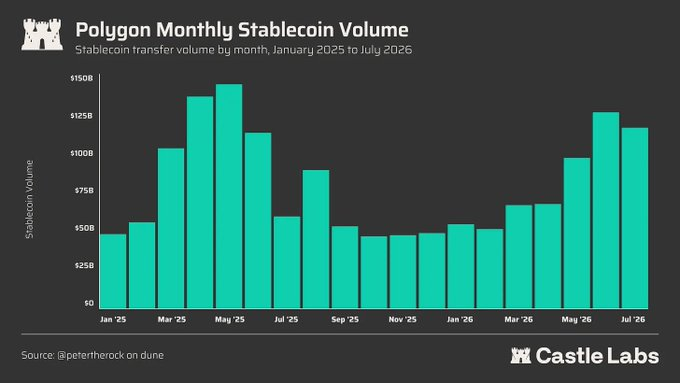
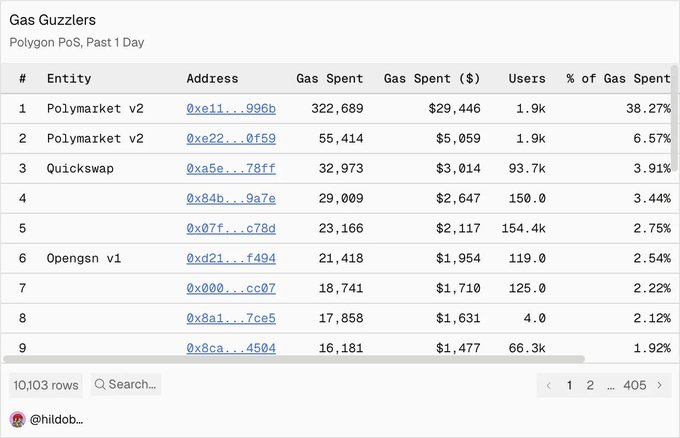
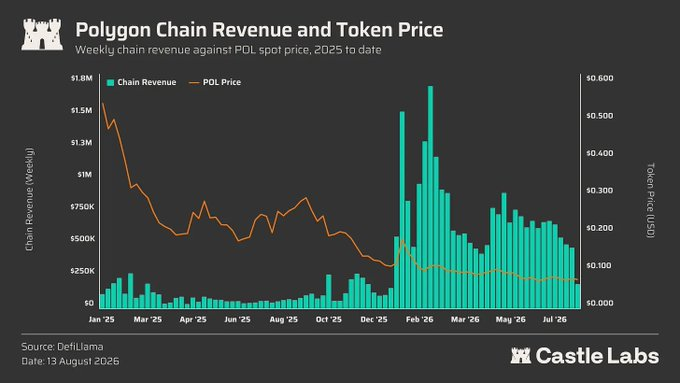
Despite the continuous growth in payment usage, Polygon's main revenue still heavily relies on the deployment of Polymarket. To reduce the risk of relying on a single source, Polygon is actively expanding its other revenue channels.
Similar to Arbitrum, Polygon's ecological expansion results have not been adequately reflected in token value. Continuous token emissions have led to weak POL performance; despite the public chain frequently ranking among the top three in terms of on-chain income and token buybacks, it still cannot fully offset the ongoing selling pressure.
Product Expansion: Developing Applications In-House to Internalize Value
Beyond ecological expansion, some public chains have begun to address the structural issue of "application layer profits being substantial while public chain layer revenues are difficult to share" in a more direct manner — namely, a vertical strategy, which involves developing applications themselves.
The application layer generates substantial fee revenue but almost none flows back to the public chain layer; this is the reality most public chains currently face. A comparison of application fees versus public chain fees over the past 30 days clearly shows that the value public chains can capture is far lower than the continuously growing income from the application layer.
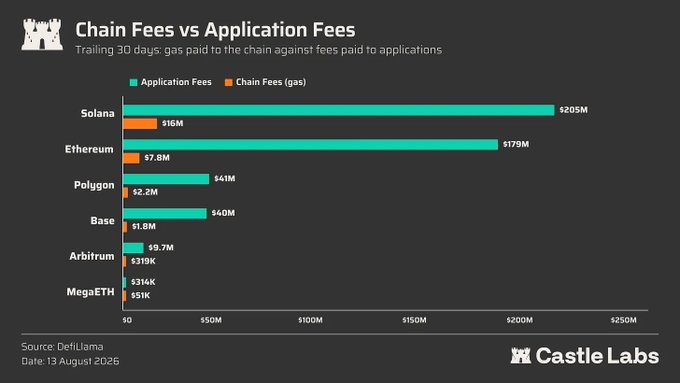
This situation is not surprising. From the inception of public chains, they have been positioned as infrastructure providers — a healthy public chain ecosystem should yield high application fees and low public chain fees, making it more developer-friendly. However, without support from fee income, public chains struggle to maintain valuation levels, token economic models, and sustainable operations.
Because of this, emerging public chains like MegaETH and Sophon, and even established public chains like Sei, have begun to pivot towards in-house application development, attempting to internalize application layer income rather than allowing it to continue flowing to third-party applications.
Recently launched MegaETH has clearly stated its intention to bridge the gap between application fees and public chain exposure. The team has shifted its focus from supporting third-party developers to developing its own first-party applications — consumer applications aimed at ordinary users, while still supporting ultra-low latency and high throughput applications (OMEGA applications) that can only be realized on MegaETH.
MegaETH co-founder Shuyao Kong stated: "We are redirecting the energy we previously lent to third-party developers back to our own first-party applications: consumer-grade applications directly built by us and aimed at target users."
MegaETH is also attempting to capture the value generated by stablecoins. It has collaborated with Ethena to launch a white-label stablecoin USDm (MegaETH USD), with funds deposited into BlackRock's BUIDL fund that can yield returns close to SOFR. Calculating based on the current supply of $18 million and an approximate SOFR of 3.6%, the annualized profit is about $650,000, which will be used for MegaETH's buybacks and burning. However, this mechanism is highly dependent on the actual activity level of the ecosystem. Currently, the supply of USDm has plummeted over 95% from its peak of about $600 million in May, reflecting a significant decline in on-chain usage.
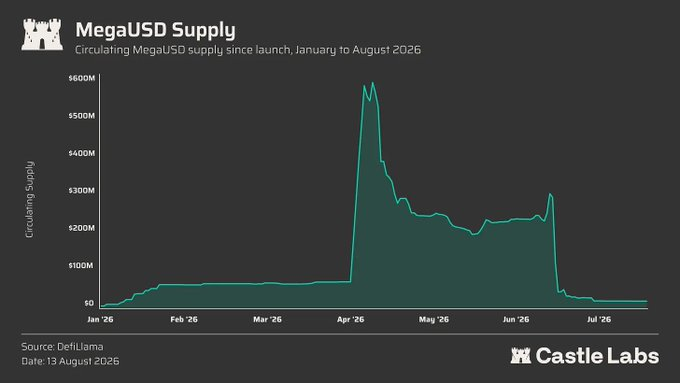
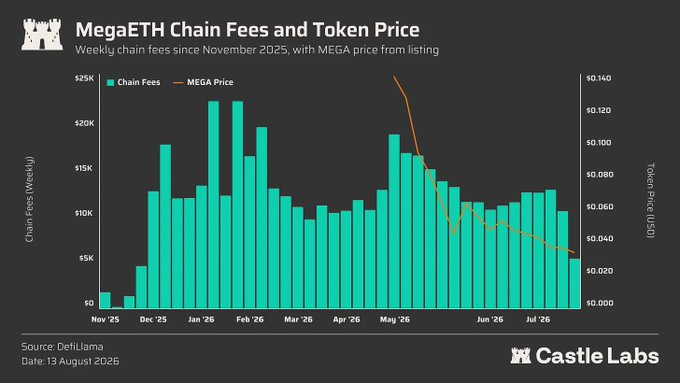
Despite MegaETH's many efforts to actively increase public chain revenue, the results have been somewhat disappointing, with both adoption rates and token prices facing pressure. In addition to communication issues, limited ecology, and hesitant launch decisions, a lack of active incentive programs is one of the important reasons for the drastic decrease in usage — while its competitor Monad is vigorously pushing through incentive measures, attracting over $400 million in TVL over the past month.
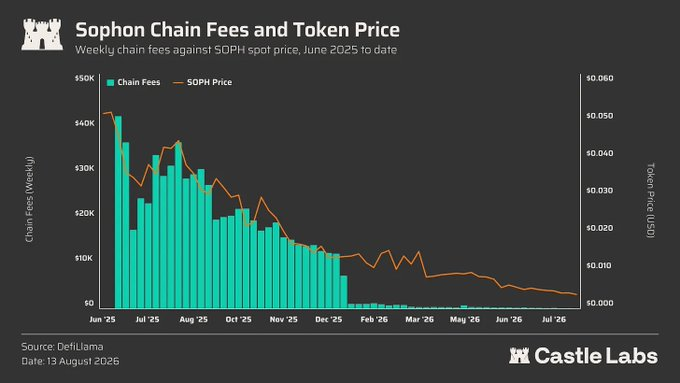
Another public chain choosing to develop applications independently is Sophon. This project's transformation is more thorough — it has directly shut down its public chain operations and transitioned to becoming an active application developer on the Base chain. Unlike MegaETH, Sophon's transformation stems from its public chain's failure to gain effective adoption, ultimately deciding to shut down and pivot. Its first application under development is the crypto card Pyre.
Like other projects, Sophon's token performance has also been underwhelming, due to the very low adoption rate of its public chain (which has now been shut down), and the narrative of "entertainment and consumer applications" has not truly attracted enough developers.
The market space for crypto applications is vast, with opportunities and potential user bases that are quite considerable, so the transformative logic for these public chains is directionally reasonable. Recently, FWA, Fomo, and the more well-known Pump.fun and Polymarket have all become ideal cases that this path may achieve.
Conclusion: Public Chains Are Evolving into "More Than Just Public Chains"
Currently, there are hundreds of public chains in the market, selling almost homogeneous block space, and unless liquidity keeps up, it is difficult to form effective differentiation.
Liquidity serves as a moat and remains effective for existing giants, allowing them to continuously attract developers and accumulate fee revenue; however, for new public chains, this cycle is difficult to initiate — to attract liquidity, incentives must be provided, and once those incentives cease, liquidity may withdraw accordingly, with MegaETH being a typical depiction of this predicament.
However, while liquidity is a differentiating factor, it is insufficient to support the current high valuation multiples of public chains, as the actual fees earned are far from matching the valuation levels.
Situations are changing. Public chains are starting to realize this structural dilemma and are actively promoting their transformation into "more than just public chains" — either by expanding the ecological service scope or by developing applications in-house to infuse more value into the ecosystem. Arbitrum, MegaETH, and others are exploring this path.
This can be seen as a return to "practicality" for the entire industry.
Ultimately, the bottom line of any network lies in its users and usage.
For years, public chains have been focused on peripheral construction, relying on substantial incentive programs to buy participant loyalty. In fact, the demand for applications from public chains far exceeds the demand from applications for public chains.
Now, public chains are finally beginning to confront this principal-agent dilemma and address it through vertical strategies and in-house application development.
Public chains are evolving into "more than just public chains."
Can this path succeed? The competition has only just begun.
免责声明:本文章仅代表作者个人观点,不代表本平台的立场和观点。本文章仅供信息分享,不构成对任何人的任何投资建议。用户与作者之间的任何争议,与本平台无关。如网页中刊载的文章或图片涉及侵权,请提供相关的权利证明和身份证明发送邮件到support@aicoin.com,本平台相关工作人员将会进行核查。


