Author: Alex Thorn
Translation: Deep Tide TechFlow
Deep Tide Summary: Galaxy Research reviewed cryptocurrency and blockchain venture capital in the second quarter of 2026: approximately $5.6 billion was invested in 384 transactions, showing a quarter-on-quarter recovery, but funding was more concentrated in later rounds; transaction/exchange/investment lending continued to attract capital, with the United States still dominating. Meanwhile, new funds only raised about $3.9 billion, marking the lowest number in years—this gap of “investing while unable to raise” in the primary market is more concerning than just looking at transaction heat.
After cooling in the first quarter, cryptocurrency venture capital warmed up in the second quarter of 2026. Venture capital invested about $5.6 billion in private cryptocurrency and blockchain-related companies, covering 384 transactions. The investment amount increased by 31% quarter-on-quarter, with the number of transactions increasing by 10%; the rebound in investment mainly came from later financing. Fundraising for new funds remains challenging: approximately $3.9 billion was allocated to 5 new cryptocurrency venture capital funds in the second quarter, the lowest number of new funds since the fourth quarter of 2019.
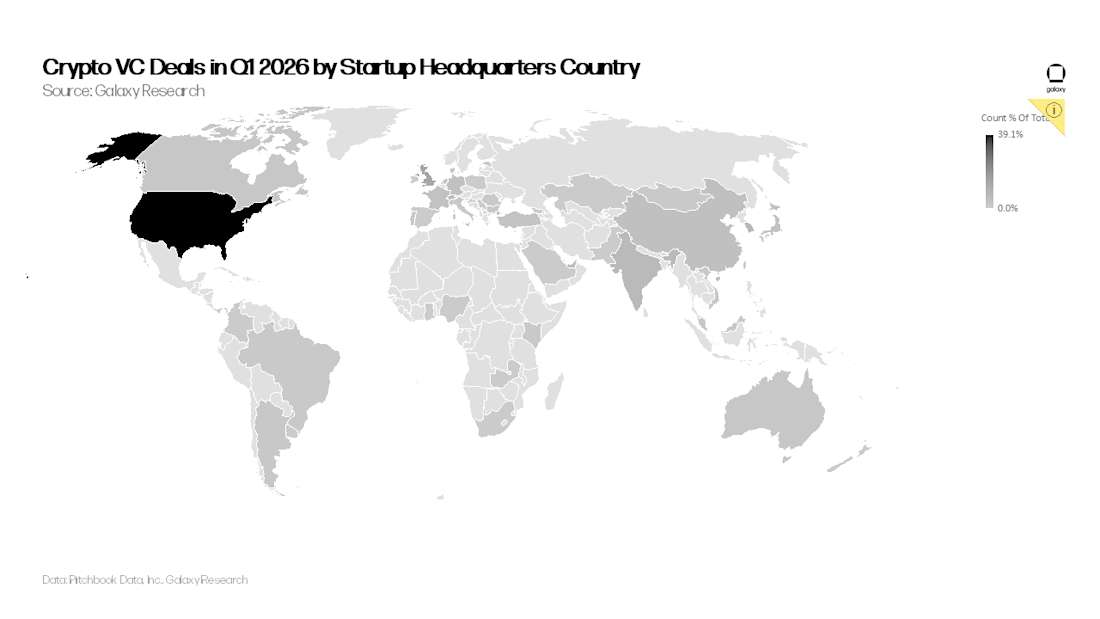
Overall, cryptocurrency venture capital activity remains relatively healthy. Transactions, exchanges, investment, and lending businesses attracted the most capital and led in transaction numbers again; there was considerable activity in DeFi, privacy/security, tokenization, AI, infrastructure, Web3/NFT/DAO/metaverse/gaming, payments/rewards, and enterprise blockchain. Later-stage companies captured 78.3% of the investment amount, while pre-seed and seed rounds accounted for 39.8% of the transaction numbers. Startups headquartered in the United States accounted for 73.5% of the investment amount and 39.1% of the 384 transactions.
Key Points Overview
Cryptocurrency VC warmed up in the second quarter of 2026, with approximately $5.6 billion invested in 384 transactions.
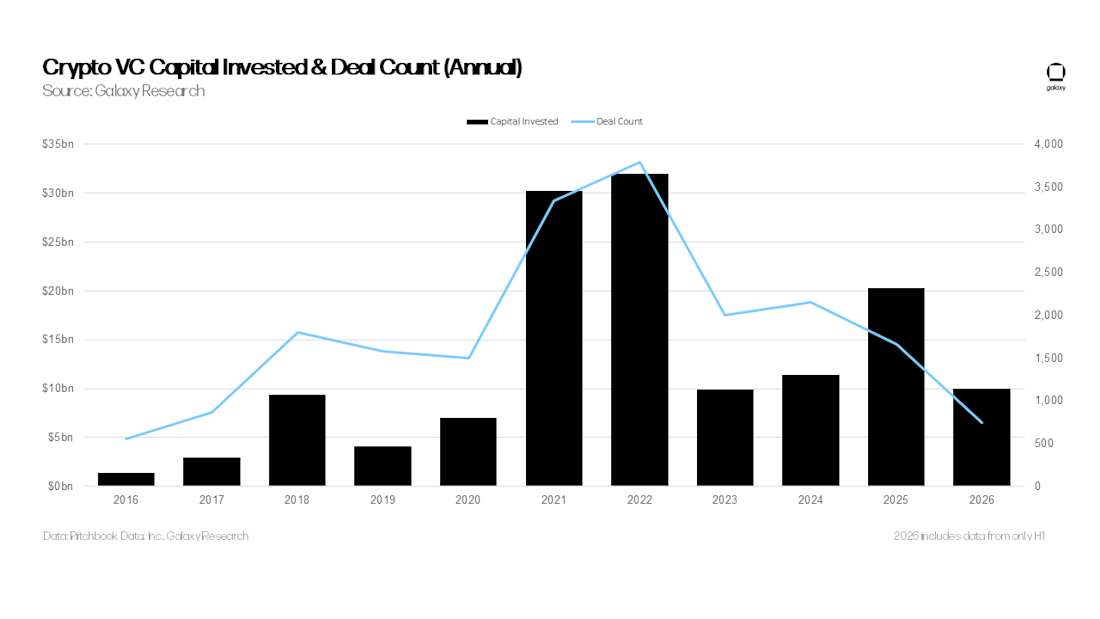
Based on the first half's pace annualized, this is approximately $20.037 billion, slightly lower than the full year of $20.3 billion in 2025 but still above the pace during most bear market phases in 2023-2024.
Later-stage transactions accounted for about 77% of the investment amount, early-stage about 15%, and seed/pre-seed accounted for the remaining share.
In the startup tracks tracked by Galaxy Research, transactions/exchanges/investment/lending classes received the most venture capital.
The United States continues to dominate in terms of investment amount and number of transactions, accounting for 73.5% of the funds and 39.1% of the transactions.
Investors allocated approximately $3.9 billion to 5 new cryptocurrency venture capital funds.
Venture Capital Activity
Transaction Numbers and Investment Amount
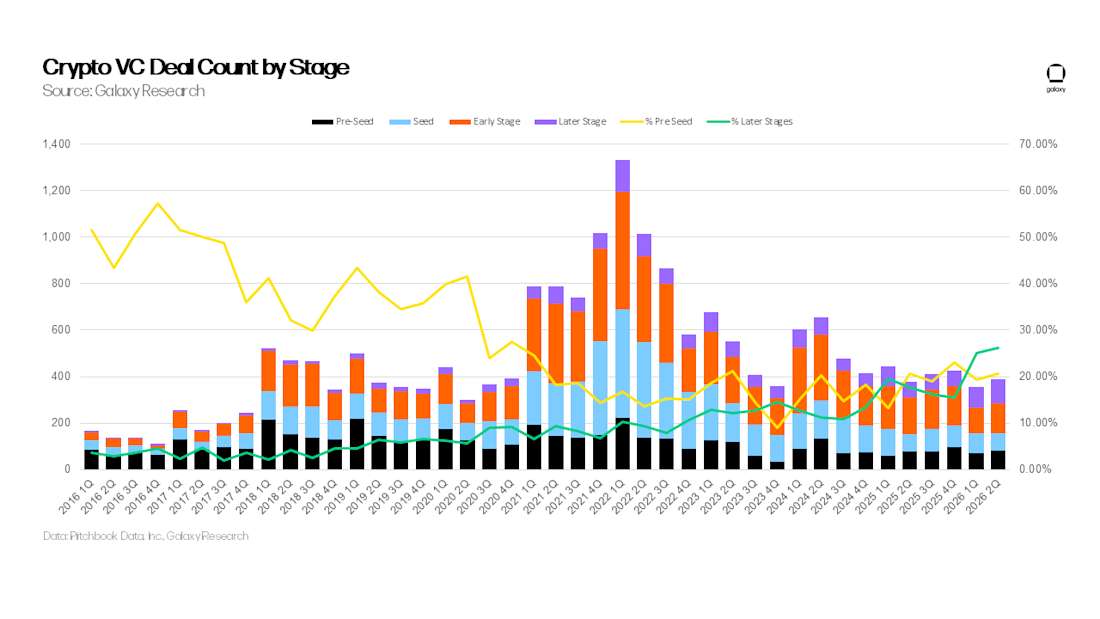
In the second quarter, venture capital invested $5.683 billion in cryptocurrency and blockchain-related startups and private companies (quarter-on-quarter +31%), covering 384 transactions (quarter-on-quarter +10%).
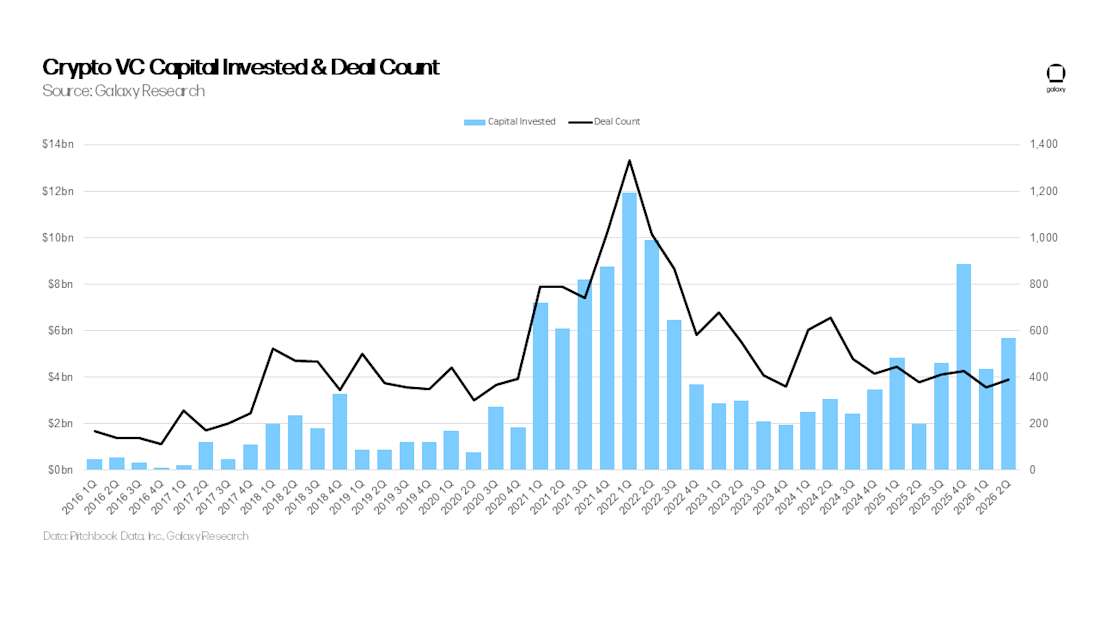
The recovery relative to the first quarter mainly comes from an increase in later-stage financing. The growth rate of investment amount exceeds that of transaction numbers, indicating more funds are concentrated into larger rounds.
So far this year, venture capital has invested $10.018 billion in the cryptocurrency sector, with a total of 744 transactions. If annualized based on the first half, the total investment amount for 2026 would be approximately $20 billion—slightly lower than the $20.3 billion in 2025 but still significantly higher than most periods in 2023-2024.
Investment Amount and Bitcoin Price
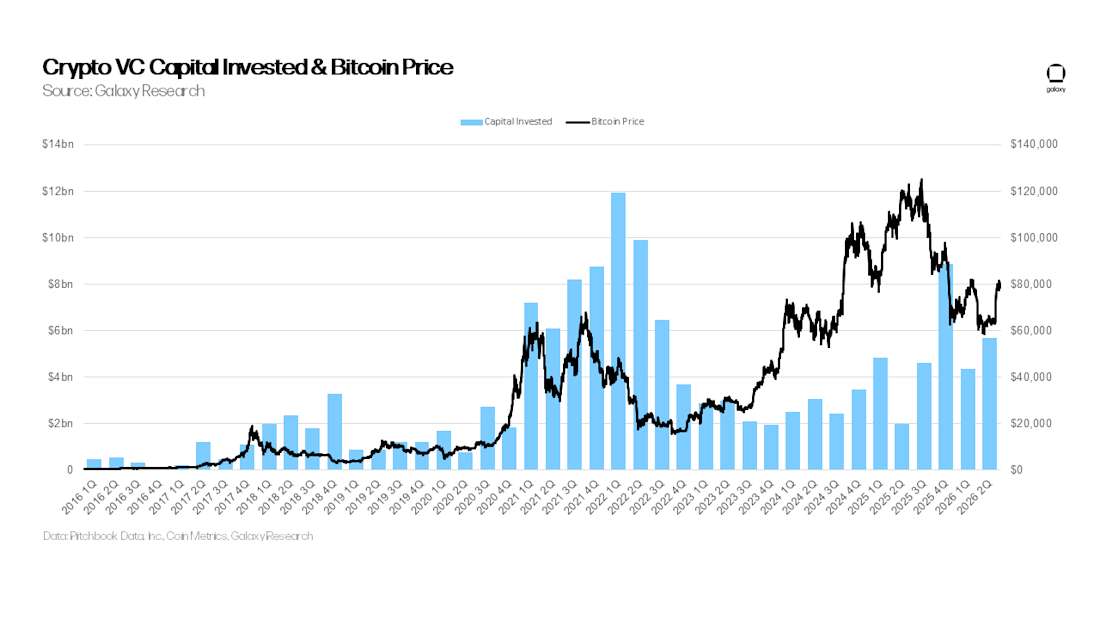
The correlation between Bitcoin prices and investment amounts in cryptocurrency startups commonly seen in past cycles remains weaker than in 2017 and 2021. When Bitcoin reached a new high at the end of 2025, venture capital activity was not consistent; however, entering the second quarter of 2026, both Bitcoin and venture capital investment amounts trended upward.
Investment Broken Down by Stage
In the second quarter, 78% of the investment amount flowed to later-stage startups, while 22% went to younger companies.
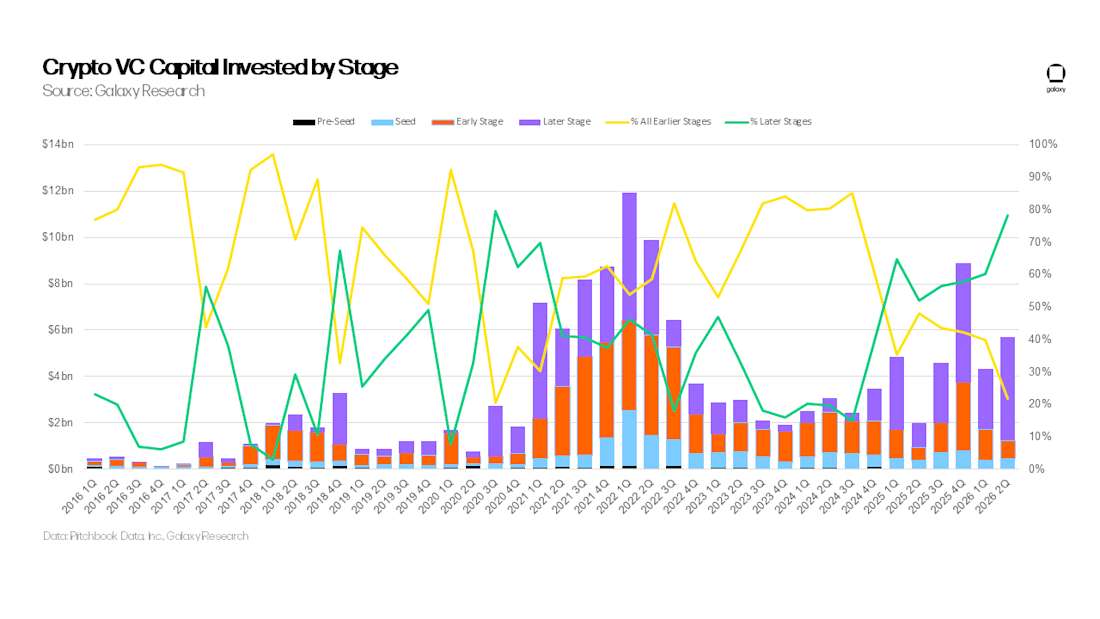
In terms of transaction numbers, pre-seed accounted for a slightly increased share of 21% of the total number, with later-stage investment rising to 26% of the transaction numbers. The author's tracking of the pre-seed share aims to observe entrepreneurial behavior and investor risk preferences. Pre-seed still has significance in absolute terms, but the increasing share of later-stage transactions reflects a maturing market.
Valuation and Transaction Size
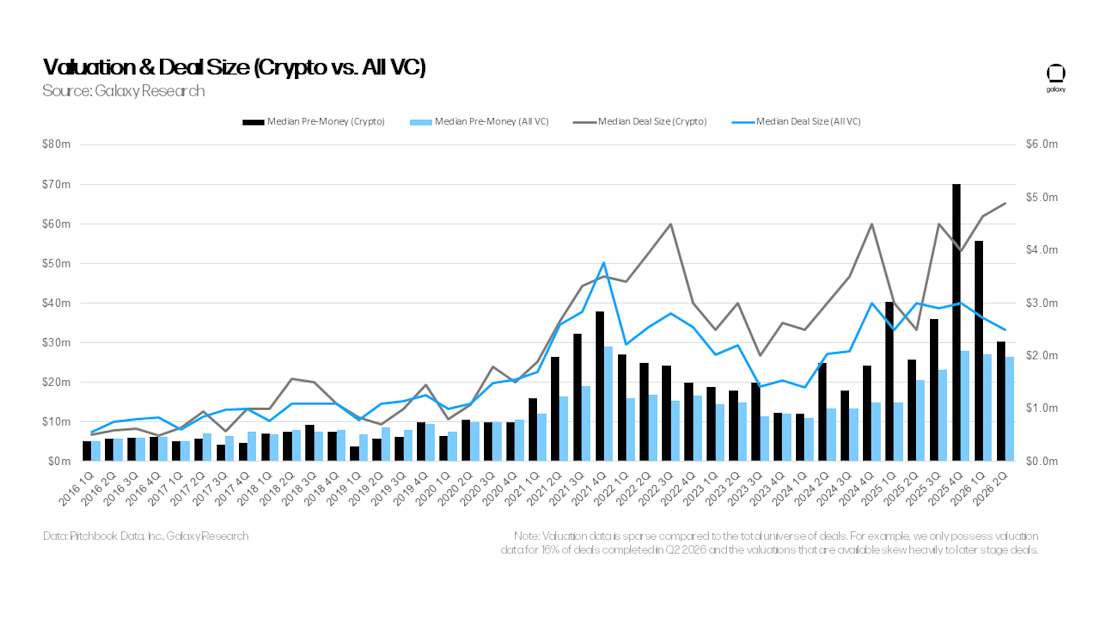
The valuations of cryptocurrency companies supported by venture capital (left vertical axis in the following figure) reached an all-time high in the fourth quarter of 2025, exceeding the previous record in 2021. In the first and second quarters of 2026, valuations have significantly receded from their highs; during the same period, the broader VC ecosystem outside of cryptocurrency saw only a slight decline. In the second quarter of 2026, the median transaction size in cryptocurrency (right vertical axis) reached a historical high of approximately $4.9 million. (Note: Valuation data is relatively sparse compared to the total sample of transactions. For example, only about 16% of transactions in the second quarter had valuation data, and available valuations were significantly biased towards later-stage transactions.)
Investment Broken Down by Track
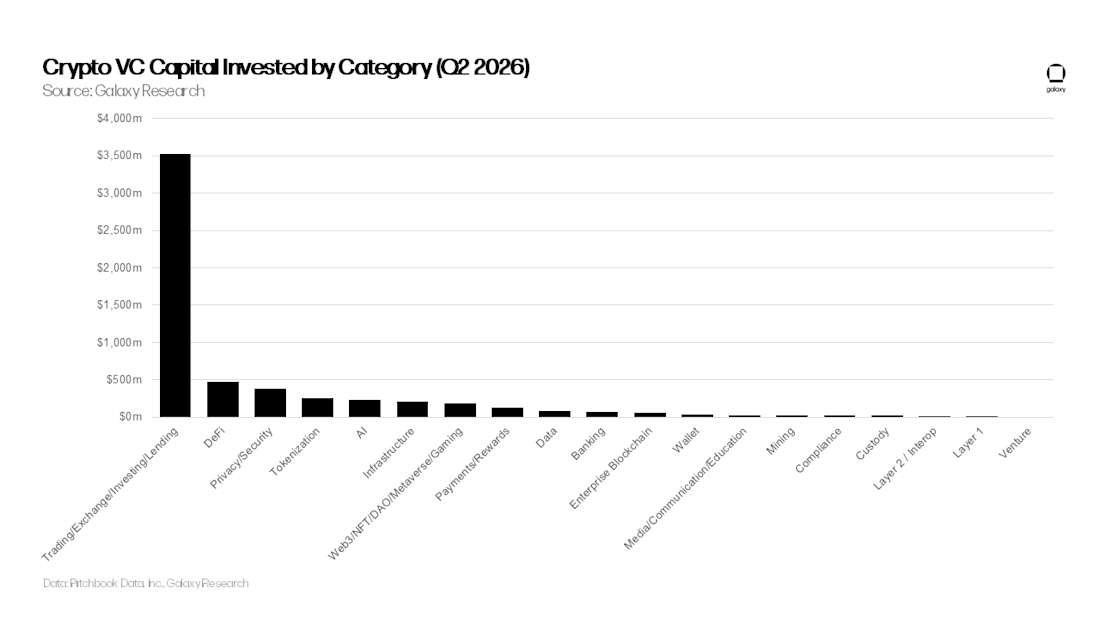
The transactions/exchanges/investment/lending track received the most funding from cryptocurrency venture capital, continuing to rank first with about $3.523 billion, equivalent to roughly three-fifths of the investment amount in the second quarter. DeFi ranked second with about $478 million, followed by privacy/security, tokenization, AI, infrastructure, Web3/NFT/DAO/metaverse/gaming, and payments/rewards.
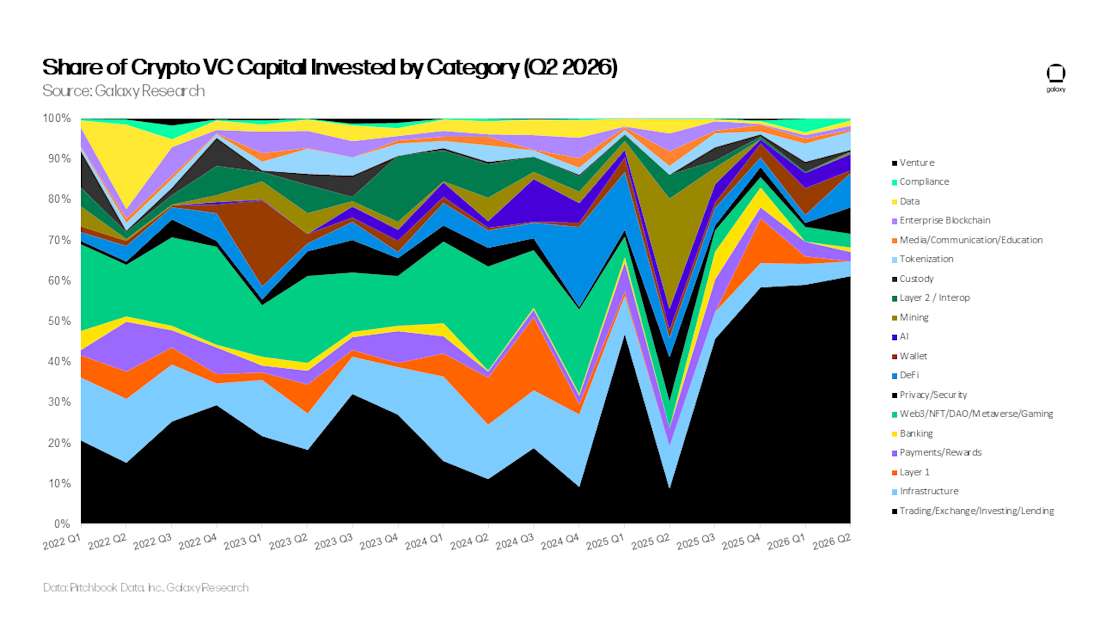
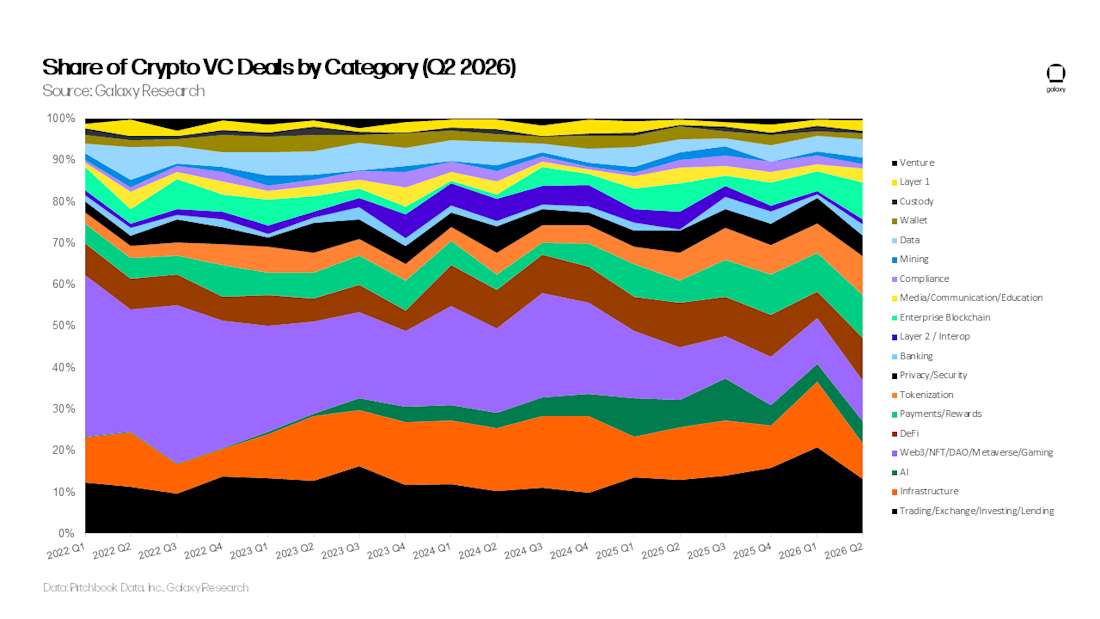
Looking back at the changes in venture capital funding proportions across tracks over time, the dollar structure in the second quarter is particularly concentrated.
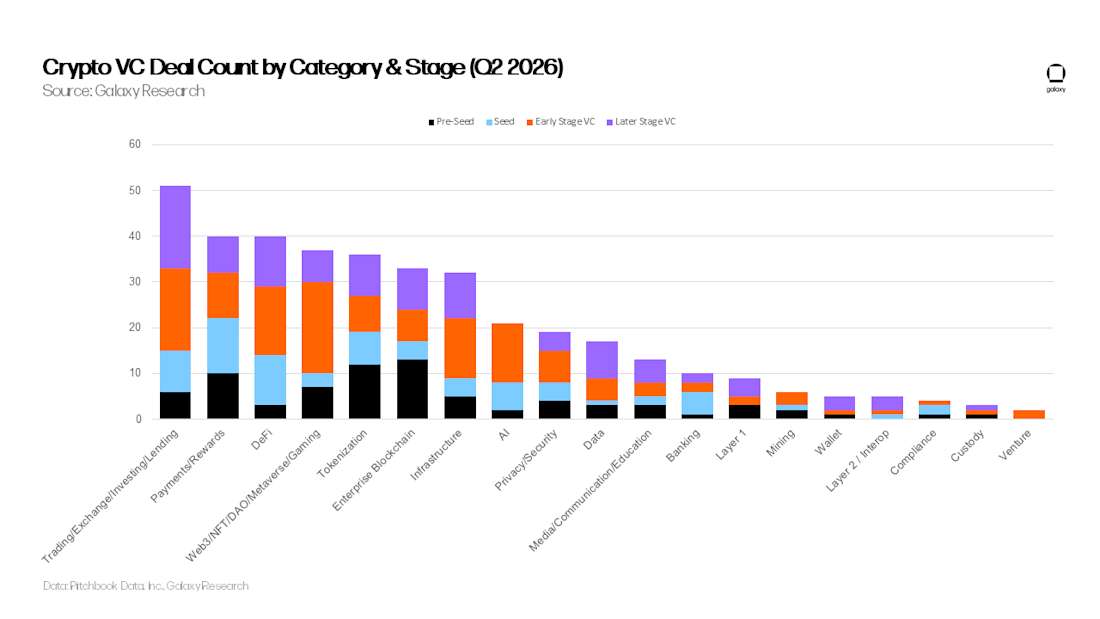
If we only look at transaction numbers, the market appears more diverse than the total dollar amount suggests. Transactions/exchanges/investment/lending still lead, but other tracks still have a significant presence in transaction numbers.
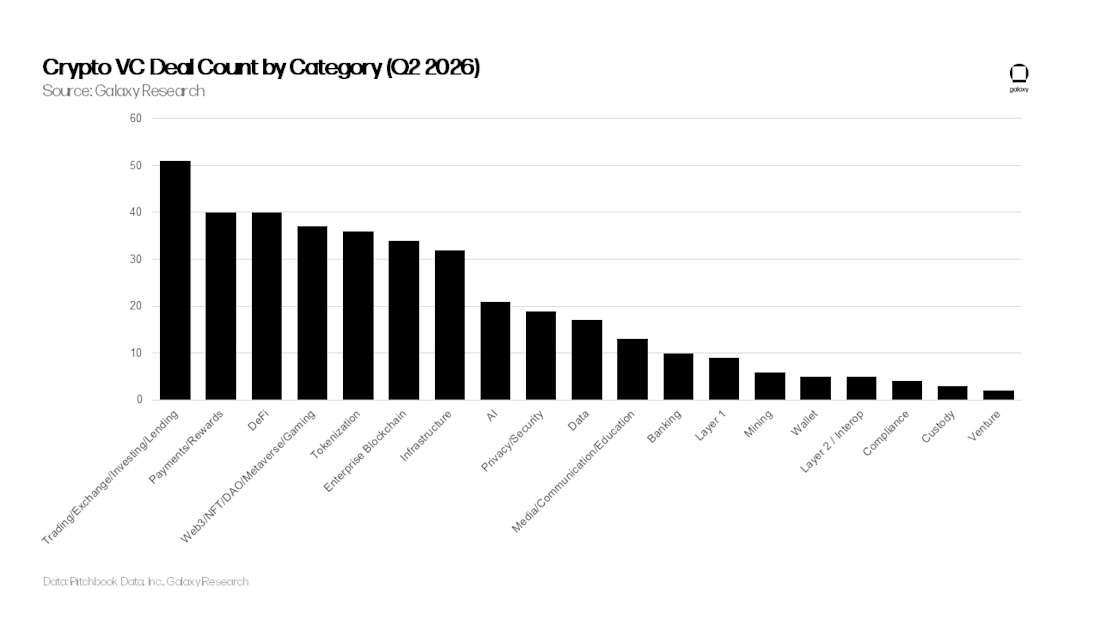
When we overlay the transaction number structure onto a timeline, the diverse pattern persists: transactions/financial classes have long occupied an important share but have not monopolized all deals.
Investment Broken Down by Stage and Track Intersection
Breaking down investment amounts and transaction numbers by intersection of track and stage allows a clearer view of where the money is actually flowing and which types of projects are still accumulating numbers in early stages.
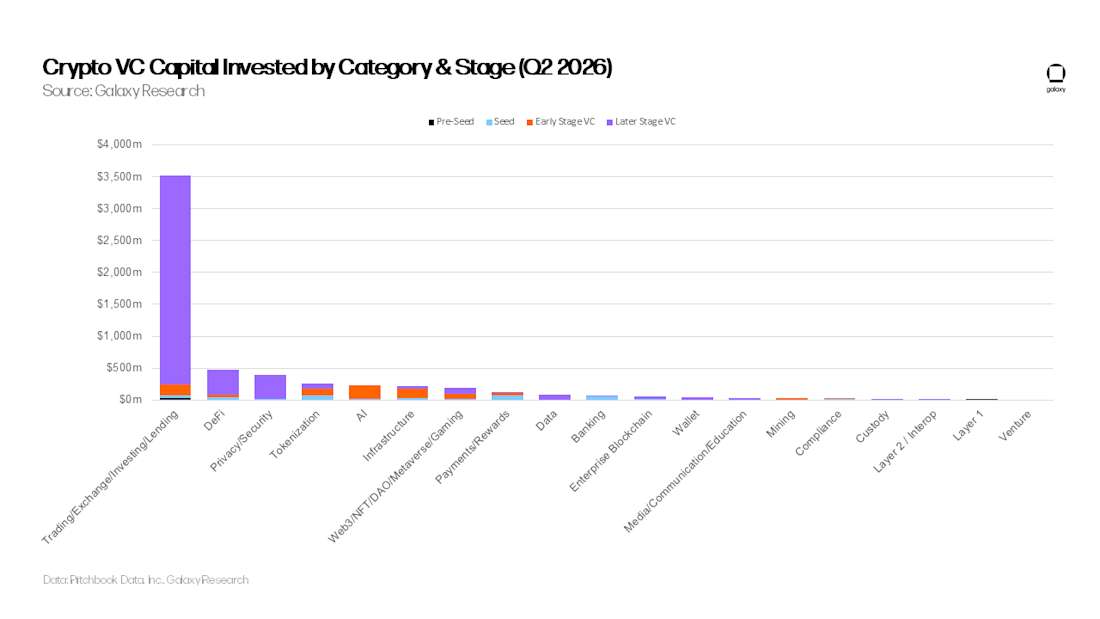
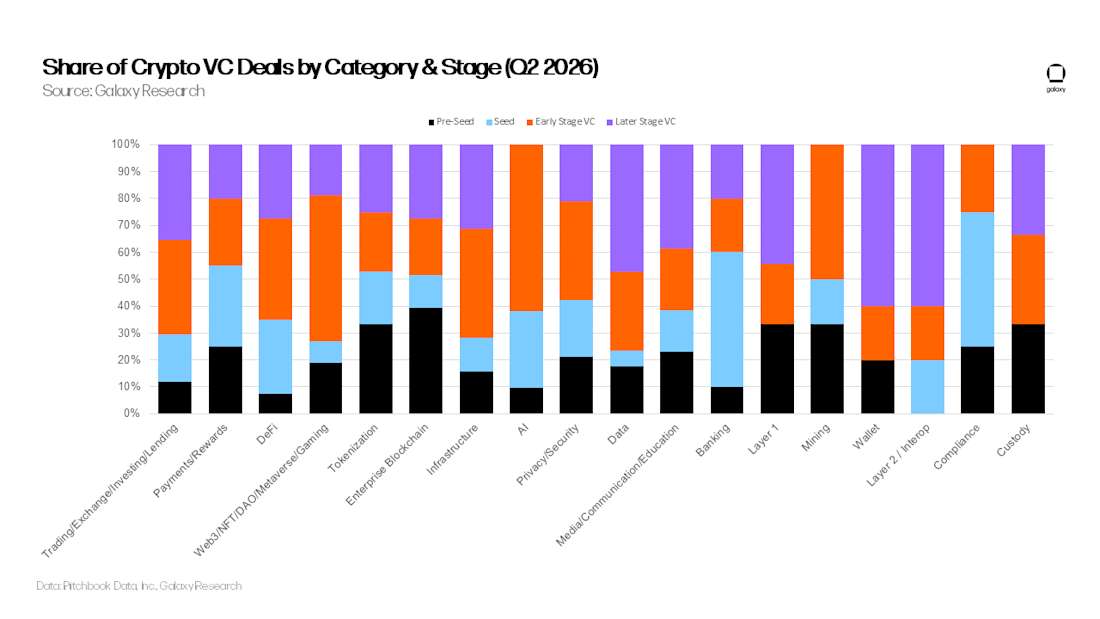
Analyzing the fund distribution within different stages of each track shows which categories rely more on later large rounds and which still mainly depend on seeds and early-stage transactions.
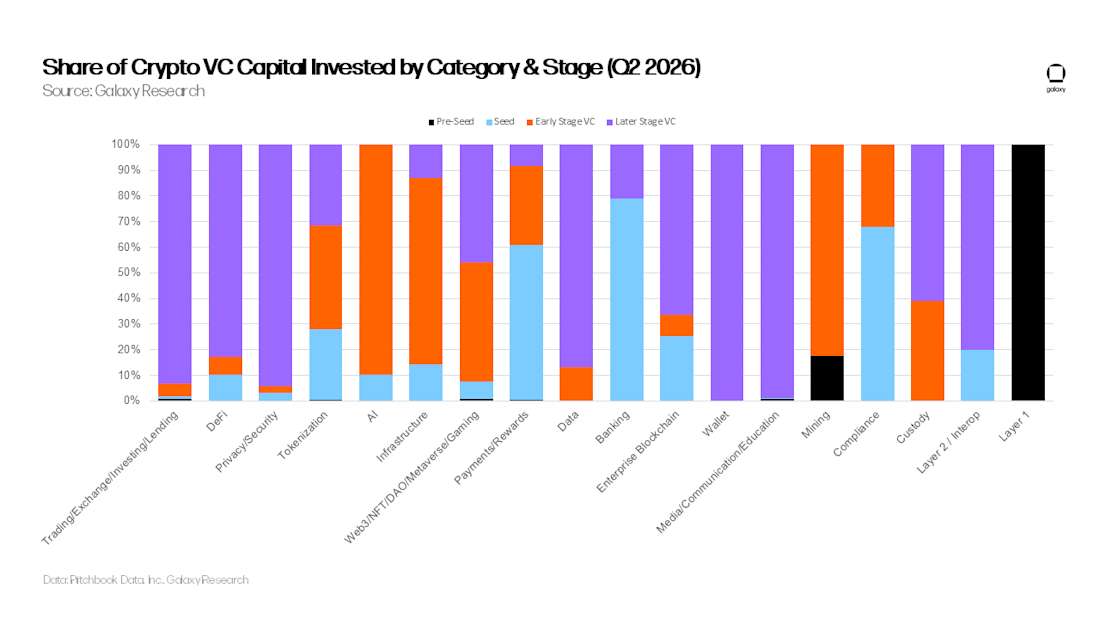
Similar to previous quarters, the second quarter maintains a relatively healthy degree of dispersion across stage and track.
Examining the stage proportions of transaction numbers in each track helps to judge the maturity of each track: some tracks have a higher proportion of later-stage numbers, while others are still dominated by early transactions.
Grouped by Year of Establishment
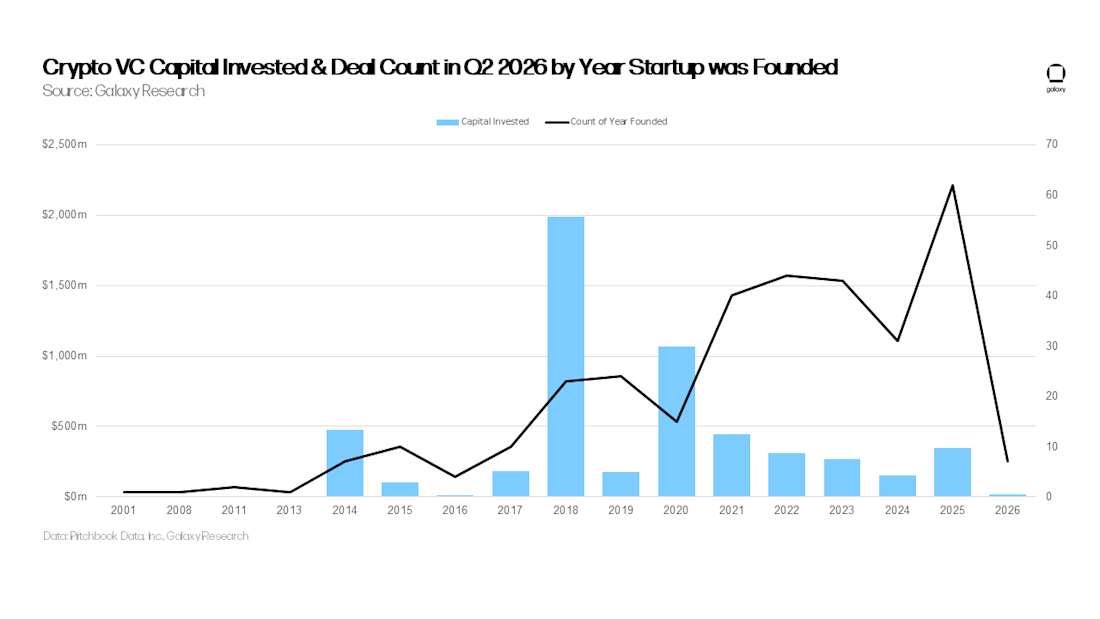
Startups founded in 2018 received the most venture capital in the second quarter of 2026, approximately $2 billion; the batch of companies founded in 2020 ranked second, with about $1.1 billion, followed by those established in 2014 and 2021. Looking at transaction numbers, younger companies dominate, leading with those from 2025, 2022, and 2023.
By Geographical Distribution
In the second quarter of 2026, 73.5% of the funds in the sample flowed to companies headquartered in the United States, which continues to be the main stage for cryptocurrency startup financing.
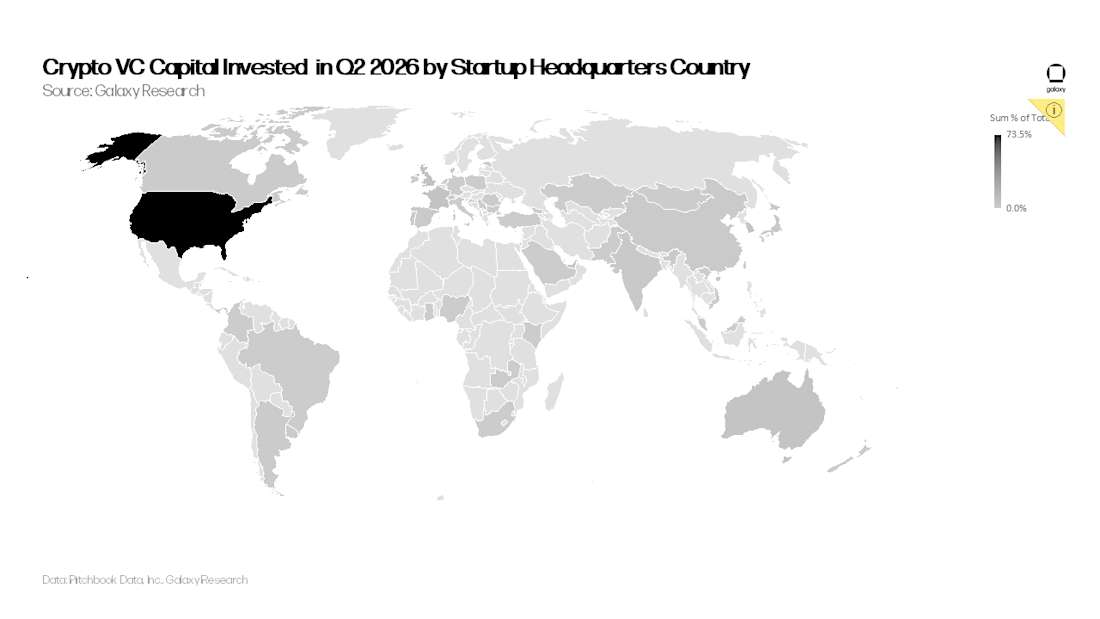
In terms of transaction numbers, the story is similar, but the geographical distribution is somewhat more dispersed. Among the representative 384 transactions, the United States still leads, while other regions also contributed a significant number.
Venture Capital Fundraising
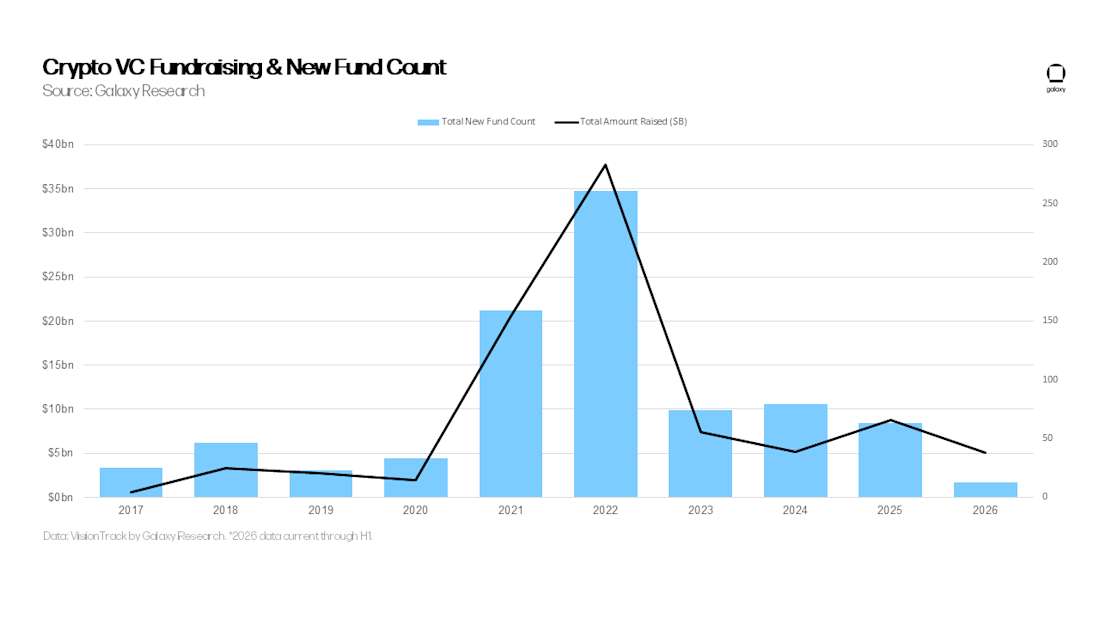
Fundraising for cryptocurrency venture capital funds remains difficult. Macroeconomic conditions, along with the turbulence in the cryptocurrency market during 2022-2023, continue to deter some institutional allocators from committing to cryptocurrency venture capital comparable to early 2021 and 2022. More recently, the warming of artificial intelligence has diverted some of the previous attention that would have gone into cryptocurrency; spot ETFs and digital asset treasury companies are also competing with venture capital for institutional funds. In the second quarter of 2026, approximately $3.9 billion was allocated to cryptocurrency-focused venture capital funds, corresponding to 5 funds—this is the fewest number of new funds in a single season since the third quarter of 2019.
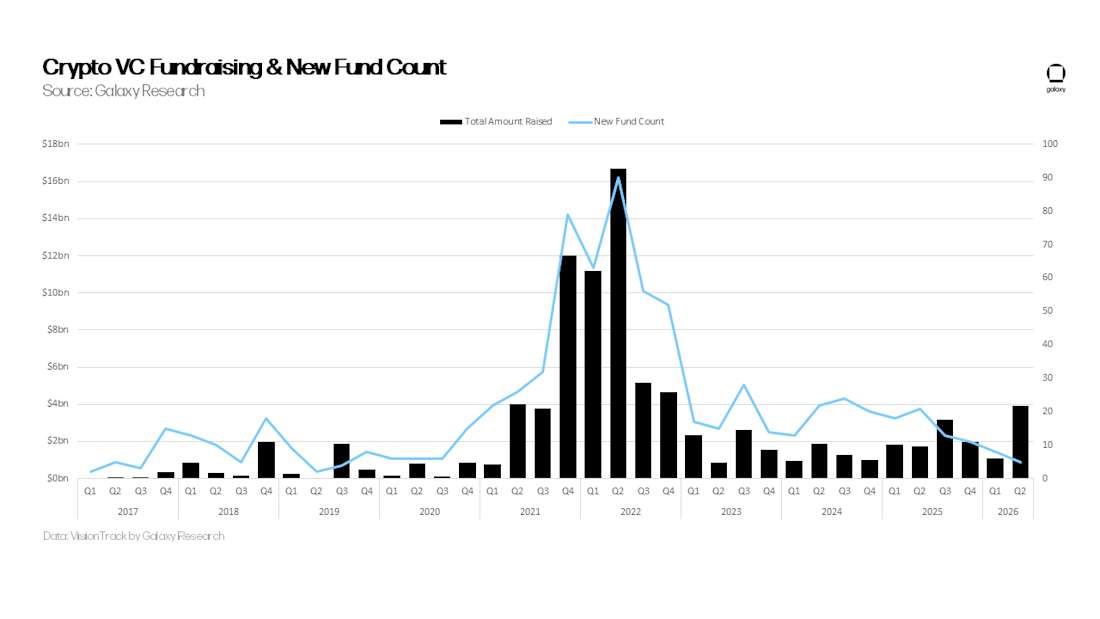
Using an annualized perspective, the fundraising pace in the first half indicates an annual total of approximately $10 billion for 2026, higher than the $8.75 billion raised in 2025.
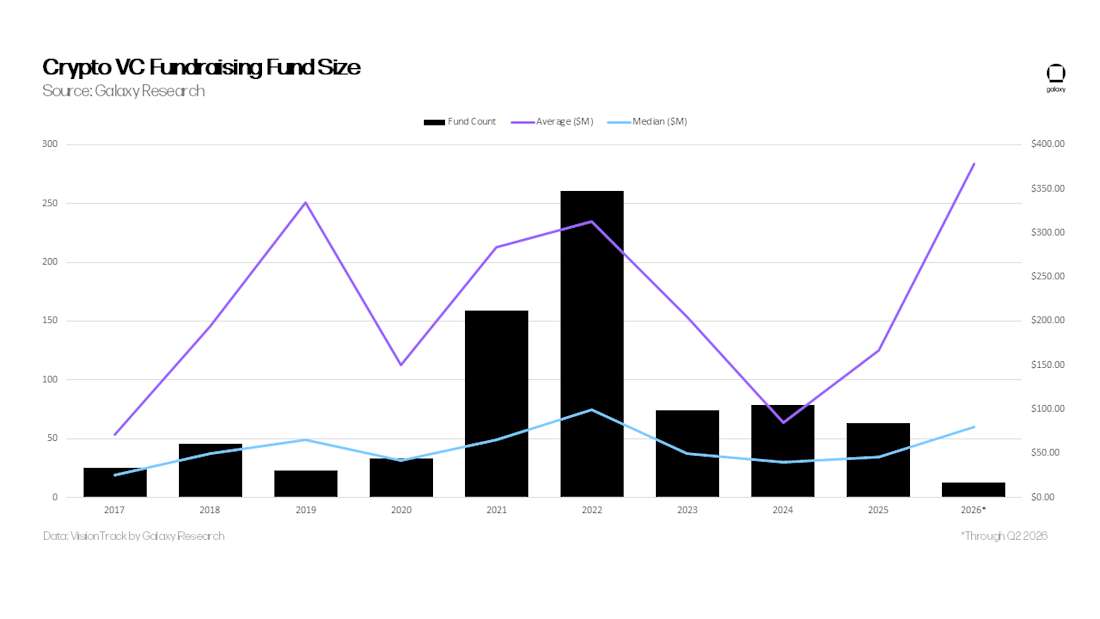
The average fund size has increased to approximately $377.98 million, and the median fund size has risen to about $80 million.
Conclusion
After a pullback in the first quarter, activity rebounded in the second quarter, overall still better than the previous bear market low. In the bull markets of 2017 and 2021, venture capital activity was highly correlated with liquidity and cryptocurrency asset prices, but this relationship has weakened. In the second quarter of 2026, both Bitcoin and venture capital activities trended upward, with the growth rate of investment amount outpacing that of transaction numbers.
Later-stage transactions continue to dominate fundraising amounts. In the second quarter of 2026, later-stage companies secured about 78% of the investment amount, reflecting the industry's maturity and the existence of more large-scale companies with existing revenue. Early rounds still accounted for the majority of transaction numbers, with pre-seed comprising around 21% of the total numbers.
Spot ETPs and digital asset treasury companies may have diverted some attention and funds that could have gone into venture capital funds and startups. The prominent investments by several large institutional capital into Bitcoin spot exchange-traded products indicate that some large funds prefer to gain exposure through liquidity instruments rather than early VC. If this trend continues, the demand for exposure in niche tracks like DeFi may shift more towards ETPs rather than the venture capital system. Although interest in DAT has declined compared to last year, its rise may also compete for institutional interest in the sector.
Fund managers still face challenging conditions. Fundraising in the second quarter rebounded to approximately $3.9 billion corresponding to 5 funds, but the number of new funds remains near historic lows. Macroeconomic factors continue to create headwinds; clearer policy could reignite allocation interest (despite the low likelihood of market structure legislation passing this year).
The United States continues to dominate the cryptocurrency startup ecosystem. Companies and projects headquartered in the United States captured the vast majority of investment amounts and maintained the largest share in transaction numbers. This trend was further strengthened in the second quarter of 2026: U.S.-headquartered companies accounted for 73.5% of the sample investment amount and 39.1% of the 384 transactions.
(The original text contains disclaimers and conflict of interest notices from Galaxy Digital, the translation omits these; opinions are from Galaxy Research and do not constitute investment advice.)
免责声明:本文章仅代表作者个人观点,不代表本平台的立场和观点。本文章仅供信息分享,不构成对任何人的任何投资建议。用户与作者之间的任何争议,与本平台无关。如网页中刊载的文章或图片涉及侵权,请提供相关的权利证明和身份证明发送邮件到support@aicoin.com,本平台相关工作人员将会进行核查。


