Author: Climber, CryptoPulse Labs
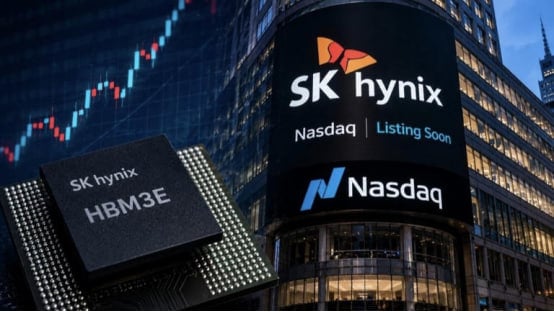
While the capital market is still debating whether NVIDIA is overvalued, another company that stands at the core of the AI industry chain is stepping into the spotlight on Wall Street. South Korea's memory chip giant SK Hynix is about to make its debut on NASDAQ in the form of ADR (American Depositary Receipts), with fundraising expected to reach as much as $29 billion.
This listing has attracted significant attention not only due to its enormous fundraising scale but also because of SK Hynix's very special position. As the global leader in HBM (High Bandwidth Memory), it has become an indispensable part of AI computing infrastructure, deeply binding with the growth of AI chip demand.
What the market is really concerned about is not the listing itself, but a larger question: in this AI arms race, apart from NVIDIA, which sells GPUs, who is truly the most profitable and scarce "shovel seller" in the industry chain?
1.From memory giant to core AI infrastructure, why is SK Hynix irreplaceable?
When one thinks of the global semiconductor industry, the first names that come to mind are often Intel, NVIDIA, or Taiwan Semiconductor Manufacturing Company. In contrast, SK Hynix is not very well-known on the consumer level, but it is already an unignorable giant within the semiconductor industry.
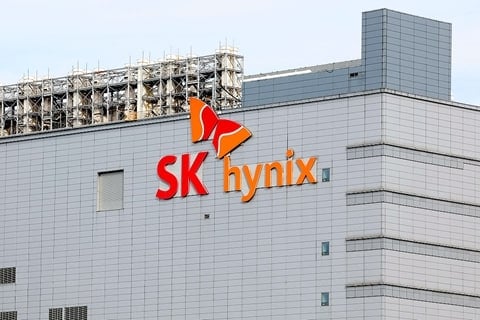 SK Hynix's predecessor can be traced back to Hyundai Electronics, founded in 1983. After going through several reorganizations following the Asian financial crisis, the company was ultimately acquired by SK Group and officially renamed SK Hynix in 2012.
Since then, the company has gradually grown from a traditional DRAM manufacturer to the world's second-largest memory chip producer, second only to Samsung Electronics.
From a business structure perspective, SK Hynix has three core businesses:
- The first is DRAM (Dynamic Random Access Memory). This is the company’s core revenue source, widely used in servers, PCs, smartphones, and data centers. DRAM can be understood as the "short-term memory" in computing systems, responsible for high-speed data reading and writing. The performance of DRAM is crucial for large models that require real-time computation.
- The second is NAND Flash. This type of product is mainly used in SSDs, mobile devices, and enterprise-level storage, responsible for long-term data storage tasks. In 2020, SK Hynix acquired Intel's NAND business, further expanding its influence in the enterprise SSD market.
- The third, and the most focused on by the current market—HBM (High Bandwidth Memory).
HBM is essentially also DRAM, but its biggest difference from traditional memory lies in its performance. Traditional DRAM is more like a regular highway, while HBM resembles a multi-layer high-speed interchange. It significantly increases data throughput while reducing energy consumption through 3D stacking and TSV (Through-Silicon Via) technology, stacking multiple layers of memory vertically.
This technology was originally used mainly for high-performance computing, but its importance has skyrocketed with the explosion of generative AI.
During the training of large models, GPUs face a fundamental problem—no matter how fast the computation, they still have to wait for data. In other words, the bottleneck of the AI era is no longer just computational power but bandwidth.
If GPUs are the brains of AI, then HBM is like the vascular system. If the blood flow is not fast enough, the brain cannot exert its full capabilities, and SK Hynix happens to be at the very core of this new bottleneck.
In HBM3 and HBM3E, SK Hynix is one of the first companies in the world to achieve mass production and is the first to enter NVIDIA’s high-end AI GPU supply chain. The market generally believes that high-performance GPUs like NVIDIA H100 and NVIDIA H200 are largely supported by SK Hynix's high-end HBM.
This has transformed it from a traditional memory vendor into a core supplier of AI infrastructure.
2.With AI computing power surging, why has SK Hynix suddenly taken center stage?
Historically, memory chips have been a typical cyclical industry. When the industry is booming, prices soar, and manufacturer profits skyrocket. However, during industry downturns, oversupply can lead to rapid price collapse.
As a result, the capital market has long been unwilling to assign high valuations to memory companies. Investors are most concerned about how long profits at their peak can be sustained.
However, AI is changing this logic because HBM is not a completely homogeneous product like traditional DRAM.
HBM has extremely high technical barriers, involving wafer manufacturing, high-density packaging, thermal management, yield control, and collaborative advanced packaging, with each step being very challenging. This means that HBM cannot just be ramped up by anyone who wants to.
Currently, there are only three companies in the world that truly possess advanced HBM mass production capabilities: Samsung Electronics, SK Hynix, and Micron Technology, which has created a strong oligopoly.
More importantly, SK Hynix currently holds a leading position. Compared to Samsung, SK Hynix performs more stably in terms of yield and production pace for high-end HBM. Compared to Micron Technology, it entered NVIDIA's supply chain earlier. These advantages grant it significant pricing power.
In the past, the storage industry competed on price; now HBM competes on capacity and delivery capability. With AI GPUs in high demand, HBM has also become a scarce resource.
There is even a saying in the market that the true limiting factor on the speed of AI computing expansion is not GPUs but HBM capacity.
This statement is not exaggerated. For example, in AI servers, the cost share of HBM mounted on a high-end GPU is continuously increasing. As the parameter scale of large models continues to grow, single cards require more memory and higher bandwidth, leading to an increase in HBM’s ASP (average selling price).
This is causing a shift in SK Hynix’s business model, where previously it monitored DRAM cycles, inventory, and price fluctuations,
now it looks at AI capital expenditures, HBM ASP, and hyperscaler procurement conditions.
The valuation system has shifted from cyclical stock logic to growth stock logic, and the essence of the capital market's repricing is the imaginative space of future cash flows.
The market no longer views SK Hynix as a typical memory company but has begun to see it as the "water seller" in AI infrastructure, which is the fundamental reason for its continuously rising valuation.
3.Landing on NASDAQ: SK Hynix wants more than just financing, but global AI valuation clout
On the surface, the ADR listing is a financing activity, but from a strategic perspective, it resembles a capital market migration. The reason for choosing NASDAQ is that the most aggressive pricing of AI narratives in the global capital markets is happening in the United States.
Just look at the performance of US stocks over the past two years: NVIDIA has become the first AI stock, Advanced Micro Devices enjoys an AI premium, and the overall valuation of data center and cloud computing companies has risen, with American investors willing to pay a high premium for AI infrastructure.
In contrast, the Korean market is different. The Korean capital market has long been cautious with valuations for manufacturing companies; even globally leading firms may not obtain valuations that match their technological barriers.
This means that even if SK Hynix’s business is strong, it may still be undervalued in its domestic market. After landing on NASDAQ, SK Hynix will gain triple advantages.
First is the dollar capital pool, as the largest institutional investors, pension funds, and sovereign funds are concentrated in the US market. ADR significantly lowers the threshold for overseas investments.
Second is the increase in liquidity; higher trading depth means it is easier to be included in ETFs and index funds.
Lastly, and most importantly, is revaluation. Capital will reconsider a question: is SK Hynix a memory company or an AI infrastructure company? The valuation differences corresponding to these two identities are very large.
Of course, risks still exist.
- The first is high customer concentration. Currently, SK Hynix is heavily reliant on NVIDIA. If the latter adjusts its supply chain, it will directly affect orders.
- The second is intensifying competition, as Samsung Electronics is fully chasing HBM technology, and Micron Technology is also accelerating expansion.
- The third is that AI capital expenditures may not continue to grow at high rates forever. If hyperscalers reduce AI investments, GPU demand declines, HBM demand cools down, and profit growth slows, these risks cannot be ignored.
Nevertheless, the market is still willing to grant a premium. The reason is simple: scarcity.
In the AI infrastructure industry chain, there are not many companies that truly possess technological barriers, scale advantages, and global supply capabilities, and SK Hynix is one of them.
Conclusion
Historically, every technological revolution has birthed two types of winners. One type is the frontrunning gold miners, while the other is the stable sellers of tools, those who sell shovels.
The NASDAQ listing may just be the beginning. What truly deserves attention is whether, when AI competition evolves from model capabilities to infrastructure competition, capital will redefine the entire value of the storage industry.
If the answer is yes, then SK Hynix is likely to be the starting point for this global reassessment.
免责声明:本文章仅代表作者个人观点,不代表本平台的立场和观点。本文章仅供信息分享,不构成对任何人的任何投资建议。用户与作者之间的任何争议,与本平台无关。如网页中刊载的文章或图片涉及侵权,请提供相关的权利证明和身份证明发送邮件到support@aicoin.com,本平台相关工作人员将会进行核查。


