On Tuesday morning, affected by concerns related to NVIDIA (NVDA.O) significant AI supply agreements and increased market competition, investor sentiment was dampened, leading to a weak opening and continued decline in the stock markets of Japan and South Korea.
As of the time of writing, the Nikkei 225 index dropped more than 4% intra-day, reaching its lowest level since May 22; the TSE index saw a maximum decline of 2.7%. The South Korean KOSPI index expanded its decline to 8%, triggering a circuit breaker mechanism, pausing trading for 20 minutes. Earlier, the Korea Exchange also temporarily activated the KOSPI sidecar mechanism, suspending programmed selling of KOSPI stocks.
Semiconductor and equipment stocks such as Tokyo Electron, Kioxia, Samsung Electronics, and SK Hynix led the decline, with drops exceeding 9%. Among them, SK Hynix's stock price once plummeted by 30%, marking the largest single-day drop in its history; Kioxia's stock price fell by 18%, the largest drop since November of last year. As the sell-off of global semiconductor stocks intensified, investor sentiment regarding the sustainability of the AI boom continued to deteriorate.
Amid a wave of AI-related deals valued at over $750 billion, the cost of insurance against debt default for NVIDIA surged, causing technology stocks to decline. Hideyuki Ishiguro, Chief Strategist at Nomura Asset Management, stated that the credit risk increased after reports regarding NVIDIA's significant investment transactions, which investors viewed as a negative signal.
Additionally, Ishiguro pointed out that China's advancements in semiconductor manufacturing equipment pose a threat to Japanese suppliers, which have long held a competitive edge in this field.
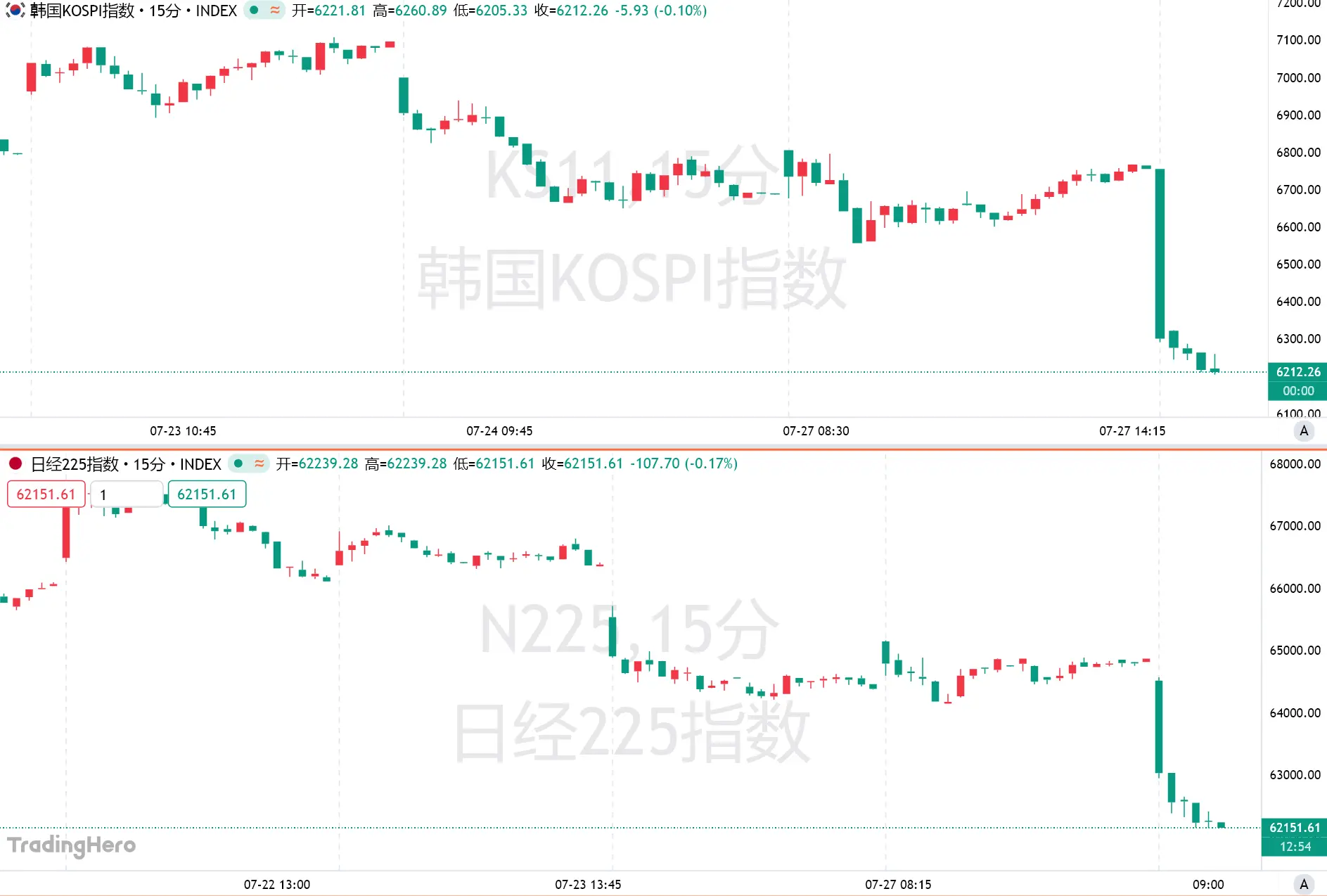
The extent of these declines indicates that market concerns are deepening over crowded stock positions in the process of advancing AI construction and the continuously rising levels of corporate debt.
“The recent sell-off in semiconductor stocks seems to be driven more by a sharp deterioration in market sentiment rather than any direct changes in fundamentals,” said Jung In Yun, CEO of Fibonacci Asset Management Global. “Investors are increasingly questioning whether the pace of spending on AI infrastructure can be sustained.”
Chris Larkin of Morgan Stanley E*Trade stated, “This week is filled with potential surprises, both good and bad. Geopolitical factors and oil prices may be the biggest variables, but an optimistic reaction to the strong earnings reports from the big seven is not guaranteed, especially if the levels of AI spending continue to surprise.”
Kyle Rodda, a senior analyst at Capital.com, wrote in a report to clients: “These companies embody the key themes currently affecting market sentiment—excess capital expenditure and spending by AI companies, which investors worry will erode returns.”
This week, several top tech companies including Meta Platforms Inc. (META) will announce key earnings. Earlier this month, news of Meta planning to sell excess AI computing power has raised concerns in the market about demand. Apple Inc. (AAPL) has issued warnings about cost pressures and reports suggest it is lobbying to seek approval to purchase memory components from competitors.
Investors are also awaiting the full performance report from Samsung Electronics for the June quarter. Kim Minji, a portfolio manager at Seoul's Must Asset Management, stated that the world's largest traditional memory chip manufacturer is catching up to SK Hynix in the HBM field.
Moreover, although SK Hynix is expected to announce another record-setting performance on Wednesday, investor sentiment has clearly weakened. The core concern in the market is that continuously rising memory prices may force customers to reduce procurement volumes and seek lower-cost alternatives.
Since hitting a historic high in June, SK Hynix’s stock price has fallen by a cumulative 38%, leading to market concerns about overly crowded trades and leveraged funds amplifying price volatility. In this round of adjustment, the company's market value has shrunk significantly, second only to SpaceX (SPCX) globally.
In just over a month, approximately $470 billion in market value has disappeared from SK Hynix. This South Korean memory chip company, once regarded as one of the hottest AI trades globally, is now becoming one of the most controversial subjects in investors' portfolios.
Shawn Oh, head of South Korean cash equity business at NH Investment & Securities, stated in a research report that considering the current valuation attractiveness and the continued deleveraging of retail investors in South Korea, SK Hynix remains an "extremely attractive buying target." However, he also noted that the market is reducing stock positions ahead of the earnings season for U.S. tech companies.
The market expects that SK Hynix's June quarter sales will grow more than twofold year-on-year, reaching approximately $57 billion; operating profit is expected to increase sixfold year-on-year. However, James Ooi, a market strategist at Tiger Brokers, stated that the significance of SK Hynix's earnings might have already transcended the company itself.
“SK Hynix's performance could also become a sentiment barometer for global AI hardware stocks,” he said, noting that market expectations have largely been anticipated, hence “even a slight miss could trigger strong reactions.”
Hebe Chen, a senior market analyst at Vantage Global Prime, stated: “The recent sell-off of chip manufacturers indicates that people's doubts about spending, returns, and valuations are deepening, rather than dissipating. With several key catalysts approaching, the hesitance to buy on dips suggests that investors are awaiting stronger evidence before rebuilding risk.”
免责声明:本文章仅代表作者个人观点,不代表本平台的立场和观点。本文章仅供信息分享,不构成对任何人的任何投资建议。用户与作者之间的任何争议,与本平台无关。如网页中刊载的文章或图片涉及侵权,请提供相关的权利证明和身份证明发送邮件到support@aicoin.com,本平台相关工作人员将会进行核查。


